
Lowest Price Guaranteed
Pages
174
Last Updated
November 2025
View Count
12105
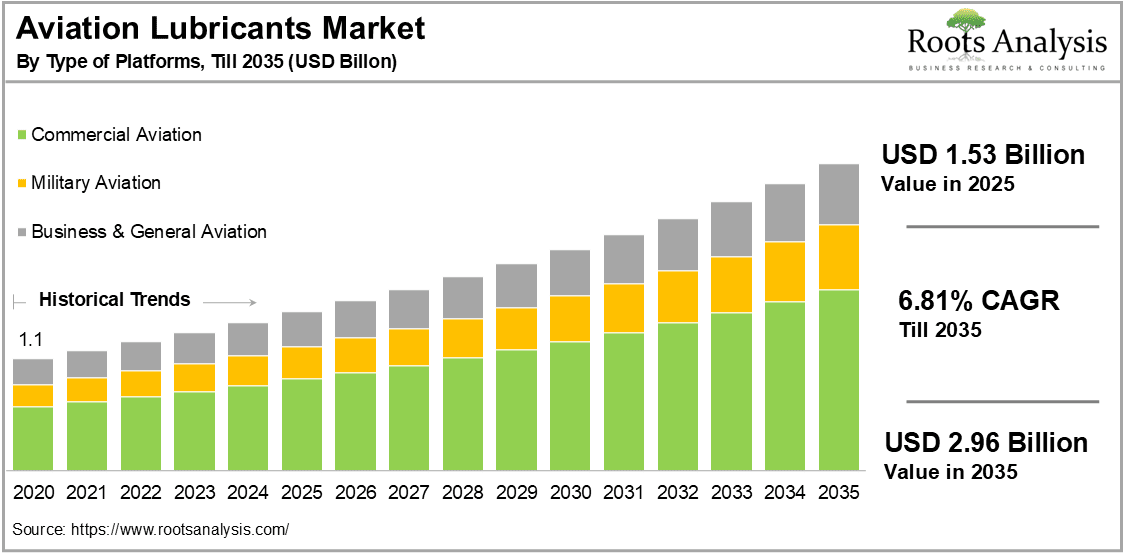
The aviation lubricants market report size is projected to grow from USD 1.53 billion in 2025 to USD 2.96 billion by 2035, representing a CAGR of 6.81%, during the forecast period till 2035.
 |
The new research study consists of aviation lubricants industry analysis, detailed global aviation lubricants analysis, mega trends, patent analysis, porter five forces, SWOT analysis, value chain analysis and other strategic frameworks.
Aviation lubricants are specialized fluids and greases which play a crucial role in aviation by reducing friction and wear between moving parts and surfaces. They help prevent rust and corrosion in various aircraft components, including engines, hydraulic systems, landing gears, and airframes. The type of aircraft influences the quality, type, and grade of lubricants used. Proper lubrication is essential for the safe operation of any aircraft and requires regular changes as part of maintenance. Additionally, the use of aircraft engine lubricants ensures that airplanes operate at optimal performance and efficiency.
Key drivers for the global market for aviation lubricants include a rise in air passenger traffic, an increase in the number of airline fleets, and the growing use of efficient aircraft engines like turbofans. However, a significant challenge in this market is that aviation lubricants are derived from crude oil, making them susceptible to price fluctuations that disrupt manufacturing processes. Such volatility can hinder growth within the aviation lubricant industry.
As sustainability becomes increasingly important, there is a notable shift towards bio-based lubricants in the aviation sector. Manufacturers are investing more in research and development to create lubricants sourced from renewable materials, which helps reduce environmental impact and comply with strict regulatory standards.
The aviation lubricants market report presents an in-depth analysis of the various companies that are involved in offering such solutions, across different segments, as defined in the table below:
| Key Report Attributes | Details | |
| Historical Trend | Since 2020-2024 | |
| Forecast Period | 2025-2035 | |
| Market Size Value in 2025 | $ 1.53 Billion | |
| Market Size Value by 2035 | $ 2.96 Billion | |
| CAGR (Till 2035) | 6.81% | |
| Type of Lubricants |
|
|
| Type of Platform |
|
|
| Areas of Application |
|
|
| Type of Material |
|
|
| Type of Aircraft |
|
|
| Type of End-Users |
|
|
| Type of Enterprise |
|
|
| Geographical Regions |
|
|
| Leading Market Players |
|
|
| PowerPoint Presentation (Complimentary) |
Available | |
| Customization Scope | 15% Free Customization | |
| Excel Data Packs (Complimentary) |
|
|
Based on the types of lubricants, the market is split into engine oil, hydraulic fluid, grease, special lubricants & additive. Among these categories, the engine oil segment growth is expected to dominate the market with a share of 57.8%. This growth is attributed to its critical role in maintaining aircraft engines. It ensures optimal performance by reducing friction, preventing wear, and providing cooling to engine components.
On the other hand, the grease segment is expected to witness rapid growth at a significant CAGR of 7.26% during the forecast period. This segment’s growth can be attributed to the need for improved wear protection and long-lasting performance in challenging operating conditions. The rising demand for specialty aviation greases reflects the industry's emphasis on maintaining aircraft safety and reliability, particularly as air travel continues to expand globally.
The global aviation lubricants market is segmented into various types of platforms, such as business & general aviation, commercial aviation, and military aviation. According to our aviation lubricants industry analysis, the commercial aviation segment will augment the segment's growth with the largest market share of aviation lubricants of over 74.56% by the next decade. This segment holds the largest market share due to the high volume of commercial flights operating worldwide for passenger and cargo transport. The increasing production rates of commercial aircraft by major manufacturers, coupled with a growing demand for air travel, significantly contribute to the commercial aviation segment's prominence.
On the other hand, it is worth highlighting that the military aviation segment is expected to witness the fastest CAGR of around 8.74% during the forecasted period. This growth is being driven by rising defense expenditure globally and an increasing focus on enhancing military aircraft capabilities. As nations invest more in modernizing their defense fleets and upgrading existing military aircraft, there is a heightened demand for specialized lubricants that can withstand extreme conditions and provide superior performance.
The market is segmented into various aviation lubricant applications, such as airframe, engine, hydraulic systems, landing gear, and others. According to our aviation lubricants market forecast, the engine segment will augment the segment's growth with the largest market share of over 65.68% in the next decade. This dominance is attributed to the essential role that lubricants play in maintaining the performance and efficiency of aircraft engines. The massive growth of this segment reflects its critical importance in ensuring optimal engine operation and longevity.
Furthermore, the hydraulic systems segment is expected to witness a growth of CAGR of 8.84% during the forecast period. This growth is driven by the increasing demand for effective lubrication solutions in hydraulic systems, which are vital for various aircraft functions, including control surfaces and landing gear operations. The rapid growth of this segment highlights the rising need for advanced lubricants that can withstand high pressure and temperature variations while ensuring reliable performance in critical applications.
The market is segmented into various types of material, such as bio-based oils, mineral-based, semi-synthetic, and synthetic. According to our aviation lubricants statistics, the synthetic lubricants segment will augment the market's growth with a market share of 65.8% during the forecasted period. This segment holds a significant market share due to the superior performance characteristics of synthetic lubricants, which include better thermal stability, oxidation resistance, and a longer service life compared to mineral-based alternatives. Synthetic lubricants are increasingly preferred in aviation applications as they meet the demanding requirements of modern aircraft engines and systems, contributing to their widespread adoption across commercial and military aviation lubricants.
Furthermore, the bio-based oils segment is expected to witness the fastest CAGR of around 9.62% during the forecasted period. The growing emphasis on sustainability and environmental compliance is driving manufacturers to invest in the development of bio-based lubricants derived from renewable resources. As regulatory pressures increase and the aviation industry seeks to reduce its carbon footprint, bio-based oils are gaining traction as a viable alternative to traditional petroleum-based lubricants.
The market is segmented into various types of aircraft, such as business jets, commercial, helicopters, large commercial jets, military, and piston engine aircraft. According to our aviation lubricants analysis, the commercial aircraft segment will augment the market's growth with a market share of 37.65% during the forecasted period. This growth is driven by the increasing production rates of commercial airliners and a growing volume of air passenger traffic. The critical role lubricants play in the aviation industry and the continuous demand for aircraft maintenance lubricants and high-performance aviation lubricants to ensure safe and efficient operations are also driving the market growth.
Furthermore, the business jets segment is expected to witness the fastest CAGR of around 9.8% during the forecast period. This growth is fueled by rising demand for private and business travel, particularly in emerging economies where economic growth is leading to an increase in disposable income. The convenience and flexibility offered by business jets are driving their popularity, resulting in a heightened need for specialized lubricants that can meet the unique performance requirements of these aircraft.
The market is segmented into various types of end-users, such as aftermarket and OEM. According to our aviation lubricants analysis, the aftermarket segment will augment the market's growth with a market share of 87.65% during the forecast period. This growth is attributed to the critical role of maintenance, repair, and overhaul (MRO) services in the aviation industry. As aircraft require regular lubrication replenishment based on operational hours, the aftermarket segment benefits from the growing number of operational aircraft globally.
Furthermore, the OEM segment is expected to witness the fastest CAGR of around 7.86% during the forecasted period. This growth is driven by rising aircraft production rates and new orders from major manufacturers like Boeing and Airbus. As airlines expand their fleets to meet increasing travel demand, the need for high-quality lubricants supplied by OEMs will grow rapidly.
The market is fragmented into multiple types of enterprises, namely large and small and medium enterprises. Currently, the large enterprise segment is expected to dominate the segment with 83.34% of the market share. However, small and medium enterprise segments are expected to witness a relatively higher (8.75%) growth rate until 2035. This is ascribable to their agility, innovation, focus on niche markets, and ability to adapt to changing customer preferences and market conditions.
This segment highlights the distribution of aviation lubricants market share by region, such as North America, Europe, Asia, Latin America, Middle East and North Africa, and the rest of the world. According to our regional analysis, North America currently exhibits dominance with 37.69% of overall market share. The demand for high performance military and commercial aviation lubricants is highly driven by the presence of some of the largest aviation firms operating in the United States including Boeing and Lockheed Martin. The region also boasts an established aviation infrastructure, characterized by several airlines and frequent air travel activities.
The “Aviation Lubricants Market, Till-2035: Industry Trends and Global Forecasts” report features an extensive study of the current market landscape, market size and future opportunity within the aviation lubricants market forecast period. The market report highlights the efforts of several stakeholders involved in this rapidly emerging segment of the service providers industry. Key takeaways of the aviation lubricants market report are briefly discussed below.
The global aviation lubricants market is driven by several key factors. A significant increase in air passenger traffic is one of the main contributors, as the demand for air travel continues to rise, leading to a greater need for new aircraft and the maintenance of existing fleets. This surge in air traffic necessitates the use of high-quality lubricants to ensure optimal performance and longevity of aircraft engines and components. Additionally, the growing number of airline fleets and advancements in aircraft technology, such as more efficient turbofan engines, further boost the demand for aviation lubricants.
Moreover, increased defense spending and government initiatives aimed at enhancing aviation infrastructure also play a crucial role in propelling market growth. As sustainability becomes a priority, there is a notable shift towards bio-based lubricants, with manufacturers investing in research and development to create eco-friendly aviation lubricants alternatives that meet regulatory standards while minimizing environmental impact. Overall, these drivers collectively contribute to the robust growth of the aviation lubricants market.
With the presence of several small and large companies, the market is experiencing intense competition and changing market dynamics. From large multinational companies to local players, companies are striving to enhance their competitive edge. In terms of market share, large enterprises and multinational companies are dominating the market. The key players are using strategies such as partnerships, acquisitions, ventures, innovations, novel product launches, R&D and geographical expansions in an attempt to solidify their position in the industry. Additionally, the increasing emphasis on sustainability is driving companies to invest in aviation lubricants further intensifying the competitive landscape.
The aviation lubricants market faces several challenges in aviation lubricants adoption that could hinder its growth and widespread adoption. One of the primary issues is the volatility of crude oil prices, as many aviation lubricants are derived from petroleum-based products. Fluctuations in crude oil prices can disrupt manufacturing processes and affect the pricing strategies of lubricant suppliers, potentially leading to increased costs for airlines and maintenance providers.
Additionally, stringent regulatory requirements regarding environmental standards pose challenges for manufacturers, as they must invest in research and development to create compliant products while also maintaining performance standards. The transition to bio-based lubricants, although beneficial for sustainability, requires significant investment in new technologies and production processes, which can be a barrier for some companies. Furthermore, the need for specialized lubricants that can withstand extreme operational conditions adds complexity to product development and may limit the availability of suitable options in the market. These challenges necessitate strategic planning and innovation from industry players to navigate the evolving landscape of the aviation lubricants market effectively.
With respect to regional industry insights, North America is likely to dominate the market for the forecast period. The dominance of this region is majorly influenced by North America’s sophisticated R&D capabilities which encourage innovation in aviation lubricants and ensure sustained expansion. This region is also very significant to the service life of aircraft fleets because of its high concentration of MRO facilities.
Examples of leading aviation lubricants suppliers (which have also been captured in this market report, arranged in alphabetical order) include Aerospace Lubricants, Ascend Aviation India, BP, Castrol, Chevron, Eastman Chemical, Exxon Mobil, FUCHS, JET-LUBE, Kelley Williamson, LANXESS, Lukoil, NYCO, Nye Lubricants, Phillips 66, Pure Lubrication, Rocol, Royal Dutch Shell, Shield Oils, Sinopec, Swastik Oil, TAF Oil, Tiodize, TotalEnergies, The Chemours, Yekta Oil & Gas.
The market report presents an in-depth analysis, highlighting the capabilities of various companies engaged in this domain, across different segments. Amongst other elements, the market report includes:
At Roots Analysis, we genuinely care about your success and understand that your business requirements are unique. While our aviation lubricants market research reports provide valuable insights, we recognize that they might not cover every aspect you need to make well-informed strategic decisions. To account for that, we offer 15% free report customization tailored to your specific needs. Whether you require additional quantitative analysis, qualitative insights, or any other information related to the aviation lubricants market, reach out us today at: support@rootsanalysis.com