


 Download Free Sample
 Buy Now
Market Size
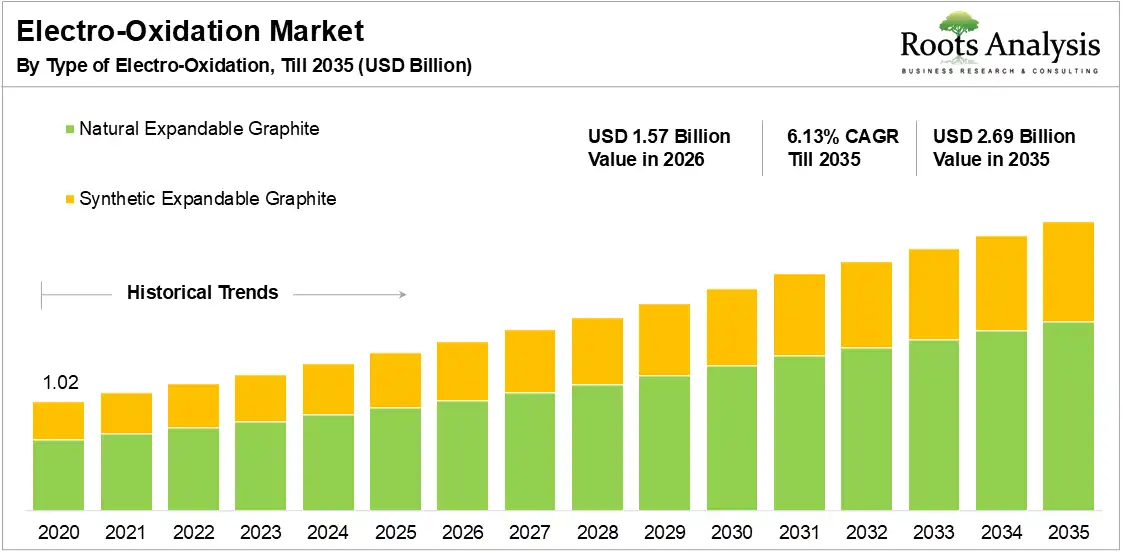
The global electro-oxidation market is expected to rise from USD 1.57 billion in 2026 to USD 2.06 billion by 2030, and USD 2.69 billion by 2035, representing an overall CAGR of 6.13% from 2026 to 2035.
Would Like to Preview the Actual Report?
Market Report: Key Takeaways
- In terms of type of electro-oxidation, the indirect electrooxidation leads the market, securing over 65% of the global electro-oxidation market share.
- On the basis of the type of electrode material, the mixed metal oxide (MMO) electrodes hold maximum share of the market.
- Based on application area, the municipal wastewater treatment dominates the market, accounting for nearly 40% of the electrochemical oxidation market share.
- With regards to regional analysis, the Asia-Pacific leads the market by holding nearly 40% of the market share.
Market Overview
Electro-oxidation is an advanced oxidation process which is primarily used to treat wastewater. This technique include the use of electric current to facilitate oxidation reaction and degrade heavy metals and hard-to-degrade pollutants without adding chemicals. The demand for electro-oxidation technology is growing rapidly due to the rising focus on stringent wastewater discharge standards for various industries and focus on green sustainable technologies to reduce pollution.
Further, the rising concern of contaminants in water, drinking water scarcity, risk associated with perfluorinated compounds, industrial waste and pharmaceutical waste drives the demand for electro-oxidation across various industrial verticals. The high demand and rising pollution and focus on green manufacturing practices creates a favorable environment for advanced oxidation process market players for innovations.
Top market players, such as Aqua Pulsar, Hydroleap, WSP, OVIVO USA, and Siemens are highly focused on innovations in electrode materials to improve efficiency, energy consumption and sustainability. For instance, in June 2025, WSP developed PFASER (a unique electro-oxidation wastewater treatment system that incorporate boron-doped diamond electrode reactors) for on-site eliminate of per and polyfluoroalkyl substances along with water contaminants. These innovations are likely to accelerate the electro-oxidation market in the future.
Recent Developments
- In May 2025, Indian Institute of Technology Madras developed and deployed an advanced electro-oxidation technology to treat wastewater specifically from textile industry.
- In May 2025, BioLargo announced the case study data on cost saving on using aqueous electrostatic concentrator solution for removing forever chemicals from wastewater.
- In April 2025, Gradiant announced that its ForeverGome solution has received gold award at the 2025 Edison Awards. This awards highlights the Gradiants key leadership in technological innovation and sustainability to address PFAS contamination worldwide.
Market Dynamics
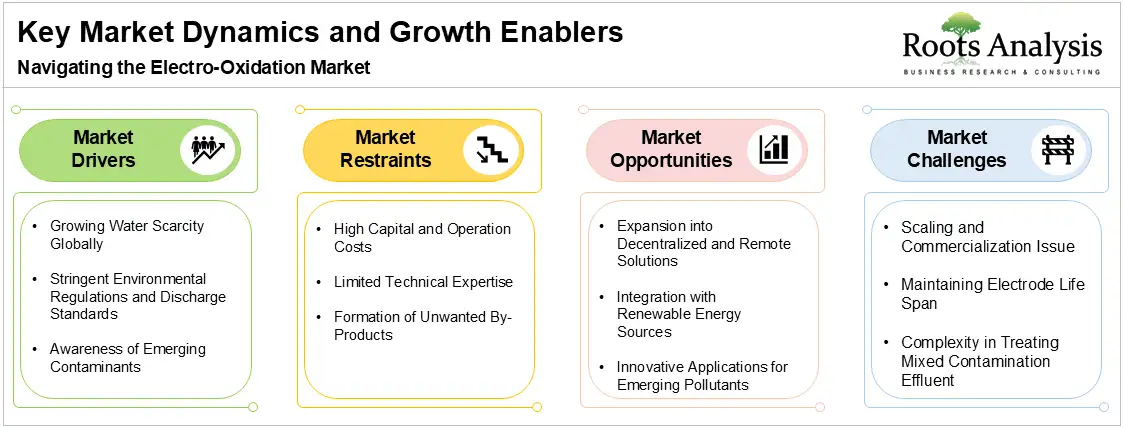
The industry is set to witness a robust growth, driven by the several drivers, restraints, opportunities, and challenges, that will influence its trajectory in the coming years.
Key Market Drivers
- Growing Water Scarcity Globally: There is an increase in the volume of pollutants, heavy metals and chemicals in water with rising urbanization and industrialization which creates drinking water scarcity. In addition, the release of agriculture based pollutants, such as pesticides and stormwater can lead to diver pollution, surging the demand for electro-oxidation for water purification. Electro-oxidation technology can effectively remove pollutants and heavy metals, thereby increasing the adoption of this technology for wastewater treatment.
Pay Only for What You Need – The Best Way to Optimize
- Stringent Environmental Regulations and Discharge Standards: Several government organizations and regulatory agencies, such as European Union, Ministry of Environment, Forest and Climate Change (MoEFCC, India) and the US Environmental Protection Agency (EPA), are undertaking initiatives to fight against wastewater management. Initiatives, such as US EPA clean water act and EU water framework directive are enforcing industries to adopt advanced electro-oxidation technologies to meet pollutants discharge limits.
- Awareness of Emerging Contaminants: The rising awareness of harmful pollutants, such as pharmaceuticals, PFAS, and endocrine disruptors that cannot be removed with traditional biological treatment has surged the demand for electro-oxidation technology for industrial waste treatment.
Market Challenges
- Scalability Challenges in Large-Scale Electro-Oxidation Systems: The high electrode material costs and process optimization may create hindrance in transitioning from successful pilot projects. Moreover, the high performance electrodes, such as boron-doped diamond anodes are highly expensive and requirement high replacement cost which create significant challenge in scaling large-scale electro-oxidation systems.
- Maintaining Electrode Performance and Lifespan: High performance electrodes degrade more frequently and wastewater management plants requirement frequent replacement. Therefore, the replacement may enhance the operational costs, which further impact the long-term economic viability.
- Complexity in Treating Mixed-Contaminant Effluents: Notably, the electrochemical removal of contaminants may vary widely according to the loads of inorganics, organics, water matrix, and conductivity. These type of mixed contaminants may require continuous optimization and tailored approach which can be challenging and cost intensive.
Electro-Oxidation Market Segmentation Insights
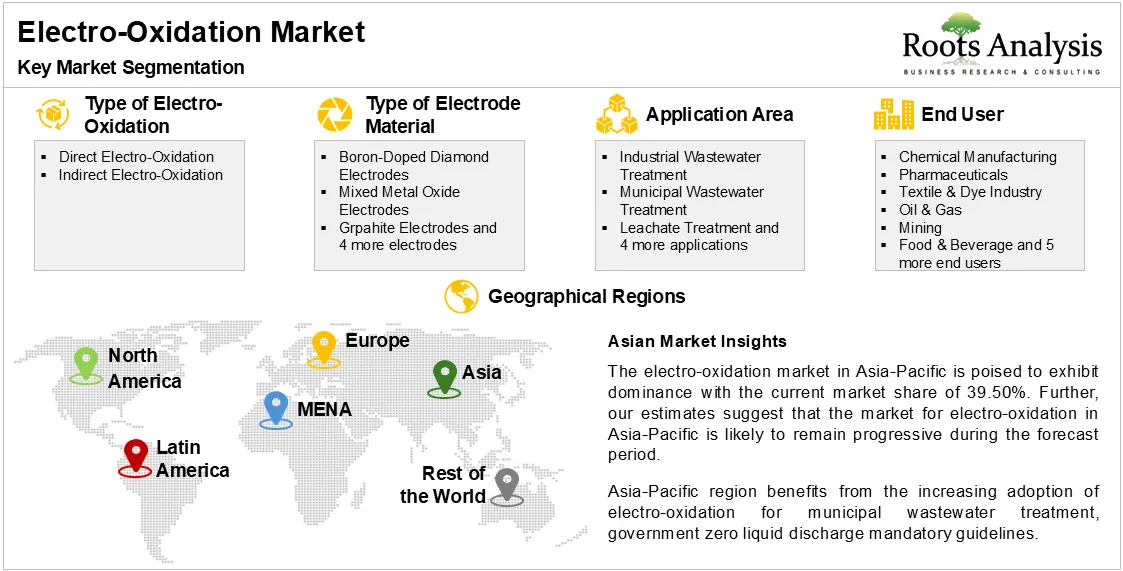
The market report on electro-oxidation presents an in-depth analysis of the various companies that are involved in offering electrode material for electro-oxidation, across different segments, as in the figure below:
Market Share Insights
Indirect Electro-Oxidation to Hold the Largest Share
Our electro-oxidation market forecast estimates that the indirect electro-oxidation secures over 65% of the market share. Indirect oxidation agents, such as boron-doped diamond electrodes, and halide ions have higher oxidation potential. Owing to its high oxidizing potential, it is rapidly adopted for pollutant removal of pharmaceuticals by electro-oxidation and textile industries.
On the other hand, direct electro-oxidation is likely to grow at the fastest CAGR during the forecast period. This can be ascribed to the cost-effectiveness, and ability to handle electrochemical oxidation of industrial effluents without including chemical additives.
Municipal Wastewater Treatment Dominate the Market by Application Area
Based on the analysis, the municipal wastewater treatment dominate the market in 2026, accounting for nearly 40% of the overall electro-oxidation market share. The rising urbanization resulted into high amount of municipal wastewater, which require electro-oxidation reactors with advanced oxidation process efficiency.
The industrial wastewater treatment segment is likely to grow at a higher CAGR of 11.50% during the forecast period. This lucrative growth stems from the stringent industrial wastewater discharge standards that has necessitated the demand for zero-liquid discharge electro-oxidation systems.
Asia-Pacific Region Will Continue to Dominate the Market in the Future
Asia-Pacific region leads the market by holding 39.50% of the overall electro-oxidation market growth and is likely to register higher CAGR. This region benefits from the stringent regulatory guidelines to manage wastewater and increasing demand for advanced systems for electrochemical removal of contaminants. Moreover, the increasing motorization, industrial setups, surge in automobiles has underscored the demand for low carbon emission practices and effluent reduction in water.
Additionally, the market growth further fueled by the government initiatives, such as China’s National VI emission norms and effluent discharge standard protocols. However, North America holds the substantial share of the market, driven by the stringent environment regulatory framework, consumer demand for energy-efficient products.
Want Information on Specific Region / Segment?
Key Market Insights
Competitive Landscape of Leading Players in Electro-Oxidation Industry
Leading electro-oxidation industry players are maintaining a competitive edge by encouraging product innovation, partnerships, and collaborations. Examples of the leading market players include Aqua-Aerobic Systems, AdEdge Water Technologies, Aquarden Technologies, Applied CleanTech, Aqualia, Arvia Technology, BioGill, Blue Eden CleanTech Solutions, Clean TeQ Water, De Nora Water Technologies, Dow Water & Process Solutions, Electrocell Systems, Ecolutia Services, EnviroChemie, Genesis Water Technologies, MIOX, Oxymem, SUEZ Water Technologies & Solutions, Veolia Water Technologies, and Xylem.
It is important to note here that to maintain their competitive edge, these market players are also investing heavily in electro-oxidation technology for industrial wastewater treatment, expanding their product portfolio, and encouraging collaborative initiatives.
What are the Latest Technology Trends in Electro-Oxidation?
- Expansion into Decentralized and Remote Solutions: With rising demand for point-of-use wastewater management techniques, the market players are widely emphasizing the expansion of electro-oxidation into decentralized and remote solutions. This deployment of electro-oxidation into point-of-use treatment in rural communities, military applications, emergency responses and mining can support water scarcity.
- Electro-Oxidation Technology for Industrial Wastewater Treatment: It is important to note here that the electro-oxidation in the future will be greatly emphasized as a part of zero-liquid discharge electro-oxidation systems scheme. This integration will enable complete wastewater recycling because electro-oxidation process can break down recalcitrant pollutants before water reuse. Moreover, this approach will be the future of managing industrial effluent.
- Nanofiltration-Electro-Oxidation: The future focus will remain on the zero-liquid-discharge which demands advanced combination of nano-filtration technology with electro-oxidation. This advanced combination can help to treat and recycle the concentrated wastewater and industrial effluent that are complex to manage.
What Benefits Does Electro-Oxidation Offers Over Alternative Treatment Methods?
Electro-oxidation offers various benefits over alternative treatment methods. Some of the key benefits are listed below:
- High Pollutant Degradation Efficiency: Electro-oxidation offers high efficiency in degrading the toxic organic pollutants, recalcitrant pollutants and offer low secondary waste production. Moreover, it can effectively degrade pesticides, industrial dyes, and pharmaceuticals that remain resistant to conventional biological methods and filtration process.
- Reduce Chemical Reagents Dependency: The process of electro-oxidation primary use electrons as an oxidizing agent. These electrons generate oxidants, such as ozone, hydroxyl radicals, and active chlorine. It eliminate the requirement of adding chemical reagents purchasing, storing, transporting, and handling large volume of hazardous chemicals.
- Reduce Sludge Production: Unlike alternative methods, such as chemical coagulation that produce high amount of metal-laden sludge which further require proper disposal, electro-oxidation generate minimal sludge. It is easy to manage and reduce disposal cost further.

Electro-Oxidation Market: Scope of the Report
| Key Report Attributes | Details | |
| Historical Trend | Since 2020 | |
| Forecast Period | Till 2035 | |
| Market Size in 2026 | $ 1.57 Billion | |
| Market Size in 2035 | $ 2.69 Billion | |
| CAGR (2026-2035) | 6.13% | |
| Segments Covered |
|
|
Unlock Deeper Insights – Schedule Your Personalized Workshop Today!
Electro-Oxidation Market Segmentation
The market report on electro-oxidation presents an in-depth analysis of the various companies that are involved in offering electro-oxidation technology, across different segments, as mentioned below:
By Type of Electro-Oxidation
- Direct Electro-Oxidation
- Indirect Electro-Oxidation
By Type of Electrode Material
- Boron-Doped Diamond (BDD) Electrodes
- Mixed Metal Oxide (MMO) Electrodes
- Graphite Electrodes
- Platinum Electrodes
- Titanium Electrodes
- Stainless Steel Electrodes
- Others
By Application Area
- Industrial Wastewater Treatment
- Municipal Wastewater Treatment
- Leachate Treatment
- Oil & Gas Produced Water Treatment
- Pulp & Paper Effluents
- Cosmetics Wastewater
- Landfill Runoff
- Others
By End User
- Chemical Industry
- Pharmaceuticals
- Textile & Dye Industry
- Oil & Gas Industry
- Mining
- Food & beverages
- Municipal Utilities
- Cosmetics
- Electronic Manufacturing
- Pulp & Paper
- Other End Users
By Geographical Regions
- North America
- US
- Canada
- Mexico
- Rest of North America
- Europe
- Austria
- Belgium
- Denmark
- France
- Germany
- Ireland
- Italy
- Netherlands
- Norway
- Russia
- Spain
- Sweden
- Switzerland
- UK
- Rest of Europe
- Asia-Pacific
- Australia
- China
- India
- Japan
- New-Zealand
- Singapore
- South Korea
- Rest of Asia-Pacific
- Latin America
- Brazil
- Chile
- Colombia
- Venezuela
- Rest of Latin America
- Middle East and Africa (MEA)
- Egypt
- Iran
- Iraq
- Israel
- Kuwait
- Saudi Arabia
- UAE
- Rest of MEA
- Rest of the World
- Austria
- New Zealand
- Other Countries


