


 Download Free Sample
 Buy Now
Market Size
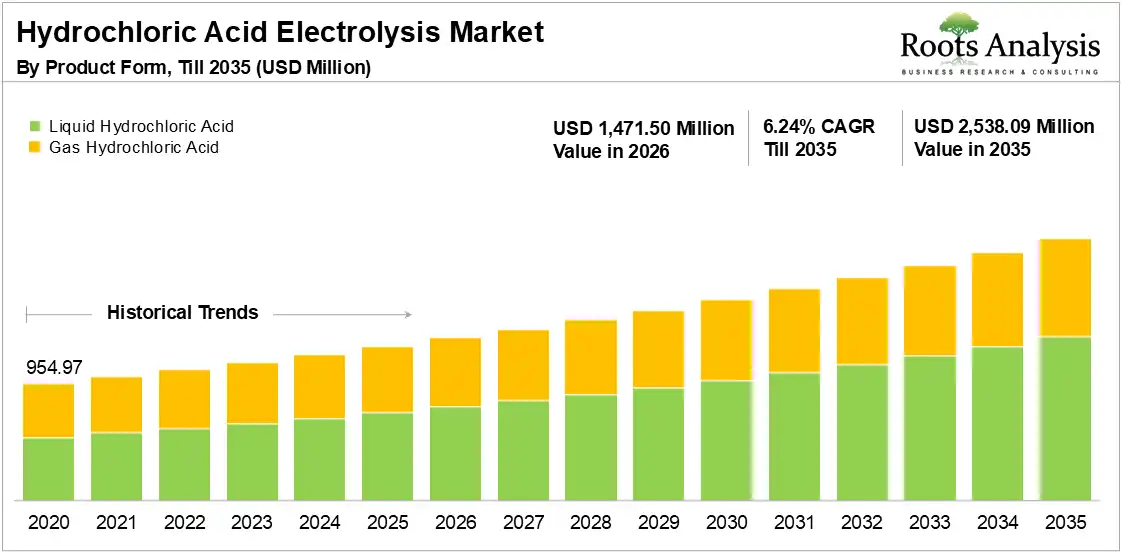
The global hydrochloric acid electrolysis market, valued at USD 1,387.21 million in 2025, is projected to reach USD 1,471.50 million in 2026 and USD 2,538.09 million by 2035, with a 6.24% CAGR during the forecast period 2026 to 2035.
See What’s in the Full Report - Request Your Complimentary Insights!
Key Takeaways
- In terms of type of technology, the membrane technology sub-segment secures the highest overall revenue share of the global market.
- In terms of application, PVC production & chlorination sub-segment holds the largest share of hydrochloric acid electrolysis market.
- In terms of leading region, Asia-Pacific holds the largest share of the market.
- Key market drivers are the increasing integration of hydrochloric acid electrolysis in industrial processes.
Market Overview
Hydrochloric acid electrolysis is defined as an electrochemical process that involves the decomposition of hydrochloric acid into its constituent gases, hydrogen and chlorine, through the application of electrical energy. The process of hydrochloric acid electrolysis for chlorine and hydrogen production requires specific operating conditions, including suitable electrode materials and controlled flow rates, to achieve optimal efficiency in the electrolysis of aqueous hydrochloric acid solutions.
The applications of hydrochloric acid electrolysis are varied and pivotal across several industrial sectors. Primarily, hydrogen and chlorine production via electrolysis are essential in the manufacture of chemical intermediates, polyvinyl chloride (PVC), pharmaceuticals, and food additives. One of the critical uses of chlorine generated via electrolysis is in water treatment for disinfection and purification, which is increasingly vital due to urbanization and growing concerns about water scarcity.
The growth of the hydrochloric acid electrolysis market is driven by multiple factors rooted in both industrial demand and technological progress. The expanding need for chlorine in various industries such as chemicals, plastics, and pharmaceuticals fuels electrochemical hydrochloric acid HCl processing market demand. Concurrently, environmental regulations and sustainability concerns encourage the adoption of electrolysis technologies to reduce reliance on raw materials and minimize emissions. Innovations aimed at improving energy efficiency in HCl electrolysis, such as membrane cell technologies, enhanced HCl electrolysis cell design, and oxygen-depolarized cathodes also lower operational costs and environmental impact, accelerating market expansion.
Recent Developments
- In June 2025, thyssenkrupp Nucera bagged a contract from Chemical Marketing and Distribution Company (CMDC) for expansion phase of its chlor-alkali plant in Jubail Industrial City.
Market Dynamics
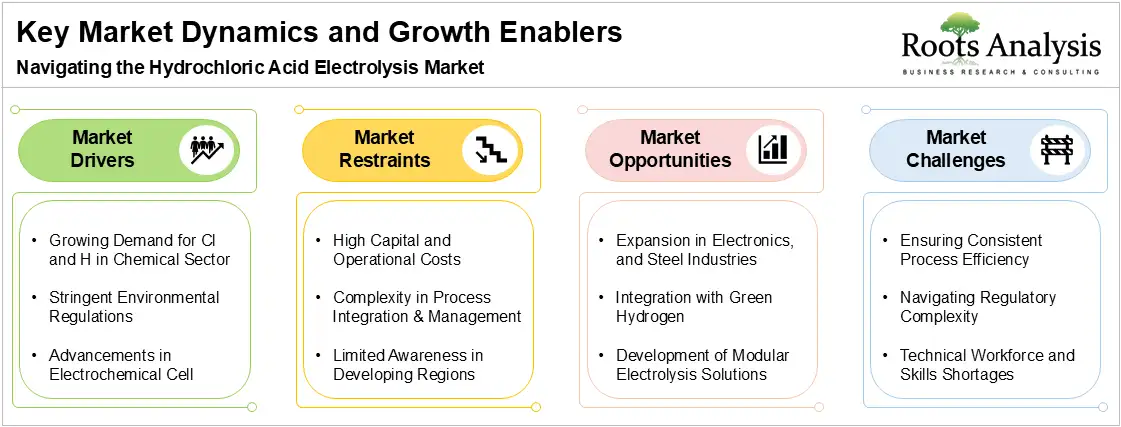
The industry is set to witness a lucrative growth phase, with the hydrochloric acid electrolysis market shaped by a dynamic interplay of drivers, restraints, opportunities, and challenges that will influence its trajectory in the coming years.
Market Segmentation
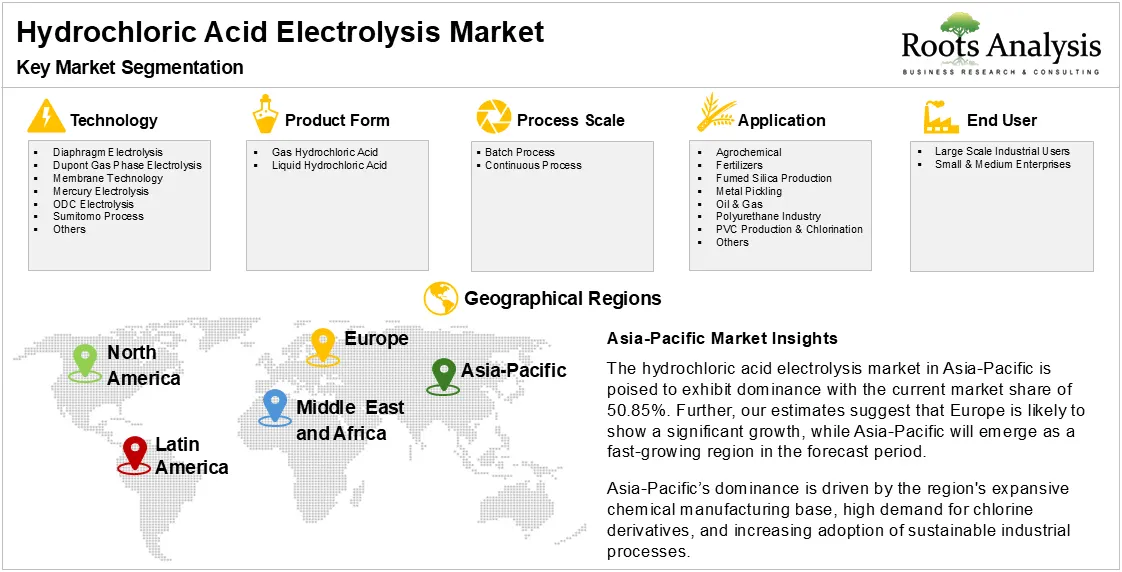
The hydrochloric acid electrolysis market report presents an in-depth analysis of the various companies that are involved in offering electrochemical purification processes for hydrochloric acid, across different segments, as in the figure below:
Market Share Insights
Membrane Technology Sub-Segment to Dominate the Hydrochloric Acid Electrolysis Industry
As per our industry analysis, the membrane technology sub-segment is expected to hold the largest share within the HCl electrolysis technology market. Membrane electrolysis leads due to its high process efficiency, environmentally friendly characteristics, and compliance with evolving regulatory standards, especially those phasing out mercury-based methods.
This technology uses ion-exchange membranes that deliver high-purity chlorine and hydrogen, makes energy efficiency improvements in hydrochloric acid electrolysis systems, and provide enhanced operational safety. The rapid adoption of membrane cells, particularly in Asia-Pacific and Europe, is reinforced by regulatory pressures and the chemical industry's push for sustainable, circular manufacturing processes.
PVC Production & Chlorination to Gain the Highest Market Share for Application Segment
The market estimates suggest that PVC production & chlorination is the dominating application sub-segment for hydrochloric acid electrolysis. This is because the vinyl chloride monomer and polyvinyl chloride industries generate significant volumes of by-product hydrochloric acid which requires recycling. These operations are closely linked to chlorine availability, which can be efficiently produced by using hydrochloric acid as feedstock for chlorine production. The demand for circular processes and raw material recycling is especially high in this sector.
The fastest-growing segment is fumed silica production. With increasing demand for high-performance and specialty materials in electronics, automotive, and construction, fumed silica manufacturing relies heavily on a consistent supply of high-purity hydrogen chloride and chlorine produced through advanced electrolysis methods.
Have Questions? Let’s Get Them Answered.
Regional Forecast Estimates: Europe to Gain the Fastest Growth, Fueled by Stringent Environmental Regulations
Hydrochloric acid electrolysis market forecast suggests that Europe is expected to witness the fastest growth during the forecast period. This growth is primarily driven by stringent environmental regulations favoring mercury-free and sustainable chlorine production technologies, increased investments in hydrochloric acid recycling market and circular economy initiatives, and strong governmental support for green industrial processes. European countries are rapidly adopting advanced electrolysis technologies to improve efficiency and reduce emissions, making it the region with the most accelerated market expansion.
Which are the Top Players in Hydrochloric Acid Electrolysis Market?
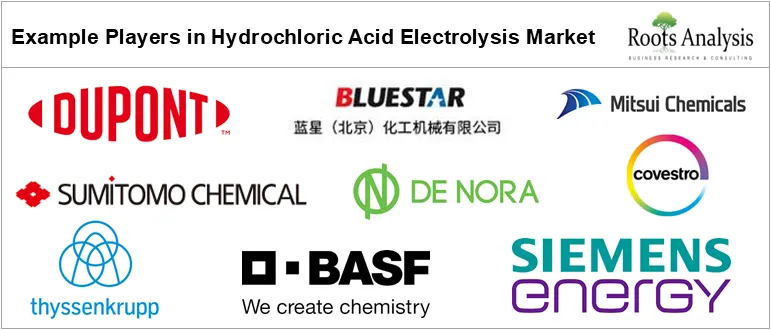
Examples of leading hydrochloric acid electrolysis manufacturers (which have also been captured in this market report, arranged in alphabetical order) include Bluestar Chemical Machinery, Covestro, DuPont, Industrie De Nora, Mitsui Chemicals, Sumitomo Chemical, and thyssenkrupp.
What Strategies are the Companies Using to Gain Hydrochloric Acid Electrolysis Market Share?
The competitive landscape of the hydrochloric acid electrolysis market is dominated by a few key players with strong technological capabilities and global presence. Presently, thyssenkrupp Nucera leads with its advanced oxygen depolarized cathode technology and large-scale plant engineering expertise. Industrie De Nora is another major player, known for its innovative solutions based on the use of membrane technology in HCl electrolysis, and global operational footprint.
Covestro contributes significantly with its proprietary electrolysis technology integrated into its chemical production network, focusing on efficiency and sustainability. Bluestar Chemical Machinery completes the group by offering cost-effective industrial hydrochloric acid electrolysis systems with a strong position in the Asian market. These companies drive industry advancements through technology development, strategic collaborations, and expansion in emerging regions, shaping the global market trajectory.
Pay Only for What You Need – The Best Way to Optimize
What are the Regulatory Standards for Hydrochloric Acid Electrolysis Operations?
- Compliance with environmental regulations such as the Minamata Convention on Mercury, which mandates phasing out mercury-based electrolysis and promotes mercury-free, membrane-based technologies to reduce environmental impact with zero-waste HCl treatment solutions and ensure safer processes.
- Adherence to regional chemical safety and emissions standards like REACH in Europe, which enforces strict controls on chemical substances and promotes sustainable, circular economy practices in hydrochloric acid production.
- Implementation of process safety management (PSM) guidelines, including hydrochloric acid management, monitoring and control of hazardous gases (chlorine, hydrogen), emergency response planning, and strict operational protocols mandated by occupational safety and health administrations (for instance, OSHA in the US).
What is the Cost Analysis of Hydrochloric Acid Electrolysis Versus Traditional Methods?
Hydrochloric acid electrolysis versus traditional methods reveals several key points. While HCl electrolysis requires a higher initial capital investment due to specialized corrosion-resistant materials, advancements in electrode material for hydrochloric acid electrolysis, membranes, and safety infrastructure, it offers long-term savings. This is achieved by enabling chlorine and hydrogen recovery, reducing raw material costs and waste management expenses. Traditional mercury-based or salt electrolysis methods may have lower upfront costs but pose greater environmental risks and regulatory penalties, making them less sustainable.
What are the Market Trends in Hydrochloric Acid Electrolysis for Chemical Recycling?
The hydrochloric acid electrolysis market for chemical recycling is experiencing steady growth driven by increasing demand for sustainable chemical processes and circular economy practices. Key trends for hydrochloric acid utilization in chemical industry include the adoption of membrane-based electrolysis technologies that improve efficiency and lower environmental impact by recovering chlorine and hydrogen after the conversion of hydrochloric acid to chlorine. Integration with renewable energy sources and digital automation, such as IoT and AI-enabled process controls, enhances operational efficiency and safety of HCl recycling by electrolysis.
What are the Safety Protocols in Hydrochloric Acid Electrolysis Plants?
- Gas Hazard Management: Hydrogen and chlorine gases produced are highly flammable and toxic. Implement continuous gas detection systems (H2 and Cl2 sensors), ensure proper ventilation, and maintain emergency purging systems with nitrogen to prevent accidental ignition and leaks.
- Electrical Safety: Follow strict lockout / tagout procedures during maintenance, ensure all electrical components are properly grounded and insulated, and have qualified personnel perform electrical tasks to avoid shocks or short circuits in the high-voltage electrolysis environment.
- Chemical Handling and PPE: Use appropriate protective gear such as acid-resistant gloves, goggles, and protective clothing to prevent chemical burns. Regularly inspect and maintain storage, piping, and handling equipment to avoid leaks and corrosion damage.

Hydrochloric Acid Electrolysis Market: Scope of the Report
| Key Report Attributes | Details | |
| Historical Trend | Since 2020 | |
| Forecast Period | Till 2035 | |
| Market Size in 2026 | $ 1,471.50 Million | |
| Market Size in 2035 | $ 2,538.09 Million | |
| CAGR (Till 2035) | 6.24% | |
| Segments Covered |
|
|
Unlock Deeper Insights – Schedule Your Personalized Workshop Today!
Market Segments
Based on the research, we have segmented the hydrochloric acid electrolysis market into technology, product form, application, end user, geographical regions, and leading players.
By Technology
- Diaphragm Electrolysis
- Dupont Gas Phase Electrolysis
- Membrane Technology
- Mercury Electrolysis
- ODC Electrolysis
- Sumitomo Process
- Others
By Product Form
- Liquid Hydrochloric Acid
- Gas Hydrochloric Acid
By Process Scale
- Batch Process
- Continuous Process
By Application
- Agrochemical
- Fertilizers
- Fumed Silica Production
- Metal Pickling
- Oil & Gas
- Polyurethane Industry
- PVC Production & Chlorination
- Others
By End User
- Large Scale Industrial Users
- Small & Medium Enterprises (SMEs)
By Geographical Regions
- North America
- US
- Canada
- Mexico
- Rest of North America
- Europe
- Austria
- Belgium
- Denmark
- France
- Germany
- Ireland
- Italy
- Netherlands
- Norway
- Russia
- Spain
- Sweden
- Switzerland
- UK
- Rest of Europe
- Asia-Pacific
- Australia
- China
- India
- Japan
- New-Zealand
- Singapore
- South Korea
- Rest of Asia-Pacific
- Latin America
- Brazil
- Chile
- Colombia
- Venezuela
- Rest of Latin America
- Middle East and Africa (MEA)
- Egypt
- Iran
- Iraq
- Israel
- Kuwait
- Saudi Arabia
- UAE
- Rest of MEA
Want Information on Specific Region / Segment?


