


 Download Free Sample
 Buy Now
Market Size
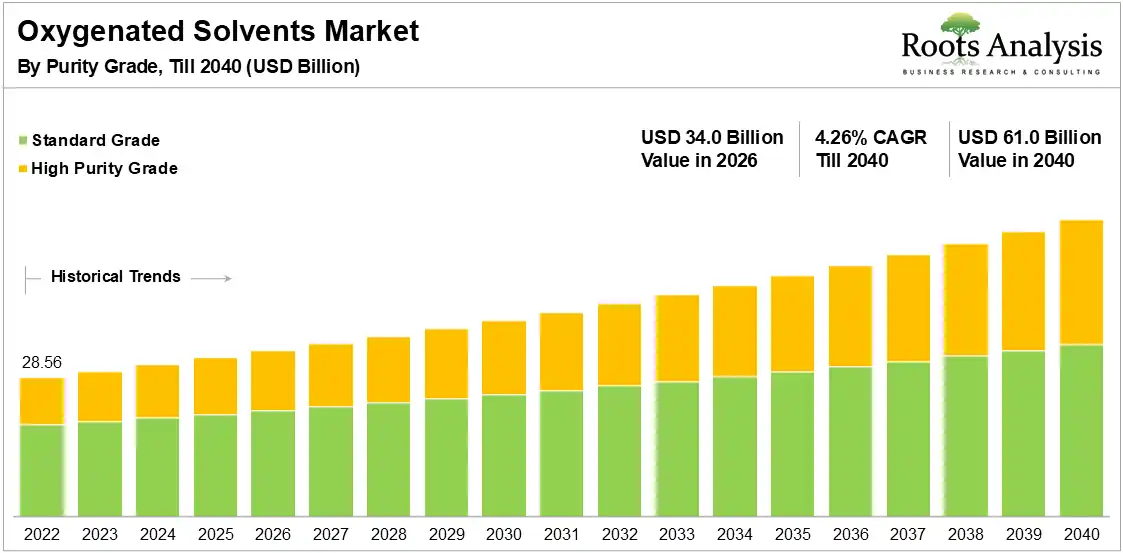
The global oxygenated solvents market is projected to reach USD 34.0 billion in 2026 and USD 61.0 billion by 2040, representing a CAGR of 4.26% during the forecast period 2026 to 2040.
See What’s in the Full Report - Request Your Complimentary Insights!
Market Overview
The oxygenated solvents sector is rapidly becoming a cornerstone of the green transformation within the chemical industry, driven by the need for low-toxicity, biodegradable, and low-VOC (volatile organic compound) alternatives to traditional hydrocarbon solvents. Distinguished by their oxygen-rich molecular structure, these solvents (including ketones, esters, glycol ethers, and alcohols) also offer high solvency power and superior performance compared to traditional hydrocarbons. Consequently, revenue is increasingly concentrated in high-precision sectors, specifically pharmaceuticals, paints and coatings, and printing inks, where performance safety is paramount.
Current oxygenated solvents industry trends highlight a critical inflection point driven by regulatory compliance. Stringent mandates, such as the European Union’s REACH and the US EPA’s VOC emission standards, are forcing the reformulation of core chemical dependencies. This shift serves as the primary catalyst for growth in the construction and automotive industries, where high-performance, low-emission formulations are now essential for adhesives, protective layers, and refinishing applications.
Long-term growth is defined by the transition toward a circular economy and bio-based oxygenated solvents. Innovation is aggressively pivoting toward renewable feedstocks to decouple production from petrochemicals. With major manufacturers currently commercializing green solvents, the sector is maturing into a landscape that harmonizes technical efficacy with strict sustainability goals.
Market Report: Key Takeaways
- Market Giants: Major players like BAS, Dow, and Exxon Mobil are consolidating their dominance by pivoting toward mass-balance and circular formulations. Notably, their aggressive shift towards green solvents has created high-growth opportunities for early adopters across various end use sectors, such as paint & coatings, pharmaceuticals and personal care.
- Startup Ecosystem: Startups like Solidec, OCOchem, and Bioeutectics are gaining significant traction by deploying modular production and carbon-capture technologies. These players are pioneering decentralized, on demand production; thereby reducing the logistic risks inherent in the traditional chemical supply chain.
- Bio-based Oxygenated Solvents Market Trends: The market is undergoing a structural transformation as petrochemical giants divest carbon-heavy legacy assets to acquire bio-based capabilities. European firms currently command premium valuations by capitalizing on pre-secured REACH certification and secured bio-feedstock supply chains to offer immediate sustainability solutions to a transforming industry.
- Oxygenated Solvents Application in Paints & Coatings Sector: The application of oxygenated solvents in the paints and coatings sector is witnessing a significant volume hike. This is primarily attributed to massive construction pipelines in the GCC and Asia-Pacific regions. Rapid urbanization and large-scale residential projects in these territories have created a direct surge in demand for high-performance architectural and industrial coatings.
- Investments and Funding Trends: Capital is shifting from general green-tech toward climate-tech projects that demonstrate unit-economic parity and clear offtake visibility. A primary example is LyondellBasell’s recent investment in renewable energy-powered solvent facilities, which aligns production with decarbonization goals. This trend highlights a broader investor demand for sustainable chemistry that balances environmental impact with long-term financial viability.
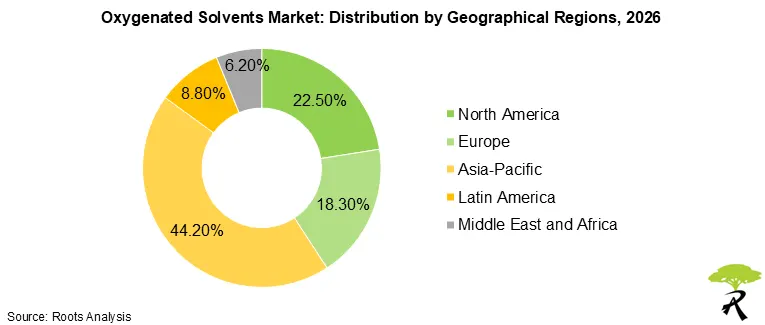
- Regional Analysis: Asia-Pacific region dominates as the primary volume engine, holding 44.20% of global share in early 2026. Meanwhile, North America and Europe are leveraging strict VOC regulations and bio-based innovation to capture higher market value.
Pay Only for What You Need – The Best Way to Optimize
Recent Industry Developments
- February 2026: Visolis secured USD 2.86 million fund from the US Department of War under the Distributed Bioindustrial Manufacturing Program (DBIMP). Company will use these funds to scale up the domestic products, including fuels, non-toxic solvent technology, and non-toxic solvents.
- December 2025: GFS Chemicals launched its Veritas Ultimate C-Headspace solvent line that covers broad range of solvents, including organic solvents, designed to eliminate interference, reduce volatile impurities, and produce consistent results.
- November 2025: Mitsubishi Gas Chemical Company signed a sales and purchase agreement with Transition Industries LLC to offtake ultra-low carbon methanol.
Market Dynamics
Key Market Drivers
- Expansion of High-Performance Industrial Coatings and Resins: Oxygenated solvents are fundamental to the formulation of high-solids and high-performance industrial coatings, particularly within the automotive, marine, and aerospace sectors. As industrial infrastructure projects require enhanced durability and superior corrosion resistance, the market sees a sustained reliance on oxygenated solvents. These chemistries remain essential in demanding environments where water-based alternatives often fail to meet rigorous performance specifications and technical standards.
- Growth in Electronics and Semiconductor Manufacturing: The rapid scaling of the semiconductor industry underpinned by 5G infrastructure, artificial intelligence, and sophisticated consumer electronics is driving the need for ultra-high-purity oxygenated solvents. These specialized glycol ethers and esters are vital components in photoresist formulations and precision cleaning agents used during wafer fabrication. In this high-stakes environment, the precise evaporation rates and purity levels of oxygenates are indispensable for ensuring the reliability of micro-components.
- Consumer Products and Personal Care Formulation Shifts: The household cleaning and personal care sectors are progressively integrating oxygenated solvents to capitalize on their high solvency power, low odor, and compatibility with aqueous systems. As brand owners develop multifunctional, high-efficacy products like advanced degreasers and long-lasting fragrances, specific oxygenates facilitate product stability and sensory appeal. This trend is reinforced by the need to balance high cleaning performance with evolving consumer safety and environmental expectations.
Market Restraints
- Petrochemical Feedstock Price Volatility: Based on our recent oxygenated solvents market analysis, the production cost for oxygenated solvents is inseparably linked to upstream petrochemical feedstocks, including ethylene, propylene, and natural gas. Ongoing price instability in global crude oil and gas markets leads to direct fluctuations in the cost of key chemical intermediates. This inherent margin volatility complicates procurement strategies and long-term financial planning for end users, potentially curbing consistent market investment.
- Regulatory Scrutiny on VOC Emissions and Air Quality Standards: Despite being safer than the traditional solvents, many oxygenated solvents are still categorized VOCs, contributing to atmospheric ozone formation. As the US EPA and European authorities continue to tighten emission caps for industrial and consumer products, these atmospheric quality standards create a competitive disadvantage for solvent-borne systems compared to emerging zero-VOC or waterborne technologies.
- Competition from Water-Based and Alternative Bio-Based Solvents: Water-based formulations or alternative bio-based solvents are well underway in the architectural coatings, adhesives, and printing ink segments, driven by corporate sustainability targets and environmental legislation. Concurrently, the rise of bio-based solvents derived from renewable feedstocks such as terpenes and bio-ethanol derivatives presents a threat to traditional petrochemical oxygenates. These alternatives appeal to manufacturers prioritizing carbon footprint reduction and renewable material sourcing.
Get an Instant Quote in 10 Minutes. Lowest Price Guaranteed
Market Share Insights
Oxygenated Solvents Market Size by Application Area
- Based on the oxygenated solvents market report, the paints & coatings application area leads the market with a share of 42.5% in 2026. However, this segment is projected to experience a share loss by 2040 with a modest CAGR of 3.5%. The decline of oxygenated solvents applications in paints & coatings is primarily driven by intensifying VOC regulations and a fundamental industry pivot toward waterborne and powder-based systems in mature housing markets.
- In contrast, the pharmaceuticals sub-segment is projected to expand at a CAGR of 5.8% to reach a 22.4% market share by 2040. This trajectory is supported by the indispensable need for high-purity reaction media in biologics and localized drug manufacturing, a trend reinforced by BASF’s 2025 expansion of specialty alcohol lines to target the resilient Asia-Pacific pharmaceutical sector.
- The personal care application area is poised for significant gains during the forecast period, fueled by premiumization and the demand for glycol ethers in skincare.
Asia-Pacific Dominates the Oxygenated Solvents Industry
Based on our recent oxygenated solvents market research, Asia-Pacific region currently dominates the global industry, accounting for 44.20% share. This dominance is fueled by aggressive urbanization driving demand for high-performance coatings and automotive materials. Further, massive investments in infrastructure, automotive manufacturing, and paints and coatings production (across countries like India and China), are likely to propel market growth in Asia-Pacific.
- China: Guided by the 14th Five-Year Plan, China is prioritizing self-reliance and decarbonization. Capital is surging into polyols and bio-refineries to insulate domestic supply chains from global trade volatility and ensure sustainable growth.
- India: The fastest-growing regional market. PCPIR zones are attracting massive FDI to localize solvent production, directly supporting the nation's booming pharmaceutical and agrochemical export hubs.
Oxygenated Solvents Market Share in North America
North America currently accounts for 22.50% oxygenated solvents market share and is poised to grow at a steady CAGR of 3.10% through 2040. While regulatory pressures limit volume expansion in this mature market, the region is strategically pivoting toward high-value specialization rather than commodity growth. Investment is now concentrated in two federally supported pillars:
- Semiconductor-Grade Purity: The CHIPS Act is catalyzing domestic demand for ultra-high-purity oxygenated solvents essential for wafer fabrication, aiming to reshore critical supply chains.
- Bio-Refining Hubs: Leveraging IRA 45Z tax credits, the Midwest "Ethanol Belt" is transforming into a production epicenter for second-generation bio-solvents, securing low-carbon, domestic feedstocks.
Want Information on Specific Region / Segment?
Market Ecosystem Insights
Oxygenated Solvents Competitive Landscape
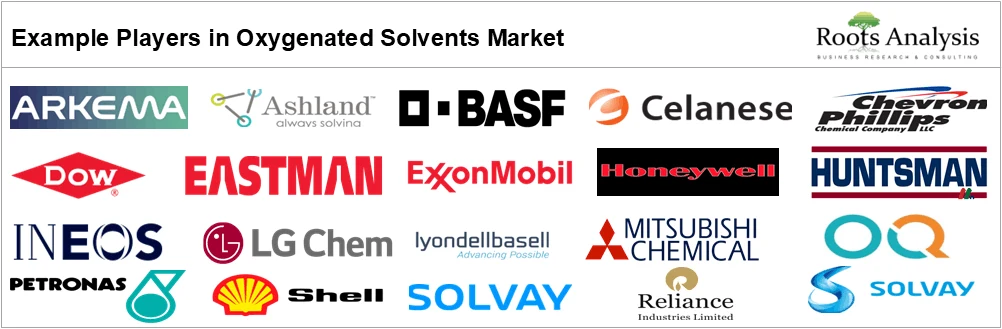
The competitive landscape is moderately concentrated yet fragmented, with players like BASF, Dow, Cargill, ADM, and Solvay aggressively pursuing vertical integration and cross-border joint ventures to secure feedstock dominance. Further, it is worth mentioning that the established giants are shedding commodity assets, while startups are pioneering the decentralized production of oxygenated molecules. Some of the strategies leveraged by key companies in the oxygenated solvents market to maintain competitive edge have been outlined below:
- Dow: Strengthening upstream integration, Dow’s October 2025 renewal with MEGlobal secures a cost-advantaged ethylene stream for its glycol ethers portfolio, insulating it from market volatility. Concurrently, the company is operationalizing massive renewable power agreements in Brazil and the US to certify its solvents as low-carbon, directly catering to the rising demand for Scope 3 emission reductions among industrial clients.
- Cargill: Aggressively diversifying into high-margin bio-industrials, Cargill is pivoting beyond agricultural commodities to capture the premium clean beauty sector. The launch of its novel bio-limonene derivative signifies a strategic entry into the personal care and fragrance markets, utilizing proprietary fermentation tech to offer high-performance, renewable alternatives to traditional petrochemical solvents.
Funding and Investment Analysis:
According to the oxygenated solvents market growth outlook, investment opportunities concentrate in renewable feedstock processing, low-VOC formulation development, and leveraging AI.
- AI Dominance: AI-related chemical and tech startups captured over 50% of the total venture capital (VC) investments in 2025. Notably, investors focused on funding companies like Cusp AI, which use AI for materials and solvent innovation.
- Late-Stage Preference: Based on the oxygenated solvents market report, late-stage VC emerged as the best opportunity as investors look for businesses that have moved beyond the laboratory scale into a full-scale industrial deployment. For instance, Solidec raised USD 2 million to scale modular chemical production system that is designed to produce hydrogen peroxide and other oxygenated intermediates on-site by using water, air, and electricity.
Oxygenated Solvents Market Opportunities
- Development of Bio-Based Oxygenated Solvents: Scaling the production of bio-based oxygenated solvents represents a major growth avenue as industries strive to reduce Scope 3 emissions. Solvents derived from biomass, sugars, or glycerine offer a strategic advantage for companies aiming to enhance the sustainability profiles of cosmetics, food packaging, and household goods. Investing in the R&D of renewable esters and glycols provides a path for product differentiation in a market increasingly sensitive to lifecycle environmental impacts.
- High-Value Solvents for Advanced Battery Technology: The global pivot to electric vehicles and stationary energy storage has created a high-margin opportunity for ultra-high-purity oxygenated solvents. Specific esters, such as dimethyl carbonate (DMC) and ethylene carbonate (EC), are critical to the production of lithium-ion battery electrolytes and separators. Manufacturers capable of meeting the stringent purity and quality control standards of the battery supply chain can capture a premium position in this high-growth technology segment.
- Solvent Recycling and Circular Economy Initiatives: Advancements in solvent recovery and purification technologies offer industrial users a dual benefit of cost containment and environmental stewardship. By implementing closed-loop systems to recapture high-value oxygenates from electronics fabrication or large-scale printing, companies can insulate themselves from feedstock price volatility. This move toward circularity aligns with broader ESG mandates and improves the overall efficiency of the chemical value chain.
Your Business is Unique – Why Shouldn’t Your Report Be?
Oxygenated Solvents Market: Scope of the Report
| Key Report Attributes | Details | |
| Historical Trend | Since 2022 | |
| Forecast Period | Till 2040 | |
| Market Size 2026 | $ 34.0 Billion | |
| Market Size 2040 | $ 61.0 Billion | |
| CAGR (Till 2040) | 4.26% | |
| Segments Covered |
|
|
Market Segmentation
Based on our research, we have segmented the oxygenated solvents market into type of solvent, type of source, purity grade, application area, geographical regions, and key players.
Market Share by Type of Solvent
- Alcohol
- Ketones
- Esters
- Glycol Ethers
Market Share by Type of Source
- Bio-Green Source
- Conventional / Petroleum-based Source
Market Share by Purity Grade
- Standard Grade
- High Purity Grade
Market Share by Application Area
- Paints & Coatings
- Adhesives
- Pharmaceuticals
- Industrial Cleaners
- Personal Care
- Agricultural Chemicals
Market Share by Geographical Regions
- North America
- US
- Canada
- Mexico
- Rest of North America
- Europe
- Austria
- Belgium
- Denmark
- France
- Germany
- Ireland
- Italy
- Netherlands
- Norway
- Russia
- Spain
- Sweden
- Switzerland
- UK
- Rest of Europe
- Asia-Pacific
- Australia
- China
- India
- Japan
- New Zealand
- Singapore
- South Korea
- Rest of Asia-Pacific
- Latin America
- Brazil
- Chile
- Colombia
- Venezuela
- Rest of Latin America
- Middle East and Africa (MEA)
- Egypt
- Iran
- Iraq
- Israel
- Kuwait
- Saudi Arabia
- UAE
- Rest of MEA


