Acute Ischemic Stroke Therapeutics Market by Type of Molecule (Biologics and Small Molecules), Drug Class (Thrombolytics, Neuroprotectants, Antithrombotics, and Others), Route of Administration (Intravenous Route, Oral Route, and Other Routes) and Geographical Regions (North America, Europe, Asia-Pacific, Latin America, and the Middle East and North Africa) – Trends and Forecast 2026-2035
Market Outlook
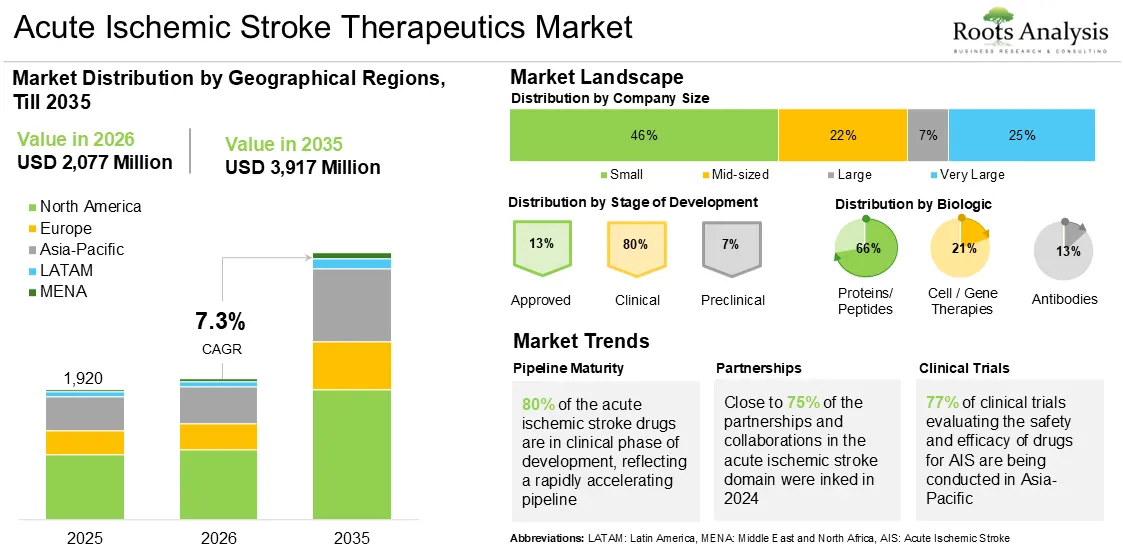
The global acute ischemic stroke therapeutics market, valued at USD 1,920 million in 2025, is projected to reach USD 2,077 million in 2026 and USD 3,917 million by 2035, representing a CAGR of 7.3% during the forecast period from 2026 to 2035.
See What’s in the Full Report – Request Your Complimentary Insights!
Market Report: Key Takeaways
Market Size & Trends
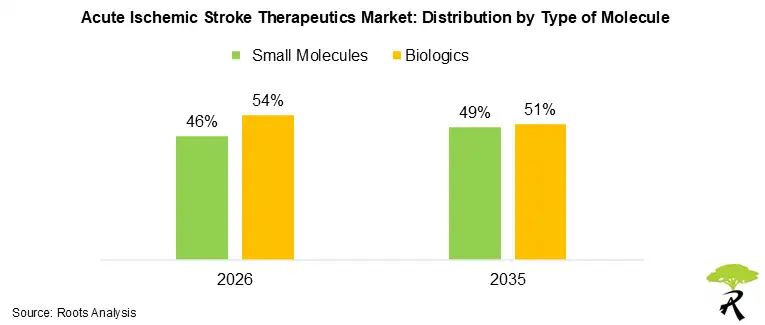
- In terms of the type of molecule, biologics hold the highest share (nearly 55%) of the current market.
- By drug class, thrombolytics dominate the current acute ischemic stroke therapeutics market.
- Based on the route of administration, intravenous route captures the largest share of the current market; this trend is unlikely to change in the future.
- In terms of geographical regions, North America currently holds the highest market share (around 50%).
Key Market Statistics
- Market Size in 2026: $2,077 Million
- Estimated Market Size in 2035: $3,917 Million
- CAGR (2026-2035): 7.3%
- North America: Largest market in 2026
- Asia-Pacific: Fastest growing region
Market Introduction
Stroke represents one of the leading causes of death and long-term disability worldwide, with approximately 11.9 million new cases reported annually. Of these, nearly 85% are ischemic in nature, underscoring the urgent need for effective, fast-acting, and widely accessible therapeutic interventions.
Acute ischemic stroke (AIS) is defined as a neurological condition caused by the sudden blockage of blood flow to the brain, leading to oxygen deprivation and the development of an infarct (an area of tissue damage). The blockage may arise from thrombosis, embolism or reduced cerebral perfusion, resulting in oxygen deprivation and tissue injury. Effective clinical management of stroke relies on rapid diagnosis via CT scan or MRI. Once diagnosed, the primary goal is to reduce infarct size and quickly restore blood flow. Current therapeutic strategies like intravenous thrombolysis and endovascular thrombectomy focus on revascularization within limited time windows (typically 4.5 hours for thrombolysis with alteplase or tenecteplase, and up to 24 hours for thrombectomy in select large-vessel occlusion cases).
In response to this substantial global burden, the past few decades have witnessed remarkable progress in the fields of neuroscience, neuroimaging, and neurotechnology, collectively transforming the landscape of acute ischemic stroke management. The clinical adoption of reperfusion therapies, such as intravenous thrombolysis (IVT) and endovascular thrombectomy (EVT), marks a major milestone in this therapeutic evolution. These therapies have demonstrated therapeutic benefits in reducing post-stroke disability and improving functional outcomes by restoring blood to the affected brain tissue. Despite the clinical benefits offered by reperfusion therapies, their broader applicability remains constrained by stringent patient eligibility criteria and a narrow treatment window. These therapies must be administered within 3 to 4.5 hours of symptom onset, which significantly limits their use. To address these constraints in acute ischemic stroke management, researchers are developing neuroprotective and neuroregenerative drugs.
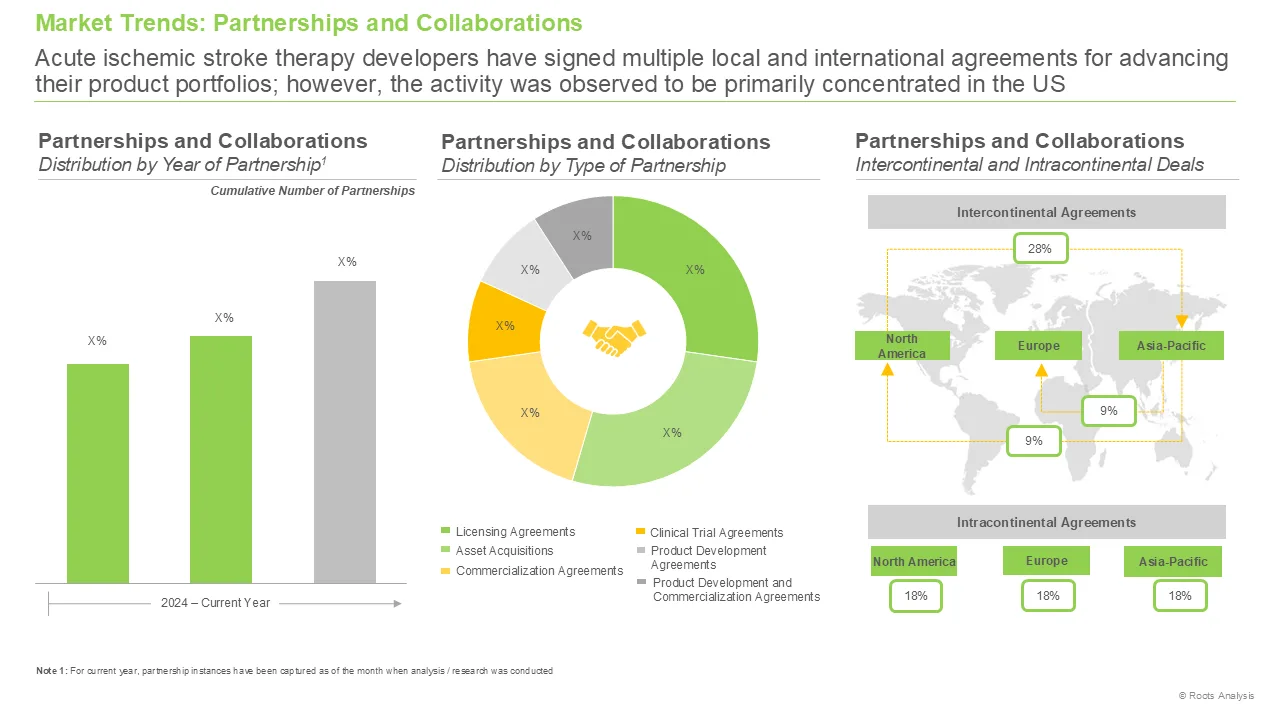
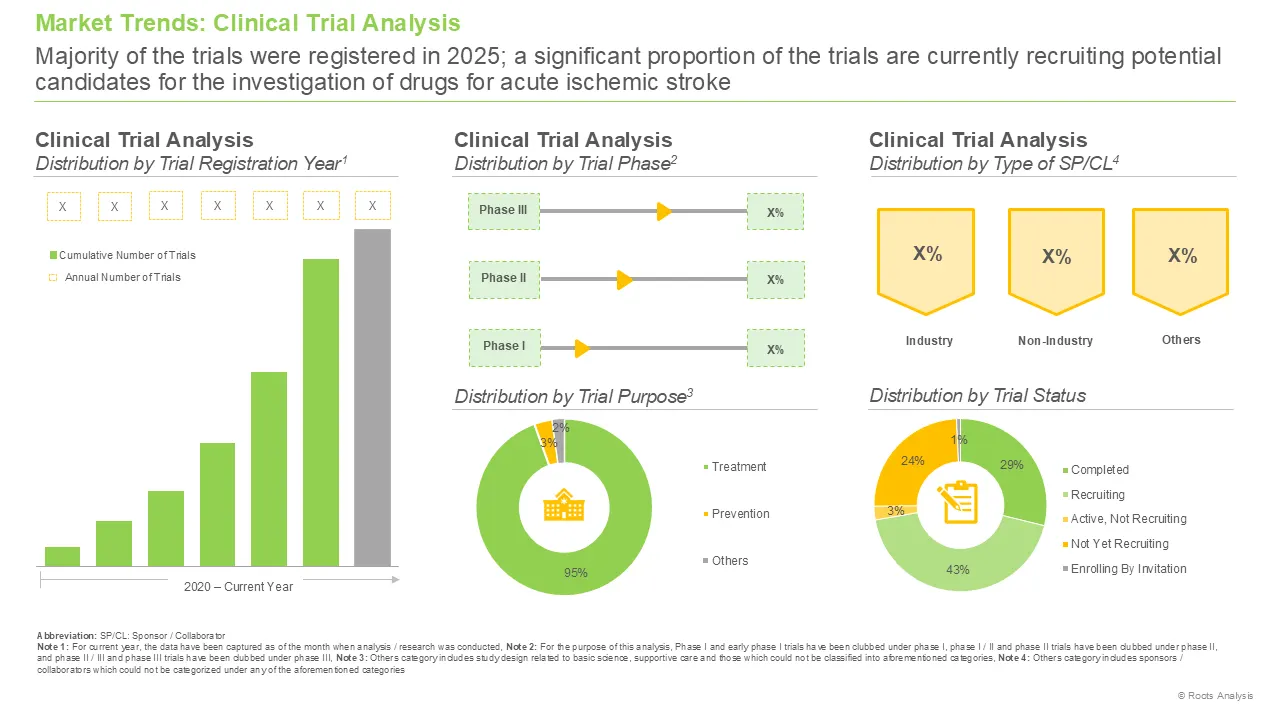
In this context, companies have also inked a number of collaborations and enhanced their clinical activity to progress research and development of acute ischemic stroke drugs. As more candidates advance toward late-stage development, the partnership and collaboration activity is likely to increase further, thereby accelerating market growth in the coming years.
Market Segmentation
Based on the research, we have segmented the Acute Ischemic Stroke Therapeutics Market by type of molecule, drug class, route of administration, and geography.
- By Type of Molecule: Biologics and Small Molecules
- By Drug Class: Thrombolytics, Neuroprotectants, Antithrombotics, and Others
- By Route of Administration: Intravenous Route, Oral Route, and Other Routes
- By Geography: North America (US and Canada), Europe (Germany, UK, France, Italy, Spain, and Rest of Europe), Asia-Pacific (Japan, China, South Korea, India, and Rest of Asia-Pacific), Latin America (Brazil, Argentina, and Rest of Latin America), and Middle East and North Africa (Saudi Arabia, UAE, Iran, and Rest of Middle East and North Africa)
Your Business is Unique – Why Shouldn’t Your Report Be?
Acute Ischemic Stroke Therapeutics Market Key Insights
What are the Key Drivers for Acute Ischemic Stroke Therapeutics Market Growth?
- Rising Global Acute Ischemic Stroke Incidence: Approximately 13.7 million new strokes occur globally, with ischemic stroke accounting for 63.9% of incident stroke cases worldwide strategies. This rise can be attributed to a growing aging population and increasing lifestyle-related risk factors, such as hypertension, diabetes, obesity, and smoking. These factors have accelerated research and innovation in reperfusion therapies, with the goal of improving clinical outcomes.
- Government Initiatives and Funding: Government agencies and institutions are pursuing partnerships with leading organizations like the World Stroke Organization to improve acute ischemic stroke care systems. These global initiatives aim to raise awareness, strengthen infrastructure, and enable access to reperfusion therapies by establishing dedicated stroke units.
What are the Main Challenges for Market Growth?
- Treatment Delay Risks and Adverse Effects: Despite ongoing advancements, delays in initiating mechanical thrombectomy significantly elevate the risk of major bleeding in acute ischemic stroke patients. Additionally, acute ischemic stroke drugs are known to be associated with several adverse side effects, such as cerebral edema and intracranial hemorrhage, which act as challenges in their widespread adoption.
- Stringent Regulatory Approvals: The acute ischemic stroke therapeutics market requires high-efficacy therapies that can restore cerebral blood flow and lower the risk of symptomatic intracranial hemorrhage within a very narrow therapeutic window. As a result, developing and approving new acute ischemic stroke drugs involves complex multi-center clinical trials, rigorous safety / efficacy demonstrations, and extended regulatory reviews by FDA or EMA. These stringent requirements slow development timelines and increase R&D costs, thereby delaying drug approvals and patient access to innovative therapies.
What are the Megatrends in Acute Ischemic Stroke Therapeutics Market?
- Ongoing Technological Advancements for Treatment of Acute Ischemic Stroke: The companies engaged in this domain have been extensively working towards the incorporation of AI-based imaging systems, allowing the automated assessment of damaged brain tissue. Such innovations enable faster, more efficient, and improved patient outcomes.
- Expanding Infrastructure Facilities for Acute Ischemic Stroke Diagnosis: The rising incidence of acute ischemic stroke is accelerating healthcare infrastructure expansion, particularly in markets such as India, China, Japan, and South Korea. In this context, India has developed mobile stroke units (MSUs) that have reduced treatment time from approximately 24 hours to nearly 2 hours in rural areas. Similarly, South Korea is actively adopting AI-based neuroimaging to detect large vessel occlusions.
Recent Developments in Acute Ischemic Stroke Therapeutics Market
- In April 2026, Shionogi acquired all rights to edaravone, a drug developed by Mitsubishi Tanabe Pharma for the treatment of acute ischemic stroke. The company paid USD 2.5 billion for acquiring the rights to this drug.
- In March 2026, Boehringer Ingelheim announced a product development agreement with Emfret Analytics for the preclinical development of EMA601, a drug indicated for the treatment of acute ischemic stroke.
- In February 2026, Simcere Pharmaceutical announced the initiation of a Phase I clinical trial to evaluate the safety and pharmacokinetic characteristics of the thrombolytic drug SIM0811 for acute ischemic stroke. It is worth highlighting that in preclinical studies, SIM0811 demonstrated superior thrombolytic efficacy and antioxidant activity compared with other investigational molecules of the same class.
Methodology and Industry Experts Interviews
The findings in this report were developed through a structured methodology combining secondary research, proprietary databases and primary interviews. Secondary research included company disclosures, regulatory databases, clinical-trial registries, peer-reviewed publications, patent records, pricing and reimbursement sources, and relevant market-access information. The resulting assumptions were triangulated against product approvals, pipeline progress, sales trends, formulation mix, regional access conditions and stakeholder interviews.
Mukul Sharma (Professor of Neurology at McMaster University, Hamilton) stated that, “The OCEANIC-STROKE trial tested the oral Factor XIa inhibitor asundexian for secondary stroke prevention in patients who experienced a noncardioembolic ischemic stroke or a high-risk transient ischemic attack (TIA). The purpose of the trial was to assess the potential of asundexian in enhancing stroke protection while minimizing hemorrhagic complications. Unlike conventional anticoagulants, which inhibit Factor Xa or thrombin (targeting both clotting and bleeding-related complications), asundexian selectively targets the FXIa factor within the intrinsic coagulation pathway, presenting a distinct mechanism of action.”
Discussions with multiple stakeholders in this domain influenced the opinions and insights presented in this study. The market report includes transcripts of the following third-party discussions:
- Associate Professor, Very Large Organization, Canada
- Associate Professor, Large Organization, US
- Neurology Professor, Very Large Organization, Canada
- Medical Doctor, Very Large Company, US
- Medical Doctor, Large Company, US
- Medical Doctor, Large Company, China
- Medical Doctor, Large Company, US
- Clinician-Scientist, Large Organization, US
- Stroke Neurologist, Very Large Organization, US
- Assistant Professor of Pharmacology and Neurology, Mid-Sized Organization, Portugal
Pay Only for What You Need – The Best Way to Optimize
Market Share Insights
Amongst Biologics and Small Molecules, Which Segment Holds the Highest Share in the Acute Ischemic Stroke Therapeutics Market?
In 2026, the biologics segment occupies the highest market share (around 55%), driven by the approval of drugs such as alteplase and tenecteplase for thrombolytic treatment. This can be attributed to their proven efficacy and rapid onset of action, as identified in the acute ischemic stroke therapeutics market analysis.
On the other hand, the small molecules segment is likely to witness a higher CAGR (8.09%) during the forecast period. This can be attributed to their low molecular weight and simpler chemical structure. Notably, these properties enable superior blood-brain barrier (BBB) penetration, a wider variety of delivery routes, and longer shelf stability, which are crucial during medical emergencies.
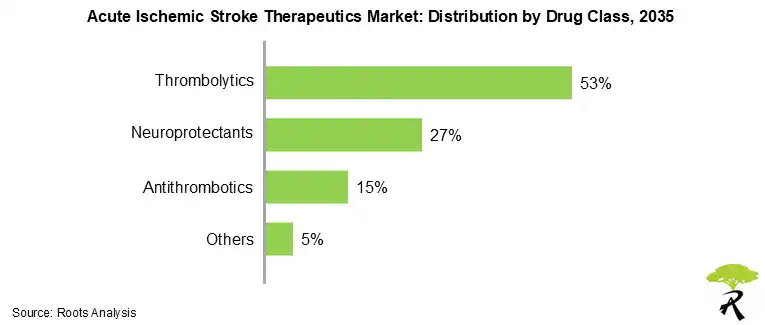
Which Drug Class Accounts for the Largest Share in the Acute Ischemic Stroke Therapeutics Market?
In 2026, the thrombolytics segment is likely to occupy a higher share of the acute ischemic stroke therapeutics market (with a 55% share) and is expected to witness a significant growth rate during the forecast period. This is primarily due to their inherent advantages, including the ability to rapidly dissolve blood clots by activating plasminogen to plasmin, which in turn breaks down the fibrin network obstructing cerebral blood flow. This mechanism of action enables rapid restoration of blood supply to the affected brain tissue, significantly reducing the extent of neurological damage when administered within the therapeutic window of 4.5 hours from symptom onset.
Regional Analysis: Which Regions are Showing the Fastest Growth in Acute Ischemic Stroke Domain?
North America: Dominating the Market by Securing Highest Share
According to our projections, North America is likely to capture a majority (50%) of the overall market share in 2026. This is due to the rising demand in the acute cerebral ischemic stroke drug market in the US and the presence of well-established therapy developers in this region. Additionally, the release of the updated 2026 Acute Ischemic Stroke Guidelines by the American Heart Association/American Stroke Association (AHA/ASA) is expected to support market growth by providing updated recommendations for acute stroke management and potentially influencing treatment adoption and clinical practice across the US. Further, several major acute ischemic stroke therapy developers in the region have expanded their capabilities to address growing treatment needs.
Asia-Pacific: Driving the Future of Market Expansion
In Asia-Pacific, the market is likely to grow at a higher CAGR till 2035, driven by its rapid growth in the healthcare sector. Moreover, the region’s growing patient population further broadens the customer base for pharmaceuticals and healthcare products, accelerating overall market expansion.
Get an Instant Quote in 10 Minutes. Lowest Price Guaranteed
Key Players Profiles in Acute Ischemic Stroke Therapeutics Market Report
The report profiles AstraZeneca, CSPC Pharmaceutical, Genentech, Jiangxi Jemincare, Mitsubishi Tanabe Pharma, NPK PHARMASOFT, Pharmazz, Sanofi, Simcere Pharmaceutical, SuperGene, and Techpool Bio-pharma.
Report Deliverables and Customization
Alongside the core market report, clients receive complimentary Excel data packs covering market landscape analysis, company competitiveness analysis, clinical trial analysis, partnerships and collaborations analysis, and market sizing and opportunity analysis. A complimentary PowerPoint presentation summarizing the full report is also included, and 15% free customization scope is available on request.
Report Authorship
This report was co-authored by Simriti Gupta and Dhriti Gulati, members of the Roots Analysis healthcare and pharmaceutical research practice. Their work focuses on therapeutic-market assessment, competitive intelligence, clinical-pipeline analysis and market forecasting.
Independence and Non-Affiliation
This report is an independent work of market research and analysis published by Roots Analysis. It is not affiliated with, sponsored by, endorsed by, or reviewed by AstraZeneca, CSPC Pharmaceutical, Genentech, Jiangxi Jemincare, and Sanofi, or any other pharmaceutical company, drug brand, or regulatory body referenced within it. No content in this report should be construed as medical advice. Roots Analysis maintains its own proprietary primary research process, and does not receive compensation from any company profiled within the report, in exchange for inclusion or favorable characterization.


