
Lowest Price Guaranteed
Pages
234
Last Updated
July 2026
View Count
12323
The global agricultural pheromones market is estimated to grow from USD 4.9 billion in 2024 to USD 15.3 billion by 2032. The market is projected to grow at a higher CAGR value of 15.3% during the forecast period.
Agriculture pheromones refer to the chemical substances that are released outside the body of an organism, particularly insects, to communicate with insects of the same species. These pheromones play a significant role in controlling pest attacks and preventing crop damage. In addition to preventing pest attacks, these agricultural pheromones are also helpful in monitoring the population of pests by trapping species-specific insects that get attracted to specific pheromones. The information helps farmers to disrupt pest behavior, trap pests, and monitor the growth of insects that cause damage to the crops. In comparison to chemical-based pest control practices, these pheromones are less toxic, target-specific, and eco-friendly. With rising concern about the impact of chemical pesticides on the environment and the health of the population, several government organizations shifted to sustainable agricultural practices and integrated pest management solutions. Agriculture pheromones serve as an environment-friendly pest control method that helps eradicate insects and pests that are harmful to crops. One of the significant advantages of using pheromones is target specificity—these pheromones do not affect other insects that might be useful for the crop, ultimately saving biodiversity while controlling the pest.
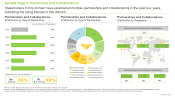
The ongoing demand for environment-friendly, sustainable, and organic agricultural practices has caught the attention of farmers and industrial leaders towards pheromones. It is worth highlighting here that several players active in this domain have entered into strategic partnerships to improve their efforts in the development of tailored pheromone solutions. For instance, in January 2023, Bayer and M2i Group announced a strategic partnership to supply pheromones-based biological crop protection products to fruit and vegetable growers. The partnership aims to distribute the pheromones targeting Lepidoptera pests in crops such as tomatoes, pome fruits, and grapes. As the demand for pheromones increases to control pests affecting a wide range of crops, we believe the agricultural pheromones industry will grow at a steady rate during the forecast period.
Agricultural pheromones are part of the broader agricultural biologicals market, which also include the biofertilizers, biopesticides and biostimulants market segments. We have covered all these segments in-depth in other market research reports.
 |
 |
 |
The market study report covers a comprehensive overview of various agriculture pheromones providers active in this industry across various segments, as mentioned in the table below.
| Key Report Attributes | Details | |
| Historical Trend | 2019-2023 | |
| Base Year | 2023 | |
| Forecast Period | 2024-2032 | |
| Market Size 2032 | USD 15.3 billion | |
| Market CAGR | ~15.3% | |
| By Product Type |
|
|
| By Function |
|
|
| Mode of Applications |
|
|
| Crop Type |
|
|
| Key Geographical Regions |
|
|
| Key Companies Profiled |
|
|
| PowerPoint Presentation (Complimentary) |
Available | |
| Customization Scope | 15% Free Customization | |
| Excel Data Packs (Complimentary) |
|
|
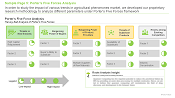
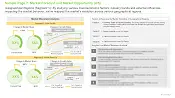
The primary objective of the market report is to provide a comprehensive analysis of market size, trends, share, growth opportunities, and future forecast. We have provided an informed estimate of the market outlook and the evolution of the market in the long-term period for the forecast period 2024-2032. In addition, we have segmented future opportunities across different global regions (North America, Europe, Asia-Pacific, Latin America, Middle East and North Africa). To account for the uncertainties associated with the market and to add robustness to our model, we have provided three agricultural pheromones market forecast scenarios, portraying the conservative, base, and optimistic tracks of the market's evolution.
All actual figures have been sourced and analyzed from publicly available information forums and primary research discussions. The financial figures mentioned in this market research report are in USD unless otherwise specified.
 |
 |
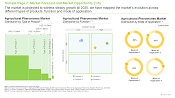 |
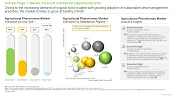
The global agricultural pheromones market is segmented into sex pheromones, aggregation pheromones, repellent pheromones, and others. According to our market study analysis, Sex pheromones account for the largest share, capturing 86% of the overall revenue share of the market in 2024. The highest shareholding can be attributed to the increasing awareness about the benefits of applying sex pheromones in the field of agriculture and advantages of using sex pheromones for pest control in agriculture. Sex pheromones can be applied in a single form, or as complex pheromones made with different chemicals to disrupt the mating pattern or attract pest of same species to trap and kill them. Owing to its target specificity, sex pheromones has been adopted by farmers on a large scale, which is anticipated to be a major reason of its highest share in the market. In addition to sex pheromones, aggregation pheromones hold the second-highest share of the market, driven by their capabilities to prevent pest attacks.
Based on the function, the market for agricultural pheromones is segmented into mating disruption, mass trapping, detection and monitoring, and others. According to our projection, mating disruption accounts for the largest share of the market, holding 48% of the overall market in 2024. Pheromones function by disrupting chemical communication by dispensing sex pheromones that impact the organism's reproduction. Thus, mating disruption has become a cornerstone in integrated pest management practices, ensuring the safety of crops.
The global market for agricultural pheromones is bifurcated into dispensers, traps, sprays, and others on the basis of mode of application. According to our projection, the dispenser application mode is holds 45% of the agricultural pheromones market share in 2024. The largest share can be attributed to the fact the dispensers are easy to use and cover a wide surface area at one time. Its diffusion technique helps to release pheromones for mating disruption into insect pests. In the long run, the trap application is likely to grow at a higher growth rate, driven by the growing usage in crop management practices.
Based on the type of crop, the market for agricultural pheromones is segmented into field crops, vegetable crops, fruits, and nuts / orchard crops. In terms of revenues, currently, fruits and nuts / orchard crops dominate the market by capturing largest share (42%) of the market. The growth can be attributed to the increasing cultivation of fruits and nuts / orchard crops that demand pest management practices to control insect attack.
The global agricultural pheromones market size is distributed across North America, Europe, Asia-Pacific, Latin America, the Middle East and North Africa, and the rest of the world. According to our projection, North America holds a significant share (33%) of the overall market in 2024. The highest share can be predicted by the increasing usage of insect pheromones within crop fields of this region. Furthermore, the increasing focus of the government on sustainable agriculture practices and integrated pest management to protect crops region has increased the adoption of pheromones for crop protection in this regio, which is anticipated to be the primary reason of highest share of North America.
 |
 |
 |
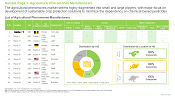
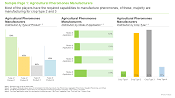
Currently, the global market features the presence of several new entrants and established players holding expertise in the development of pheromones. Overall, the market seems highly fragmented into small and large players who are focusing on the development of sustainable crop protection solutions to minimize the dependency on chemical-based pesticides. Additionally, key industrial leaders are actively increasing their efforts to attain regulatory approval and expand research on the development of innovative integrated pest management solutions using pheromones to target a broad range of pests.
Chemical-based fertilizers and pesticides cause soil deterioration and impact our health. Driven by the negative consequences, government organizations are emphasizing sustainable agricultural practices and integrated pest management solutions that can reduce dependency on chemical-based pesticides. In this context, agricultural pheromones have been widely adopted as natural insecticide solutions to control pest attacks. Furthermore, agricultural pheromones do not harm non-targeted organisms, reduce pesticide residues, and help to preserve biodiversity, further contributing to the adoption of these agricultural pheromones on a large scale. Additionally, regulatory support from government organizations and increasing investments in sustainable agriculture are further driving the widespread adoption of pheromones in the agricultural field, which is anticipated to propel the market during the forecast period.
Despite the growing adoption of sustainable pest management practices like pheromones, the market for agricultural pheromones is witnessing substantial challenges that impede its growth. Some of the challenges include environmental factors such as humidity, temperature, and wind speed. Pheromone-based pest control depends upon the accurate manipulation of the behavior of insects by releasing specific chemical signals. Environmental conditions such as high temperature, wind speed, and humidity may impact the longevity, dispersion, and efficacy of the pheromones. For instance, high-temperature conditions can degrade the pheromones quickly, thereby reducing their working efficiency due to shorter lifespan. Moreover, the low temperature can also limit the effectiveness of these pheromones.
Additionally, pheromones-based pest management solutions require adequate training for appropriate implementation. Owing to its implementation complexity, farmers may face difficulties in determining the pheromone-based pest control principle and selecting and implementing these products effectively in the field. Furthermore, the high cost of pheromones-based pest management products creates challenges for the farmers, specifically those with limited finance, which can create challenges in adoption on a large scale.
Technological advancements in various areas, such as pheromone formulation, production, and delivery systems, provide significant opportunities for market leaders to drive innovations in this field. Currently, the leading players in the agricultural pheromones industry are accelerating their research on synthetic pheromones with improved efficacy, purity, and stability of the pheromones. In addition, several industrial leaders are focusing on providing advanced formulation techniques that allow complete encapsulation of pheromones inside microcapsules and controlled-released applicator devices. Technological advancements have also been implicated in the monitoring and detection system that enables real-time pest and pheromone efficacy monitoring. The integration of technology helps to provide valuable information required for the pest management decision process.
Furthermore, the rapid increase in agricultural escalation has offered significant opportunities to industrial leaders to provide pheromone-based pest control solutions. As government organizations emphasize customized sustainable agricultural practices more, there will be a surge in the requirement for most integrated pest management solutions like pheromones, which is estimated to accelerate the agricultural pheromones market growth during the forecast period.
Examples of the leading companies engaged in this industry (the complete list of key players has also been listed in the detailed report) are mentioned below.
Several recent developments have taken place in this market. We have outlined some of the recent initiatives below. These developments, even if they took place post the release of our market report, substaniate the overall market trends and have been outlined in our analysis.