
Lowest Price Guaranteed
Pages
245
Last Updated
July 2026
View Count
19562
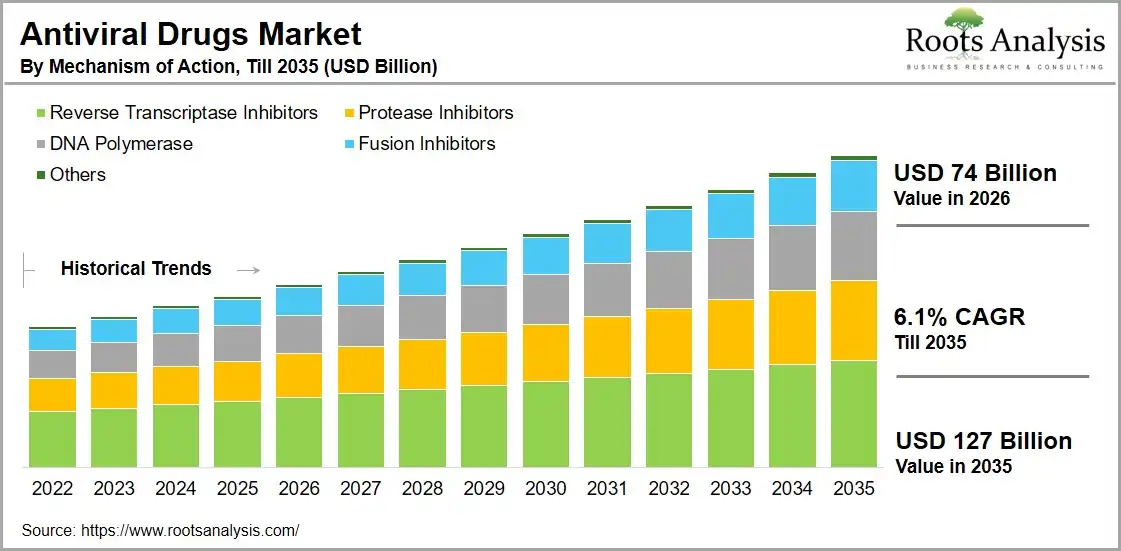
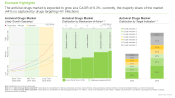
The global antiviral drugs market size is estimated to grow from USD 69 billion in 2025 to reach USD 74 billion in 2026 and USD 127 billion by 2035, representing a higher CAGR of 6.1% during the forecast period 2026 to 2035.
To learn more about this report, request a free sample copy
Infectious diseases caused by pathogenic microorganisms such as viruses, bacteria, and fungi, have created enormous opportunities for the market for antiviral, antibiotics and antifungal drugs over the past few years. Infectious diseases are one of the prominent causes of death around the world. According to the National Institute for Health’s reports, around 52 million (33%) deaths are caused by infectious diseases annually. COVID-19 is one of the latest examples of an infectious disease that caused 3 million deaths worldwide. Before COVID-19, Human Immunodeficiency Virus (HIV) was the most lethal infectious disease and will continue to remain. As per WHO report, 3 million deaths are expected to be caused by HIV, by 2030. Consequently, the rising cases of HIV, inflating the need for lifetime medication, has amplified the demand for antiviral drugs around the world.
 |
 |
 |
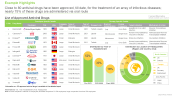
Over the past few years, a number of flu medicine and different types of antiviral drugs targeting a myriad of infectious diseases, including human immunodeficiency virus (HIV) infection, hepatitis, herpes simplex virus (HSV) infection, cytomegalovirus (CMV) infection, influenza, coronavirus infection (COVID-19) and others, have received approvals from various regulatory authorities, globally. However, it is important to note that, currently, the approved antiviral drugs (around 80) are capable of targeting only 10 of the 220 known viruses that are responsible for causing multiple life-threatening infectious diseases in humans. Further, several antiviral drugs are being evaluated across multiple clinical trials for the treatment of various infectious diseases. Moreover, post the onset of the COVID-19 pandemic, extensive research is being conducted to evaluate the safety and efficacy of novel antiviral therapeutics.
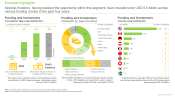
Additionally, the presence of big pharmaceutical companies, investment in R&D for the development of effective antiviral therapeutics against the known viral targets and launch of innovative therapies over a wide range of distribution channels, are further likely to expand market outlook over the forecast period of this report. Driven by the increasing demand for safe and effective antivirals, ongoing pace of innovation, recent partnership activity and sufficient financial support from investors, the antiviral drugs market is anticipated to witness substantial market growth during the forecast period.
The market research report presents an in-depth analysis of the various companies that are engaged in the global market of antiviral drugs, across different segments, as defined in the table below:
| Key Report Attribute | Details | |
| Historical Trend | Since 2018 | |
| Forecast Period | Till 2035 | |
| Market Size in 2026 | USD 74 Billion | |
| Market Size in 2035 | USD 127 Billion | |
| CAGR (Till 2035) | 6.1% | |
| By Mechanism of Action |
|
|
| By Target Indication |
|
|
| By Drug Target |
|
|
| By Type of Therapy |
|
|
| Key Geographical Regions |
|
|
| Key Companies Profiled |
(A full list of operating companies captured is and available in the report) |
|
| PowerPoint Presentation (Complimentary) |
Available | |
| Customizaiton Scope | 15% Free Customization | |
| Excel Data Packs (Complimentary) |
|
|
 |
 |
 |
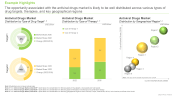
One of the key objectives of this market report was to estimate the current market size, opportunity, and future growth potential of the antiviral drugs market, over the forecast period. Based on multiple parameters, likely adoption trends, and through primary validations, we have provided an informed estimate of the market evolution during the forecast period till 2035. The market report also features the likely distribution of the current and forecasted opportunity within the market across various segments, such as mechanism of action (fusion inhibitors, DNA polymerases, protease inhibitors, reverse transcriptase, and others), type of target indication (human immunodeficiency virus infection, coronavirus infection, hepatitis, herpes simplex virus infection, cytomegalovirus infection, influenza, and others) type of Drug Target (virus targets and host targets), type of therapy (monotherapy and combination therapy), and key geographical regions (North America, Europe and Asia Pacific,Latin America, Middle East, North Africa and Rest of the World).
In order to account for future uncertainties and to add robustness to our model, we have provided three market forecast scenarios, namely conservative, base and optimistic scenarios, representing different tracks of the industry’s growth.
All actual figures have been sourced and analyzed from publicly available information forums and primary research discussions. Financial figures mentioned in this report are in USD unless otherwise specified.
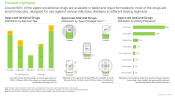
Based on the mechanism of action, the market is split into Fusion Inhibitors, DNA Polymerases, Protease Inhibitors, Reverse Transcriptase, and others. Reverse transcriptase is expected to lead the segment with 34% of the market revenue during this forecast period due to its effectiveness in the treatment of HIV and hepatitis C. The increasing number of patients with these infectious diseases globally has been requiring the demand for antiviral drugs for the long term. Thus, with this rising demand for the drugs, the growth of the market is expected to continue to grow in the future as well.
Based on type of target indication, the global antiviral drugs market is categorized into Human Immunodeficiency Virus Infection, Coronavirus Infection, Hepatitis, Herpes, Simplex Virus Infection, Cytomegalovirus Infection, Influenza, and others. As per our projection, human immunodeficiency infection (HIV) holds 38% market share and is likely to dominate the market during the forecast period. On the other hand, antiviral drugs for COVID-19 treatment capture 15.7% of the overall market share. The prevalence of HIV/AIDS cases worldwide has necessitated the research program for the development of antiviral drugs which are anticipated to drive the market growth over this projection period.
Based on the type of drug target, the antiviral drugs market is classified into Virus Targets and Host Targets. The virus target segment drives the market demand and is expected to lead the market with 77% of the market revenue during this forecast period. Whereas, the host target is anticipated to grow at the rate of 6.1%. Due to the potential to indicate a broad spectrum, host targets are efficient in antiviral activity where they target host factors or cellular pathways that are responsible for virus replication and control their mutation.
This segment describes the type of therapies in the global antiviral drugs market. Based on the type of therapy, the market is classified into monotherapy and combination therapy. According to this projection, in terms of market revenue, monotherapy captures 79% of the antiviral drugs market share. Combination therapy is anticipated to rise at 7.4% of CAGR and is likely to boost the market segment during the forecast period. The key factors for growth of combination therapy segment are the cost-effectiveness and efficiency of such therapies. In a study, it was found that combination therapies have a higher success rate than monotherapy.
This segment highlights the distribution of the antiviral drugs industry across various geographies, such as North America, Europe, and Asia-Pacific, Latin America, the Middle East and North Africa. According to our projections, North America is dominating the market with 46% of the global antiviral drugs market share. North America’s leading position can be attributed to its robust pharmaceutical industry and the rising number of research institutions and their active research programs in infectious diseases, boosting the demand for antiviral drugs. Also, the increased prevalence of infectious diseases like HIV and Hepatitis C, strong healthcare infrastructure and robust research and development ecosystem support the growth of this market.
In addition to this, the region has the largest healthcare budget which promotes significant funding and investments in clinical trials, drug development, and other technological advancements in the medical sector. As well as the presence of key players and a wide range of distribution channels, strong regulatory bodies such as the FDA (Food and Drug Administration) promote research and development activities for antiviral therapies in countries like the U.S. and Canada.
Asia Pacific will drive the antiviral drugs market growth with 8.4% CAGR during the forecast period. The growth of the market in Asia Pacific can be ascribed to the expanding healthcare budget, growing prevalence of viral infection, a large population base in the region, and emerging infectious diseases.
The “Antiviral Drugs Market: Industry Trends and Global Forecasts, till 2035” market report features an extensive study of the current market landscape, market size, market forecast and future opportunities for the companies developing antiviral drugs. The market report highlights the efforts of several mechanisms and targets indicated in this rapidly emerging segment of the pharmaceutical industry. Key takeaways of the market report are briefly discussed below.
The sudden outbreak of the COVID-19 pandemic generated immense opportunities for the antiviral drugs market during the pandemic. The drastic need for antiviral medication for COVID-19 treatment initiated extensive demand for effective antiviral drugs. In addition, various existing antiviral drugs such as remdesivir and hydroxychloroquine were tested and repurposed to treat COVID-19 patients. Over the period of time and after several accelerated clinical trials, few pharmaceutical companies developed effective antiviral medication and vaccines for the treatment of COVID-19. As such there was period of accelerated growth created by the pandemic. Any such pandemic and epidemic situations are likely to drive the development of novel antivirals.
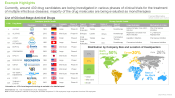
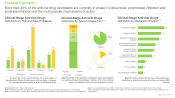
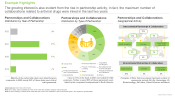
The antiviral drugs market is highly competitive with the presence of numerous pharmaceutical giants, small biotechnology firms, and big multinational companies for antiviral drug development. Some of the prominent firms are AbbVie, AstraZeneca, Bristol-Myers Squibb, Genentech, Gilead Sciences, GlaxoSmithKline (GSK), Johnson & Johnson, and others, stimulate the growth of the market. Presently, more than 375 companies are engaged in the development of over 420 early and late-stage antiviral medications, worldwide. These companies are prominent players in the pharmaceutical industry and contribute years of drug development experience and funding to the antiviral drugs market.
In addition, few startups have also emerged in the market, which are bringing technological advancements to the field. One such startup is Estonia based Nora AI, which has developed a platform for evaluation of artificial intelligence for development of antiviral drugs. The use of AI in drug discovery applications is driving the emergence of several startups.
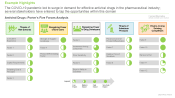
In the last few years, there was mounting emphasis on the development of antiviral medication for COVID-19. The sudden outbreak of the coronavirus fabricated tremendous possibilities for the antiviral drugs market due to which all the major market players were conducting clinical trials targeting the SARS-CoV-2 virus. Many companies obtained authorization and approval for the COVID-19 treatments. Although the pandemic is past us now, the research efforts have not stopped. There are significant efforts being put on the development of novel antivirals. According to clinicaltrials.gov, there are currently 182 active clinical trials across the world targeting COVID, with long COVID / post-COVID syndrome creating market opportunities for antivirals.
In addition, the exploration of advanced technologies in gene therapy and RNA based antiviral drugs is another significant market driver. Through such efforts, pharmaceutical companies strive to offer specific antiviral medication that boosts the potential of targeted therapies, which is likely to expand the scope of the antiviral drugs.
The origination of new viral infections has increased the interest in the host target therapies. This is a promising approach in the development of antiviral medication through which pharmaceutical companies are striving to develop antiviral therapies that directly target viral components. This procedure is likely to increase the potential benefits of antiviral drugs and augment the popularity among drug researchers and pharmaceutical firms.
Moreover, host target therapies have the potential to indicate broad spectrum antiviral activities. The therapy is also effective in decreasing the risk of resistance and can address a diverse range of viral diseases. As well as its ability to combine with other antiviral drugs enhance the potential advantages of the therapy which enables researchers to innovate combination therapies tailored to certain viral infections.
The global market for antiviral drugs (including Fusion Inhibitors, DNA Polymerases, Protease Inhibitors, and Reverse Transcriptase) is estimated to reach USD 127 billion by 2035. With the growing demand for antiviral drugs due to the rising incidence of infectious diseases, the antiviral drugs market growth is expected to increase at a CAGR of 6.1% over the forecast period. It is worth highlighting that, in terms of the type of mechanism of action, reverse transcriptase-based drugs are expected to occupy the largest share of the market during the forecast period. This spike in market growth is anticipated to be fueled by the increasing prevalence of viral infection and its associated diseases namely, human immunodeficiency virus, hepatitis C, herpes, and others.
Examples of key companies engaged in the antiviral drugs industry (which have also been profiled in this market report; the complete list of companies is available in the full report) include AbbVie, AstraZeneca, Bristol-Myers Squibb, Genentech, Gilead Sciences, GlaxoSmithKline (GSK), Johnson & Johnson, Merck, Novartis, Pfizer, Roche, and ViiV Healthcare. This market report includes an easily searchable excel database of all the companies developing antiviral drugs, worldwide.
Amongst other elements, the market report features:
 |
 |
 |
Several recent developments have taken place in the field of antiviral drugs. We have outlined some of these recent initiatives below. These developments, even if they took place post the release of our market report, substantiate the overall market trends that have been outlined in our analysis.