
Lowest Price Guaranteed
Pages
198
Last Updated
July 2026
View Count
13704
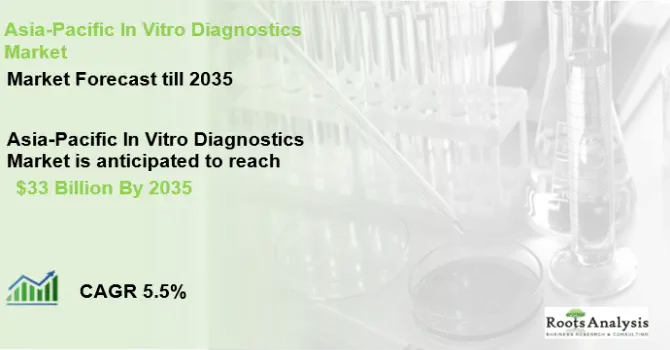
Asia Pacific in vitro diagnostics market, valued at USD 18 billion in 2024, is estimated to reach USD 19 billion in 2025 and USD 33 billion by 2035, representing a CAGR of 5.6% during the forecast period.
 |
To learn more about this report, request a free sample copy
Growth in the Asian market is primarily attributed to the growing prevalence of chronic diseases and the increasing geriatric population. The new market research report comprises industry trends, market size analysis, patent analysis, competitive landscape, emerging trends, and future forecast.
 |
 |
 |
In vitro diagnostics refers to tests conducted using medical equipment in laboratories to analyze human health using specimens such as blood, tissue, and urine. These diagnostic tests help to detect disease conditions and infections so healthcare experts can provide appropriate treatment to patients for disease prevention. Some of the common examples of in vitro diagnostic tests include molecular diagnostics, point-of-care testing, immunoassays, microbiology, and hematology. In recent years, the growing incidence of chronic disease in regions like the Asia-Pacific underscores the requirement for advanced diagnostic procedures for disease diagnosis and treatment. According to the National Institute of Health, around 21% of the geriatric population in India has been reported with at least one chronic disease.
 |
 |
 |
Patients suffering from chronic diseases require continuous monitoring to manage disease indications. Driven by the ongoing point-of-care testing demand, key players engaged in this industry are taking a shift towards technological advancements to develop next-generation sequencing tests that aid in detecting genetic variations. Further, the focus of market leaders remains on delivering in vitro diagnostic kits that can be used for disease diagnosis at home. These advanced kits have been designed with next-generation sequencing technology that enhances the diagnosis of hereditary cancer syndromes. The paradigm shift towards next-generation in vitro diagnostics that has the potential to target disease at the genomic level and growing adoption is anticipated to drive the market during the forecast period.
 |
 |
 |
The market study report highlights the capabilities of industry growth across various segments mentioned below.
| Key Report Attributes | Details | |
| Historical Trend | Since 2018 | |
| Forecast Period | Till 2035 | |
| Market Size 2025 | USD 19 billion | |
| Market Size 2035 | USD 33 billion | |
| CAGR (Till 2035) | 5.6% | |
| Distribution by Products |
|
|
| Distribution by Technology |
|
|
| Distribution by Application Areas |
|
|
| End-users |
|
|
| Key Countries Covered in Asia Pacific IVD Market |
|
|
| Key Companies Profiled |
|
|
| Customization Scope | 15% Free Customization Option | |
| Excel Data Packs (Complimentary) |
|
|
The comprehensive analysis of the Asia Pacific IVD market covers an in-depth analysis of current market size, growth trends, competitive landscape, investment analysis, and future opportunities. Our year-wise analysis of key in vitro diagnosis market scenarios across various segments provides insight into the investment opportunities and future growth opportunities for the IVD vendors active in this industry. In order to add strength to our market research model and represent future uncertainties, we have added three market forecast scenarios, namely the base model, conservative model, and optimistic model. Furthermore, we provide an in-depth analysis of the competitive market landscape based on application areas, technology, products, and end-users to help industry stakeholders make informed decisions about investment. Further, all the figures represented in the market report have been sourced and analyzed from publicly available information forums and primary research discussions.
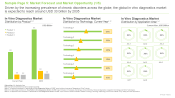
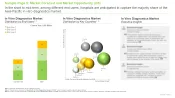
On the basis of types of products, the Asia Pacific IVD market is distributed into instruments, reagents, and others. According to our projection, the reagents account for the largest share of the market in 2024 and are poised to grow at a CAGR of 6.5% during the forecast period. Driven by the rising demand for advanced diagnosing methods, the instruments segment is likely to grow steadily from 2024-2035. The demand for reagents, which are consumables that are used per test conducted, will continue to hold the largest market share, driven mainly by a comparative increase in the number of tests conducted in this region.
The Asia Pacific IVD market has been distributed into infectious disease, diabetes, oncology, cardiology, nephrology, autoimmune disease, drug testing, and other applications based on the types of applications. According to our projection, infectious diseases account for the largest Asia Pacific in vitro diagnostics market share. This can be attributed to the growing incidence of infectious diseases in Asian countries. India and China are the two countries that are leading the world in population size and hence the demand for healthcare. The high population density is also responsible for the huge burden of respiratory and other infectious diseases in these regions.
Based on the type of techniques, the Asia Pacific In vitro diagnostics industry has been distributed into immunoassay, hematology, clinical chemistry, molecular diagnostics, coagulation microbiology, and other technologies. Driven by the ongoing demand for advanced in vitro diagnostics procedures for disease analysis at the molecular level, immunoassay accounts hold the largest share in 2024. In the long run, molecular diagnostics are likely to grow at a CAGR of 6.2% during the forecast period. The heightened growth can be attributed to the fact that molecular diagnostics methods ensure quick response to infectious diseases and enable researchers to prepare personalized treatment plans.
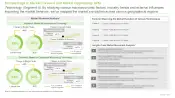
The Asia Pacific In Vitro Diagnostics Market (Distribution by Products (Instruments, Reagents, and Other Products), by Technology (Immunoassay, Hematology, Clinical Chemistry, Molecular Diagnostics, Coagulation Microbiology, and Other Technologies), by Application (Infectious Disease, Diabetes, Oncology, Cardiology, Nephrology, Autoimmune Disease, Drug Testing, and Other Applications), by End User (Hospitals, Laboratories, and Other End Users) and Key Asian Countries (China, Japan, India, South Korea, Australia, Thailand, Malaysia, Indonesia and Rest of the Asia Pacific): Industry Trends and Regional Forecast, 2024-2035; the market study report provide comprehensive analysis on Asia Pacific IVD market size, competitive landscape, emerging trends and future investment opportunities for vendors active in this industry. Additionally, the market report features an in-depth analysis of the ongoing efforts of players engaged in this industry for overall growth and innovations. Key takeaways of the industry analysis are briefly discussed below.
In Asia Pacific, the rising concern of chronic diseases such as diabetes, cardiovascular diseases, and infectious diseases necessitates developing in vitro diagnostics tests. Further, In September 2023, the outbreak of the Nipah Virus in India, transmitted through spillover from infected bats into humans, has further increased the demand for advanced in vitro diagnostics test kits for rapid detection and ensuring implementation of disease management measures. Additionally, the growing geriatric population has fueled the Asia Pacific IVD market. Aged people are more susceptible to disease and age-related health conditions such as osteoporosis and heart-associated disorders. Moreover, the increasing disposable income, along with high spending on advanced healthcare, has increased the demand for innovative diagnostic tests, which is anticipated to drive the Asia Pacific in vitro diagnostics market growth.
The Asia Pacific in vitro diagnostics market is projected to grow, driven by the rising demand for rapid diagnostic testing solutions. However, the inadequate reimbursement scenario may hinder the growth of the market. In addition to unfavorable reimbursement, the high cost of designing in vitro diagnostics kits and installation of platforms may create challenges for small and medium-sized players. Further, the sensitivity associated with the macroeconomic cycle of in vitro diagnostics also impedes the market growth during the forecast period. Additionally, the stringent regulatory guidelines associated with the approval of in vitro diagnostics kits and devices in Asia Pacific are the major market restraint that impacts its growth during the forecast period.
Driven by the increasing launch of new in vitro diagnostics products, the key players in this industry are accelerating their R&D process to enhance their product portfolio. It is worth noting here that the Asia Pacific in vitro diagnostics market is witnessing several partnerships and collaborations between key players. For instance, in May 2022, Hitachi High-Tech Corporation signed a strategic partnership with Invivoscribe (a US-based blood cancer testing kit developer and manufacturer). The aim of the partnership is to accelerate the molecular diagnostics and precision medicine businesses by combining international regulatory expertise and Invivoscribe technology with core expertise in high-tech analysis systems technologies. Additionally, the increasing urbanization and high healthcare expenditure in Asian countries like China, India, and Japan are anticipated to enhance the adoption of advanced diagnostics technologies. Moreover, supportive government initiatives to promote research on advanced diagnostics technologies contribute to the growth of the Asia Pacific IVD market.
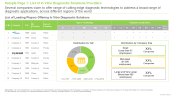
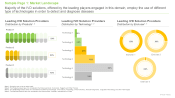
Key Asia Pacific based IVD companies are (in alphabetical order) DiaSorin, Fujifilm and Sysmex. This market report includes an easily searchable excel database of all the in vitro diagnostic companies headquartered in Asia Pacific.
Several development and collaboration activities have been witnessed in this industry. Some of the ongoing development activities, even if they took place after the release of our market report, substantiate the overall trends that have been outlined in this analysis report.