Bispecific Antibodies Market 6th Edition, 2026 to 2035
Bispecific Antibodies Market by Route of Administration (Intravenous, Subcutaneous, Intravitreal, Intraocular, and Intra-peritoneal), Therapeutic Area (Solid Tumors, Hematological Malignancies, Ophthalmic Disorders, Genetic Disorders, Brain Disorders, Blood Disorders, Inflammatory Disorders, and Autoimmune Disorders), Target Antigen, Mechanism of Action, Antibody Format, Geographical Regions, and Sales Forecast – Trends and Forecast 2026-2035
-
Lowest Price Guaranteed
-
Pages
443 -
Last Updated
November 2026 -
View Count
30695 -
Bispecific Antibodies Market Outlook: USD 81.5 Billion by 2035, Growing at a 16.5% CAGR
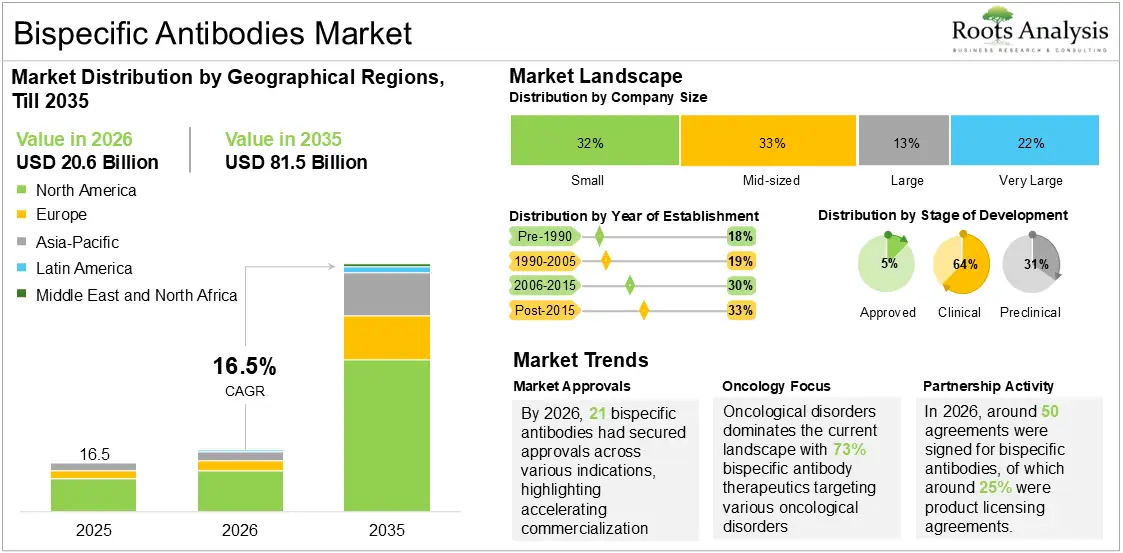
The global bispecific antibodies market, valued at USD 16.5 billion in 2025, is projected to reach USD 20.6 billion in 2026 and USD 81.5 billion by 2035, representing a CAGR of 16.5% during the forecast period 2026 to 2035.
To learn more about this report, request a free sample copy
Market Report: Key Takeaways
Market Size & Trends
- Based on route of administration, subcutaneous route currently represents the leading market segment.
- In terms of therapeutic area, genetic disorders hold the largest share, accounting for around 30% of the current bispecific antibodies market.
- In terms of target antigen, FIXa x FX currently accounts for the largest share of the bispecific antibodies market.
- T-cell retargeting / activation represents the leading segment, accounting for major share of the current market.
- Based on antibody format, asymmetric antibodies currently represent the leading market segment.
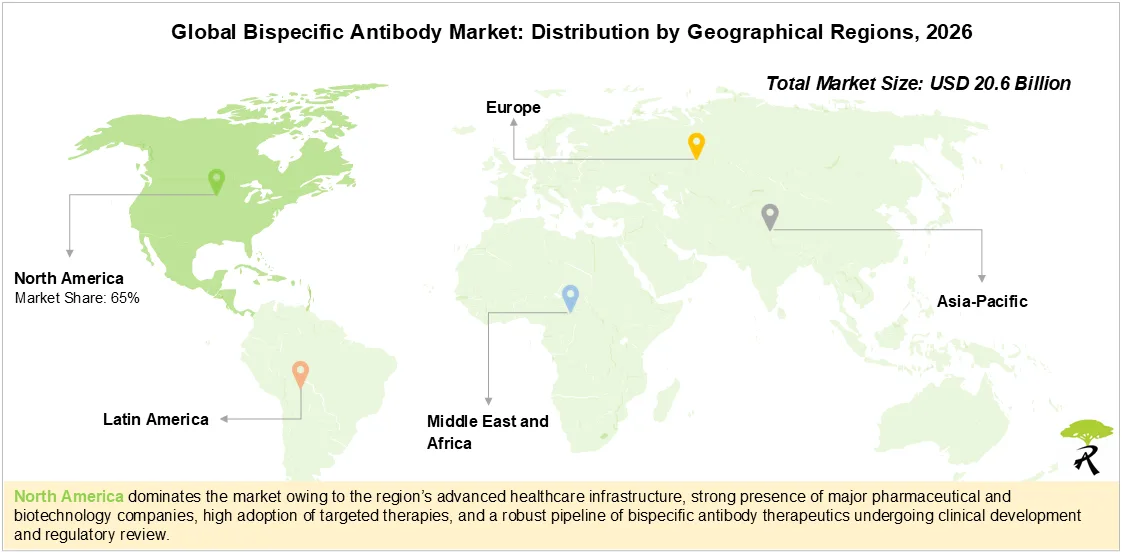
- North America currently holds the largest share (65%) of the global bispecific antibodies market, while Asia-Pacific is expected to register the fastest growth during the forecast period.
Key Market Statistics
- Market Size in 2026: USD 20.6 billion
- Estimated Market Size in 2035: USD 81.5 billion
- CAGR (2026-2035): 16.5%
- North America: Largest market in 2026
- Asia-Pacific: Fastest-growing region
What are Bispecific Antibodies and How Do They Work?
Bispecific antibodies are engineered protein therapeutics designed to bind two different antigens or two distinct epitopes within a single molecule. Depending on their design, they can redirect immune cells through targets such as CD3, block two disease-driving pathways simultaneously, activate or suppress receptor signaling, or combine tissue targeting with an additional therapeutic function. The modality includes full-length asymmetric antibodies, antibody fragments, T-cell engagers, dual-checkpoint antibodies, bispecific fusion proteins and other multispecific formats created through advanced protein-engineering approaches.
The therapeutic scope now extends across oncology, hematology, ophthalmology, genetic disorders, immunology and selected neurological diseases. In cancer, bispecifics can connect immune effector cells with tumor-associated antigens or co-target complementary signaling pathways. In hemophilia A, FIXa x FX targeting provides a non-factor replacement approach to restore coagulation. In ophthalmology and neurology, dual-targeting designs are being explored to combine pathway modulation with tissue-selective delivery, including strategies intended to improve blood-brain barrier transport.
Developers are also moving beyond traditional CD3-based T-cell engagement. In April 2026, Merck initiated a pivotal Phase 2b/3 program for MK-8748 (Tiespectus), an investigational bispecific that directly activates Tie2 while inhibiting VEGF in neovascular age-related macular degeneration. Across the broader pipeline, innovation is expanding into dual-checkpoint inhibition, cytokine neutralization, immune-mediated diseases and other combinations of ligands, receptors and cell-surface targets.
Despite this opportunity, bispecific development remains technically demanding. Developers must manage chain pairing, protein stability, aggregation, cell-culture productivity, purification, analytical characterization, dose optimization and immunogenicity while maintaining scalable manufacturing and consistent product quality. For T-cell-engaging therapies, clinical development must also account for cytokine release syndrome, neurologic toxicity, infections and other adverse effects that can influence dosing, monitoring and site of care.
How is the Bispecific Antibodies Market Segmented?
Based on the research, the bispecific antibodies market is segmented by route of administration, therapeutic area, target antigen, mechanisms of action, antibody format and geographical regions.
By Route of Administration
- Intravenous, Subcutaneous, Intravitreal, Intraocular, and Intra-peritoneal
By Therapeutic Area
- Solid Tumors, Hematological Malignancies, Ophthalmic Disorders, Genetic Disorders, Brain Disorders, Blood Disorders, Inflammatory Disorders, and Autoimmune Disorders
By Target Antigen
- PD-1 x CTLA-4, FIXa x FX, BCMA x CD3, CD20 x CD3, VEGF x Tie-2, VEGF x ANG2, CD3 x DLL3, PDL1 x VEGF, GPRC5D x CD3, EGFR x Lgr 5, Aβ × TfR1, EGFR x cMET, PD-1 x IL-2, HER2 x HER2, CD3 x CD19 and Other Target Antigens
By Mechanism of Action
- Targeting Tumor Angiogenesis, T-Cell Retargeting / Activation, Resistance Factors Co-targeting, Cytokines Retargeting / Neutralization, Dual Ligands Blocking, and Other Mechanisms of Action
By Antibody Format
- Asymmetric Antibodies and Antibody Fragments
By Geographical Regions
- North America: US, and Canada
- Europe: Germany, France, UK, Italy, Spain, and Rest of Europe
- Asia-Pacific: China, Japan, Australia, and South Korea
- Latin America: Brazil, and Argentina
- Middle East and North Africa: Saudi Arabia, UAE, and Egypt
Bispecific Antibodies Market Key Insights
What are the Key Drivers of Growth in the Bispecific Antibodies Industry?
- Partnerships and Collaborations: Developers are increasingly combining bispecific antibodies with complementary targeted therapies to address resistance and improve antitumor activity. In September 2026, Treeline Biosciences entered into a clinical-trial collaboration and supply agreement with Roche to evaluate the BCL6 degrader TLN-121 with Roche's CD20 x CD3 T-cell-engaging bispecific antibodies glofitamab (Columvi) and mosunetuzumab (Lunsumio) in B-cell lymphomas.
- Increasing Commercial Validation of T-Cell-Engaging Therapies: Amgen reported worldwide IMDELLTRA / IMDYLLTRA (tarlatamab) sales of USD 258 million in the first quarter of 2026 and USD 288 million in the second quarter, with second-quarter sales increasing 115% year over year. This performance highlights the potential for differentiated bispecific therapies to gain traction in specialist oncology settings despite complex dosing and toxicity-management requirements. Growing commercial acceptance may encourage further investment in label expansion, community-care pathways, and competing T-cell-engaging assets.
- Expansion into Immune-Mediated and Non-oncology Diseases: Developers are increasingly applying bispecific engineering to inflammatory diseases in which multiple signaling pathways sustain symptoms and reduce the effectiveness of single-target therapies. For instance, in March 2026, Navigator Medicines initiated the Phase 2a MAINSAIL trial of NAV-240, an OX40L x TNF-α bispecific antibody, in patients with moderate-to-severe hidradenitis suppurativa. The company also advanced the half-life-extended NAV-242 into Phase 1 development. Both candidates are designed to inhibit two validated inflammatory targets, while NAV-242 could support less frequent subcutaneous dosing. Clinical progress in hidradenitis suppurativa, alongside potential applications in Crohn's disease and ulcerative colitis, demonstrates how bispecific platforms could diversify market revenues beyond oncology.
What are the Main Challenges in Bispecific Antibodies Development?
- Complex Molecular Assembly and Purification Requirements: Bispecific antibodies can generate chain-mispairing species, aggregates and product-related variants that are difficult to separate from the intended molecule. Developers therefore require robust protein-engineering strategies, cell-culture control, orthogonal analytical methods and scalable purification processes to maintain product quality, yield and batch-to-batch consistency.
- Safety-Management Requirements can Restrict Treatment Decentralization: T-cell-engaging products can cause cytokine release syndrome, neurologic toxicity, infections and cytopenias, creating a need for step-up dosing, trained healthcare professionals and structured monitoring. For LYNOZYFIC (linvoseltamab-gcpt), the U.S. prescribing information reports CRS in 46% of patients and neurologic toxicity in 54%, while ICANS occurred in 8%; the product is available only through a REMS. These requirements can limit adoption in smaller hospitals and community settings unless outpatient pathways and monitoring protocols are validated.
- Clinical Differentiation is Becoming Harder as the Pipeline Becomes More Crowded: Programs must demonstrate meaningful benefit using indication-appropriate clinical endpoints, which may include objective response rate, duration of response, progression-free survival, overall survival, symptom control or other disease-specific measures. Biomarker-defined patient selection and diagnostic testing can become increasingly important as developers pursue more personalized treatment strategies.
How Do Regulation, Administration Setting and Reimbursement Shape Adoption?
Regulatory review of bispecific antibodies is closely linked to mechanism-specific safety, manufacturing control and the strength of clinical evidence. T-cell engagers may require step-up dosing, intensive early monitoring and post-marketing commitments, while other formats such as ophthalmic bispecific antibodies follow different benefit-risk and administration pathways. Developers therefore need product-specific regulatory strategies rather than a single class-wide approach.
Commercial adoption also depends on pricing, reimbursement and site-of-care economics. Intravenous products may require infusion infrastructure and hospital or specialist-center capacity, while subcutaneous administration can improve convenience and potentially support broader outpatient use when safety profiles and labels permit. Payers and healthcare institutions increasingly evaluate acquisition cost alongside administration, monitoring, supportive care and the durability of clinical benefit.
Recent Developments in the Bispecific Antibodies Market
- In September 2026, Treeline Biosciences entered into a clinical-trial collaboration and supply agreement with Roche to evaluate TLN-121 in combination with the CD20 x CD3 bispecific antibodies Columvi (glofitamab) and Lunsumio (mosunetuzumab) in B-cell lymphomas.
- In June 2026, UCB completed its acquisition of Candid Therapeutics. The transaction added cizutamig, a BCMA x CD3 T-cell engager being developed for autoimmune and inflammatory diseases and strengthened UCB's next-generation immunology pipeline.
- In May 2026, BioNTech and Bristol Myers Squibb reported interim Phase 2 data from ROSETTA Lung-02 evaluating pumitamig, a PD-L1 x VEGF-A bispecific immunomodulator, plus chemotherapy in previously untreated advanced non-small cell lung cancer. The program is advancing through a global Phase 3 development strategy.
- In May 2026, the U.S. FDA approved Bizengri (zenocutuzumab-zbco) for adults with advanced, unresectable or metastatic NRG1 fusion-positive cholangiocarcinoma with disease progression on or after prior systemic therapy, extending regulatory validation of bispecific antibodies beyond conventional T-cell-engaging mechanisms.
Scope, Methodology and Industry Expert Interviews
This study combines secondary research, proprietary databases and primary stakeholder interviews to assess the bispecific antibodies market. Secondary research included company disclosures, regulatory information, clinical-trial and pipeline data, scientific and technical literature, product approvals, commercial sales, partnership activity and other publicly available market evidence. Findings were triangulated across market sizing, therapeutic area, target antigen, mechanism of action, route of administration, antibody format, clinical development, commercial adoption and regional trends before finalization.
Discussing the engineering challenges of bispecific antibodies, Tony Polverino, former Chief Scientific Officer at Zymeworks, stated, "The ability to bring two different molecules together, or two different binding arms together into the same molecule presents a challenge."
The market report includes transcripts of the following primary research interviews:
- Senior Scientist, Mid-sized Organization, US
- PhD Student, Very Large Organization, Germany
- Chief Executive Officer, Small/Mid-sized Organization, Germany
- Chief Scientific Officer, Small/Mid-sized Organization, Germany
- Former Senior Director, Business Development, Large Organization, US
- Business Development Consultant, Mid-sized Organization, UK
- Director, GMP Clinical Manufacturing, Very Large Organization, China
In addition, the market report includes transcripts of the following third-party discussions:
- Founder and Chief Executive Officer, Small Organization, Singapore
- Vice President, Therapeutic Area Lead for Hematology Oncology, Very Large Organization, US
- Senior Director and EMEA Therapeutic Area Lead in Oncology, Very Large Organization, US
- Chief Executive Officer, Large Organization, China
- Chief Executive Officer, Small Organization, US
- Director of Antibody Technology Discovery, Very Large Organization, South Korea
- Chief Executive Officer and Founder, Small Organization, China
- Professor for Experimental Cancer Therapy, Very Large Organization, Germany
- Chief Research and Development Officer, Very Large Organization, Japan
- Breast Medical Oncologist; Director, Early Drug Development Division; Chair, Experimental Therapeutics Program, Large Organization, Italy
Bispecific Antibodies Market Share Insights
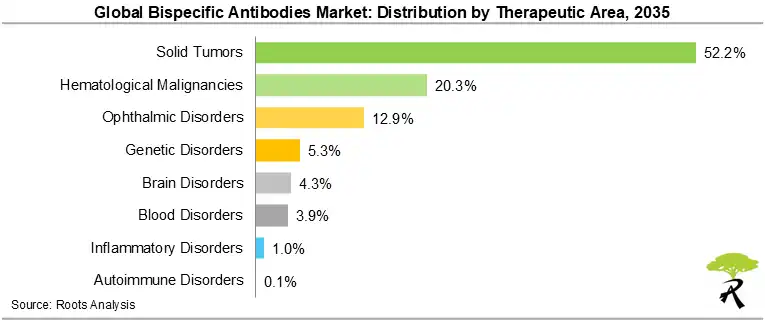
Market Share by Type of Therapeutic Area: Genetic Disorders Account for the Largest Share
Genetic disorders currently account for the largest therapeutic-area share, at around 30%, reflecting the substantial commercial contribution of bispecific therapies used in inherited bleeding disorders such as hemophilia A. Brain disorders are expected to expand faster during the forecast period as developers evaluate bispecific approaches designed to cross the blood-brain barrier and modulate neurological disease biology.
Market Share by Target Antigen: FIXa × FX Account for the Largest Share
FIXa × FX currently account for 30% of bispecific antibody market revenue, reflecting the clinical and commercial importance of simultaneously engaging activated factor IX and factor X to promote coagulation. The Aβ x TfR1 segment is attracting growing development interest because receptor-mediated transport across the blood-brain barrier could support targeted delivery of therapeutic activity to the central nervous system.
Market Share by Mechanism of Action: T-Cell Retargeting / Activation Segment Holds the Largest Share
T-cell retargeting / activation currently accounts for more than 30% of the market and remains the leading mechanism of action, driven by approved CD3-engaging therapies across hematologic malignancies and selected solid tumors. Cytokine retargeting / neutralization is expected to grow comparatively faster as developers explore dual-pathway control of inflammation, immune activation and treatment resistance.
Regional Analysis
North America is Expected to Dominate the Market by Securing Highest Share
North America currently accounts for the largest share (65%) of the global market. The region benefits from a high concentration of biopharmaceutical developers, extensive oncology and hematology clinical-trial activity, early adoption of newly approved therapies, specialist hospital infrastructure and established commercial pathways for complex biologics. Continued growth will depend on label expansion, broader outpatient use where clinically appropriate, payer coverage and the ability of healthcare providers to manage administration and safety requirements.
Asia-Pacific is Projected to Grow at a Higher CAGR During the Forecast Period
Asia-Pacific is expected to register the fastest growth during the forecast period, supported by expanding bispecific antibody pipelines, rising participation of regional biopharmaceutical companies in global clinical development, increasing investment in biologics R&D and manufacturing, and growing regulatory and commercial activity in markets such as China, Japan and South Korea. The pace of adoption will continue to vary by indication, approval timing, reimbursement and access to specialist care.
Who Are the Key Players in the Bispecific Antibodies Market?
The report profiles 3SBio, AbbVie, ABL Bio, Akeso Biopharma, Alphamab Oncology, AstraZeneca, BioNTech, Chia Tai Tianqing Pharmaceutical Group, EpimAb, Genentech, Genmab, Innovent Biologics, Johnson & Johnson, Light Chain Bioscience, Merck, Regeneron, RemeGen, Roche, Systimmune, and Wuhan YZY Biopharma. A complete list of close to 130 companies captured is available within the full report. Company inclusion reflects market and competitive analysis and does not imply endorsement or affiliation with Roots Analysis.
Report Deliverables and Customization
Alongside the core market report, clients receive complimentary Excel data packs covering the marketed, clinical-stage and preclinical bispecific antibodies market landscape, company competitiveness analysis, partnerships and collaborations, and market sizing and opportunity analysis. A complimentary PowerPoint presentation summarizing the full report is also included, and 15% free customization scope is available on request.
The report is designed to support pharmaceutical and biotechnology R&D and portfolio teams, business-development and licensing leaders, clinical and regulatory teams, market-access and commercial-strategy functions, investors and competitive-intelligence professionals. It can also support CRO / CMO selection where organizations are evaluating external clinical-development, analytical or manufacturing capabilities for bispecific programs.
Independence and Non-Affiliation
Roots Analysis is an independent market research and consulting firm. This report draws on publicly available information, primary interviews, and proprietary analysis. Roots Analysis is not affiliated with, sponsored by, endorsed by or acting on behalf of the U.S. Food and Drug Administration, the European Medicines Agency, any pharmaceutical or biotechnology company, branded therapeutic, technology platform or individual named in this report. Company and product names are referenced solely for factual, market-analysis and benchmarking purposes.
This report represents the sixth edition of an ongoing research series tracking the bispecific antibodies market. Roots Analysis does not receive compensation from companies profiled in the report in exchange for inclusion or favorable characterization. The report is intended for market-research and strategic-planning purposes and should not be interpreted as medical advice.
Report Authorship
Author(s): This report was co-authored by Rupali Vadhera and Pemba Lahmo, members of Roots Analysis healthcare and pharma research practice with experience in biologics discovery, development, and manufacturing market studies and competitive intelligence and market forecasting. Findings are based on proprietary databases, secondary research, regulatory analysis and executive interviews and are subject to internal review before publication.