


 Download Free Sample
 Buy Now
Market Size
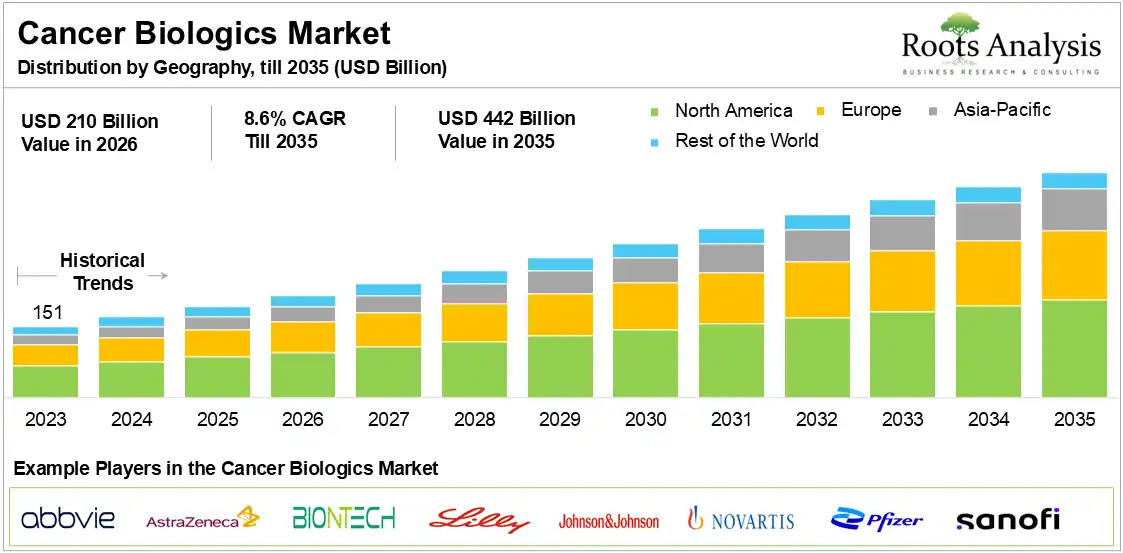
The global cancer biologics market size, valued at USD 189 billion in 2025, is projected to reach USD 210 billion in 2026 and USD 442 billion by 2035, with a CAGR of 8.6% during the forecast period 2026 to 2035. This market is growing unprecedentedly, driven by the rising incidence of cancer and increased demand for personalized treatment for cancer.
See What’s in the Full Report – Request Your Complimentary Insights!
Market Report: Key Takeaways
- The increasing prevalence of various oncological disorders (including blood cancer, bladder cancer and pancreatic cancer), along with increased healthcare spending on cancer treatment is fueling the cancer biologics market growth.
- In terms of type of biologic, the antibodies segment secures close to 65% of the overall revenue share due to its higher specificity for tumor-associated antigens, larger binding surface enabling cytotoxic activity, reduced systemic toxicity and established drug safety profiles.
- In terms of target indication, blood cancer segment currently holds close to 20% of the market share owing to a rising burden of various hematologic malignancies, such as leukemia, lymphoma, and multiple myeloma.
- In terms of geographical regions, North America currently holds 45% of the market share due to the growing research, favorable regulatory guidelines, and a strong presence of key drug developers in the region.
Market Overview
According to World Cancer Congress, cancer is the third leading cause of mortality across the globe, following cardiovascular and infectious diseases. Currently, there are various treatment strategies available in the market, including surgery, radiotherapy, and drug-based interventions. Among all available strategies, surgery remains the primary treatment option, particularly in early-stage cancers. Another treatment option, radiotherapy, is generally combined with this approach and is given in a localized manner by healthcare professionals.
In the past few years, drug-based interventions (including biologics and small molecules) have observed a rapidly expanding pipeline for various types of cancer. Biologic therapies, including monoclonal antibodies, bispecific antibodies, cell and gene therapies target and modulate specific biological pathways. Notably, biologics capture close to 70% of the cancer therapeutics market. It is worth highlighting that, KEYTRUDA® (developed by Merck) and Darzalex® (developed by Johnson & Johnson) have been approved for oncological disorders and reported sales worth USD 30 billion and USD 12 billion, respectively, in 2024. This underscores the substantial clinical and commercial impact of these cancer therapeutics.
In parallel, small molecule drugs remain a cornerstone of cancer therapy, particularly owing to their ability to penetrate cells and modulate intracellular signaling pathways. According to the market report, the market for small molecule cancer therapeutics is likely to be worth USD 96 billion in the current year and is expected to reach USD 261 billion in 2035.
Recent Developments
- In September 2025, the American Association for Cancer Research (AACR) held an event in Colorado, US, where Precision Biologic presented the preclinical findings of its antibody-drug conjugate PB-vcMMAE-5 for the treatment of ovarian cancer.
- BioNTech and Duality Biologics announced the positive results obtained for its breast cancer drug, trastuzumab pamirtecan (BNT323). Notably, the drug successfully met the primary endpoint of progression-free survival in a Phase III trial for HER2-positive metastatic or unresectable breast cancer.
- In June 2025, Biocon Biologics announced a strategic partnership with National Cancer Society of Malaysia (NCSM) in order to launch Patient Assistance Program (PAP) in Malaysia. Through this agreement, the company aims to improve accessibility and affordability of cancer care in Malaysia.
- In March 2025, Shilpa Biologicals announced a strategic partnership with mAbTree Biologics aimed to co-develop and manufacture a novel immuno-oncology therapy for the treatment of various type of cancer, including lung, and head and neck carcinomas.
Your Business is Unique – Why Shouldn’t Your Report Be?
Cancer Biologics Market Trends
- Approval of ADCs for Cancer Treatment: With the approval of new drugs, there's a need to shift from a "one-size-fits-all" approach to personalized dosing strategies in order to avoid under- or overdosing. The industry has observed approval of antibody drug conjugates for various forms; for instance, PADVEC® for second line treatment of metastatic urothelial cancer, BESPONSA® for CD22-positive acute lymphoblastic leukemia, ZYNLONTA® for third line treatment of diffuse large B-cell lymphoma.
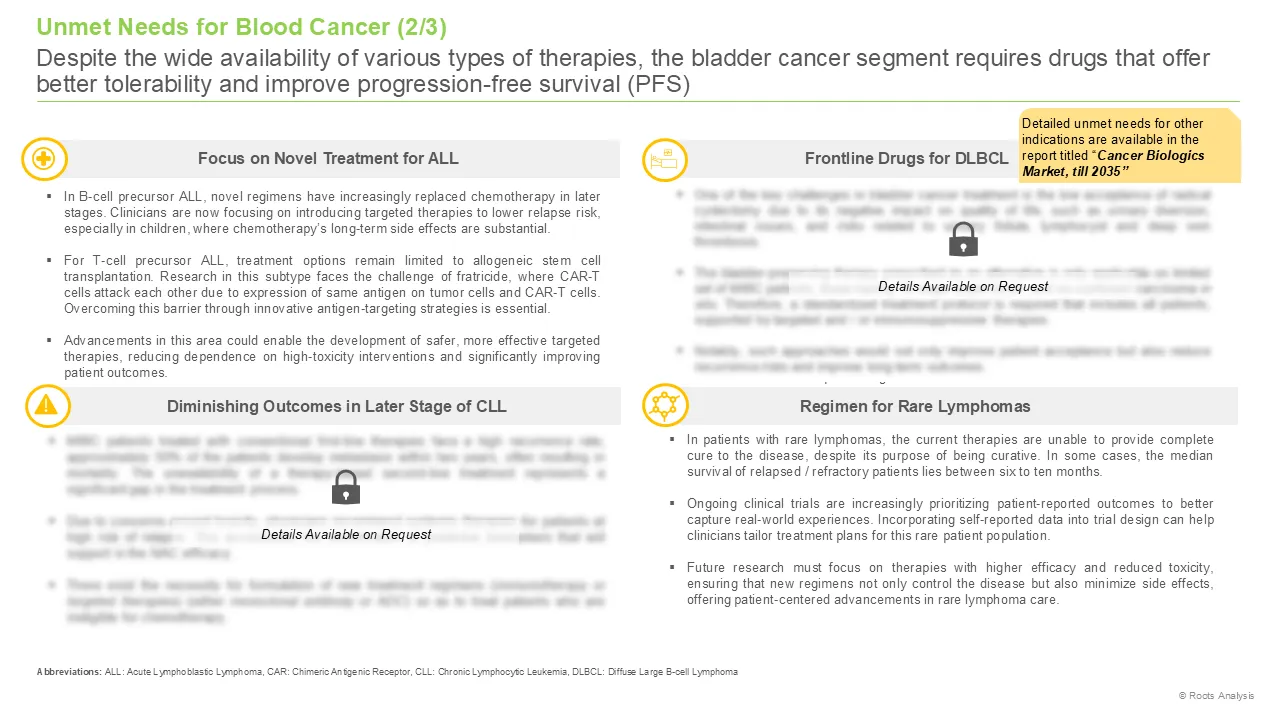
- Focus on Patient-reported Outcomes: In patients with rare lymphomas, the current therapies are unable to provide complete cure, despite being curative in nature. In some cases, the median survival of relapsed / refractory patients lies between six to ten months. As a result, ongoing clinical trials are increasingly prioritizing patient-reported outcomes to better capture real-world experiences. Incorporating self-reported data into trial design can help clinicians tailor treatment plans for this rare patient population.
- Integration of Medical Devices in the Treatment: In addition to the usage of biologics, the incorporation of certain medical devices for patient treatment has provided benefits. For example, Optune Gio® (developed by Novocure) is an approved wearable medical device that produces tumor treating fields (TTFields) for glioblastoma multiforme adult patients. Also, Optune Lua® (developed by Novartis) is prescribed in combination with PD-1 / PD-L1 inhibitors / docetaxel as a second line treatment for metastatic non-small cell lung cancer.
- Development of Biosimilars: Considering the high cost of treatment with cancer biologics, there is huge potential in the market for adoption of biosimilars. Some of the leading cancer biologics, specifically antibody based therapeutic Herceptin, Avastin and Rituxan have approved biosimilars in the market. According to Celltrion, its Herceptin biosimilar, Herzuma captured 75% share of the trastuzumab market in Japan in April 2025.
Industry Experts
Experts believe that various advanced therapeutics, including bispecific antibodies can be a game changer modality for healthcare sector.
During an interview with Drug Development & Delivery, Adam Vogel (Senior Vice President and Head of Sales, Samsung Biologics) stated that, “Bispecific antibodies have shown promise for treating severe cancers, such as multiple myeloma, non-small cell lung cancer, and cervical cancer, and the number of novel drug products like BsAbs entering clinical trials is expected to increase further. In addition to BsAbs, ADCs, which are formed when an antibody is attached to a cytotoxic payload, are commonly used as cancer treatment.”
Discussions with multiple stakeholders in this domain influenced the opinions and insights presented in this study. The market report includes transcripts of the following other third-party discussions:
- Director, Public Research University in the US
- Clinical Director, Hospital in the US
- Vice-President, Large Company in the US
- Professor, Public Research University in Sweden
- Professor, Public Research University in the UK
Unlock Deeper Insights – Schedule Your Personalized Workshop Today!
Cancer Biologics Market Drivers
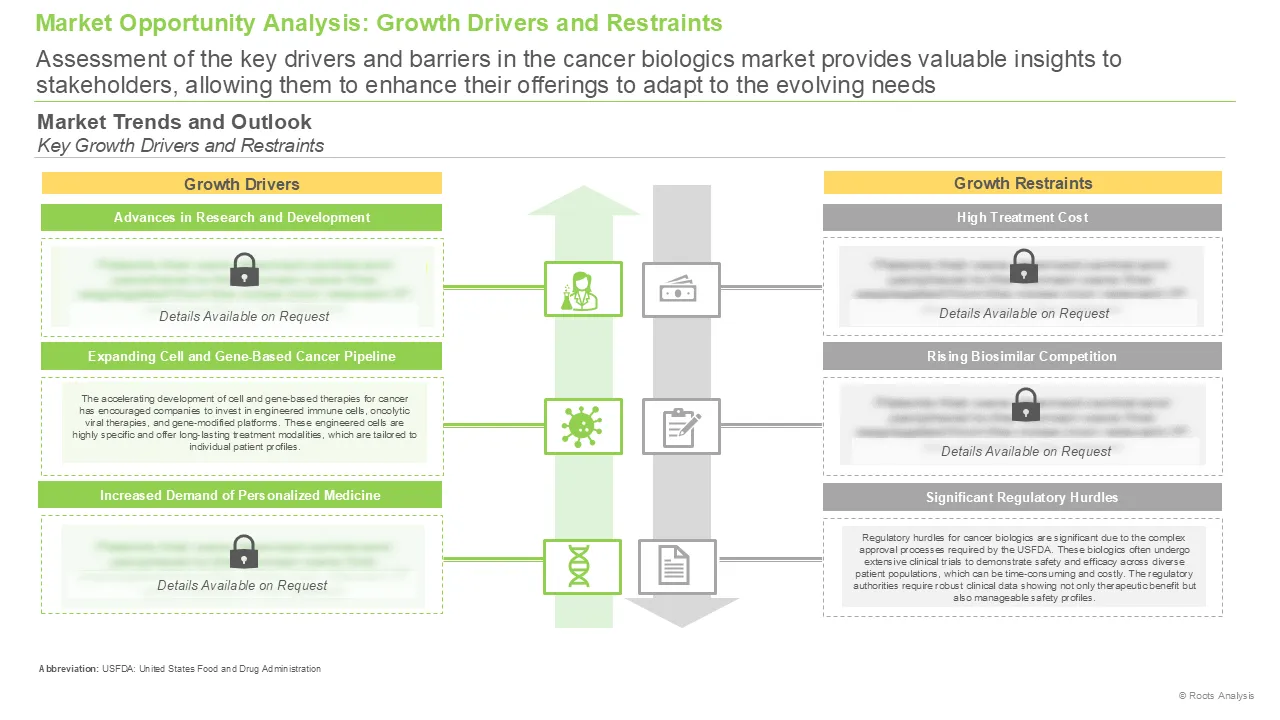
- Growing Focus on Personalized Medicine: The increased focus on personalized cancer biologics therapy market has garnered the interest of several pharmaceutical companies to develop advanced therapies, aimed to ensure durable response expanding treatment options across diverse types of cancer.
- Expanding Cell and Gene-Based Cancer Pipeline: The accelerating development of cell and gene-based therapies for cancer has encouraged pharmaceutical companies to invest in engineered immune cells, oncolytic viruses, and gene-modified platforms, offering highly specific, long-lasting treatment modalities tailored to individual patient profiles. Such advancements have showcased significant impact of biotechnology on cancer biologics market.
Market Share Analysis
mRNA Therapies and Vaccines to be the Future of Cancer Treatment
- According to the cancer biologics market report, the antibodies segment holds 70% of the overall market share in 2035. This growth stems from the fact that antibodies pose high specificity and can target cancer cells precisely, minimizing damage to healthy cells.
- It is important to highlight here that mRNA therapies and vaccines segment is likely to grow at a higher CAGR. Notably, the pharmaceutical companies expect the mRNA therapies and vaccines (including BNT113, mRNA-4157 and GRT-C901 / GRT-R902), which have shown promising results in the clinical trials, to achieve blockbuster status in the coming years, indicating significant growth of the industry.

Blood Disorders Dominate the Cancer Biologics Industry
- According to the cancer biologics market forecast, the blood cancer segment accounts for close to 20% of the overall revenue. This highest share can stem from the greater survival rates achieved by various targeted therapies for the treatment of blood cancer.
- In the future, the breast cancer segment is likely to grow at the fastest CAGR during the forecast period. Notably, breast cancer accounts for 30% of all female cancer cases in the US, driving pharmaceutical companies to advance breast oncology research and drug development with fewer side effects.

The detailed methodology across the global cancer biologics industry, its market segmentation and revenue generated across various segments is available in the full report.
Get an Instant Quote in 10 Minutes. Lowest Price Guaranteed
Cancer Biologics: Regional Market Insights
North America Generates High Revenue
According to our global cancer biologics market analysis, North America is dominating the market by securing 45% of the overall revenue share. This dominance is likely to be the result of high cancer incidence, ongoing technological advancements and favorable regulatory guidelines for supporting the development of cancer biologics.
US Market for Cancer Biologics
The US dominates the cancer biologics industry, driven by advanced healthcare infrastructure, strong research in chronic disorders, and rising demand for personalized cancer care. Notably, as per United States Centers for Disease Control and Prevention (CDC), the costs associated with cancer treatment / care is likely to reach more than USD 240 billion by 2030. Further, supportive funding, regulatory frameworks, and collaborations with non-industry firms strengthen the position of drug developers based in this region as global leaders in this field.
China Cancer Biologics Market
China is emerging as a key market r, supported by an increased approvals of biologics for various chronic conditions, robust government funding, and active collaborations between universities and pharmaceutical companies. Notably, in 2024, National Medical Products Administration (NMPA) approved close to 40% drugs for cancer treatment, primarily focused on non-small cell lung cancer (NSCLC).
Evolution of Cancer Biologics in the Asia Pacific and Western Europe
Asia Pacific is a fastest growing region owing to an upsurge in number of clinical trials for cancer treatment in this region and rapidly aging populations especially in countries such as Japan and China. Western Europe countries (including Germany, France and UK) are growing steadily due to research initiatives, more drug launches and emphasis to overcomes the divergent health-technology assessment timelines.
Cancer Biologics Market: Scope of the Report
Key Report Attributes
| Key Report Attributes | Details | |
| Historical Trend | Since 2023 | |
| Forecast Period | Till 2035 | |
| Market Size 2026 | USD 210 Billion | |
| Market Size 2035 | USD 442 Billion | |
| CAGR (Till 2035) | 8.6% | |
| Key Players Profiled |
|
|
| Segments Covered |
|
|
| Excel Data Packs (Complimentary) |
Available |
|
| PowerPoint Presentation (Complimentary) |
Available | |
| Customization Scope | 15% Free Customization | |
Cancer Biologics Market Segments
Based on the research, we have segmented the Cancer Biologics Industry into type of biologic, target indication and geography.
Cancer Biologics Market, by Type of Biologic
- Antibodies
- Cell and Gene Therapies
- Oncolytic Viral Therapies
- mRNA Therapies and Vaccines
- Nucleotide-based Drugs
- Peptides
- Other Biologics
Cancer Biologics Market, by Target Indication
- Blood Cancer
- Lung Cancer
- Colorectal Cancer
- Breast Cancer
- Prostate Cancer
- Skin Cancer
- Renal Cancer
- Cervical and Gastric Cancer
- Liver Cancer
- Bladder Cancer
- Ovarian Cancer
- Pancreatic Cancer
- Head and Neck Cancer
- Brain Cancer
- Other Type of Cancer
Cancer Biologics Market, by Geography
- North America
- US
- Europe
- Germany
- France
- UK
- Italy
- Spain
- Rest of Europe
- Asia-Pacific
- India
- Japan
- South Korea
- China
- Rest of the World
Want Information on Specific Region / Segment?


