
Lowest Price Guaranteed
Slides
206
Last Updated
August 2025
View Count
18031
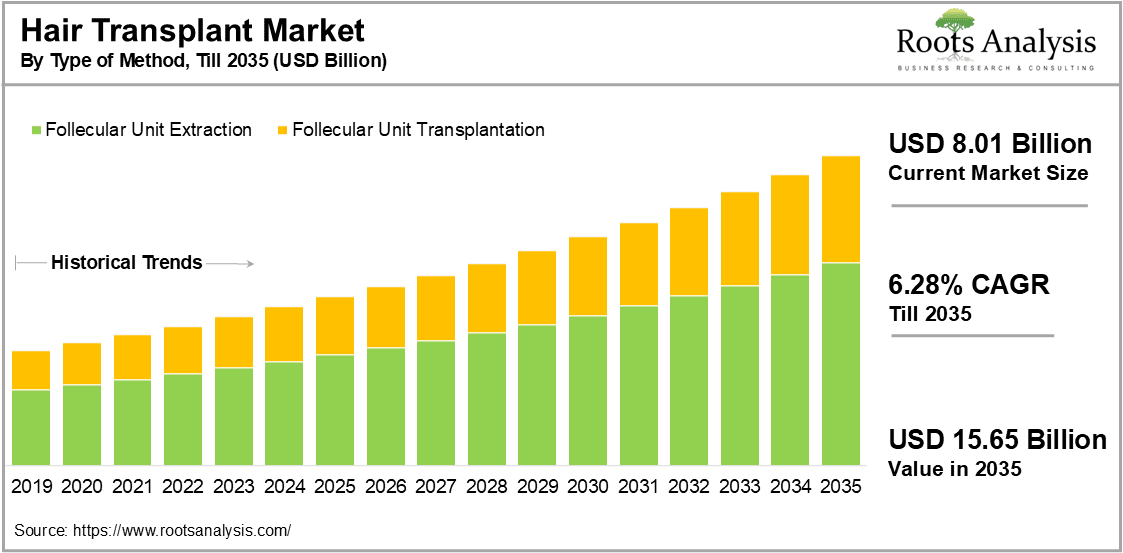
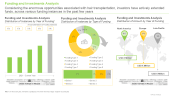
The global hair transplant market size is valued at USD 8.01 billion in 2024 and is estimated to reach USD 15.65 billion by 2035, representing a CAGR of 6.28%, during the forecast period.
Hair loss is one of the major concerns among people and it is growing exponentially across the world. High stress level, nutritional deficiency, hormonal changes and consistent hair styling techniques (including the usage of chemical products) has contributed to the hair loss. Individuals with medical conditions, such as androgenic alopecia (occurring due to genetics or environmental factors) and alopecia areata (an autoimmune disorder) can cause pattern baldness in both men and women. Similar to youthful skin, thicker hair is an important part of aesthetic appearance and hair loss significantly impact the overall look of a person. For people experiencing hair loss, hair transplant emerge as a promising medical aesthetics solution to regain lost hair follicle and achieve fuller hair growth again.
This segment highlights the distribution of hair transplantation market based on type of method into follicular unit extraction and follicular unit transplantation. According to our analysis, currently follicular unit extraction method dominates the market and occupies the highest share (66%) of the market. Follicular unit extraction is a minimal invasive procedure and ensure faster recovery time as compared to convention method.
 |
Driven by its minimal invasive nature, follicular unit extraction has been opted for hair restoration on a large scale. Furthermore, the increasing technological advancements, such as the integration of artificial intelligence and use of robotics to improve precision and efficiency has contributed to the overall share of the market. In the long run, this segment is expected to grow at a substantial CAGR during the forecast period, which further solidify its robust presence in the industry.
 |
 |
 |
Based on the type of hair transplant, the global hair transplant market is segmented into head hair transplantation, eyebrow transplantation, frontal hairline lowering and other types of hair transplant. According to our projection, presently, head hair transplantation holds the largest share (nearly 50%) of the global market. This dominance is likely to be the fact that head hair transplantation is amongst the common procedure opted by the people to cover baldness and hair thinning on the head.
 |
 |
 |
Furthermore, with changing lifestyle and increased stress level results into hair loss in young men. As a result, more people are opting for hair transplantation procedures for covering baldness on the head. Driven by the ongoing trend, this segment will continue to remain dominant and is projected to grow at a higher CAGR during the forecast period.
The hair transplant market value is categorized by type of gender, such as men and women. Among these, men dominates the market with the largest share (85%) of the overall market. This can be attributed to the fact that men experience hair loss more in comparison to women and seek more hair transplantation solutions.
 |
 |
 |
However, it is important to highlight here that women segment will grow at a higher CAGR during the forecast period. This is primarily due to the growing number of females experiencing any kind of hair loss. This severe hair loss in women can be caused due to hormonal changes, genetics and any other medical condition.
On the basis of type of therapy, the global market is segmented into low level laser therapy, stem cell hair restoration and platelet rich plasma. Currently, platelet-rich plasma therapy occupies the highest hair transplant market share. This can be attributed to the high potential of platelet rich plasma for stimulating hair growth and its non-invasive nature. According to a study conducted by Cairo University, individuals who have undergone platelet rich plasma therapy have 75% hair growth after the six months of treatment. Notably, the minimal side effects and higher efficacy rate for hair restoration has further contributed to the highest share of the market.
However, it is worth mentioning that stem cell therapies have also shown significant outcomes in stimulating hair growth, promoting new hair growth and rejuvenating hair follicles. As researchers continue to explore stem cell therapy for hair growth stimulation, we believe this segment will grow at a higher CAGR, contributing to the overall market expansion during the projected period.
Based on the end user, the global market is segmented into hospitals, clinics and surgical centers. According to our projection, clinics dominate the market and is poised to hold nearly 70% hair transplant market share by 2035. This can be attributed to clinics offering advanced hair transplantation solutions, personalized care and post-procedural recovery at affordable prices.
Furthermore, the specialized clinics that offer hair transplant treatment to patients with Alopecia areata has significantly contributed to the overall share of clinics. Driven by the growing preferences specialized hair transplantation solution, this segment will continue to grow at a substantial CAGR during the forecast period.
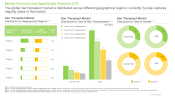
The global market is distributed across different geographical regions, such as North America, Europe, Asia-Pacific, Middle East and North Africa, and Latin America. According to our analysis, currently Europe accounts for the highest share (nearly 35%) of the market. Several factors, such as growing number of people with hair loss and technological advancements for hair restoration technologies, are contributing to the highest share of this region. Furthermore, advanced procedures, such as follicular unit extraction, stem cell therapies and robot-assisted procedures have made treatment more efficient, minimally invasive and accessible in this region.
However, in the long run, Asia-Pacific will show lucrative growth potential and is likely to grow at a higher CAGR during the forecast period. This can be driven by the growing healthcare expenditure and higher number of patients experiencing hair loss.
The “Hair Transplant Market: Industry Trends and Global Forecasts, till 2035” market report features an extensive study on the current market landscape and future potential of developing hair transplant solutions, over the next decade. The study presents an in-depth analysis, highlighting the capabilities of various stakeholders engaged in this domain, across different geographies.
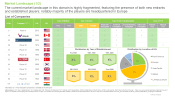
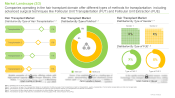
Presently, the market landscape seems highly competitive and features the presence of several small, mid-sized and large industry players. Several industry players, such as Bosley, and Hair Restoration Blackrock are leveraging technological innovations to make procedures less invasive and enhance the development of non-invasive hair restoration solutions. US based Pelage Pharmaceuticals is developing a regenerative medicine based on stem cell research at University of California Los Angeles. The phase I clinical candidate is a small molecule that is topically applied to stimulate the hair follicle stem cells.
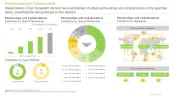
Considering the high demand, there are various industrial players who have entered into collaborations and strategic alliance to enhance their product portfolio and consolidate their robust presence in this growing industry. Overall, the market seems highly competitive offering enormous opportunities to industry leaders for driving innovation in this field.
Some of the potential drivers that are propelling the growth of this industry includes increasing prevalence of hair loss and technological advancements. It is important to highlight here that the medical conditions, stress and sedentary lifestyle has triggered the hair loss in men and women in recent years. According to the National Alopecia Areata Foundation, 160 million people worldwide have / have had alopecia areata, of which US alone has about 7 million people with this condition.
Since hair loss can impact on the overall aesthetic appearance, several people are opting for hair transplantation, which is expected to be a key driver for the market. Additionally, the key players are focusing on technological innovations to develop state-of-the-art hair transplantation solutions, which is likely to be a consolidate reason for market growth.
Despite the high demand for hair transplant, this market witness significant challenges that hinder its widespread adoption. Some of those challenges includes high treatment cost and an invasive approach. It is worth noting here that hair transplant procedure such as follicular extraction unit and robotic assisted hair transplantation is expensive, which limit its adoption across middle income countries. In order to overcome the cost barriers, the stakeholders are required to emphasize the development of more accessible, affordable and high-quality hair transplant solutions.
Despite the high-cost barrier, the global market for hair transplant is experiencing exponential growth. Some of the top trends that are likely to grow the industry include high demand for non-invasive procedures, such as platelet-rich plans therapy, exosome-based stem cell therapy and personalized treatment. Furthermore, growing disposable income and the integration of advanced technologies to offer personalized treatments are likely to be the key factor that are driving market growth during the forecast period. Additionally, advancements in hair transplantation instruments such as DHI implanter pens, sapphire blades and improved punch tools are offering enormous opportunities to make strategic initiatives. In future, the key players will focus on hair follicle cloning and tissue engineering to avoid extraction of large number of hair follicle from body part and transplant.
The integration of 3D bioprinting with hair transplant industry is anticipated to be a game changer, wherein the bio-printed hair follicles (grown in an external environment) can be used and implanted, for hair restoration. This significantly reduces the dependence on extraction at the donor’s site. As a result, the further minimization of invasion on the patient can result in enormous increase in the people opting for hair transplantation.
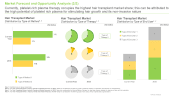
Currently, the market for hair transplant in Europe holds the highest share of the market and is likely to remain dominant during the forecast period. This dominance is primarily due to the growing prevalence of hair loss and rising technological innovations to mitigate the growing concern. Furthermore, the European countries such as Germany, Italy and UK has a large number of people with hair loss problems.
In addition, the increasing strategic initiatives by the industrial players and rising disposable income in this region has further contributed to the highest share of the segment. Moreover, some other factors that are contributing to the highest share of Europe include advanced healthcare infrastructure, well-established medical care and high number of individuals seeking hair transplant solutions.
The global hair transplant market size is currently valued at USD 8.01 billion. Driven by the growing preferences of hair transplant to achieve thicker hair, the market is estimated to reach USD 15.65 billion by 2035. Notably, the growing disposable income and hype bolstered by social media to achieve youthful appearance has further increased the demand for hair restoration processes. In order to fulfill the growing demand, several industrial players are focusing on strategic initiatives to drive innovations such as robotic hair transplantation and stem cell therapies to regrow new hair.
For instance, in November 2024, Silicon Valley Hair Institute announced the updated content on ARTAS® hair transplant (an advanced ARTAS® robotic technology) which was guided by Dr. Miguel Canales for hair loss treatment and restoration. Such education initiatives undertaken by the stakeholders to educate the people around the world, emphasized on the commercialization strategies adopted by them. Driven by the growing awareness, along with the rise in demand for such solutions, the market is expected to grow at a CAGR of 6.28% during the forecast period.
Examples of key players engaged in this domain (which have also been captured in this report) include Allergan, Bernstein Medical, Bosley, Chicago Hair Transplant Clinic, GETFUE Hair Clinics, Dermamagnetica, Elite Hair Restoration, Hair Restoration BlackRock, HairClub, Hairline International Hair and Skin Clinic, Hair Palace Clinic, MAXIM Hair Restoration, Nova Medical and Venus Concept. This market report includes an easily searchable excel database of all the companies developing hair transplant solutions.
The market study report provide valuable information of the players who are presently active across various segments of this growing industry as mentioned in the table below.
| Key Report Attributes | Details | |
| Historical Trend | Since 2019 | |
| Forecast Period | Till 2035 | |
| Market Size 2035 | USD 15.65 billion | |
| Market CAGR | ~6.28% | |
| Type of Hair Transplant |
|
|
| Types of Gender |
|
|
| Type of Hair Transplantation Method |
|
|
| Type of Therapy |
|
|
| Type of End User |
|
|
| Key Geographical Region |
|
|
| Key Players Profiled |
|
|
| PowerPoint Presentation (Complimentary) |
Available | |
| Customization Scope | 15% Free Customization | |
| Excel Data Packs (Complimentary) |
Available | |
One of the key objectives of the hair transplant market report was to estimate the current market size, opportunity and the market growth potential, over the forecast period, till 2035. We have provided informed estimates on the likely evolution of the market for the forecast period.
Additionally, the market report features the distribution of the current and forecasted opportunity within the market across type of hair transplantation (head hair transplantation, eyebrow transplantation, frontal hairline lowering and other types of hair transplantation), type of gender (male and female), type of method (follicular unit extraction and follicular unit transplantation), type of therapy (low level laser therapy, stem cell hair restoration and platelet rich plasma), type of end user (hospitals, clinics and surgical centers), geographical region (North America, Europe, Asia-Pacific, Middle East and North Africa, and Latin America), and leading players.
To account for the uncertainties associated with the development of hair transplantation technology and to add robustness to our model, we have provided three market forecast scenarios, portraying the conservative, base and optimistic tracks of the market’s evolution.
All actual figures have been sourced and analyzed from publicly available information forums and primary research discussions. Financial figures mentioned in this market research report are in USD, unless otherwise specified.
Several recent developments have taken place in the hair transplantation field. We have outlined some of these recent initiatives below.