


 Download Free Sample
 Buy Now
Market Size
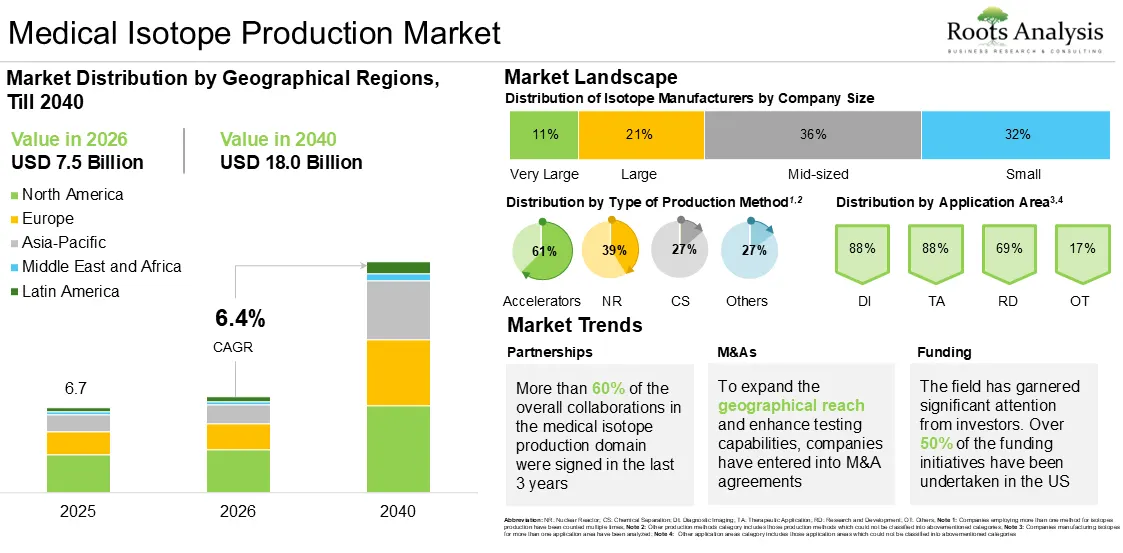
The global medical isotope production market, valued at USD 6.7 billion in 2025, is projected to reach USD 7.5 billion in 2026 and USD 18.0 billion by 2040, representing a CAGR of 6.4% during the forecast period 2026 to 2040.
See What’s in the Full Report – Request Your Complimentary Insights!
Market Report: Key Takeaways
- The commercial scale sub-segment dominates (89%) the overall medical isotope production market.
- Radioisotope sub-segment dominates the current medical isotope production market.
- Technetium-99m is the most popular type of radioisotope in the overall market.
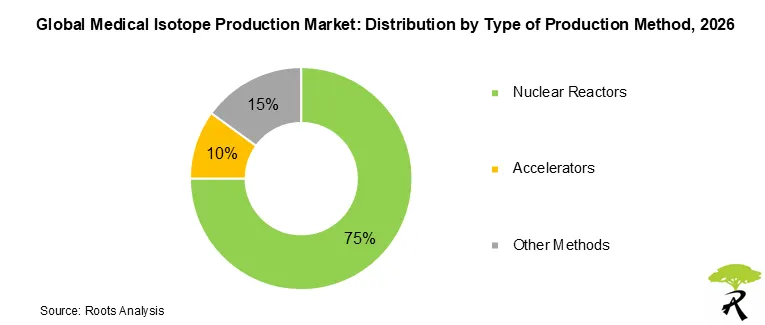
- Nuclear reactors account for the highest share (75%) of the overall market, followed by accelerators and other methods.
- Diagnosis is the most popular application area, capturing the largest share (64%) of the overall medical isotope production market.
- With respect to the type of diagnostic radioisotopes, SPECT radioisotopes dominate the current market.
- Gamma emitters currently hold the highest market share, among therapeutic radioisotopes.
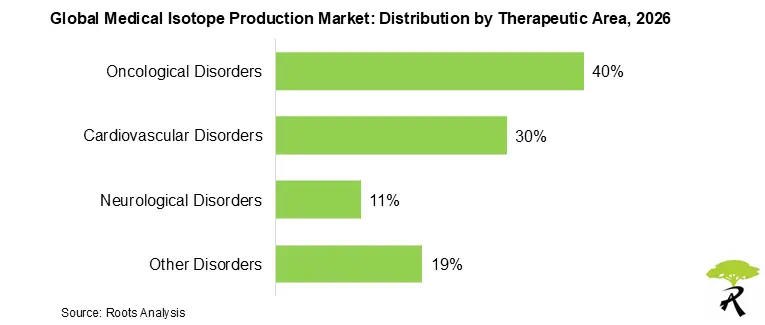
- Oncological disorders hold the largest share (40%), among therapeutic areas, of the overall market.
- In terms of end-users, hospitals hold the highest share of the market.
- North America captures nearly 45% of the overall market.
Methodology and Industry Experts Interviews
The findings presented in this study were developed through a structured research methodology combining extensive secondary research, proprietary databases, company disclosures, regulatory filings, academic and industry publications, and primary research. Inputs were triangulated across production capacity, isotope availability, supply-chain reliability, regulatory and quality requirements, clinical adoption, and regional market conditions to validate the market assumptions and forecast estimates. The report includes detailed transcripts of interviews conducted with the following industry participants:
David Harris (President and Chief Executive Officer of Christel House International), stated, “The global market for Isotopes is growing. The global demand for Lutetium is predicted to become a billion dollar market. That is sort of known and that is a huge supply amount for Lutetium. The FDA has almost 200 drugs undergoing clinical trials that are all based on Lutetium and are targeting different types of cancers.”
The analysis is further supported by relevant third-party expert discussions with multiple stakeholders influenced the opinions and insights presented in this study. The market report includes detailed transcripts of interviews conducted with the following individuals:
- Managing Director, Small Organization, Netherlands
- Chief Executive Officer, Mid-sized Organization, Canada
In addition, the market report includes transcripts of the following other third-party discussions:
- Director, Business Development & Strategic Supply, Mid-sized Organization, Canada
- Nuclear and Radiological Engineering and Medical Physics program Chair, Large Organization, US
- Medical Radioisotopes Advisor, Very Large Organization, France
- Senior Director, Nuclear Medicine, Small Organization, UK
- Future Leaders Fellow, Large Organization, UK
- Staff Radiologist and Nuclear Medicine Physician, Large Organization, Canada
Market Overview
Medical isotopes represent a critical component in modern targeted cancer therapies, enabling the delivery of highly potent agents in the form of radioisotope medicine. By integrating various technological advancements in production methods, medical isotope production companies are manufacturing high-quality radioisotopes to be utilized in the healthcare industry.
The radiopharmaceutical sector continues to expand rapidly by leveraging innovations in medical isotope chemistry, production methods, and purification technologies to refine safety and efficacy profiles. However, the field still encounters certain challenges including large-scale medical isotope production, cost intensive logistics, high capital investment needs, along with meeting stringent regulatory and quality standards for clinical deployment. Within this workflow, radiopharmaceutical manufacturing combines isotope production, radiolabeling and quality control for diagnostic and therapeutic products.
Achieving stability in supply chain and establishing new research reactor facilities remain significant hurdles for widespread adoption. However, expanding applications in cancer therapies and the rising global trend of personalized medicine are fueling market growth.
Recent Developments
- SHINE Technologies and C-Ray Therapeutics: signed an agreement, in March 2026, for the distribution of Non-Carrier-Added Lutetium-177 in Mainland China.
- Curium Pharma, PeptiDream and PDRadiopharma: entered into an agreement, in February 2026, to enroll first patient in the registrational clinical trial of Lutetium-177 PSMA therapy, for the treatment of prostate cancer, in Japan.
- Bruce Power and Kinectrics: partnered, in January 2026, to manufacture a new hot-cell facility, to accelerate the large-scale production of medical radioisotopes in Ontario.
Your Business is Unique – Why Shouldn’t Your Report Be?
Medical Isotope Production Market Trends
- Partnerships and Collaborations: The global medical isotope production market is witnessing a growing number of partnerships, expected to drive the growth in this market. For instance, market players, such as Eckert & Ziegler and Telix, are actively collaborating to expand production capabilities and streamline the clinical translation of radiopharmaceuticals, especially in oncology imaging and targeted radionuclide therapy. Several companies are entering technology licensing and joint R&D partnerships to develop non-reactor-based isotope production methods. This is particularly notable for molybdenum-99 and technetium-99m, where cyclotron and accelerator-based approaches are gaining traction to reduce dependence on aging reactors and address supply constraints. These efforts are expected to improve supply reliability, enhance regional self-sufficiency, and meet rising demand in nuclear medicine.
- Funding and Investments: Over the years, monetary assistance from angel investors, venture capitalists, and funding schemes of various public and private organizations, along with assistance from regulatory authorities, have allowed start-ups / small companies to progress their R&D efforts in the medical isotope production industry. SpectronRx recently secured an investment worth $85 million from OrbiMed, aimed at scaling up manufacturing infrastructure and alleviating the supply constraints associated with critical therapeutic isotopes.
Market Drivers
- Expansion of production facilities: Medical isotope production companies are expanding their production facilities rapidly, enabling them to ensure large scale production of multiple medical radioisotopes at a time. This expansion is supported by growing investments in advanced hot-cell technologies, nuclear reactor infrastructure, and accelerator- and cyclotron-based production facilities, which enhance production capacity, improve supply reliability, and help meet the increasing demand for diagnostic and therapeutic radioisotopes.
- Growing interest in targeted and personalized radiotherapies: Advanced therapeutics such as Lutetium-177, Thorium-228, and Yttrium-90 are involved in targeted radionuclide therapies. Diagnostic isotopes such as fluorine-18 and technetium-99m are widely used in PET and SPECT imaging, respectively. Technetium-99m is commonly obtained from molybdenum-99/technetium-99m generator systems, making reliable Mo-99 production critical to the nuclear medicine supply chain.
Pay Only for What You Need – The Best Way to Optimize
Market Segmentation Analysis
Commercial Scale Accounts for the Largest Share of the Medical Isotope Production Market
Commercial scale accounts for the largest market share (89%) of the overall market. This is due to the evolving landscape of nuclear medicine and the radiopharmaceutical sector, which has witnessed increased commercialization of isotope-based therapies. The medical isotope production market for preclinical / clinical scale sub-segment is likely to grow at a relatively higher CAGR, showcasing substantial growth potential during the forecast period. This is due to expanding pipeline of isotope based radiopharmaceutical products, particularly targeted radionuclide therapies.
Radioisotopes Lead the Medical Isotope Production Market
Radioisotopes currently capture the majority share within the medical isotope production market. This can be primarily attributed to the fact that radioisotopes have emerged as a promising alternative in contemporary healthcare industry, addressing the limitations of traditional diagnostic and surgical methods, such as lower accuracy and invasiveness. The market for stable isotopes is expected to grow at a higher pace owing to their growing applications in the diagnostic application area. In March 2026, Theragenics entered into a collaboration with Clarity Pharmaceuticals in order to manufacture and supply stable isotopes for diagnostic purposes.
Nuclear Reactors Set to Lead Medical Isotope Production Industry
Nuclear reactors dominate the overall market, accounting for 75% share. This can be attributed to the established infrastructure and ability to support large-scale production of high-demand isotopes, including molybdenum-99, iodine-131 and lutetium-177. Additionally, nuclear reactors offer high neutron flux, enabling efficient production of isotopes that require neutron irradiation and are difficult to manufacture through alternative methods.
We anticipate accelerator sub-segment to grow at a relatively higher CAGR during the forecast period. This is due to increasing adoption of cyclotron and linear accelerator-based production methods for decentralized and patient-specific isotope supply. Additionally, accelerators enable the production of emerging therapeutic isotopes, including actinium-225, copper-67 and zirconium-89, which are gaining importance in targeted radiopharmaceutical therapies and PET imaging.
Diagnosis is the Most Prominent Application
Medical isotopes being used for diagnosis capture the majority (64%) of the share and are expected to remain dominant during the forecast period. This is because of the growing number of cancer cases, due to lifestyle changes and environmental factors, resulting in a heightened demand for early diagnosis using non-invasive solutions.
Oncological Disorders Lead the Medical Isotope Production Market
Oncological disorders capture the majority (40%) share within the medical isotope production market, as a result of the rising prevalence of oncological disorders across the globe. The utilization of radiopharmaceuticals for the diagnosis and treatment of such disorders is steadily increasing. The market for neurological disorders sub-segment will grow at a relatively high CAGR due to a rapid surge in the incidence of neurodegenerative disorders.
Market Regional Insights
North America Dominates the Medical Isotope Production Market
North America holds the highest share (45%) of the overall market, owing to the higher acceptance of radiotherapies among patients in developed regions, particularly in the US. Nuclear technology advancements in this region, such as incorporation of computer-driven robotic technology for the production of medical isotopes, positions it for significant growth in the future.
Medical Isotope Production Adoption in the Asia-Pacific Region
Owing to the growing geriatric population and rise in the number of cancer and cardiovascular disease cases, along with the technological advancements in medical imaging technologies, the market for medical isotopes in Asia-Pacific is likely to grow at a higher rate during the forecast period.
Get an Instant Quote in 10 Minutes. Lowest Price Guaranteed
Key Players in the Medical Isotope Production Market
Examples of key companies profiled in this market report include Cardinal Health, Curium Pharma, Eden Radioisotopes, NorthStar Medical Radioisotopes, Nusano, SpectronRx, ABX advanced biochemical compounds, CMR Isotopes, Eckert & Ziegler, ROTOP Pharmaka, China Isotope & Radiation Corporation, and Global Medical Solutions. The complete list of close to 65 companies is available in the full report, which also includes an easily searchable Excel database of companies worldwide. Additional named organizations referenced elsewhere in this report's underlying data, including Bruce Power, Curium Pharma, C-Ray Therapeutics, Kinectric, PeptiDream, PDRadiopharma, and SHINE Technologies, reflect initiatives undertaken across the medical isotope production ecosystem, not an endorsement relationship with Roots Analysis.
Market Segments
Based on the research, we have segmented the Medical Isotope Production Market into Scale of Operation, Type of Isotope, Radioisotope, Production Method, Application Area, Type of Diagnostic Radioisotope, Type of Therapeutic Radioisotope, Therapeutic Area, End-Users, and Geographical Regions.
By Scale of Operation
- Commercial Scale, Preclinical / Clinical Scale
By Type of Isotope
- Radioisotopes, Stable Isotopes
By Type of Radioisotope
- Technetium-99m, Lutetium-177, Fluorine-18, Other Radioisotopes
By Type of Production Method
- Nuclear Reactors, Accelerators, Other Methods
By Application Area
- Diagnosis, Nuclear Therapy, Other Applications
By Type of Diagnostic Radioisotope
- SPECT Radioisotopes, PET Radioisotopes
By Type of Therapeutic Radioisotope
- Gamma Emitters, Beta Emitters, Other Emitters
By Therapeutic Area
- Oncological Disorders, Cardiovascular Disorders, Neurological Disorders, Other Areas
By End-Users
- Hospitals, Diagnostic Centers, Research Institutes
By Geographical Regions
- North America, Europe, Asia-Pacific, Middle East and Africa, Latin America
Report Deliverables and Customization
Alongside the core market report, clients receive complimentary Excel data packs covering the medical isotope production market landscape, company competitiveness analysis, partnerships and collaborations, funding and investments, vendor selection framework, and market sizing and opportunity analysis. A complimentary PowerPoint presentation summarizing the full report is also included, and 15% free customization scope is available on request.
Report Authorship
Author(s): This report was co-authored by Rupali Bhardwaj and Rashmeet Kaur, both part of Roots Analysis’s healthcare and pharma research practice, with a focus on the medical isotope production market, including isotope generation, processing, and supply for diagnostic imaging, therapeutic applications, and research. All findings are based on proprietary databases, executive interviews, and regulatory analysis, and were subject to internal peer review prior to publication.
Independence and Non-Affiliation
Roots Analysis is an independent market research and consulting firm. This report draws on publicly available information, primary interviews, and proprietary analysis. Roots Analysis is not affiliated with, endorsed by, or a representative of the USFDA, the European Medicines Agency, or any of the pharmaceutical companies, branded therapeutics, or individuals named in this report. All company and product names are used for identification purposes only and remain the property of their respective owners.
Roots Analysis maintains its own proprietary primary research process, and does not receive compensation from any company profiled within the report, in exchange for inclusion or favorable characterization.
Clients evaluating this report alongside competing market studies should weigh two factors in particular: whether the segmentation depth matches their specific decision, and whether the publisher discloses its own independence from the companies and regulatory bodies it covers.


