


 Download Free Sample
 Buy Now
Market Outlook
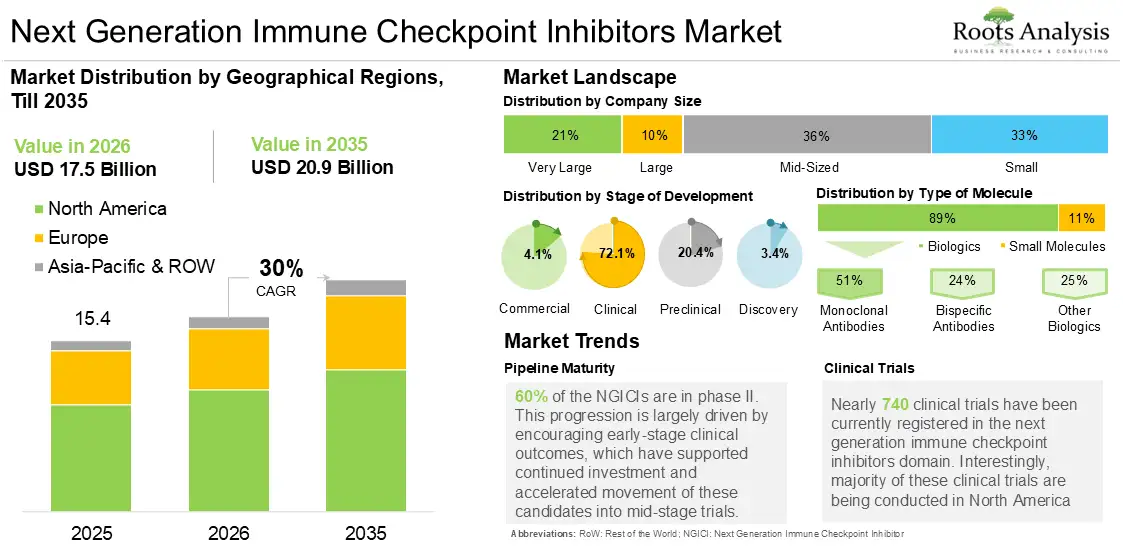
The global next generation immune checkpoint inhibitors market, valued at USD 15.4 billion in 2025, is projected to reach USD 17.5 billion in 2026 and USD 20.9 billion by 2035.
See What’s in the Full Report – Request Your Complimentary Insights!
Market Report: Key Takeaways
Market Size and Trends
- In terms of target immune checkpoint, the CD38 is likely to hold the highest share (close to 97%) of the market, in 2026.
- Based on the target disease indication, the multiple myeloma is likely to occupy the largest share of the market, in 2035.
- Based on type of molecule, biologics are likely to hold the highest market share (close to 97%), in the current year.
- Based on geographical regions, North America is projected to capture the majority share of the market, in 2035.
- In terms of sales forecast for therapies, Darzalex will hold the highest market share by securing 38% of the market share in future.
Key Market Statistics
- Projected Market Size in 2026: $17.5 billion
- Estimated Market Size in 2035: $20.9 billion
- CAGR (2026-2035): Darzalex: -8% (Patent expiry in 2029), Other Products: 30%
- North America: Largest market in 2035
- Asia-Pacific: Fastest growing region
Unlock Deeper Insights – Schedule Your Personalized Workshop Today!
Market Introduction
Cancer continues to be one of the leading causes of mortality worldwide, and this rising incidence across major geographies has reinforced the need for more durable and effective treatment options. Although targeted therapies, chemotherapy and radiation therapy have demonstrated improved outcomes in specific settings, many tumors continue to show limited or short-lived responses. First-generation immune checkpoint inhibitors (ICIs), particularly those targeting CTLA-4 and PD-1 / PD-L1, have reshaped cancer therapeutics by activating antitumor immunity, yet their overall response rates remain variable, and resistance continues to be a major clinical challenge.
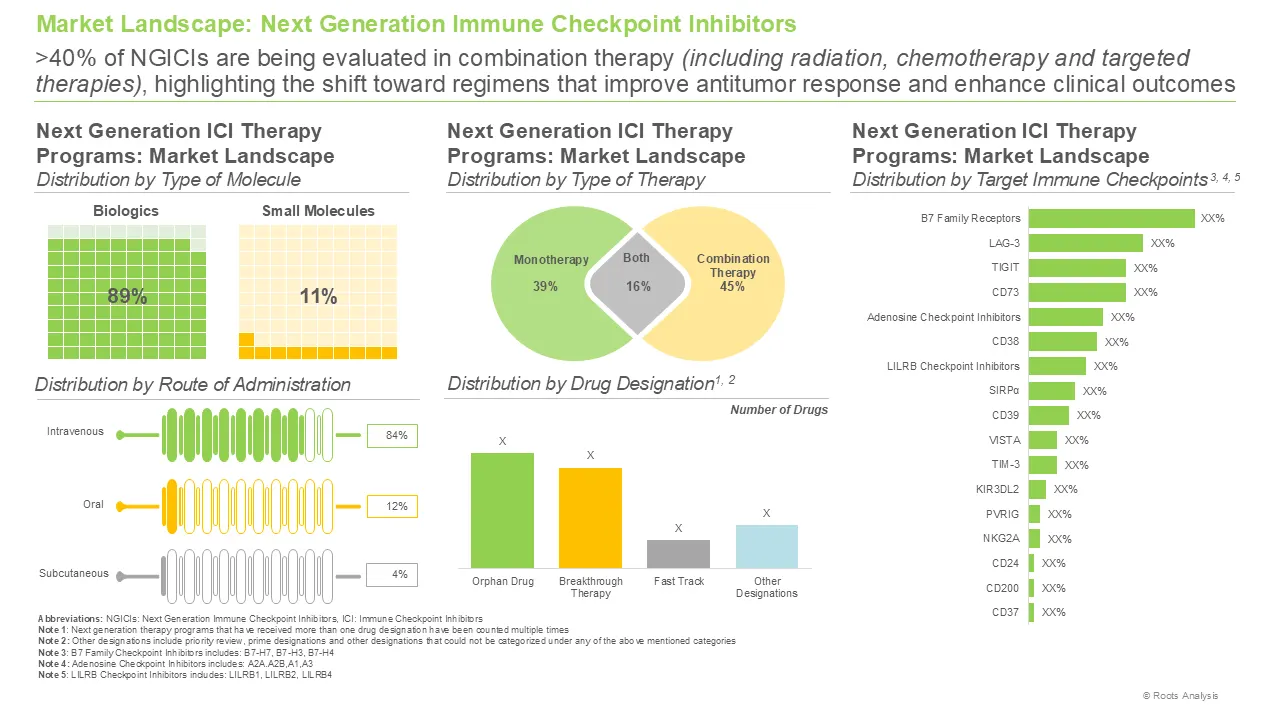
These limitations have accelerated interest in next generation immune checkpoint inhibitors (NGICIs). Emerging targets such as LAG-3, TIM-3, TIGIT, CD47, VISTA, CD38, and adenosine receptors address additional mechanisms of immune suppression within the tumor microenvironment, offering the potential for improved efficacy and broader patient benefit. Supported by active R&D pipelines, increasing clinical evaluations, and rising industry partnerships, these advancements are driving strong commercial momentum and positioning NGICIs as a key growth driver within the global immuno-oncology market.
Market Segmentation
Based on our secondary market research, we have segmented the Next Generation Immune Checkpoint Inhibitors Market into target immune checkpoint, target disease indication, type of molecule, geographical regions, leading players and sales forecast of therapies.
By Target Immune Checkpoint
- CD38
- B7-H3
- TIGIT
- LAG-3
- CD73
By Target Disease Indication
- Multiple Myeloma
- Lung Cancer
- Melanoma
- Light Chain Amyloidosis
- Immune Thrombocytopenia
- Prostate Cancer
- Esophageal Cancer
- Pancreatic Cancer
By Type of Molecule
- Biologics
- Small Molecules
By Geographical Regions
- North America
- Europe
- Asia-Pacific and Rest of the World
By Leading Players
By Sales Forecast of Therapies
- Darzalex
- Sarclisa
- ONO-4882
- Ifinatamab Deruxtecan / MK-2400
- GSK5764227
- Mezagitamab (TAK-079)
- Fianlimab
- Quemliclustat
- Domvanalimab
Want Information on Specific Region / Segment?
Next Generation Immune Checkpoint Inhibitors Market Key Insights
What Factors are Driving Increased Adoption of Next Generation Immune Checkpoint Inhibitors?
- Evolving Preference for Modern Immuno-Oncology Therapies: Traditional cancer treatments often struggle with limited long-term efficacy. Chemotherapy can cause substantial toxicity, and many tumors eventually develop resistance, reducing their sustained benefit. Radiotherapy, though effective for localized disease, becomes less impactful once the cancer spreads or involves areas that are difficult to target. In contrast to these therapies, immune checkpoint inhibitors provide a more focused and durable treatment strategy by activating the body’s own immune system to identify and eliminate cancer cells, with less systemic side effects and long-lasting therapeutic responses. As a result, their improved clinical outcomes and broader applicability across cancer types continue to drive strong market adoption.
- Growing Cancer Burden Strengthens Demand for Immunotherapies: The global cancer burden continues to rise sharply, with an estimated 20 million new cases and over 10 million deaths reported in 2025. This trend is expected to escalate further, with projections indicating that annual cancer cases could exceed 3.5 million by 2050 if current incidence rates persist, driven by population growth. Such an expanding disease incidence and prevalence demands for more effective options in this domain. Cancer immunotherapy, especially immune checkpoint inhibitors, have gained prominence due to their ability to harness the immune system to recognize and destroy cancer cells more precisely than many traditional modalities. This enhanced therapeutic potential, combined with expanding clinical approvals across diverse tumour types, is fuelling increased adoption and investment in these advanced treatments.
What are the Main Challenges in Next Generation Immune Checkpoint Inhibitors Market Growth?
- Biomarker Gaps Limit Effective Use: The immune checkpoint inhibitor market continues to face challenges due to the lack of reliable, widely accepted biomarkers that can accurately predict patient response. As a result, many non-responding patients still enter clinical trials, leading to inefficient use of time and resources. Additionally, treatment outcomes depend on multiple biological factors which include, tumor mutations, immune microenvironment, Human Leukocyte Antigen (HLA) types, microbiome, and patient genetics that make single-marker strategies inadequate and further complicate adoption.
- irAEs Remain a Key Safety Concern: A major limitation to the broader use of next-generation checkpoint inhibitors is the risk of immune-related adverse events (irAEs). Since these therapies boost immune activity, they can unintentionally affect various organs, leading to conditions such as thyroiditis, colitis, and pneumonitis. In more severe cases, patients may need to pause treatment or receive immunosuppressive care, which can affect outcomes, raise costs, and limit the overall adoption.
Recent Developments in Next Generation Immune Checkpoint Inhibitors Market
- In April 2026, European Commission approved Keytruda (pembrolizumab), the first PD-1 inhibitor-based therapy in combination with Paclitaxel and / or Bevacizumab for the treatment of Platinum-Resistant Recurrent Ovarian Carcinoma.
- In February 2026, FDA approved pembrolizumab in combination with paclitaxel, with or without bevacizumab, for patients with platinum-resistant recurrent ovarian cancer. This approval broadens the clinical use of next generation immune checkpoint inhibitors and supports their growing role in hard-to-treat gynaecological cancers.
- In October 2025, Takeda entered into a strategic partnership with Innovent Biologics. Through this deal, Takeda secured rights to two late-stage next-generation immuno-oncology candidates outside Greater China, including IBI363, a bispecific antibody fusion protein being studied for lung and colorectal cancers. Such collaborations help companies rapidly expand their next generation immune checkpoint inhibitors pipelines and strengthen global development efforts.
Get an Instant Quote in 10 Minutes. Lowest Price Guaranteed
Industry Experts on Next Generation Immune Checkpoint Inhibitors Market
The global market for next generation immune checkpoint inhibitors has a transformative future and is likely to remain progressive in the future.
Dr. Hing C. Wong (Founder and CEO, HCW Biologics), stated that, “Although current immune checkpoint inhibitors generate responses in only a small subset of patients, they still recorded over USD 40 billion in global sales in 2024, reflecting strong demand. This gap between clinical need and current performance is creating significant opportunities for next-generation checkpoint inhibitors, particularly those designed to improve efficacy by targeting additional pathways and enhancing effector immune cell activation.”
The next generation immune checkpoint inhibitors market report includes detailed transcripts of interviews conducted with the following individuals:
- Chief Executive Officer, Large Company, United States
- Chief Executive Officer, Small Company, Australia
- Vice President and Head of Oncology, Large Company, Ireland
- Head of Oncology and Clinical Development, Large Company, United States
Market Share Insights
Which Target Immune Checkpoint Account for the Largest Share of Next Generation Immune Checkpoints Market?
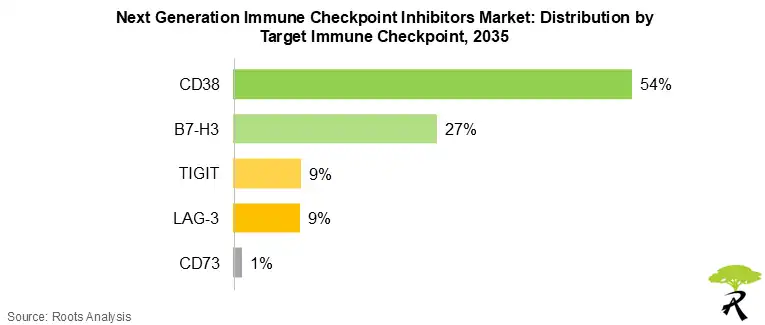
- The next generation immune checkpoint inhibitors market is well distributed across various target immune checkpoint, such as CD38, B7-H3, TIGIT, LAG-3 and CD73. In 2035, the CD38 segment is likely to occupy the higher share (>50%) of immune checkpoint inhibitors market. Further, the B7-H3 segment is likely to witness a significantly higher growth rate during the forecast period.
- This is primarily due to the dual function of this checkpoint protein, that has the ability to exert both stimulatory and immunosuppressive effects on the immune system. Further, clinical studies suggest that the immunosuppressive function of this checkpoint predominates, specifically in the treatment of glioblastoma. This makes B7-H3 a promising checkpoint inhibitor for clinical research.
Which Type of Molecule Account for the Largest Share of Next Generation Immune Checkpoint Inhibitors Market?
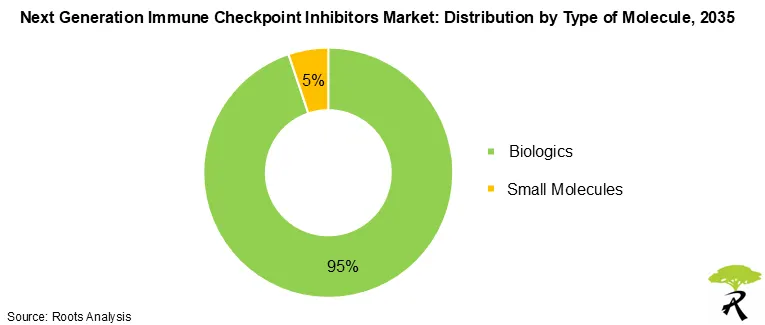
- The next generation immune checkpoint inhibitors market is well distributed across various types of molecules, such as biologics and small molecules. Based on the next generation immune checkpoint inhibitors market report, the biologics segment is likely to occupy the highest (nearly 95%) next generation immune checkpoint inhibitors market share in 2035. This is because biologics are designed to have a relatively lower dosing frequency, that ensures patient compliance and target specificity, while limiting off-target effects in patients.
- The small molecules segment is likely to witness a higher CAGR in the future, this is because they can simultaneously modulate multiple anti-tumor pathways. Their strong oral bioavailability and low risk of immunogenicity also make them more convenient and better tolerated by patients. Together, these advantages enhance clinical flexibility, reduce overall treatment burden, and strengthen the commercial appeal of small molecules.
Regional Market Analysis: Which Regions are Showing the Fastest Growth in Next Generation Immune Checkpoint Inhibitors Market?
North America: Dominating the Market by Securing Highest Share
North America is likely to capture more than 60% of the next generation immune checkpoint inhibitors market share in 2035, owing to the advanced healthcare infrastructure and research capabilities in this region which enable drug developers to conduct extensive clinical trials required to meet the stringent regulatory guidelines of drug approval bodies.
Asia-Pacific and Rest of the World: Driving the Future of Market Expansion
In Asia-Pacific and rest of the world, the next generation immune checkpoint inhibitors market is likely to grow at a relatively higher CAGR, till 2035. This is mainly because this region features a broad target patient pool suffering from cancer, primarily in Southeast Asia, which has a population of over 690 million. Given the rising cancer burden and the evolving clinical research landscape, the demand for effective immune checkpoint inhibitor therapies is likely to increase significantly within this region in the coming years.
What are the Mega Trends in Next Generation Immune Checkpoint Inhibitors Market?
- Advancing ICIs Through Combination Therapy: A key development in next generation immune checkpoint inhibitors is the growing focus on combination therapy. While ICIs (immune checkpoint inhibitors) have already transformed cancer treatment / care and are approved across many solid tumors, studies show that pairing them with targeted therapies can further enhance treatment outcomes. A notable example is the approved triple regimen of atezolizumab, vemurafenib, and cobimetinib for BRAFV600-mutated advanced melanoma, which demonstrates clear synergistic benefit. Although not all combinations are successful, the overall shift toward combining ICIs with targeted agents is shaping the direction of next generation immunotherapy development.
- Development of Third Generation Immune Checkpoint Inhibitors: The rise of new immune checkpoint targets represents a significant market opportunity for the next generation of immunotherapies. As PD-1/PD-L1 inhibitors exhibit plateauing response rates, developers are prioritizing more promising targets such as LAG-3, TIGIT, and TIM-3. Studies show that new checkpoint targets are delivering encouraging results. TIM-3 inhibitors can activate immune cells more effectively and help more T cells reach the tumor. Similarly, LAG-3 has shown the ability to improve outcomes, especially when used with PD-1 therapies, by helping overcome resistance., These studies suggest strong potential for new indications and combination treatments, supporting future growth of next-generation immune checkpoint inhibitors.
Next Generation Immune Checkpoint Inhibitors Market: Report Attributes
| Key Report Attribute | Details | |
| Historical Trend | Since 2022 | |
| Forecast Period | Till 2035 | |
| Market Size 2026 | USD 17.5 Million | |
| Market Size 2035 | USD 20.9 Million | |
| CAGR (Till 2035) | Darzalex: -8% (Patent expiry in 2029) Other Products: 30% |
|
| Segments Covered |
|
|
| Key Players Profiled |
|
|
| PowerPoint Presentation Complimentary) |
Available | |
| Customization Scope | 15% Free Customization | |
| Excel Data Packs (Complimentary) |
Available | |


