
Lowest Price Guaranteed
Slides
338
Last Updated
September 2026
View Count
26178
The global pharmacy market, valued at USD 2.5 trillion in 2025, is projected to reach USD 2.6 trillion in 2026 and USD 4.1 trillion by 2035, with a 5% CAGR during the forecast period 2026 to 2035.
 |
To learn more about this report, request a free sample copy
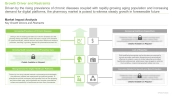
The new research study consists of pharmacy industry data, market trends, detailed market analysis, competitive landscape, company competitiveness analysis, value chain analysis, market impact analysis, and market forecast and opportunity analysis. The rising prevalence of chronic diseases coupled with rapidly growing aging population and increasing demand for home care is propelling the increased adoption of online pharmacy services.
According to the US health department, around 133 million Americans live with at least one chronic disease. In order to address this, the pharmacy industry, comprising both independent stores and chains are offering a wide range of prescription drugs, over-the-counter drugs, medical devices and other health and wellness products for the treatment of such diseases. Presently, several pharmacies are considered as “one-stop-shop” providing pharmacy products along with a wide range of other essential products, including skincare, hair care, baby care and household products.
Recent trends in the global pharmacy industry showcase a growing emphasis on personalization, sustainability and the rise of online pharmacy. Pharmacies are rapidly adopting automation and digitalization strategies to enhance efficiency, improve patient safety and provide personalized services.
Additionally, the COVID pandemic has accelerated the growth of this industry, with pharmacies offering testing and vaccination services. In July 2024, Babson Diagnostics launched new blood testing services available through two retail pharmacies, namely Peoples Rx and Lake Hills Pharmacy in Austin and San Antonio. Pharmacists now offer various services like glucose testing, cholesterol screening and immunizations in community pharmacies.
It is worth mentioning that in the US, drug stores enhance customer engagement through loyalty programs, with 33% of the US consumers joining new programs in 2022. This trend is not only limited to the US, as 57% of the consumers worldwide, used their loyalty points in 2022 to save money. Moreover, the personalized offers are valued by 60% of consumers, emphasizing the importance of tailored interactions to drive loyalty and savings.
It is worth important to note that online pharmacies, also known as e-pharmacy, have experienced rapid growth worldwide, driven by the high internet usage and patients' desire to reduce healthcare costs. However, the growth of online pharmacies has also led to increased illegal sales of the unapproved and misbranded drugs, particularly since the COVID-19 pandemic.
The diverse regulatory, economic and cultural environments in different countries have resulted in varying models of online pharmacies, with prescription-based models being utilized in the US and non-prescription based models in Europe.
To summarize, Ronit Sharma, Associate at Roots Analysis states ''As the industry continues to evolve, pharmacies are adopting strategic initiatives, such as micro-fulfillment centers for supporting prescription drugs shipping demand. This shift in the industry, coupled with the rising trend of online pharmacy, is expected to drive significant growth in the global pharmacy market value over the forecast period.''
 |
 |
 |
The market report presents an in-depth analysis of the various leading players that are involved in the pharmacy industry, across different segments, as defined in the table below:
| Key Report Attributes | Details | |
| Historical Trend | Since 2019 | |
| Forecast Duration | 2026-2035 | |
| Future Trend | Till 2035 | |
| Market Size Value, 2026 | USD 2.6 Trillion | |
| Market Size Value, 2035 | USD 4.1 Trillion | |
| CAGR (Till 2035) | 5% | |
| Type of Pharmacy |
|
|
| Type of Product Offered |
|
|
| Availability |
|
|
| Type of Drug |
|
|
| Type of Drug Molecule |
|
|
| Type of e-pharmacy Platform |
|
|
| Therapeutic Area |
|
|
| Geographical Regions |
|
|
| Market in North America |
|
|
| Market in Europe |
|
|
| Market in Asia-Pacific |
|
|
| Market in Middle East and North Africa |
|
|
| Market in Latin America |
|
|
| Key Companies Profiled |
|
|
| PowerPoint Presentation (Complimentary) |
Available | |
| Customization Scope | 15% Free Customization | |
| Excel Data Packs (Complimentary) |
|
|
 |
 |
 |
One of the key objectives of this market report was to estimate the current market size, opportunity and the future market growth potential of the service providers in the pharmacies market, over the forecast period. Based on multiple parameters, likely adoption trends and through primary validations, we have provided an informed estimate on the market evolution till 2035.
The data coverage of market report features the likely distribution of the current and forecasted opportunity for service providers in the global market across various segments, such as type of pharmacy (retail pharmacy, e-pharmacy, hospital pharmacy and other pharmacies), type of product offered (drugs / pharmaceuticals, medical devices and other pharmacy products), availability (prescription products and over-the-counter products), type of drug (branded / patented drugs and generic drugs), type of drug molecule (small molecules and biologics), type of e-pharmacy platforms (app-based platforms and web-based platforms), therapeutic area (oncological disorders, cardiovascular disorders, neurological disorders, infectious diseases, metabolic disorders, respiratory disorders, dermatological disorders, genetic disorders, autoimmune / inflammatory disorders and other disorders), key players and geographical regions (North America, Europe, Asia-Pacific, Middle East and North Africa, and Latin America). In order to account for future uncertainties associated with some of the key parameters and to add robustness to our model, we have provided three pharmacy market forecast scenarios, namely conservative, base and optimistic scenarios, representing different tracks of the industry’s evolution.
All actual figures have been sourced and analyzed from publicly available information forums and primary research discussions. Financial figures mentioned in this market report are in USD, unless otherwise specified.
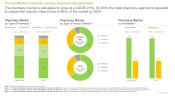
The pharmacy industry is segmented into different types of pharmacies, such as retail pharmacy, e-pharmacy, hospital pharmacy and other pharmacies. The retail pharmacy market share is currently the highest and is expected to remain dominant during the forecast period. This can be attributed to the widespread accessibility and convenience offered by retail pharmacies, particularly for chronic diseases and aging population, as well as the adoption of digitalization by these pharmacies.
Additionally, retail pharmacies are expanding their services to include specialty pharmacy and mail order pharmacy services, which cater to specific patient requirements and provide convenient delivery options. CVS Health and Walgreen Boots Alliance are the largest retail pharmacy in the US in terms of market share. Both these groups also have mail and specialty pharmacy businesses.
The global pharmacy market is segmented across different types of products, such as drugs / pharmaceuticals, medical devices and other pharmacy products. The market share for drugs / pharmaceuticals is currently the highest and is expected to remain dominant during the forecast period. This can be attributed to the high demand for drugs / pharmaceuticals, driven by factors, such as increasing incidence of chronic diseases and the growing awareness among people for self-care and timely medication to treat various common and chronic diseases.
This segment highlights the fragmentation of the pharmacy industry across different availability options, such as prescription products and over-the-counter products. Prescription drugs currently capture the largest market share and is expected to remain the same during the forecast period. This can be attributed to the increasing prevalence of chronic disorders. Prescription drugs are highly adopted by the patients as they are prescribed by healthcare professionals (e-prescribing), ensuring safety, efficacy and minimal side effects. Additionally, the development of new prescription drugs, including specialty drugs, contributes to the dominance of prescription products in the market.
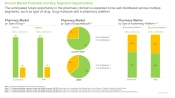
The pharmacy market analysis highlights this market for drugs / pharmaceuticals, which is further divided into various sub-segments based on the type of drug, such as branded / patented drugs and generic drugs. Presently, branded / patented drugs capture majority of the drugs / pharmaceuticals market size in the pharmacy industry. However, owing to the heightened popularity of generic and super generics, the market share for generic drugs is expected to grow at a relatively higher CAGR.
The pharmacy market trends highlight this market for drugs / pharmaceuticals, which is further divided into various sub-segments based on the type of drug molecule, such as small molecules and biologics. Presently, small molecules capture majority of the drugs / pharmaceuticals market in the pharmacy industry. However, owing to the increasing demand for biologics, the market share for biologics is expected to grow at a relatively higher CAGR.
The pharmacy market report highlights this market for e-pharmacy, which is further divided into various sub-segments based on the type of e-pharmacy platform, such as app-based e-pharmacy platforms and web-based platforms. App-based platforms currently capture the largest market share. However, since web-based platforms are easier to access, the market share for web-based platforms is expected to grow at a relatively higher rate during the forecast period.
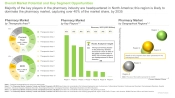
This segment highlights the distribution of the pharmacy industry across various therapeutic area, such as oncological disorders, cardiovascular disorders, neurological disorders, infectious diseases, metabolic disorders, respiratory disorders, dermatological disorders, genetic disorders, autoimmune / inflammatory disorders and other disorders. Pharmacy market for oncological disorders currently capture the highest share and is expected to dominate the market during the forecast period. This can be attributed to the increasing prevalence of different types of cancers across the globe, particularly in low and medium HDI countries, where the proportional increase in incidence is striking at 142% and 99%, respectively.
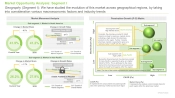
This segment highlights the distribution of the market opportunity across various geographies, namely North America, Europe, Asia-Pacific, Middle East and North Africa and Latin America. According to our projections, North America is likely to capture majority (42%) of the global market share, and this trend is unlikely to change in the future as well due to the emergence and growth of the US online pharmacy market. It is worth highlighting that the pharmacies market in Asia-Pacific is expected to grow at a relatively higher CAGR (5.6%), during the forecast period, till 2035.
The “Pharmacy Market: Industry Trends and Global Forecast, till 2035” report features an extensive study of the market size and future opportunities associated with service providers within the pharmacy industry, during the given forecast period. The market report highlights the market trends and market drivers. Key takeaways of the market report are briefly discussed below.
The demand for online / e-pharmacy has increased because of several factors, such as increased patient convenience, significant cost savings, on-time accessibility, drug shortage in the retail stores and growth of e-commerce. It is worth mentioning that the US online pharmacy market is growing exponentially. According to a survey, 10% of the increase has been observed in Americans purchasing medications through online pharmacy. Further, it is worth noting that a gradual shift from offline to online purchase of pharmacy products has been observed within the last three years. In October 2024, Amazon Pharmacy announced its plans to open pharmacies across 20 cities in the US by 2025 to allow same-day delivery of medicines. However, there are several risks, such as combining prescription drugs with other consumer products and exposure to substandard or counterfeit medicines are involved through online drug purchasing.
The pharmacy industry growth is primarily attributed to the significant increase in the demand for personalized medicines and specialty medicines. More than 35% of the overall drug spending is on specialty brand drugs for the treatment of various complex and rare chronic diseases, including cancer, type 2 diabetes and congestive heart failure. Strategic initiatives such as digital innovations, technology integration and online home delivery services have been among the important drivers for the rise in the overall pharmacies market. Further, the inclusion of various customer centric services, such as home healthcare, laboratory services, mail order pharmacy and specialty pharmacy services through pharmacies has been a significant driving factor. These value-added services provide customers with increased convenience, accessibility and a comprehensive approach to their healthcare needs, making pharmacies a more attractive and preferred choice for customers. As a result, pharmacies are constantly looking out for opportunities to enhance their product and service offering in order to cater to the rising demand for patient-centric approaches.
The global market opportunity for pharmacies is estimated to be $2.6 trillion in 2026. The market growth is primarily fueled by the increasing need for specialized medications, diagnostic devices and other healthcare products intended for the treatment of both acute and chronic diseases. Further, the covid pandemic has accelerated the demand for several healthcare products, such as sanitizers and masks, as people have become more aware of the importance of maintaining hygiene and health.
In terms of the type of pharmacy, the market size for e-pharmacy is anticipated to grow at a relatively higher CAGR of 6.3% during the forecast period. Several e-pharmacy players have secured funding for expansion of their platforms. September 2023 saw a US based e-pharmacy, Alto Pharmacy, raise $120 million. In August 2023, India based online pharmacy MrMed raised $500,000 to allow for team expansion and expansion of regional coverage. The epharmacies though are facing stiff competition from physical pharmacies that allow patients to have open conversations with the pharmacists and clarify doubts, if any. As per a recent interview of Tim Wentworth, CEO, Walgreens (a physical pharmacy) with CNBC “We will beat Amazon because of the human interface that we offer in communities and neighborhoods, 8,600 locations today where you can come in if you actually are getting a drug that you want to talk about, if you have a health concern, if you want to get an over-the-counter product to go along with your drug.”
Presently, over 40% of the market opportunity is created by the demand for pharmacy products in North America. Within North America, the US is expected to dominate the pharmacy industry and this trend is likely to remain the same during the forecast period. The demand for pharmacy products in the US is driven by the rising burden of both, acute and chronic diseases, resulting in increasing consumption of drugs in the US than other developed countries.
Europe held the second largest pharmacy market share. EU aims to work towards the safety of patients buying medicines through online pharmacies. As such, it maintains a database of all the registered online retailers across various countries. Germany is a fertile ground for online pharmacies. Apo.com Group, a pharmacy chain based in the country reported 30% growth in revenues in H1 2023.
UK market saw a number of retail pharmacies closing operation in 2023. According to a report by Healthwatch England, 436 retail pharmacies closed operations permanently in 2023. This significantly impacted the accessibility of medicine. Finding an opportunity created by the closures, a big supermarket chain, ASDA launched its online pharmacy business in April 2024. Based on our analysis, we expect to see other supermarket players to enter this market to help fill the gap.
The market value for pharmacies market in Asia-Pacific is expected to grow at a relatively higher CAGR of 5.6% during the forecast period. The growth is mainly driven by the rising population of the region and increase in income for spending on healthcare. Additionally, as the healthcare facilities become more accessible, reaching rural areas, owing to the emergence of telehealth and telemedicine technology the disease diagnosis and treatment rates are improving significantly. As quoted above, countries like India have seen a surge in the growth of epharmacies, with a number of these players receiving funding in the last few years for expanding their outreach.
Other regional market trends have been captured in the full report.
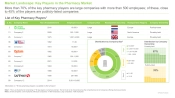
Examples of largest pharmacy chains involved in selling drugs / pharmaceuticals, medical devices and other pharmacy products (which have also been captured in this market report, arranged in alphabetical order) include Ahold Delhaize, Albertsons, A.S. Watson, Bestway, Cardinal Health, Cigna (Express Scripts), COSMOS, Costco, CVS Health, Dirk Rossmann, Dr. Max, Good Neighbor Pharmacy, Health Mart, Kroger, Matsumoto Kiyoshi, Phoenix, Rite Aid, The Jean Coutu, Walmart, Walgreens Boots Alliance, and Well Pharmacy.
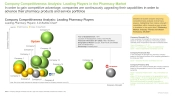
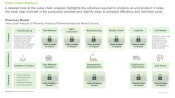
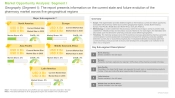
The market report presents an in-depth pharmacy market analysis, highlighting the various trends in this market, across different segments. Amongst other elements, the market report includes:
 |
 |
 |
Several recent developments have taken place in the pharmacy market. We have outlined some of these recent initiatives below. These developments, even if they took place post the release of our market report, substantiate the overall market trends that have been outlined in our analysis.