
Lowest Price Guaranteed
Slides
165
Last Updated
July 2026
View Count
19640
The global RSV vaccine market size, valued at USD 1,149.41 million in 2025, is anticipated to reduce to USD 987.83 million in 2026 and USD 731.05 million by 2040.
To learn more about this report, request a free sample copy
The new research study consists of industry trends, detailed market analysis, product competitiveness analysis, clinical trial analysis, patent analysis, FDA approval strategies and market impact analysis, along with the market forecast and opportunity analysis.
Respiratory Syncytial Virus (RSV) is a widespread virus that primarily affects the lower respiratory tract, leading to infectious diseases. While it is most commonly known for causing infections in older adults and infants, it also poses significant risks to individuals with compromised immune systems. It is worth highlighting that respiratory syncytial virus is recognized as a contagious respiratory pathogen that often causes severe illness and mortality, consequently leading to surge in economic and disease burden, worldwide.
 |
 |
 |
According to a report by the World Health Organization, around 33 million new cases of RSV diseases are reported every year in children under five years of age, worldwide. This can be primarily attributed to the unavailability of known medical interventions for the treatment of RSV diseases. In September 2024, WHO gave a global recommendation for maternal RSV immunization, with a single dose of RSV vaccine in the third trimester of pregnancy.
Currently, there are several preventive measures, including over-the-counter medications, nasal sprays and humidifiers, however, these approaches have been found to be incompetent as they only provide symptomatic relief. To overcome these limitations, RSV vaccines have emerged as a promising alternative, offering safe, targeted and efficacious treatment options.
 |
 |
 |
RSV vaccines are designed to prevent infections and other severe respiratory illnesses, such as bronchitis and pneumonia by stimulating the immune system to recognize and fight the respiratory syncytial virus. The significance of these vaccines lies in their potential to reduce hospitalization rates, complications, and mortality associated with RSV infections.
Further, technological advancements, such as the utilization of mRNA and nanoparticle technology in the development of RSV vaccines have made significant progress in recent years. These innovative approaches enable rapid and flexible vaccine design, potentially providing more effective and long-lasting immunity against RSV.
Given the ongoing research efforts and increased number of clinical trials focusing on RSV treatment, the global RSV vaccine market is poised to witness more approvals of effective vaccines in the near future, ultimately providing promising public health outcomes. Further, owing to the rapid pace of growth within the vaccine market, the demand for effective RSV vaccines is anticipated to rise in the foreseen future, creating lucrative opportunities for stakeholders in this domain.
 |
 |
 |
Dr. Deborah Atherly, Global Head of Policy, Access, and Introduction within PATH’s Center for Vaccine Innovation and Access, stated in an interview “Preventing RSV disease is critical in early life when infants are at risk of severe infections, which can cause hospitalizations and deaths. A WHO SAGE recommendation is a necessary step in the policy pathway to scale and support use of immunization products, especially in low- and middle-income markets where need is greatest.”
The growth of the market is expected to be driven by technological advancements in vaccine development, increasing awareness of RSV immunization, and the rising global burden of RSV diseases. As research advances and new vaccines are developed, this domain is likely to see robust market growth over the next decade.
The research report presents an in-depth analysis of RSV vaccines and developers, across different segments, as defined in the table below:
| Key Report Attributes | Details | |
| Historical Trend | Since 2023 | |
| Forecast Period | Till 2040 | |
| Current Market Size | $987.83 Million | |
| Market Size 2040 | $731.05 Million | |
| Type of Vaccine |
|
|
| Route of Administration |
|
|
| Target Patient Population |
|
|
| Distribution Channel |
|
|
| Key Geographical Regions |
|
|
| Key Companies Profiled |
|
|
| Customization Scope | 10% Free Customization | |
| Excel Data Packs (Complimentary) |
|
|
One of the key objectives of this market report was to estimate the current market size, future opportunity and the RSV vaccine market growth potential over the forecast period. Based on multiple parameters, likely adoption trends and through primary validations, we have provided an informed estimate on the market evolution, till 2040.
The market report also features the likely distribution of the current and forecasted opportunity for respiratory syncytial virus vaccine market across various segments, such as type of vaccine (subunit / viral-like-particle (VLP) vaccines, live attenuated vaccines and mRNA vaccines), route of administration (intramuscular and other routes), target patient population (elderly individuals, infants / children and pregnant individuals), distribution channel (pharmacies and drug stores, government / institutional suppliers and others) and key geographical regions (North America and Europe), and leading players.
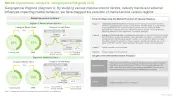
In order to account for future uncertainties associated with some of the key parameters and to add robustness to our model, we have provided three RSV vaccine market forecast scenarios, namely conservative, base and optimistic scenarios, representing different tracks of the industry’s evolution.
All actual figures have been sourced and analyzed from publicly available information forums and primary research discussions. Financial figures mentioned in this market report are in USD, unless otherwise specified.
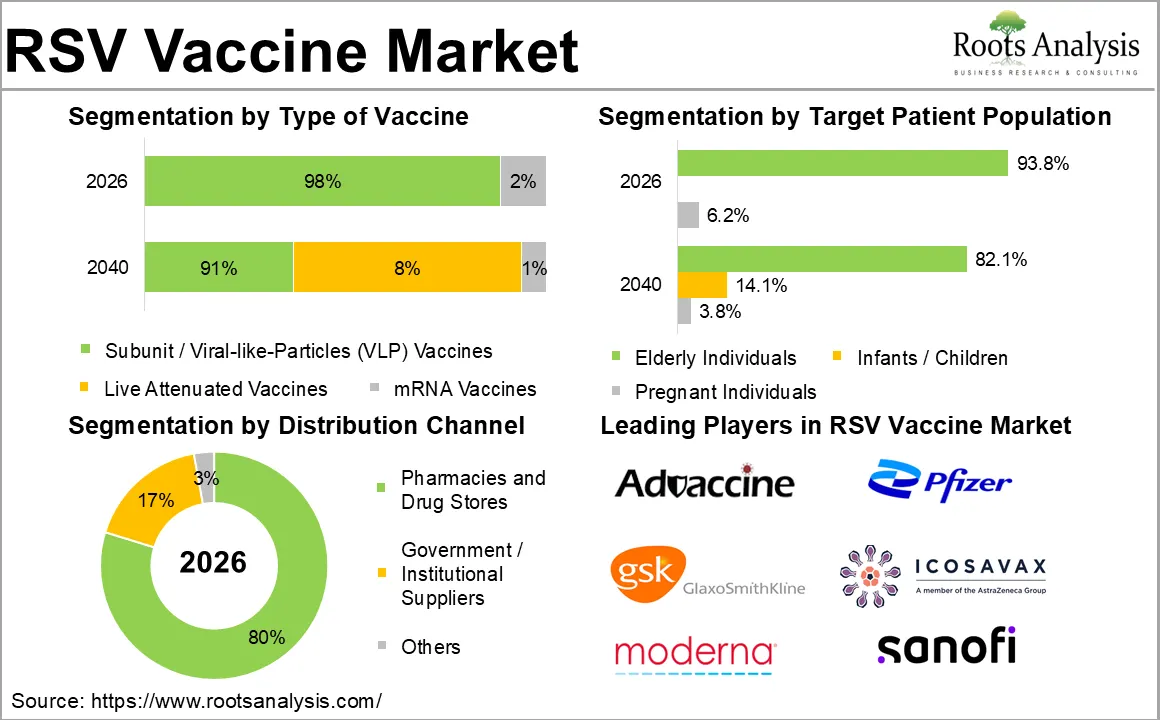
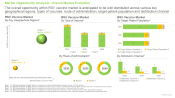
The RSV vaccine market is categorized into different types of vaccines, namely subunit / viral-like-particle (VLP) vaccines, live attenuated vaccines and mRNA vaccines. Currently, the subunit / viral-like-particle (VLP) vaccines hold majority of share (98.4%) in the market. This can be attributed to the fact that these vaccines produce highly repetitive immunogenic responses due to their morphological resemblance to their parent virus. These properties enhance the safety and efficacy of subunit / viral-like-particle vaccines while significantly reducing the potential side effects and toxicity associated with other types of vaccines. Further, the high demand across healthcare providers and public health agencies prefer these vaccines because they have a well-established safety profile and proven clinical trial data.
Additionally, government procurement bodies in developed regions like North America and Europe have already started including these vaccines in their adult and maternal immunization programs. This early mover advantage, combined with strong institutional trust, keeps subunit / VLP vaccines at the top in terms of market share. In the upcoming years, live attenuated vaccines segment is likely to grow at a higher CAGR during the forecast period. Live attenuated intranasal RSV vaccines mimic natural viral infection while eliciting robust mucosal and cellular responses, are easy to use, non-invasive, and more adapted for mass vaccination compared to intramuscular vaccines. They induce immunity directly at the site of viral entry and can generate tissue-resident memory T cells for long-term protection, while avoiding the risk of vaccine-enhanced disease seen with inactivated vaccines.
Based on the route of administration, the global market is segmented across intramuscular and other routes. According to our RSV vaccine market forecast, Intramuscular administration holds the highest share in the market and is likely to remain dominant in the future. This highest share is due to the fact that currently approved RSV vaccines, including Abrysvo and Arexvy, are delivered through the intramuscular route. Healthcare providers such as hospitals, outpatient clinics, and pharmacies are already well-equipped and trained to deliver IM injections, making adoption smooth and straightforward.
Government immunization programs and large-scale procurement agencies also prefer intramuscular vaccines because the dosing, storage, and administration protocols are well-defined and easy to standardize across healthcare settings. Owing to the greater acceptance across healthcare, intramuscular administration segment is likely to remain dominant during the forecast period.
By target patient population, the global market is segmented into elderly individuals, infants / children and pregnant individuals. Among these, the RSV vaccines developed for elderly individuals hold the highest (93.8%) RSV vaccine market share. This can be attributed to the fact that RSV is one of the leading causes of severe respiratory illness and hospitalization among adults aged 60 and above, which makes this population the primary focus of currently approved RSV vaccines. Further, the regulatory approvals for Abrysvo and Arexvy were first granted for adults aged 60 years and older.
Government health agencies in North America and Europe have already issued recommendations for RSV vaccination in older adults, which is directly driving institutional purchasing and reimbursement coverage. The large and growing global elderly population, combined with high disease burden and strong clinical evidence, firmly positions this segment at the top in terms of market share. On the other hand, infants / children segment is anticipated to register higher CAGR during the forecast period. This lucrative growth is due to the substantial unmet clinical need in infants and children, combined with advancing live attenuated intranasal vaccine candidates in clinical development that offer superior mucosal immunity and safer safety profiles compared to existing approaches.
This segment highlights the distribution of RSV vaccine market size across various distribution channels, including pharmacies and drug stores, government / institutional suppliers and others. Based on our analysis, pharmacies and drug stores segment occupies the highest market share (79.8%). This is primarily due to their convenience and widespread accessibility, as majority of the population is living close to a pharmacy or a drug store. Additionally, the increasing authorization to pharmacists to administer vaccines, has enhanced patient education and encourage vaccination uptake. Notably, large pharmacy chains such as CVS and Walgreens in the US have already played a major role in adult vaccine distribution, and this model is now expanding to RSV vaccines. Private payers and insurance companies are also expanding reimbursement coverage for pharmacy-administered RSV vaccines, which further drives the growth of pharmacies and drug stores growth.
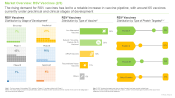
GSK holds the highest market share, with Arexvy generating the most sales amongst the competitor RSV vaccines. GSK reported sales of GBP 590 million (~USD 765 million) for FY 2024, a decline of more than 50% over the previous year, driven by limited recommendation from ACIP for individuals aged 60 to 74. This was followed by Pfizer’s Abrysvo, which reported sales of USD 755 million for FY 2024. Moderna’s mRESVIA reported sales of USD 25 million, generated in two quarters post its launch.
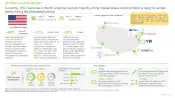
This segment highlights the distribution of the RSV vaccine market size across various key geographies, namely North America and Europe. According to our projections, North America captures majority (84.0%) share in the overall market. This can be attributed to the rising prevalence of respiratory diseases in RSV seasons, highly advanced pharmaceutical infrastructure and the concentration of key market players who are heavily invested in clinical trials and complex RSV vaccines delivery research. Further, government organizations such as the CDC and ACIP have issued clear vaccination recommendations for elderly adults and pregnant women, which has directly triggered large-scale procurement of RSV vaccines by hospitals, pharmacy chains, and institutional healthcare providers.
Additionally, leading pharmaceutical companies including Pfizer, GSK, and Moderna are headquartered or have their primary commercial operations in North America, ensuring strong product availability in this region. This combination of early regulatory approvals, strong public health infrastructure, high healthcare spending, and broad insurance coverage firmly establishes North America as the dominant geography in this market.
The “RSV Vaccine Market: Industry Trends and Global Forecasts, till 2040” report features an extensive study of the current market landscape, market size and future opportunities for RSV vaccines manufacturers, during the given forecast period. The market report highlights the efforts of several stakeholders engaged in RSV vaccine industry. Key takeaways of the market report are briefly discussed below.
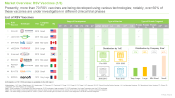
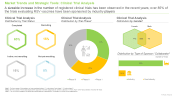
Presently, close to 55 vaccine developers are focused on developing different types of RSV vaccines, including subunit / viral-like-particle (VLP) vaccines, live attenuated vaccines, recombinant vaccines, mRNA vaccines and other types of vaccines. The current market landscape features the presence of very large, large, mid-sized and small players headquartered across different regions.
It is worth noting that majority (45%) of the developers are headquartered in North America, owing to the robust research initiatives, supported by substantial investments made by both public and private investors in the region. Further, the regulatory scenario in North America is generally supportive for immunization therapies, which helps expedite the approval processes for innovative vaccines.
Currently, three RSV vaccines are approved by the USFDA, including Arexvy (GSK), Abrysvo (Pfizer) and mRESVIA (Moderna), marking a significant advancement in RSV vaccine industry. The first RSV vaccine, Arexvy (GSK), was approved in May 2023 for use in elderly individuals, followed by the second vaccine, Abrysvo (Pfizer), which was approved in 2023 for immunization of older adults and pregnant women to produce antibodies and protect their newborns from RSV diseases. Further, the mRESVIA vaccine developed by Moderna got approved in 2024 for use in older adults to reduce the risk of severe illness in this vulnerable population.
In recent years, several biotechnology and pharmaceutical companies have invested extensively in order to evaluate the therapeutic viability and future potential of innovative vaccines. In the coming years, the number of clinical trials evaluating the efficacy of RSV vaccines, across the globe is anticipated to increase owing to the ongoing research efforts of vaccine developers to launch more innovative vaccines on the market.
Some big pharma players like Merck are looking to enter the market by 2026. The company reported positive results from phase II/III trial for its molecule clesrovimab in July 2024. At the same time, the vaccine developers with approved vaccines are looking for target population expansion. Moderna has filed for FDA approval under priority review for mRESVIA in expanded population (high-risk adults aged 18-59). Additionally, the RSV vaccines proven ability to prevent severe complications (by ensuring safe and effective treatment) in vulnerable population offers tremendous potential to improve overall healthcare outcomes.
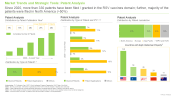
Since 2020, over 330 patents focused on RSV vaccines have been granted / filed, indicating the substantial efforts made by researchers in this market. It is worth highlighting that majority of the patents (68%) in this domain were patent applications (not having received approval yet), followed by granted patents (31%) and remaining (1%) were other patents (including amended patents, patent of addition and search reports). Further, most of the patents have been filed by industry players in this industry.
Moderna’s mRESVIA is the first mRNA vaccine to receive approval for RSV. Moderna’s mRNA vaccine consists of an mRNA sequence encoding a stabilized pre-F glycoprotein, which is expressed on the surface of the virus and is used by the virus to enter host cells.
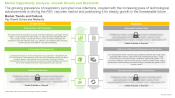
Currently, the global RSV vaccine market is estimated to be worth USD 987.83 million; the growth is primarily driven by the increasing burden of RSV infections, ongoing technological advancements and the pressing need for preventive treatments, such as immunization techniques.
Currently, close to 85% of the RSV vaccine market share is captured by North America, owing to the growing health concerns related to respiratory diseases in the region. Notably, in the US, the Centers for Disease Control and Prevention (CDC) monitors weekly RSV activity to anticipate and manage potential surges in hospitalizations. However, RSV vaccination rates in North America remains low and has witnessed a decline in the current year, specifically after the recent CDC recommendation to narrow the eligible age-group for RSV vaccine to adults aged 75 and older.
Examples of top players in RSV vaccine industry (have been profiled in this market report; in alphabetical order) include Beijing Advaccine Biotechnology, GlaxoSmithKline, IcosaVax (A company of AstraZeneca), Moderna, Pfizer and Sanofi. This market report includes an easily searchable excel database of RSV vaccine manufacturers present worldwide.
The market report presents an in-depth market analysis of the vaccines under development for RSV, highlighting the capabilities of various RSV vaccine developers in this market, across different segments. Amongst other elements, the market report includes:
Driven by numerous developmental breakthroughs and results of studies demonstrating the safety and efficacy of RSV vaccines in addressing the health-related concerns associated with RSV diseases. Therefore, this sector has garnered considerable attention from various industrial and non-industrial players engaged in the industry.
Several recent developments have taken place in the field of RSV vaccines, some of which have been outlined below. These developments, even if they took place post the release of our market report, substantiate the overall RSV vaccine market trends that have been outlined in our analysis.