
Lowest Price Guaranteed
Slides
157
Last Updated
July 2026
View Count
13929
The global renewable / sustainable laboratory plasticware market size is estimated to grow from $0.47 billion in 2025 to $2.69 billion by 2035, at a CAGR of 19% during the forecast period, till 2035.
 |
To learn more about this report, request a free sample copy
The new research study consists of market trends, detailed market analysis and market sizing.
By integrating sustainable practices, laboratories can achieve a balance between high-quality research outputs and environmental responsibility. The shift toward eco-friendly lab supplies has become a necessity rather than a choice, ensuring that the future of scientific research aligns with global sustainability goals.
 |
 |
 |
The market report presents an in-depth analysis of the various companies that are engaged in offering sustainable laboratory plasticware for use across multiple industries, different segments, as defined in the table below:
| Key Report Attributes | Details | |
| Historical Trend | Since 2020 | |
| Forecast Period | Till 2035 | |
| Market Size 2035 | $2.69 Billion | |
| CAGR | 19% | |
| Type of Plastic |
|
|
| Type of Polymer |
|
|
| Type of Plasticware |
|
|
| End User |
|
|
| Geography |
|
|
| Key Companies Profiled |
|
|
| PowerPoint Presentation (Complimentary) |
Available | |
| Customization Scope | 15% Free Customization | |
| Excel Data Packs (Complimentary) |
|
|
 |
 |
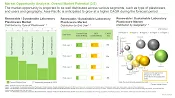 |
One of the key objectives of the renewable / sustainable laboratory plasticware market report was to estimate the current market size, opportunity and the market growth potential for the companies active in this domain. Based on multiple parameters, likely adoption trends and through credible secondary research, we have provided an informed estimate on the market evolution during the forecast period till 2035.
The market report also features the likely distribution of the current and forecasted opportunity within the market across various segments, such as type of plastic (bioplastic, recycled plastic and other plastics), type of polymer (polyethylene, polypropylene, polystyrene and other polymers), type of plasticware (pipette tips, tubes, plates, racks and other plasticwares), end user (academic and research institutes, clinical and environmental testing laboratories, pharmaceutical and biotechnology companies and other end users) and Geography (North America, Europe, Asia-Pacific, Latin America and MENA).
In order to account for future uncertainties and to add robustness to our model, we have provided three renewable / sustainable laboratory plasticware market forecast scenarios, namely conservative, base and optimistic scenarios, representing different tracks of the sustainable plastic labware market growth.
All actual figures have been sourced and analyzed from publicly available information forums. The opinions and insights presented in the market report were influenced by discussions held with stakeholders in the industry. Financial figures mentioned in this market report are in USD, unless otherwise specified.
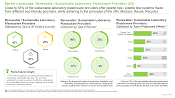
The global renewable / sustainable laboratory plasticware market is categorized into different types of plastics, such as bioplastic, recycled plastic and other plastics. Currently, the bioplastic based labware segment occupies a higher market share (85%) and is likely to stay dominant during the forecast period. This is primarily due to the fact that bioplastics production consumes 65% less energy than traditional petroleum-based plastics. Further, it is worth mentioning that the recycled plastics-based labware segment is expected to grow at a higher CAGR compared to other segments.
This segment highlights the distribution of global renewable / sustainable laboratory plasticware market across various types of polymers such as polyethylene, polypropylene, polystyrene and other polymers. Among these types of polymers, the polypropylene market segment currently occupies the highest renewable / sustainable laboratory plasticware market share and is expected to witness substantial growth during the forecast period. Notably, polypropylene is regarded as a high-grade and valuable plastic, making it the preferred material for plasticware production. Its exceptional chemical resistance, durability, and versatility across a wide range of laboratory applications strengthens its position in the global sustainable plastic labware market.
The global renewable / sustainable laboratory plasticware market analysis highlights the distribution of this market across various types of plasticware, such as pipette tips, tubes, plates, racks and other plasticwares. Among these types of plasticwares, currently pipette tips occupy the highest share (36%) and this segment is expected to witness substantial growth during the forecast period. This is primarily due to the continuous revenue generated by pipette tips, which require frequent replenishment.
Moreover, there has been significant innovation in sustainable pipette tips, including alternatives made from recyclable and compostable materials, as well as the development of reusable tips with efficient cleaning systems. Although tubes and plates are also seeing advancements in sustainable options, their replacement rates are typically lower than those of pipette tips.
The global renewable / sustainable laboratory plasticware market share is segmented across different types of end users, such as academic and research institutes, clinical and environmental testing laboratories, pharmaceutical and biotechnology companies and other end users. Currently, pharmaceutical and biotechnology segment is expected to hold the majority (70%) of the market share, and this trend is unlikely to change in the future as well. On the other hand, the academic and research institutes segment is expected to grow at the higher growth rate of 21%. Notably, academic labs are also significant contributors to the plastic waste. According to an analysis done by University of Exeter, their scientific labs generates around 5.5 million metric tonnes of plastic waste annually.
This segment highlights the distribution of global market across various geographies, such as North America, Europe, Asia-Pacific, Latin America and MENA. According to our projections, currently Europe is likely to capture the majority (45%) of the renewable / sustainable laboratory plasticware market share and this trend is unlikely to change in the future as well. Further, it is worth highlighting that the sustainable plastic labware market share in Asia is expected to grow at the highest CAGR among other regions (20%), during the forecast period till 2035.
The “Renewable / Sustainable Laboratory Plasticware Market: Industry Trends and Global Forecasts, till 2035” market report features an extensive study of the current market landscape, market size, market share, market analysis, sustainable plastic labware market forecast and future opportunities for the companies active in this domain. This market report highlights the efforts of several suppliers involved in this rapidly emerging segment of the lab supplies industry. Key takeaways of the sustainable plastic labware market analysis have been briefly discussed below.
The growing interest in sustainable lab plastics is becoming a significant driver of the sustainable plastic labware industry. As laboratories actively seek alternatives to traditional plastics, there is a shift towards the adoption of biobased and biodegradable materials for lab consumables. These innovative materials, derived from renewable resources such as used cooking oil, sugarcane, and corn starch, play a crucial role in reducing the dependence on fossil fuels.
Companies like Eppendorf are pioneering this transition towards sustainable labware by developing lab plastics that maintain high performance standards as well as minimize the environmental impact. However, there are certain challenges in renewable laboratory plasticware market, such as high production costs and the user skepticism regarding the safety and efficacy of sustainable options, hindering their widespread adoption.
Adopting sustainable lab plastics not only reduces the environmental footprint of laboratories but also addresses the growing regulatory pressures and corporate sustainability goals. For instance, initiatives like lab plastics recycling programs enable researchers to divert disposable lab plasticware from landfills. Further, the environmental impact of laboratory plastics is driving advancements in manufacturing processes, leading to the development of durable and reusable alternatives.
The sustainable plastic labware market is witnessing significant growth, driven by the rising demand for eco-friendly lab products and mounting regulatory pressure that encourages sustainable practices. Innovations in material science, particularly in the development of biodegradable laboratory plasticware, are transforming product developments in this sector. Organizations are increasingly prioritizing lab sustainability to enhance brand reputation and meet ESG (Environmental, Social, and Governance) goals. Further, circular economy practices, such as recycling initiatives and take-back programs, are gaining momentum as key strategies for sustainability. Collaboration between eco-friendly laboratory plasticware suppliers and green chemistry advocates is fostering sustainable solutions, further driving the expansion of growth of renewable lab plastics industry.
In addition, the concept of reduce, reuse and recycle has gained the attention of pharmaceutical industry as well. To facilitate reuse, companies like Grenova have introduced innovative solutions, such as the pipette tip washer TipNovus and microwell plate washer PlateNovus. These advancements enable laboratories to reuse these lab consumables, significantly contributing to the creation of more sustainable lab environments. Further, the take-back programs introduced by various companies, such as Corning and Starlab allow customers to return used lab plastics for responsible disposal and recycling.
Complementing these efforts, several companies, including Labcycle, are exploring chemical recycling technologies. This process involves breaking down plastics into their raw materials, allowing them to be reused in the production of new laboratory products. Such approaches effectively close the loop in the lifecycle of laboratory plasticware.
In recent years, there has been an increasing focus on sustainable practices in laboratories, particularly in the use of plasticware. This involves substantial efforts to reduce waste, promote recycling, and adopt eco-friendly alternatives. Many labs are transitioning to reusable labware or bioplastics to minimize the reliance on single-use plastics. Companies are now responding to this trend by offering sustainable lab consumables made from renewable materials or recycled plastics. In addition, proper segregation and recycling programs are implemented to ensure minimal landfill contributions. Innovations such as refillable pipette tips, biodegradable containers, and closed-loop recycling systems further support plastic labware sustainability.
The global renewable / sustainable laboratory plasticware market size is estimated to be worth USD 0.47 billion currently. In terms of type of plastic, the revenues generated by bioplastic is anticipated to capture the largest market share, during the forecast period, till 2035. The renewable plastic labware market growth is primarily driven by heightened regulatory pressures on laboratories, technological advancements, and evolving consumer preferences towards sustainable products.
Examples of companies offering sustainable laboratory plasticware (also profiled in this report, the complete list of companies is available in the full report) include Corning (US), Diversified Biotech (US), Eppendorf (Germany), Green Elephant Biotech (Germany), Labcon (US), Polycarbin (US), QIAGEN (Germany) and Thermo Fisher Scientific (US). This market study includes an easily searchable excel database of the leading companies that offer sustainable lab plastics.
 |
 |
 |
The market report presents an in-depth analysis, highlighting the capabilities of various stakeholders in the renewable / sustainable laboratory plasticware industry, across different geographies. Amongst other elements, the market report includes:
Several recent developments have taken place related to sustainable laboratory plasticware, some of which have been outlined below.