
Lowest Price Guaranteed
Slides
170
Last Updated
January 2026
View Count
16475
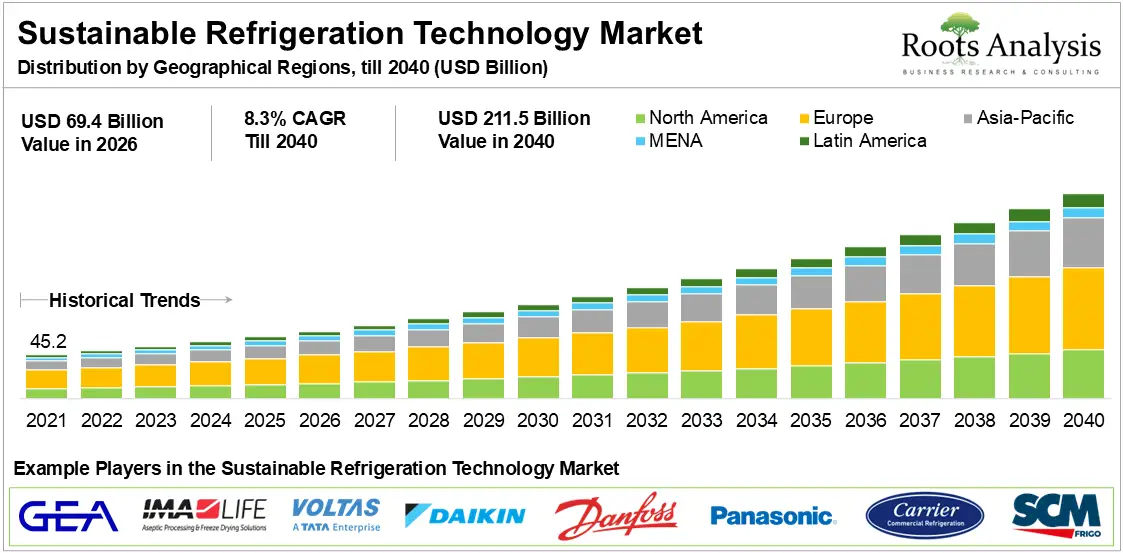
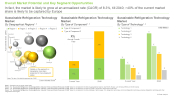
The sustainable refrigeration technology market is estimated to grow from USD 69.4 billion in 2026 to reach USD 114.3 billion in 2032 and USD 211.5 billion by 2040, representing a higher CAGR of 8.3% during the forecast period.
To learn more about this report,request a free sample copy
Refrigeration is indispensable to modern life, playing a critical role in sectors ranging from food preservation to pharmaceuticals. However, its environmental footprint is both significant and unsustainable. Traditional refrigeration technologies, which rely heavily on hydrofluorocarbons (HFCs) and potent synthetic refrigerants, have contributed to global warming and ozone depletion.
 |
 |
 |
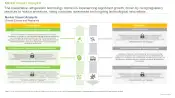
Refrigeration and air conditioning are responsible for over 10% of global greenhouse gases, with projections indicating that these emissions could double by 2030. Alarmingly, approximately 20% of the total electric energy consumption, worldwide, is dedicated to refrigeration. This is largely driven by inefficient systems and the continued use of high global warming potential (GWP) refrigerants like hydrofluorocarbons (HFCs), which significantly accelerate climate change.
To address this growing environmental concern, several commercial and industrial sectors are increasingly adopting sustainable refrigeration technologies designed to reduce environmental impact. Sustainable refrigeration technologies are systems that utilize natural refrigerants or operate without refrigerants, promoting eco-friendly cooling solutions for various applications.
 |
 |
 |
Natural / sustainable refrigerants, such as carbon dioxide (CO2) ammonia (NH3) and propane (R290) offer improved energy efficiency and significantly lower GWP compared to traditional synthetic refrigerants. It is worth highlighting that transitioning to low- impact refrigerants like CO2 has the potential to reduce global emissions by up to 48 gigatons, equivalent to planting 806 billion trees.
The sustainable refrigeration technology market is emerging as a critical component in the global shift towards greener cooling. In addition, integration of AI and IoT in refrigeration systems is transforming this industry by enabling real-time monitoring, predictive maintenance, and energy optimization.
 |
 |
 |
Further, solar-powered systems and phase-change materials are emerging as game-changers for preserving perishable goods in remote areas, creating new market opportunities. Moreover, expanding cold chain logistics, along with stricter environmental regulations such as Kigali Amendment and European F-Gas Regulation, is pushing the refrigeration industry towards more sustainable practices.
| Key Report Attributes | Details | |
| Historical Trend | Since 2021 | |
| Forecast Period | Till 2040 | |
| Market Size 2026 | $69.4 Billion | |
| Market Size 2040 | $211.5 Billion | |
| CAGR | 8.3% | |
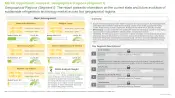
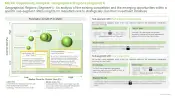
The market analysis also features the likely distribution of the current and forecasted opportunity within the sustainable refrigeration technology domain across various segments, such as type of component, type of technology, type of equipment, application, end user and geographical regions.
We have created three sustainable refrigeration technology market forecast scenarios, conservative, base and optimistic, to account for future uncertainties in key parameters and enhance the robustness of our model. These scenarios represent different tracks of the industry's evolution.
Several recent developments have taken place in the field of sustainable refrigeration technology, and we outline some of these below. These developments, even if they arose after our market report’s release, support the overall sustainable refrigeration technology market trends detailed in our analysis.
The market research report presents an in-depth analysis of the various sustainable refrigeration companies, across different segments, as defined in the table below:
| Market Segmentations | Details | |
| Type of Component |
|
|
| Type of Technology |
|
|
| Type of Equipment |
|
|
| Application |
|
|
| End User |
|
|
| Geographical Regions |
|
|
| Market in North America |
|
|
| Market in Europe |
|
|
| Market in Asia-Pacific |
|
|
| Market in Middle East and North Africa |
|
|
| Market in Latin America |
|
|
With continuous technological advancements, regulatory push for emission reduction and rising customer demand for eco-friendly refrigeration solutions, the sustainable refrigeration technologies market is anticipated to witness noteworthy growth during this forecast period.
Giuseppe Galli, (CEO, Frascold), states, “We are pleased to see that the market is increasingly moving toward these natural solutions, thanks to a growing awareness of care for the environment and the passage of the new F-Gas law, which will impose increasing limits on refrigerants with high Global Warming Potential (GWP) over the next few years.”
| Report Deliverables | Details | |
| Excel Data Packs (Complimentary) |
|
|
| Key Sustainable Refrigeration Technology Providers Profiled |
|
|
| PowerPoint Presentation (Complimentary) |
Available | |
| Customization Scope | 15% Free Customization | |
The “Sustainable Refrigeration Technology Market: Industry Trends and Global Forecasts, till 2040” market report features an extensive study of the current market landscape of sustainable refrigeration technology, company profiles, ongoing megatrends analysis, market impact analysis and market size and future opportunities within the sustainable refrigeration technology industry, during the forecast period.
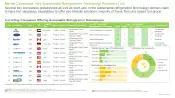
The current market landscape features over 100 key sustainable refrigeration technology providers including very large, large, mid-sized and small companies. These companies have the required expertise to offer eco-friendly solutions, refrigeration technologies for various industrial and commercial applications across the globe.
Within Europe, Germany (32%) emerged as the key hub, offering advanced sustainable refrigeration technologies that are increasingly being adopted across a wide spectrum of commercial and industrial applications.
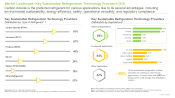
Interestingly, carbon dioxide is the preferred refrigerant for various applications due to its several advantages, including environmental sustainability, energy efficiency, safety, operational versatility, and regulatory compliance.
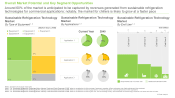
The global market for sustainable refrigeration technology is likely to be worth $69.4 billion in 2026 and will reach $211.5 billion by 2040. In terms of type of refrigerant, CO2 refrigeration technology segment holds the largest share of the sustainable refrigeration technology market. On the contrary, other technologies including magnetic refrigeration market is likely to grow at a relatively higher CAGR of 10.6% during the forecast period.
Several factors drive the growth of this market such as regulatory push for emissions reduction, rising consumer preference for sustainable products, and ongoing technological advancements. In addition, the expanding applications of energy efficient refrigeration across multiple sectors is accelerating innovation and development in this field.
European companies will likely dominate the global sustainable refrigeration technology market in 2040, with more than 45% of players based in the region enhancing their product offerings. The majority of key sustainable refrigeration technology providers are headquartered in Europe, North America, followed by Asia-Pacific, MENA and Latin America.
Recently, the European Union has enacted some of the world’s most ambitious F-gas regulations, particularly under Regulation (EU) 2024/573. Key measures taking effect from January 1, 2025, include a ban on self-contained refrigeration equipment that uses F-gases with a GWP of 150 or higher. Further, starting January 1, 2026, the use of all F-gases-including HFCs and HFOs-will be prohibited, regardless of their GWP. These stringent regulations are accelerating the adoption of eco-friendly refrigeration systems and driving market growth across this region.
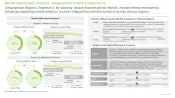
The market in Asia-Pacific is expected to grow at a relatively high CAGR (9.0%), during the forecast period till 2040. This is due to several factors, including rapid urbanization, rising awareness of natural refrigerants, growth in the food and beverage industry, and technological advancements.
Government regulations, including the EU Green Deal and the Kigali Amendment have significantly accelerated the adoption of sustainable refrigeration technologies. Additionally, growing environmental awareness among businesses and consumers is driving the demand for energy-efficient refrigeration systems with minimal environmental impact. Moreover, technological advancements such as integration of AI and IoT are further propelling the growth of this market.
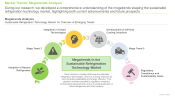
Technological advancements focus on energy efficiency, low-GWP (Global Warming Potential) refrigerants, and smart systems. Some of the key innovations include the use of natural refrigerants such as CO2, ammonia, and hydrocarbons which significantly reduce environmental impact. In addition, the emergence of magnetic refrigeration technology offers a revolutionary approach for efficient cooling without the need for refrigerants.
Notably, advancement in compressor technologies, variable-speed drives, and improved heat exchangers are further enhancing the performance of refrigeration systems. Along with this, integration of IoT and AI enables real-time monitoring, predictive maintenance, and optimized energy use. Interestingly, companies like Frigid.Cloud are innovating IoT-enabled refrigeration platforms to optimize energy consumption for food and beverage companies.
Solar-powered refrigeration and thermal energy storage systems have emerged as groundbreaking technologies for optimizing energy use and providing reliable cooling in remote areas with limited electricity. Sure Chill Technology has pioneered solar-powered refrigeration solutions that are capable of maintaining stable temperatures without the need for continuous power.
Further, the adoption of refrigerant tracking technologies is becoming essential for monitoring and managing refrigerant use and emissions, supporting both regulatory compliance and operational efficiency. Therefore, altogether, these advancements are driving the rapid evolution of the sustainable refrigeration market.
Several regulations are significantly impacting the refrigeration industry by accelerating the global shift toward sustainability. The Kigali Amendment to the Montreal Protocol (global) mandates the phasedown of HFCs, pushing the industry to adopt low-GWP refrigerants. In addition, the F-Gas Regulation (Europe) enforces strict quotas and bans on high-GWP substances, driving innovation in natural refrigerants like CO2 and ammonia.
In the U.S, the Clean Air Act and the EPA's Greenhouse Gas Reporting Program (GHGRP) impose stringent controls on refrigerant emissions, promoting the development of leak-proof, energy-efficient systems. Interestingly, in July 2024, the U.S. Environmental Protection Agency (EPA) issued a final rule to phase down HFC use by 40% between 2024 and 2028.
In addition to this, many countries have also established energy efficiency standards for refrigeration equipment, further minimizing energy consumption. Beyond regulations, industry groups like the Consumer Goods Forum are actively promoting the phase-out of high-GWP refrigerants, fostering the adoption of natural refrigeration systems across the industry.
These regulatory frameworks are pushing industries towards the use of natural refrigerants including ammonia refrigeration technology and propane refrigeration technology. This shift is reducing greenhouse gas emissions, increasing operational efficiency, and fostering sustainable refrigeration practices.
As green refrigeration technologies market trends continue to align with environmental goals, the impact of eco-friendly refrigerants on climate change is becoming increasingly positive, paving the way for a more sustainable and environmentally responsible future.
CO2 refrigeration systems operate at higher pressures and have more compact design, making them suitable for space-limited applications. They are also non-toxic and have high heat transfer coefficients. On the other hand, ammonia systems are highly efficient and cost-effective but require careful handling due to toxicity concerns. While both refrigerants have zero ozone depletion potential (ODP), ammonia has no GWP, however CO2 has a GWP of 1.
Magnetic refrigeration technology eliminates the use of harmful gases by leveraging magnetocaloric effects for cooling. Its energy-efficient, refrigerant-free design is anticipated to substantially drive the magnetic refrigeration market in the near future. It is worth highlighting that, MAGNOTHERM, a Germany based start-up, offers highly efficient magnetic refrigeration solutions that have 40% more efficiency than other temperature systems.
Examples of companies offering sustainable refrigeration technology (profiled in this report, the complete list of companies is available in the full report) include Carrier Commercial Refrigeration, Enerflex, GEA, Greencold, Hussmann, INTARCON, MAGNOTHERM, SCM Frigo. This market study includes an easily searchable excel database of the leading companies that are involved in sustainable refrigeration market.
The market report presents an in-depth analysis, highlighting the capabilities of various stakeholders in the sustainable refrigeration technology industry, across different geographies. Amongst other elements, the market report includes:
Sustainable refrigeration is playing a pivotal role in reducing global greenhouse gas emissions, driven by the phase-down of high-GWP refrigerants and a strong push toward energy-efficient technologies. We're seeing strong momentum, especially in Europe, where regulations and sustainability goals are pushing rapid adoption. Innovations in natural refrigerants like CO2 and hydrocarbons, along with the integration of smart controls and heat recovery systems, are transforming the future of commercial and industrial cooling. As businesses worldwide align with ESG goals, I believe natural and energy-efficient refrigeration systems will lead the market, offering both environmental benefits and long-term cost savings.
Akarshika has been working as a competent business research analyst since she joined Roots Analysis. Throughout her tenure, Akarshika has actively tracked emerging trends and technologies within the pharmaceutical industry. She has contributed to numerous comprehensive research reports that provide in-depth views on topics such as proteomics market, oligonucleotide synthesis market and green chemistry market.