Market Outlook
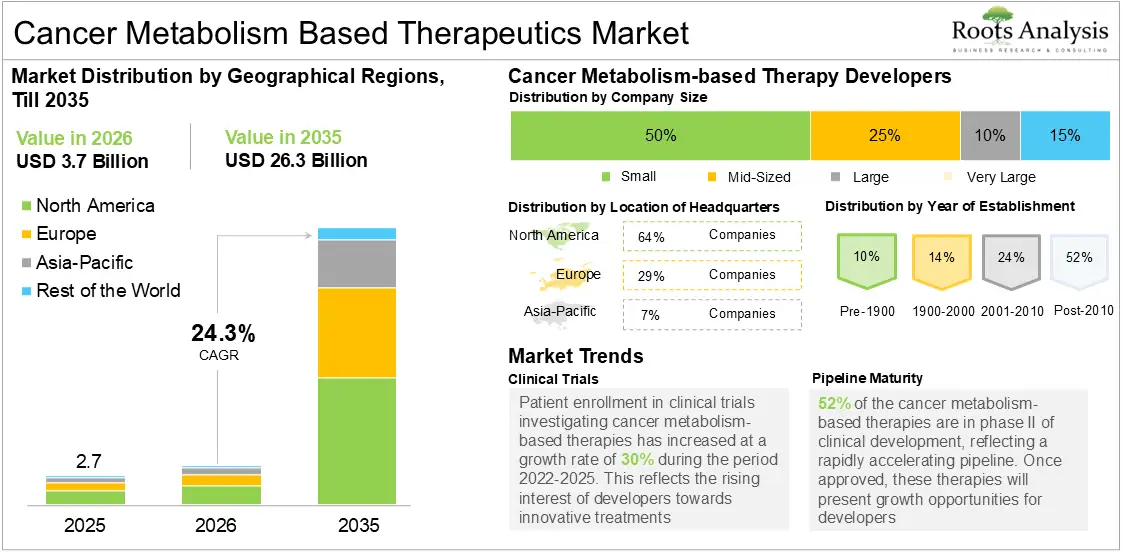
The global cancer metabolism based therapeutics market, valued at USD 2.7 billion in 2025, is projected to reach USD 3.7 billion in 2026 and USD 26.3 billion by 2035, with a CAGR of 24.3% during the forecast period 2026 to 2035.
To learn more about this report, request a free sample copy
Market Report: Key Takeaways
Market Size and Trends
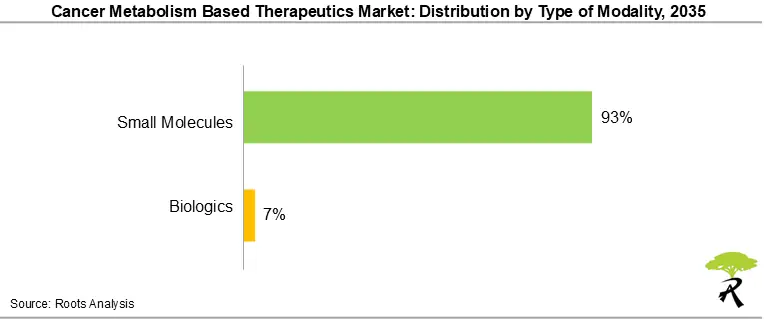
- In terms of type of modality, small molecules are likely to hold the highest share of the market in 2026; this trend is unlikely to change in the future.
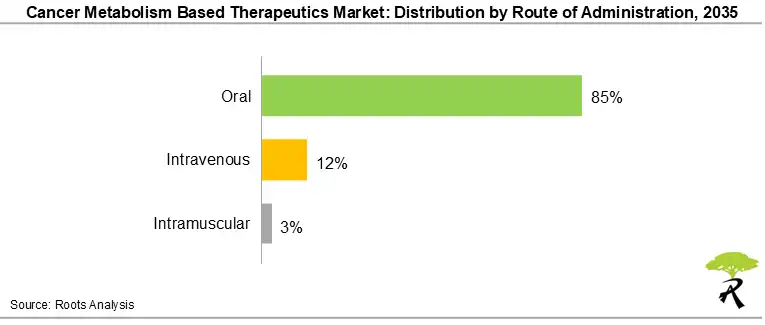
- With respect to route of administration, oral route (close to 85%) dominates the current market.
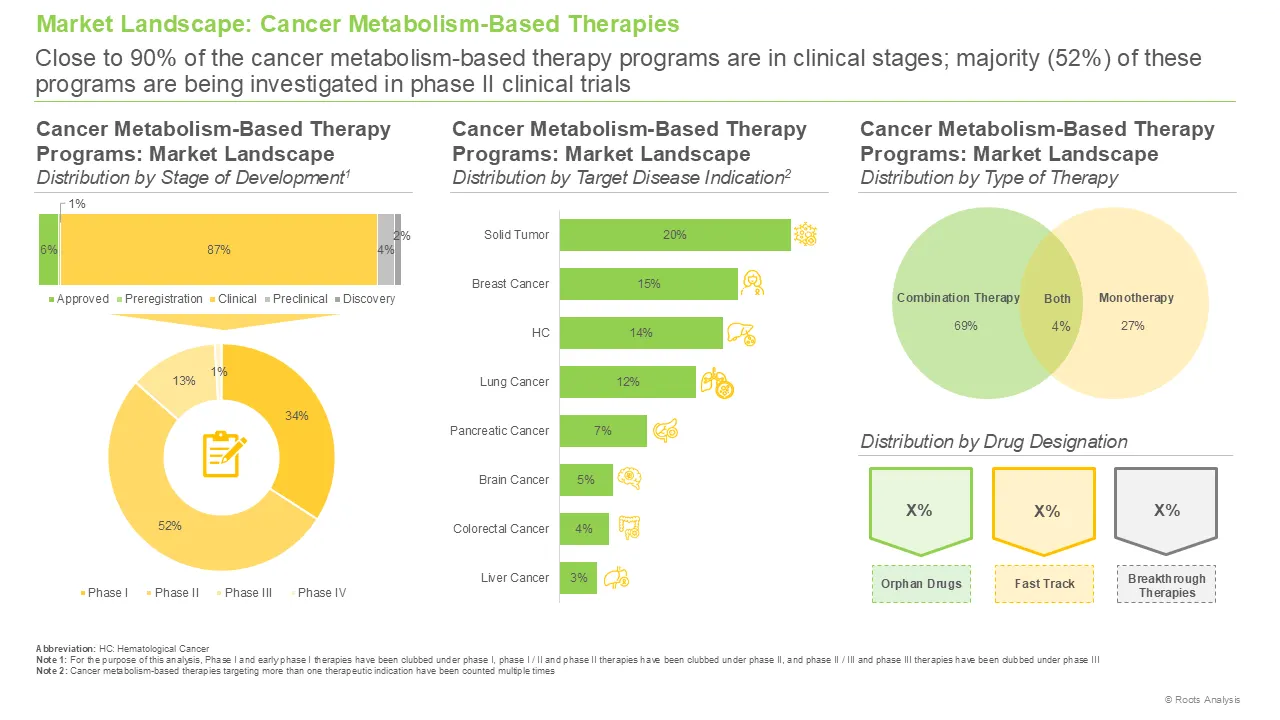
- Based on target disease indication, in 2026, breast cancer captures the largest cancer metabolism based therapeutics market value (over 45%).
- In terms of geographical regions, North America currently holds the highest market share by securing over 50% of the market share.
Key Market Statistics
- Market Size in 2026: $3.7 billion
- Estimated Market Size in 2035: $26.3 billion
- CAGR (Till 2035): 24.3%
- North America: Largest market in 2026
- Asia-Pacific: Fastest growing region
Market Introduction
Cancer remains a significant global health challenge, with millions of lives affected each year. To grow and spread, cancer cells undergo a process called metabolic reprogramming, which allows them to use nutrients differently than healthy cells. This reprogramming involves alteration of key metabolic pathways, including increased glucose uptake (via the Warburg effect), dysregulated mitochondrial function, and enhanced dependence on nutrients like glutamine and lipids, presenting as unique metabolic features distinguishing cancer cells from normal cells. Within this workflow, NAMPT inhibitor targets NAD metabolism as a vulnerability in selected cancer cells.
In the mid-20th century, a pioneering discovery by Otto Warburg, in the field of cancer metabolism, suggested that tumor tissues favour aerobic glycolysis. This breakthrough generated significant interest among industry and non-industry stakeholders in targeting cancer’s reprogrammed metabolic pathways essential for tumor survival. Since then, researchers began investigating the specific enzymes driving these changes across pathways such as the TCA cycle, lipid synthesis, and amino acid, pentose phosphate, and nucleotide metabolism.
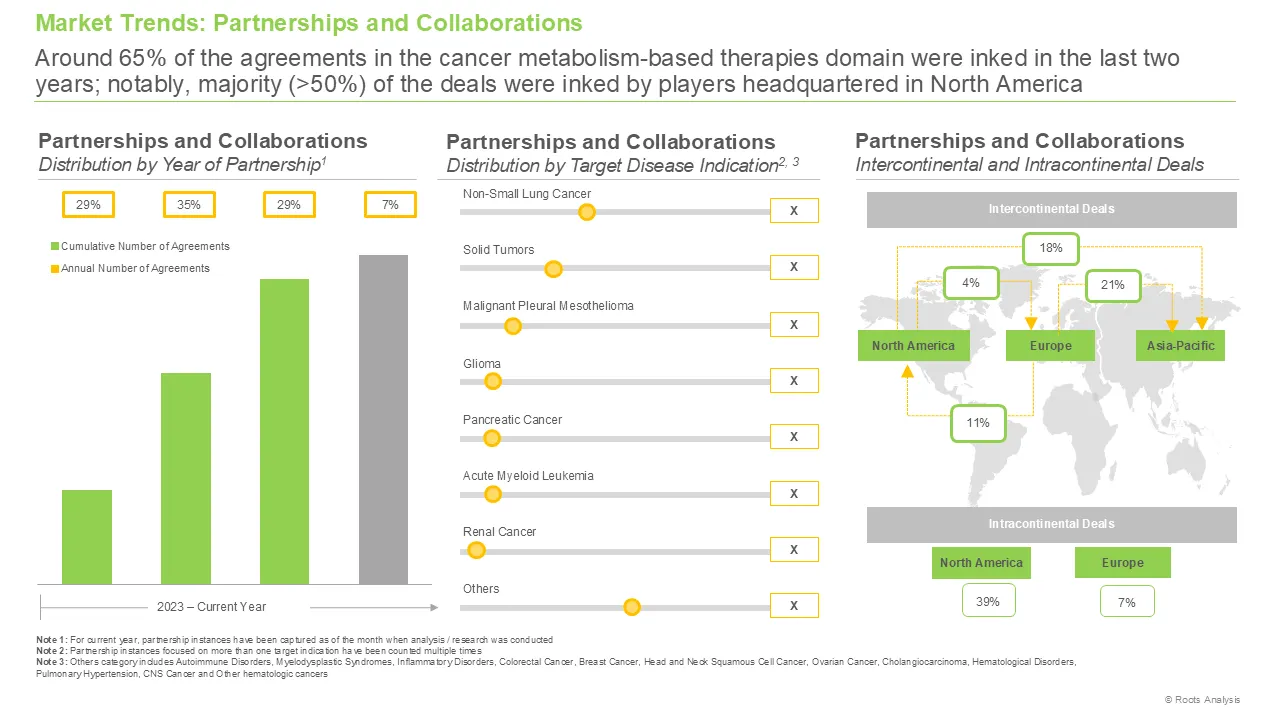
This discovery and the subsequent research efforts led to the development and advancement of cancer metabolism-based therapeutics. These therapeutics have demonstrated potential in effectively targeting and disrupting the metabolic pathways in cancer cells, preventing their uncontrolled growth. Given their therapeutic efficacy, companies have inked a number of collaborations to progress the research and development activities in global cancer metabolism based therapeutics market. As more candidates advance towards late-stage development, the partnership and collaboration activity is likely to increase, thereby leading to aggressive market growth in the next coming years.
Market Segmentation
Based on the research, we have segmented the Cancer Metabolism Based Therapeutics Market Report into type of modality, route of administration, target disease indication, geographical regions and sales forecast of therapies.
By Type of Modality
By Route of Administration
- Oral
- Intravenous
- Intramuscular
By Target Disease Indication
- Breast Cancer
- Non-small Cell Lung Cancer
- Acute Myeloid Leukemia
- Brain Cancer
- Cholangiocarcinoma
- Bile Duct Cancer
- Myelodysplastic Syndromes
- Malignant-mesothelioma
- Soft Tissue Sarcoma
- Hepatocellular Carcinoma
- Pancreatic Cancer
By Geographical Regions
- North America
- Europe
- Asia-Pacific
- Rest of the World
By Sales Forecast of Therapies
- Daraxonrasib
- Gedatolisib
- Olomorasib
- Inavolisib
- Vorasidenib
- STX-478
- AZD 5363
- AG-120
- Selpercatinib
- ADI-PEG 20
- Augtyro
- Taletrectinib
- Piqray
- TAS-120
- Rezlidhia
- AG-221
Key Market Insights
What Factors are Driving Increased Adoption of Cancer Metabolism Based Therapeutics?
- Advancements in Targeted Therapies: The cancer metabolism based therapeutics market growth is driven by adoption of precision medicine for targeting unique metabolic pathways of a patient’s tumor profile. Such approaches enable more personalized, effective treatments, prompting pharmaceutical companies to expand their drug pipelines and meet rising demand for targeted cancer therapies.
- Growing Cancer Burden: The global cancer burden continues to rise sharply, with an estimated 20 million new cases and over 10 million deaths reported in 2025. This trend is likely to escalate further, with projections indicating that annual cancer cases could exceed 35 million by 2050 if current incidence rates persist, driven by population growth. This escalating incidence demands innovative options like cancer metabolism based therapies, which target cancer cells reprogrammed pathways, offering superior efficacy and personalization over traditional treatments.
What are the Main Challenges in Cancer Metabolism Based Therapeutics Market Growth?
- Target Specificity Limits: Existing therapies often exhibit poor target specificity and high toxicity, limiting the effectiveness and safety of cancer metabolic based therapies. Since cancer and healthy cells share several metabolic targets, the off-target effects of cancer metabolism based therapies lead to high clinical trial failures, limited approvals, reduced commercial viability, and increased development costs.
- Complex Tumor Metabolism and Metabolic Plasticity: A major challenge in cancer metabolism based therapies is the metabolic plasticity of cancer cells, which allows them to dynamically adjust to microenvironmental stresses, such as nutrient deprivation and hypoxia. This adaptability makes it difficult to target any single metabolic pathway, as tumor metabolism is inherently complex, highly adaptable, and heterogeneous. Consequently, standard treatments like chemotherapy and radiation are effective only in a subset of patients, since tumors exhibit distinct genetic mutations and protein expression profiles that vary from one patient to another. This inherent variability in cancer biology underpins the growing importance of precision and personalized cancer therapeutics.
Recent Developments in Cancer Metabolism Based Therapeutics Market
- In January 2026, Nuvation Bio announced a licensing agreement with Eisai to expand the global footprint of Taletrectinib. Under this agreement, Eisai gains exclusive development, registration and commercialization rights for non-small cell lung cancer treatment across several regions, strengthening its presence in the Europe cancer metabolism based therapeutics market.
- In January 2026, Exelixis announced a clinical collaboration with Natera for STELLAR-316, a Phase 3 trial evaluating Zanzalintinib, an oral kinase inhibitor, alone and in combination with an immune checkpoint inhibitor for the treatment of patients with colorectal cancer.
- In April 2025, Polaris announced a distribution agreement with Er-Kim Pharmaceuticals to commercialize Pegargiminase (ADZODI) across 36 markets in the EMEA region for Malignant Pleural Mesothelioma (MPM).
Industry Experts on Cancer Metabolism Based Therapeutics Market
The market for cancer metabolism based therapies have a transformative future and is likely to remain progressive in the future. A key driver of progression is the success of specialized treatments like Selpercatinib.
Lori J Wirth (Medical Oncologist, Massachusetts General Hospital), stated that, “The approval of selpercatinib represents a significant advancement for patients suffering from RET-driven thyroid cancer. The majority of patients treated with selpercatinib demonstrated improved efficacy and tolerability compared to earlier treatment option Multi-Kinase Inhibitors (MKIs). Moreover, the drug showed durable responses, with many patients continuing therapy for prolonged durations. While adverse events were observed, most were low grade and can be effectively managed. Whereas higher-grade events, such as hypertension or transaminitis, may require dose adjustments. However, serious hypersensitivity reactions appear to be relatively uncommon. Overall, discontinuations due to toxicity were far less frequent than seen with multi-kinase inhibitors.”
The cancer metabolism based therapeutics market report includes detailed discussions of multiple stakeholders in this domain, which have influenced the opinions and insights presented in this study. The market report includes transcripts of the following third-party discussions:
- Associate Professor, Very Large Company, US
- Medical Oncologist, Very Large Company, US
- Associate Professor, Large Company, Germany
Market Share Insights
Which Route of Administration Accounts for the Largest Cancer Metabolism Based Therapeutics Market Share?
- In 2035, the oral dosage segment is likely to occupy the highest (~85%) market share. Further, this segment is likely to witness a significant growth rate during the forecast period.
- This can be attributed to their non-invasive nature, convenience of drug administration and increased patient compliance as compared to other routes.
- Intramuscular segment is likely to witness a higher CAGR in the future, this is due to fact that intramuscular route allows controlled, slow release of metabolic inhibitors over weeks or months, ensuring stable therapeutic blood levels resulting in reduced dosing frequency.
Which Type of Modality Accounts for the Largest Share?
- Based on the cancer metabolism based therapeutics market analysis, small molecules segment is likely to occupy highest market share by 2035.
- This trend stems from their proven efficacy along with the ease of administration, lower production costs and established safe drug profiles.
Regional Market Analysis: Which Regions are Showing the Fastest Growth?
North America: Dominating the Market by Securing Highest Share
North America is likely to capture more than 45% of the overall market share by 2035, owing to rising demand for cancer metabolism based therapies in the US and presence of well-established therapy developers in this region. Further, in recent years, many large cancer metabolism based therapy manufacturing developers within this region have expanded their capabilities to meet the growing demand in this region.
Asia-Pacific: Driving the Future of Market Expansion
In Asia-Pacific, the market is likely to grow at a higher CAGR till 2035, driven by surging research and development investments in novel cancer metabolism therapies and stringent regulatory requirements that favor developers with specialized expertise. Moreover, the region’s growing patient population further broadens the customer base for pharmaceuticals and healthcare products, accelerating overall market expansion.
What are the Mega Trends in Cancer Metabolism Based Therapeutics Market?
- Ongoing Technological Advancements: Rapid progress in metabolic biomarkers, advanced imaging tools and omics-platforms is enhancing the precision of detecting metabolic abnormalities in tumors. These innovations enable early identification of patients who are most likely to benefit from metabolic therapies, thereby increasing clinical trial success rates and driving the development of more targeted and effective treatment strategies.
- Regulatory Incentives and Orphan Drug Designations: Expedited review pathways and orphan drug designations are accelerating the development and approval of cancer metabolism based therapies, expediting the time-to-market for therapies targeting various cancer indications.
Scope of Cancer Metabolism Based Therapeutics Market Report
| Key Report Attributes |
Details |
| Historical Trend |
Since 2021 |
| Forecast Period |
Till 2035 |
| Market Size 2026 |
USD 3.7 Billion |
| Market Size 2035 |
USD 26.3 Billion |
| CAGR (Till 2035) |
24.3% |
| Segments Covered |
- Type of Modality
- Route of Administration
- Target Disease Indication
- Geographical Regions
- Sales Forecast of Therapies
|
| Key Players |
(A complete list of companies captured is available in the report) |
PowerPoint Presentation
(Complimentary) |
Available |
| Customization Scope |
15% Free Customization |
Excel Data Packs
(Complimentary) |
Available |
Frequently Asked Questions
What are cancer metabolism based therapeutics?
Cancer metabolism based therapeutics are targeted therapies that exploit the unique, altered metabolic pathways of cancer cells to stop their growth without harming normal cells.What are the key drivers of cancer metabolism based therapeutics market?
The key growth drivers include the rising incidence of cancer, advancements in targeted therapies and increased research and development in this domain. Additionally, growing demand for personalized therapies also contributes to the market growth.How big is the cancer metabolism based therapeutics market?
The market opportunity is substantial, with significant growth and wide global reach. The market size is projected to reach USD 26.3 billion by 2035.What is the cancer metabolism based therapeutics market growth?
The market is expected to grow at an annual rate of 24.3% from 2026 to 2035.Which region has the highest growth rate in the cancer metabolism based therapeutics market?
Asia-Pacific is likely to grow at the highest CAGR during the forecast period till 2035.Which cancer types receive the main focus in the worldwide market for cancer metabolism based therapeutics?
Breast Cancer, Non-small Cell Lung Cancer, and Acute Myeloid Leukemia are major targets for which cancer metabolism based therapies are being developed, globally.Who are the key pharmaceutical companies developing cancer metabolism based therapeutics?
AstraZeneca, Bristol Myers Squibb, Cornerstone Pharmaceuticals, Eli Lilly, Novartis, Polaris, Roche and Servier.