Genome Editing Service Market Size, Share, Trends, Industry Analysis Report
Genome Editing Service Market - Focus on CRISPR: Industry Trends and Global Forecasts, Till 2030
-
Lowest Price Guaranteed
-
Pages
290 -
Last Updated
July 2026 -
View Count
23702 -
Genome Editing Service Market Size
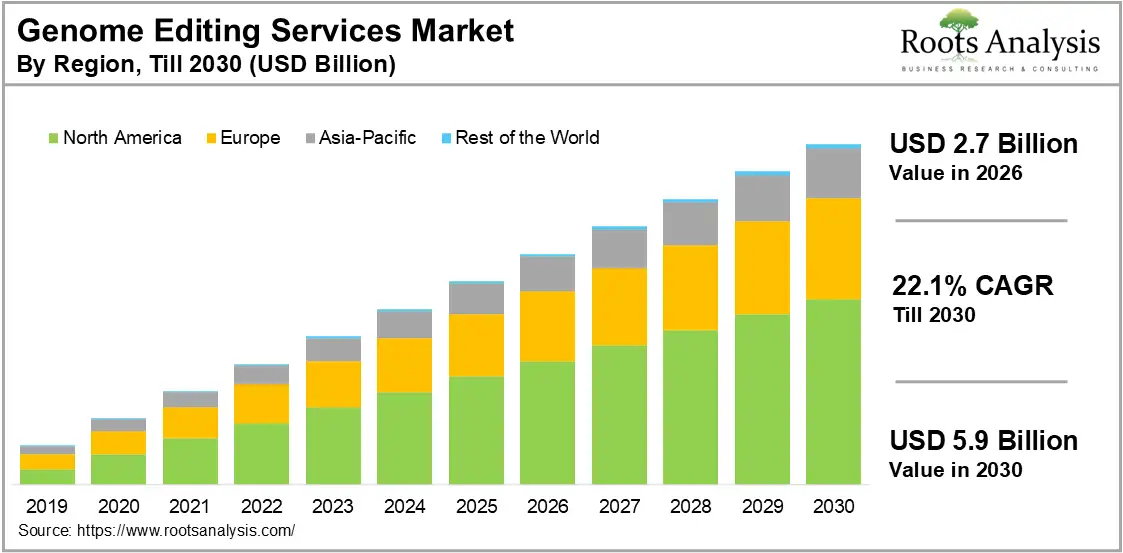
The genome editing service market, valued at USD 2.1 billion in 2025, is projected to reach USD 2.7 billion in 2026 and USD 5.9 billion by 2030, with a 22.1% CAGR during the forecast period 2026 to 2030.
To learn more about this report, request a free sample copy
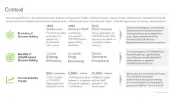
The 1970s witnessed the introduction of one of the most revolutionary advances in biotechnology, when Hamilton Smith (a molecular biologist at Johns Hopkins University School of Medicine) purified the first site-specific restriction enzyme, called Hind II. This development enabled the scientific community to devise the means to manipulate living organisms at the genetic level, opening up a plethora of opportunities in fundamental and applied life science research. Soon after, in the 1980s, the US FDA approved the world’s first genetically engineered drug, which was human insulin marketed under the brand name HUMULIN®.
Genetic engineering and genome editing concepts have evolved significantly over the last two decades, with the development of a variety of versatile DNA modulation technologies including zinc finger nucleases, transcription activator-like effector-based nucleases (TALENs), and the clustered regularly interspaced short palindromic repeats (CRISPR). These developments have enabled medical researchers to perform an array of gene / cell line engineering experiments, including gene knockdowns, gene overexpressions and single base editing, for a variety of R&D applications. It is worth highlighting that, of all the available genome manipulation technologies, CRISPR is currently considered to be the most popular tool, owing to its fast, accurate, and cost-effective approach. In fact, in 2018, scientists Emmanuelle Charpentier, Jennifer Doudna, and Virginijus Siksnys were felicitated for their pioneering efforts on the CRISPR-Cas9 technology, with the prestigious Kavli Prize in Nanoscience.
 |
 |
 |
Currently, there is an evident increase in demand for complex biological therapies (including regenerative medicine products), which has created an urgent need for robust genome editing techniques. The biopharmaceutical pipeline includes close to 500 gene therapies, several of which are being developed based on the CRISPR technology. Recently, in July 2019, a first in vivo clinical trial for a CRISPR-based therapy was initiated. However, successful gene manipulation efforts involve complex experimental protocols and advanced molecular biology centered infrastructure. Therefore, many biopharmaceutical researchers and developers have demonstrated a preference to outsource such operations to capable contract service providers. Consequently, the gene editing market was established and has grown to become an indispensable segment of the modern healthcare industry, offering a range of services, such as gRNA design and construction, cell line development (involving gene knockout, gene knockin, tagging and others) and transgenic animal model generation (such as knockout mice).
Additionally, there are several players focused on developing advanced technology platforms that are intended to improve / augment existing gene editing tools, especially the CRISPR-based genome editing processes. Given the rising interest in personalized medicine, a number of strategic investors are presently willing to back genetic engineering focused initiatives. Prevalent trends indicate that the market for CRISPR-based genome editing services is likely to witness a significant market growth during the forecast period.
Recent Developments in Genome Editing Service Market
Several recent developments have taken place in the field of genome editing service market. We have outlined some of these recent initiatives below. These developments, even if they took place post the release of our market report, substantiate the overall market trends that have been outlined in our analysis.
- In May 2026, ERS Genomics and Aurigene Pharmaceutical Services announced a non-exclusive CRISPR / Cas9 licensing agreement, granting Aurigene access to foundational gene-editing patents. The deal enables Aurigene to integrate genome editing into its CRDMO services, enhancing discovery capabilities and expanding support for global pharma and biotech partners across drug development programs.
- In May 2026, Eli Lilly entered into a collaboration with AI biotech Profluent to develop AI-designed recombinases for large-scale gene editing. The agreement includes milestone payments up to $2.25 billion, supporting multiple R&D programs and commercialization efforts, strengthening next-generation gene editing service capabilities and expanding precision genetic medicine applications.
- In April 2026, Profluent entered into a collaboration with Eli Lilly focused on developing custom site-specific recombinases using AI-driven protein design. The partnership aims to enable precise DNA editing at scale for complex diseases, expanding advanced gene editing service offerings and accelerating commercialization through Lilly’s global development capabilities.
- In March 2026, Tropic raised $105 million in Series C funding round with an aim to scale gene-edited crops using CRISPR technologies. The funding will support commercialization and pipeline expansion of climate-resilient bananas and rice, highlighting increasing investor interest in gene editing platforms and associated service capabilities across agricultural biotechnology markets.
Key Companies in Genome Editing Service Market
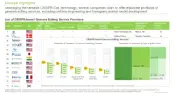
Examples of key gene editing companies engaged in CRISPR based genome editing service market (which have also been profiled in this market report; the complete list of gene editing companies is available in the full report) include Applied StemCell, BioCat, Biotools, Charles River Laboratories, Cobo Scientific, Creative Biogene, Cyagen Biosciences, GeneCopoeia, Horizon Discovery, NemaMetrix, Synbio Technologies and Thermo Fisher Scientific. This market report includes an easily searchable excel database of all the gene editing companies worldwide.
Moreover, the table presented below compares leading service providers in the genome editing service market, focusing on CRISPR capabilities. It highlights key service offerings, strengths in custom cell line editing, animal model generation, typical project timelines, and relative pricing positioning. Kindly note that the information presented in this table is collated based on the information available in the public domain.
| Company Name | Year of Establishment | Headquarters | Custom Cell Line Editing | Animal Model Generation | Turnaround Time (Typical) | Key Differentiator |
| Thermo Fisher Scientific | 1956 | Massachusetts, USA | Yes | Yes | 4–12 weeks | Comprehensive end-to-end workflow tools & reagents; global scale & integration |
| Horizon Discovery (Revvity) | 2005 | Cambridge, UK | Yes | Limited | 6–10 weeks | Largest portfolio of ready-to-go edited cell lines & knockout models |
| Charles River Laboratories | 1947 | Massachusetts, USA | Yes | Yes | 8–16 weeks | Regulatory-ready preclinical animal models & in vivo services |
| Creative Biogene | 2004 | New York, USA | Yes | Yes | 3–8 weeks (for cell lines) | Fast, cost-effective custom projects with good support for various cell types |
| Cyagen Biosciences | 2006 | California, USA | Yes | Yes | 4–12 weeks (for models) | Specialized in rapid, high-efficiency rodent (mouse / rat) model generation |
Scope of the Genome Editing Service Market Report
The “Genome Editing Service Market - Focus on CRISPR: Industry Trends and Global Forecasts, till 2030” market report features an extensive study of the current market landscape, market size, market share, market growth, market trends, market value, market forecast, market outlook, statistics and future opportunities of the genome editing service market. The market research report presents an in-depth analysis, highlighting the capabilities of various stakeholders engaged in genome editing service market, across different geographical regions.
 |
 |
 |
Amongst other elements, the market research report includes:
- A detailed assessment of the current market landscape, featuring an elaborate list of over 80 gene editing companies that offer CRISPR-based genome editing services, and analyses based on a number of relevant parameters, such as type of gRNA service, availability of gRNA format, type of endonuclease, type of Cas9 endonuclease format, type of cell line engineering offering, type of cell line, type of animal model generation offering, availability of CRISPR libraries and important service provider details (year of establishment, company size and location of headquarters).
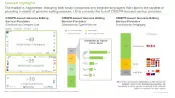
- An insightful 2X2 representation, highlighting the competitiveness of various CRISPR-based genome editing service providers captured in our database (segregated across various peer groups based on company size), taking into consideration the supplier power and the specific genome editing capabilities (which include gRNA service(s), endonuclease service(s), cell line engineering service(s), animal model generation service(s) and availability of CRISPR library(s)) of different companies.
- Elaborate profiles of key players (shortlisted based on strength of service portfolio), featuring a brief overview of the company, its financial performance (if available), a detailed description of its genome editing service offerings, recent developments and an informed future outlook.
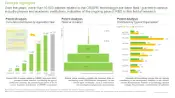
- An in-depth analysis of over 10,000 patents related to CRISPR technology that have been filed / granted, since 2006, highlighting key trends associated with these patents, across type of patent, publication year and application year, regional applicability, CPC symbols, emerging focus areas, leading patent assignees (in terms of number of patents filed / granted), patent benhcmarking and valuation.
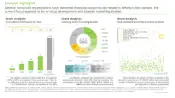
- A detailed analysis of close to 2,000 grants that have been awarded to support research projects related to CRISPR, highlighting important parameters, such as year of award, amount awarded, administring institute center, support period, funding mechanism, type of grant application, grant activity, type of recipient organization, regional distribution of recipient organization, prominent project leaders and emerging focus areas. It also features a detailed multivariate grant attractiveness analysis based on the amount awarded, support period, grant type and funding mechanism.
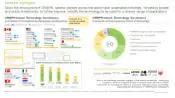
- A discussion on the advanced technologies and systems that have been developed to improve CRISPR-related processes. It includes a list of companies that have developed such innovative technology platforms, along with details on a number of relevant parameters, such as year of establishment, company size, core expertise, location of headquarters and important technology specifications (including technology name, focus area and key features). In addition, it includes short profiles of key technology providers. Further, the chapter highlights a list of companies that offer CRISPR kits and CRISPR design tools.
- An analysis highlighting potential strategic partners, segregated based on likelihood of entering into collaboration with CRISPR-based genome editing services providers. The analysis takes into consideration multiple relevant parameters, such as type of therapy, pipeline strength, pipeline maturity, company strength and therapeutic area.
- A discussion on important, industry-specific trends, key market drivers and challenges, under a SWOT framework, featuring a qualitative Harvey ball analysis that highlights the relative impact of each SWOT parameter on the overall market.
The key objective of genome editing service market report is to provide a detailed market analysis in order to estimate the existing market size, market share, market growth, market trends, market value, market forecast, market outlook, statistics and future opportunity for genome editing service market during the forecast period. We have provided an informed estimate of the likely evolution of the market in the short to mid-term and long term, for the forecast period, till 2030. In addition, we have segmented the future opportunity across [A] type of services offered (gRNA construction, cell line engineering and animal model generation), [B] type of cell line used (mammalian, microbial, insect and others) and [C] different geographical regions (North America, Europe, Asia Pacific and rest of the world). To account for the uncertainties associated with the CRISPR-based genome editing services market and to add robustness to our model, we have provided three forecast scenarios, portraying the conservative, base and optimistic tracks of the market’s evolution.
The research, analysis and insights presented in this market report are backed by a deep understanding of key insights generated from both secondary and primary research. All actual figures have been sourced and analyzed from publicly available information forums and primary research discussions. Financial figures mentioned in this market research report are in USD, unless otherwise specified.