


 Download Free Sample
 Buy Now
Market Size
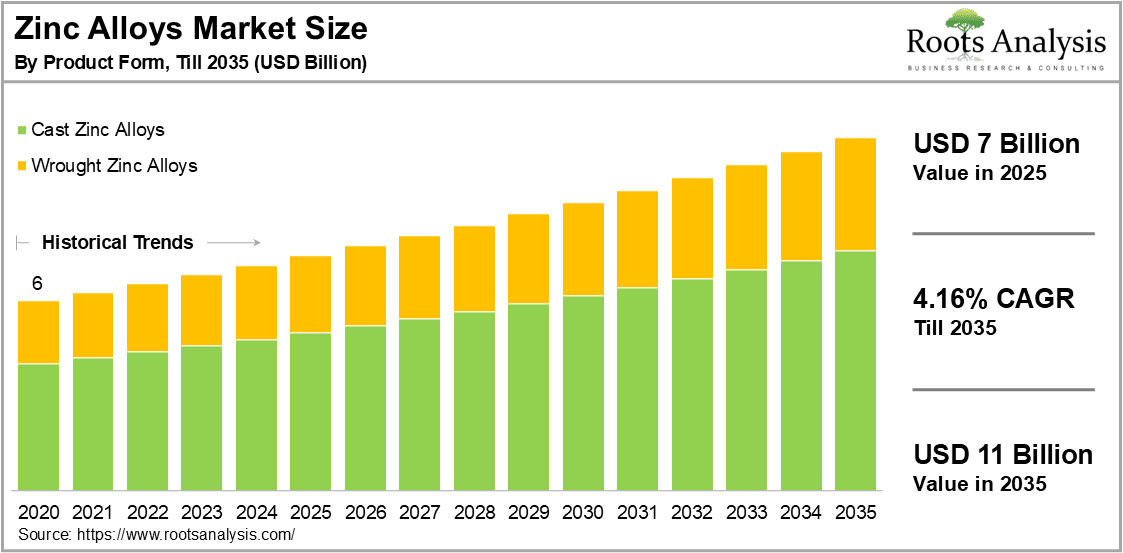
The global zinc alloys market size, valued at USD 7 billion in 2025, is projected to reach USD 9 billion in 2030 and USD 11 billion by 2035, with a CAGR of 4.16% during the forecast period 2025 to 2035.
See What’s in the Full Report–Request Your Complimentary Insights!
Zinc alloys are advanced metal blends formed by combining zinc with elements such as aluminum, copper, and magnesium, strategically engineered to deliver superior mechanical, chemical, and physical properties. Their excellent fluidity and low melting point enable high-precision zinc die casting of complex automotive and electronic components, offering manufacturers outstanding flexibility in design and performance.
These alloys are highly valued for their exceptional corrosion resistance, making them ideal for exposed structural automotive parts and robust electronic housings where durability and EMI shielding are critical. By fine-tuning the composition, manufacturers can tailor zinc alloys for optimal strength, ductility, and longevity, meeting evolving industry demands for lightweight, efficient, and cost-effective products.
Additionally, zinc alloys support circular economy initiatives due to their recyclability and lower energy requirements for processing, promoting sustainable manufacturing practices in the automotive and electronics sectors. Their environmental performance and cost efficiencies position zinc alloys as essential materials for next-generation industrial applications where sustainability and innovation are core priorities.
Recent Developments in the Zinc Alloys Market
- In May 2025, Hindustan Zinc launched an online metal sale via E-Auction, redefining the metal procurement experience through its transformative Online Price Discovery (OPD) and Digital Pricing Automation platforms.
- In April 2025, Hindustan Zinc set a new record as world’s top zinc die casting companies, recording a historic-high annual mined metal production at 1095 KT and refined metal production at 1052 KT.
Zinc Alloys Market Dynamics
Key Market Drivers
- Expansion in Construction and Infrastructure: The construction sector increasingly utilizes zinc die casting alloys for locks, hinges, and hardware components, attracted by their corrosion resistance, durability, and excellent aesthetic qualities, driving growth in infrastructure projects.
- Growth in Automotive and Transportation Sectors: Automotive manufacturers are adopting zinc die casting for lightweight, high-precision, and robust components, such as engine parts, housings, and decorative trims, meeting stringent performance and environmental standards in next-generation vehicles.
- Rising Demand for Consumer Goods and Electronics: The surge in consumer electronics and durable goods relies heavily on zinc alloy applications for connectors, enclosures, and decorative hardware, benefiting from versatility, EMI shielding, and design flexibility for innovative products.
- Renewable Energy and Energy Storage Applications: Emerging energy storage solutions use zinc die casting alloys for battery components and renewable system housings, leveraging their recyclability, low energy processing, and cost-effectiveness in sustainable energy applications.
Key Market Challenges
- Volatility in Raw Material Prices: Fluctuations in the prices of zinc casting alloys impact production costs and profit margins for manufacturers, thereby limiting their applications.
- Technological Barriers in Manufacturing: Producing high-quality zinc alloys with consistent properties requires advanced manufacturing techniques and skilled labor, which can be a barrier for some zinc alloy die casting parts manufacturers.
- Supply Chain Disruptions: Geopolitical tensions, trade restrictions, and logistical challenges faced by zinc die casting supplier disrupt the supply of raw materials and finished products, affecting market stability.
- Economic Uncertainty and Market Fragmentation: Economic downturns and the presence of numerous small and medium-sized producers can lead to price volatility and intense competition in the market.
Pay Only for What You Need – The Best Way to Optimize
Market Share Insights
Die Casting Alloys to Drive Industry Growth
According to our zinc alloys industry analysis, the die casting alloys sub-segment is set to take the lead among the different product types, holding a significant share of 49.21%. Further, this trend is unlikely to change during the forecast period as it is projected to have the fastest growth rate (CAGR of 4.35%).
The widespread adoption of zinc die casting alloys in the automotive sector, particularly for manufacturing lightweight and durable parts, makes them the largest contributor to the zinc alloys market demand.
Along with that, the growth is also driven by the increasing production of electric vehicles, advancements in die casting technology, and the push for lightweight, recyclable materials in electronics industries.
Zinc-Aluminum Alloys Dominate the Market
Among various zinc alloy composition, the zinc-aluminum sub-segment stands out as the leading one, holding a market share of 44%. According to our zinc alloys market report, it is important to note that zinc-aluminum sub-segment is projected to grow at a fastest CAGR of 4.19% during the forecast period.
Zinc-aluminum alloys dominate the market due to their superior mechanical properties, excellent corrosion resistance, and exceptional castability, making them highly suitable for precision die casting applications across automotive, electronics, and consumer goods sectors.
Their lightweight yet durable nature supports innovations in electric vehicles and advanced industrial uses. Additionally, these alloys align with sustainability trends by offering recyclability and low environmental impact, fueling growing adoption globally.
Cast Zinc Alloys Driving Market Growth in Electronics and Industrial Applications
The cast zinc alloys sub-segment currently dominates the market and is projected to experience the fastest CAGR during the forecast period 2025-2035. This dominance is largely fueled by their extensive application in zamak die casting and zinc die casting process, specifically used for manufacturing miniatured electronic components.
Cast zinc alloys find broad utilization in zinc alloy manufacturing for industrial components in sectors, such as plumbing, aerospace, and medical devices. Additionally, the widespread use of plating zinc die casting enhances durability and aesthetic appeal, especially in high-performance applications, supporting the sustained market growth and demand for custom zinc die casting parts from precision manufacturers.
This sub-segment’s growth is further driven by advancing die casting technology and increasing adoption across electronics and industrial sectors that require strong, lightweight, and reliable zinc alloy components such as die cast zamak 3, supporting the overall expansion of the global zinc alloys market.
Regional Estimates: Asia to Holds the Largest Share within the Industry
According to our zinc alloys market size and forecast 2025-2035, Asia exhibits dominance by capturing 49.86% of the overall current market share. This growth is primarily driven by the region’s rapid industrialization, paired with the presence of major manufacturing hubs in countries, such as China, India and Japan, which drives significant growth in zinc alloy consumption.
The automotive and construction sectors, in particular, are key contributors to this demand, supported by government initiatives and investments in the infrastructure department.
Want Information on Specific Region / Segment?
Market Key Takeaways
Impact of Automotive Sector Growth on Zinc Alloys Market
- Global electric vehicle sales soared to more than 15 million units in 2024, reflecting the rapid adoption of EVs worldwide, a trend boosting demand for corrosion-resistant, lightweight materials, such as zinc die casting alloys in automotive components.
- Automotive engineering advancements illustrate increased use of zinc die casting in battery housings, transmission covers, and other critical parts, driven by zinc’s cost-efficiency and recyclability in sustainable vehicle manufacturing.
Effect of Construction Industry Expansion on Zinc Alloys Demand
- The global construction sector expanded by approximately 4.5% in 2024, fueled by infrastructure investment and urbanization, which stimulated demand for durable zinc alloy for construction in roofing, cladding, and galvanizing applications.
- Zinc’s recognized sustainability benefits, including recyclability and environmental compatibility, position it as an increasingly preferred material in green building initiatives and eco-friendly construction practices.
Challenges in Zinc Alloys Supply Chain and Raw Material Prices
- Zinc stocks on the London Metal Exchange (LME zinc stocks) have declined from 230,000 tons to 40,850 tons since the beginning of the year, leading to critically low inventory levels.
- This severe depletion is largely due to supply gaps from disruptions in Western smelting operations, including permanent closures and production cuts in Japan, South Korea, Australia, and Italy.
- While Western smelters face significant challenges, Chinese zinc producers have increased output, supported by rising imports of zinc concentrates, especially from the Democratic Republic of Congo and Russia.
- These supply disruptions and inventory imbalances have intensified price volatility and created an urgent need for industries dependent on aluminum zinc alloy uses and other alloys, such as Zamak 3 alloy and Zamak 5 alloy to seek diversified sourcing and recycling strategies.
How is the Zinc Alloys Market Growth Driven by Renewable Energy Storage?
- Growing interest in zinc ion batteries as cost-effective, safer alternatives to lithium-ion technology is driving zinc demand, with research underscoring zinc’s potential for scalable, sustainable energy storage.
- The high recyclability and low environmental impact of zinc contribute to its rising role in renewable energy systems, supporting decarbonization efforts and reinforcing demand for zinc alloys in energy storage applications.
Zinc Alloys Market: Scope of the Report
| Key Report Attributes | Details | |
| Historical Trend | Since 2020 | |
| Forecast Period | Till 2035 | |
| Market Size 2025 | USD 7 Billion | |
| Market Size 2035 | USD 11 Billion | |
| CAGR (Till 2035) | 4.16% | |
| Type of Product |
|
|
| Alloy Composition |
|
|
| Product Form |
|
|
| End Use Industry |
|
|
| Geographical Regions |
|
|
| Key Players Profiled |
|
|
| PowerPoint Presentation (Complimentary) | Available | |
| Customization Scope | 15% Free Customization | |
| Excel Data Packs (Complimentary) |
|
|


