


 Download Free Sample
 Buy Now
Market Size
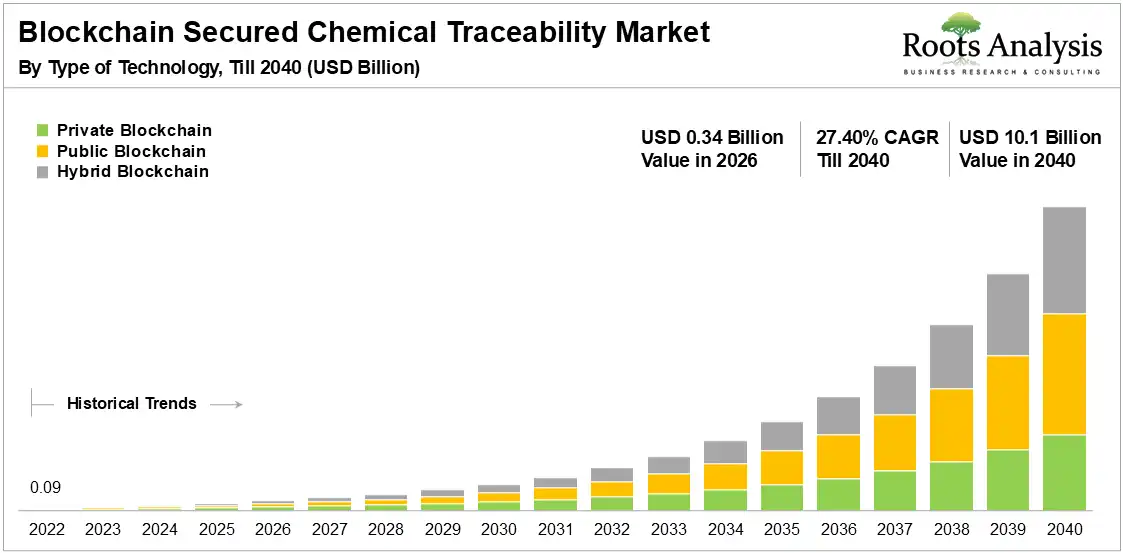
The global blockchain secured chemical traceability market is projected to reach USD 0.34 billion in 2026 and USD 10.1 billion by 2040, representing a CAGR of 27.40% during the forecast period 2026 to 2040.
See What’s in the Full Report – Request Your Complimentary Insights!
Market Overview
The global chemical industry is currently navigating a radical transparency revolution. As of early 2026, blockchain-secured traceability has transitioned from a niche experimental phase to a mission-critical industrial infrastructure. This shift is driven by the urgent convergence of stringent environmental mandates, the adoption of circular economy models, and the persistent necessity to eliminate fraudulent materials from the global supply chain.
At its core, these solutions’ leverage distributed ledger technology (DLT) to establish immutable records for chemical products. By capturing data across raw materials, intermediates, and finished goods, the technology provides a secure audit trail from initial sourcing through to end-user consumption. This infrastructure creates value by enhancing regulatory compliance, mitigating counterfeiting risks, and enabling the precise ESG reporting required for hazardous materials.
High-value sectors, specifically specialty chemicals, pharmaceutical precursors, and agricultural chemicals have become the primary staging ground for these applications. Recent blockchain chemical traceability market momentum is evidenced by European chemical producers implementing blockchain tracking for bio-based feedstocks to meet “European Green Deal” requirements. This represents a broader movement toward "Digital Product Passports," a strategic priority now shared by industry leaders such as BASF, Covestro, and Microsoft.
The next frontier of innovation involves integrating advanced AI (artificial intelligence) and data analytics directly with blockchain ledgers. This synergy allows companies to move beyond retrospective tracking toward predictive insights, offering a clearer view of potential supply chain disruptions. As the market reaches new heights, the transition toward total regulatory accountability and structural sustainability ensures a highly positive outlook for investment and long-term growth.
Market Report: Key Takeaways
- Global Leaders Initiatives: The market is currently moderately competitive, featuring robust presence of well-established players like BASF, Covestro, SAP, IBM, and Microsoft. While companies like IBM emphasize blockchain and supply chain technology to pharmaceutical-chemical supply chains for chemical traceability, VeChain is prioritizing the development of blockchain-as-a-service platform and Internet of Things (IoT) security integration for chemical tracking.
- Startup Ecosystem: Current global chemical industry blockchain market analysis highlights that startups are the primary drivers of innovation in niche chemical applications like carbon tracking and circular chemistry. Circularise has led a pioneering project with 10 chemical players, including Neste and Shell, to test blockchain-based systems as a complement to sustainability certification. This selective data sharing technology allows suppliers to provide verified proof of their material’s sustainability attributes without revealing sensitive proprietary formulations.
- Funding and Investment Initiatives: The funding environment for blockchain-secured traceability has matured, with a shift toward more traditional venture capital and debt financing models. Supply chain traceability represents significant segment capturing enterprise investment. Recently, Mstack Chemicals raised USD 40 million (Series A, 2025) for specialty chemical operations and digital logistics.
- Cloud-Based Deployment Mode Dominance: Cloud-based deployment captured over 55.5% of the global blockchain-secured chemical traceability market share in 2026 and is projected to grow at a CAGR of 30.8%. This cloud-based model is favored for its scalability, lower capital expenditure, and ease of access for global supply chain partners.
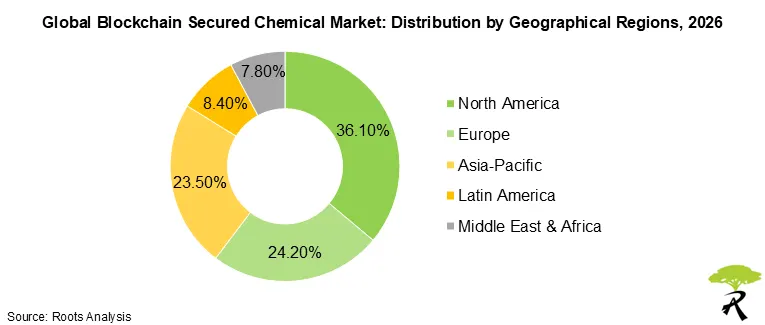
- Geographical Insights: The geographic landscape of the blockchain chemical traceability market is bifurcated between the technological pioneers of the west and the manufacturing powerhouses of the east. While North America holds a dominant market share of approximately 36.1%, Asia-Pacific will grow at a 28.2% CAGR.
- Future Opportunities: The key future chemical traceability solutions market trends include the AI-blockchain hybrid solutions, circularTree-type platforms, cloud-based SaaS platforms, IoT-blockchain integration, and pharmaceutical-chemical traceability platforms.
Recent Industry Developments
- October 2025: SMX and Goldstrom Advisory signed a strategic partnership to embed SMX’s molecular marker and blockchain-registry technologies into precious metal supply chains for gold and silver. This partnership aims to provide a permanent molecular signature that survives refining and melting as well as link to blockchain-secured digital passport.
- September 2025: Mastack launched Chemstack AI, a closed loop AI ecosystem specifically designed for molecular synthesis. This AI-led R&D platform also acts as a closed-loop ecosystem to diversify and track chemical supply chains through autonomous discovery engines.
Pay Only for What You Need – The Best Way to Optimize
Market Dynamics
Market Drivers
- Regulatory Pressure for Hazard Identification and Compliance: Stringent international regulations, such as REACH in Europe and Globally Harmonized System of Classification and Labelling of Chemicals (GHS), necessitate granular and verifiable data on chemical composition, handling, and environmental impact across the supply chain. IoT integration for chemical supply chain management provides an immutable record for automated compliance reporting, significantly reducing the administrative burden and mitigating financial penalties for non-compliance.
- Escalating Counterfeiting and Adulteration Risks: The high-value specialty chemical and pharmaceutical active pharmaceutical ingredient (API) segments face significant threats from counterfeiting, which compromises product integrity and consumer safety. Therefore, pharmaceutical supply chain traceability solutions provide a verifiable chain of custody from source to end-user, allowing end-users to authenticate product origin quickly and protecting brand reputation and intellectual property.
- Increased Demand for Supply Chain Resilience and Transparency: Based on the Chemical supply chain digitization market report, the global geopolitical instability and recent supply chain disruptions have driven a strong business requirement for enhanced visibility to mitigate risks related to source verification and quality assurance. Blockchain offers a real-time, shared ledger that provides a single source of truth, enabling proactive risk management and faster response to product recalls or supply bottlenecks.
- Efficiency Gains through Process Automation and Smart Contracts: Manual data reconciliation and paper-based documentation remain significant sources of friction in chemical logistics and trade finance. Implementing blockchain solutions allows for the automation of processes like trade settlement, quality assurance verification, and automated payments via smart contracts, reducing operational costs and accelerating transaction speeds across a fragmented value chain.
Market Restraints
- Securing the Physical-to-Digital Bridge for Bulk Chemicals: A key challenge for this market is linking the physical chemical container (e.g., drums, IBCs, tank cars) to its digital identity on the blockchain in a secure and cost-effective manner, especially for high-volume, low-margin bulk chemicals. Standard solutions like QR codes or RFID tags often fall short in harsh chemical environments, requiring specialized IoT solutions and robust regulatory compliance chemicals industry traceability that increase operational costs.
- Complexity of Cross-Border Regulatory Compliance and Data Sovereignty: Chemical supply chains frequently cross multiple jurisdictions, each with different data privacy laws (like GDPR) and specific chemical registration requirements. Designing a blockchain solution that satisfies conflicting data sovereignty rules, where data must be stored locally in one country but shared across borders for a global supply chain, presents a complex legal and architectural challenge.
- Scalability for High-Volume Data and Network Latency: The chemical industry involves high-volume data transactions, especially for bulk movements where large numbers of sensors track temperature, pressure, and location. Ensuring that blockchain networks can scale efficiently to handle this volume of data without significant network latency or high transaction fees (gas costs) is a crucial technical hurdle for commercial viability in this sector.
- Lack of Universal Definition of Traceability and Data Standards: Different stakeholders define traceability differently based on their specific needs; for instance, producers prioritize source verification, regulators prioritize hazard tracking, and end-users focus on authenticity. The absence of a universally accepted data standard for chemical identifiers and supply chain events complicates efforts to build a truly interoperable and universally accepted blockchain solution.
Want Information on Specific Region / Segment?
Market Share Insights
Supply Chain Management Holds the Highest Share
- Based on the chemical supply chain transparency market outlook, supply chain management holds the highest share at 35.2% in 2026, driven by its foundational role in blockchain supply chain apps where product traceability commands 24.5% overall, aligning with chemical planning and end-to-end visibility needs.
- Counterfeit detection emerges as fastest-growing at 28.5% CAGR to 2040, fueled by rising fraud in high-value chemicals / pharma, regulatory demands for authenticity, and cost-effective blockchain verification alternatives like compliance rejected due to narrower scope. Proxies include increasing counterfeiting pressures and supply chain reports, such as pharma blockchain for anti-counterfeit.
Blockchain Chemical Traceability Regional Market Share Analysis
North America: The Technological Infrastructure Leader
Based on blockchain in chemical supply chain market report, North America holds a dominant market share of approximately 36.1% in 2026.
- Key Strength Points: Rising investment in technological infrastructure, robust government fund support, and presence of established players like IBM, Microsoft, and Oracle.
- Dynamic: The US is the proving ground for blockchain-backed pharma and chemical traceability, driven by the Drug Supply Chain Security Act (DSCSA).
- Investment Hotspots: Houston petrochemical corridor, Delaware Valley pharma-chemical cluster, Silicon Valley blockchain innovation.
Asia-Pacific: The Fastest-Growing Manufacturing Hub
According to blockchain technology in chemical logistics market research, Asia-Pacific is expected to record the highest growth rate during the forecast period, fueled by expanding manufacturing bases and government-backed digital transformation programs.
- Key Strength Points: High mobile penetration, active startup ecosystems, and "government-backed digital-trade programs" in China, India, and Singapore.
- Dynamic: China is leading in cross-border trade documentation and logistics park integration, while India focuses on agricultural chemical traceability and SME modernizations.
- Investment Hotspots: China (chemical park integration, NITI Aayog-Oracle blockchain pilots), India (pharmaceutical traceability), and Singapore (chemical trading hub).
- Risk-Return Profile: High growth potential but regulatory fragmentation and data sovereignty concerns present moderate risks.
Europe: The Regulatory Catalyst
Europe remains the primary driver of traceability standards, despite having a smaller revenue share than North America. The Ecodesign for Sustainable Products Regulation (ESPR) makes Europe the global leader in Digital Product Passport (DPP) implementation.
- Key Strength Points: Stringent regulatory frameworks (REACH, ESPR) and a focus on circularity and ethical sourcing.
- Dynamic: European firms like BASF and Shell are pioneering "Mass Balance" blockchain protocols to secure their lead in the burgeoning green chemicals market.
- Investment Hotspots: Germany (BASF blockchain pilots, and SafeOne Chain), Netherlands (chemical port logistics), and Belgium (Solvay-ChemChain partnership).
Market Ecosystem Insights
Competitive Analysis of Key Players in Blockchain Chemical Supply Chain
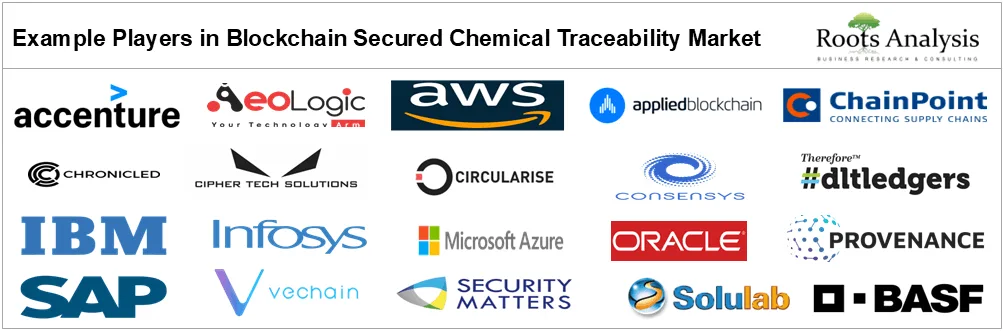
The competitive landscape of the blockchain-based chemical traceability market is moderately fragmented, featuring a diverse mix of technology giants, blockchain specialists, startups, and established chemical industry leaders such as BASF, Dow, Covestro, Circularise, SAP, and the VeChain Foundation.
Industrial players are strategically focusing on developing regulatory-compliant, blockchain-enabled traceability systems to enhance transparency, sustainability, and carbon accountability across the chemical supply chain. As global net-zero and sustainability mandates tighten, the demand for “carbon-tracking-as-a-service” solutions is surging. Consequently, market participants are investing heavily in blockchain-as-a-service (BaaS) platforms and digital verification systems to authenticate the mass balance of sustainable raw materials.
Strategic collaborations, pilot projects, and new product launches are at the core of competitive differentiation. A notable example includes the SAP–Unilever GreenToken pilot project, which successfully improved transparency and traceability across Unilever’s palm oil-derived chemical feedstock supply chain. Key participants in such initiatives include SK Geo Centric (South Korea), Elantas (Italy), Westlake Vinnolit (Germany), and Berry Global (US).
Investment Opportunities in Blockchain Solutions for Chemical Supply Chain Transparency
- Verifiable Green Premium for Sustainable Chemicals: Blockchain enables chemical manufacturers to create a clear audit trial for chemicals produced through sustainable processes, certified low-carbon sourcing, or ethical supply chains. This verifiable "green premium" offers a significant market differentiation opportunity to capture high-value contracts from environmentally conscious downstream industries and end consumers willing to pay for transparency.
- Specialty Chemical Traceability as a High-Return Segment: The high cost of non-compliance and product recalls in high-value specialty chemical markets (e.g., electronics materials, pharmaceutical APIs, agrochemicals) makes them ideal candidates for blockchain investment. The ROI for traceability in these segments is significantly higher than for low-margin bulk chemicals, allowing solution providers to target profitable niches where compliance and authenticity are paramount.
- Integration with Digital Twins and AI for Predictive Analytics: Moving beyond simple traceability, the market opportunity lies in integrating blockchain data with digital twin models and artificial intelligence (AI) platforms. This allows for predictive quality control, automated process optimization, and simulation of supply chain disruption scenarios, transforming raw data into high-value operational insights for chemical manufacturers and logistics providers.
Get an Instant Quote in 10 Minutes. Lowest Price Guaranteed
Blockchain Secured Chemical Traceability Market: Scope of the Report
| Key Report Attributes | Details | |
| Historical Trend | Since 2022 | |
| Forecast Period | Till 2040 | |
| Market Size 2026 | $ 0.34 Billion | |
| Market Size 2040 | $ 10.1 Billion | |
| CAGR (Till 2040) | 27.40% | |
| Segments Covered |
|
|
Market Segmentation
Based on the research, we have segmented the blockchain secured chemical traceability market into type of component, type of technology, type of deployment model, application area, enterprise size, end-use industry, geographical regions, and key players.
Market Share by Type of Component
- Platforms
- Public Blockchains
- Private / Permissioned Blockchains
- Hybrid & Consortium Models
- Services
- Consulting & Strategy
- Deployment & Integration
- Support & Managed Services
Market Share by Type of Technology
- Private Blockchain
- Public Blockchain
- Hybrid Blockchain
Market Share by Deployment Model
- On-Premises
- Cloud-Based
Market Share by Application Area
- Supply Chain Management
- Counterfeit Detection
- Regulatory Compliance
- Traceability
- Provenance
Market Share by Enterprise Size
- Small and Medium Enterprises (SMEs)
- Large Enterprises
Market Share by End Use Industry
- Pharmaceuticals and Healthcare
- Food and Beverage
- Chemicals and Petrochemicals
- Specialty Chemicals
- Agriculture
Market Share by Geographical Regions
- North America
- US
- Canada
- Mexico
- Rest of North America
- Europe
- Austria
- Belgium
- Denmark
- France
- Germany
- Ireland
- Italy
- Netherlands
- Norway
- Russia
- Spain
- Sweden
- Switzerland
- UK
- Rest of Europe
- Asia-Pacific
- Australia
- China
- India
- Japan
- New Zealand
- Singapore
- South Korea
- Rest of Asia-Pacific
- Latin America
- Brazil
- Chile
- Colombia
- Venezuela
- Rest of Latin America
- Middle East and Africa (MEA)
- Egypt
- Iran
- Iraq
- Israel
- Kuwait
- Saudi Arabia
- UAE
- Rest of MEA


