


 Download Free Sample
 Buy Now
Erythrosine Market Overview
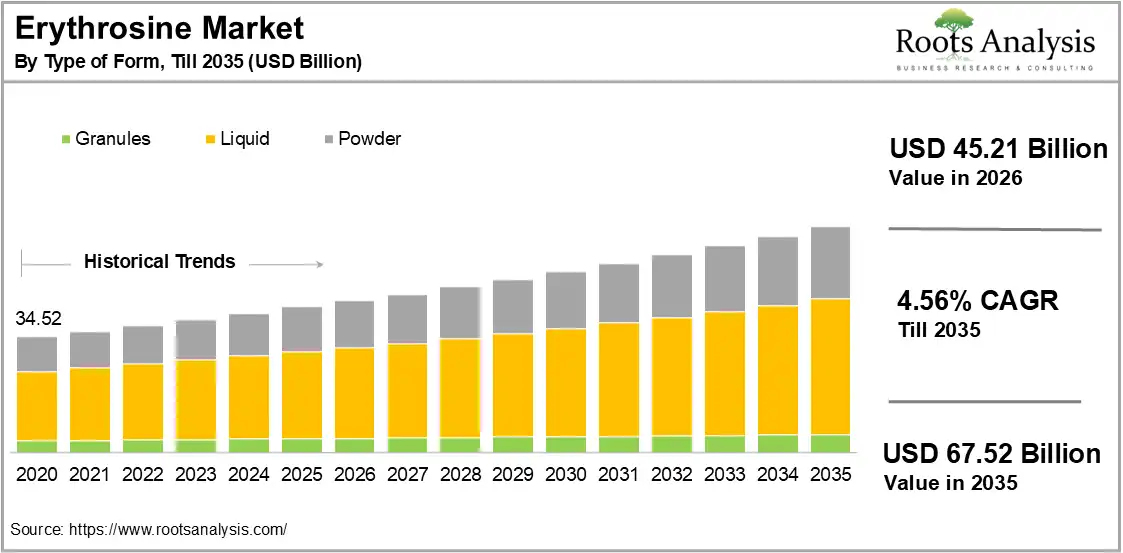
The global erythrosine market, valued at USD 45.21 billion in 2026, is projected to reach USD 54.03 billion in 2030 and USD 67.52 billion by 2035, representing a CAGR of 4.56% during the forecast period. The new research study consists of erythrosine industry analysis, detailed market forecast analysis, and providing actionable strategic recommendations.
See What’s in the Full Report - Request Your Complimentary Insights!
With the emergence of technological advancements and rising competition in the food sector, a demand for more appealing visuals rises. To cater to this demand, erythrosine is on a surge. By condensing resorcinol and phthalic anhydride, erythrosine is manufactured. This dye offers easy solubility and vibrant color to the product for easy identification and appealing visuals.
The benefits of using erythrosine as a food colorant over other synthetic dye are due to higher heat stability and poor light scattering have played a major role in the expansion of the market. Further, the consumer preferences for food colors for appetite simulation and perceived tastiness are achieved by these dyes. It is worth highlighting that these synthetic colorants are used in photodynamic therapy (PDT) for cancer treatments. Notably, their reliable application in dental plaque has nurtured the market. Moreover, applications of erythrosine in confectionery for celebration aesthetics and bright colors have made an impact in natural vs synthetic dyes competition.
The global erythrosine market size is expected to grow significantly over the forecast period due to the rapid growth in erythrosine in cosmetics and makeup products such as skin tone creams, lip gloss and eye shadows. Further, the rising growth in packaged food will play a major role in the market growth due to their high usage of baked foods, cereals and sauces. It is worth highlighting that these offer high solubility that does not affect product quality. In addition, cost-effectiveness due to low manufacturing costs and easy material availability will accelerate the expansion of the market in the forecasted period. Consequently, rising investments in development and advancements in food dye will contribute to the erythrosine market outlook.
Erythrosine Market Segmentation
Market Share by Type of Form
On the basis of the type of form, the erythrosine market is bifurcated into granules, liquid and powder. The liquid segment is anticipated to dominate the segment with more than 50% market share of erythrosine in 2025. This can be ascribed to easy dissolvable properties that allow easy applications in candles, food, beverages and sauces. In addition, these are used to stain and visualize dental plaque forwardly boosting liquid erythrosine market.
On the other hand, the powder segment is expected to witness a relatively faster (4.67%) erythrosine market growth rate by 2035. This can be attributed to their high usage in baking and confectionery due to the need of high color concentration without compromising texture of original product. Further, their rapid demand in cosmetic and ingested drugs will drive the powder erythrosine market growth.
Have Questions? Let’s Get Them Answered.
Market Share by Type of Solubility
On the basis of the type of solubility, the erythrosine market is bifurcated into dyes and lakes. Currently, the liquid segment is anticipated to dominate the segment with more than 55% of market share in 2025.
Further, this segment is also expected to grow with a relatively higher erythrosine market CAGR of 4.94% in the forecasted period. Prominent reason for this growth can be their applications in various industries such food & beverage, bakeries, cosmetics and chemicals. It is worth highlighting this dye offer effortless dissolvability without downgrading product’s quality.
Market Share by Type of Enterprises
Based on the types of enterprise, the global erythrosine market is segmented into large and small and medium enterprise. According to our analysis, the large enterprise is leading the segment with the major market shares. This can be attributed to their substantial financial resources, extensive research and access to guide to understanding the impact of consumer preferences on the erythrosine market, established market presence and drive business growth in non-volatile memory market.
However, the small and medium enterprise segment is expected to grow with a relatively higher CAGR of 4.67% in the forecasted period. This can be ascribed to their agility in implementing new technologies, which allows them to quickly leverage the latest technologies for operational efficiency, cost reduction, and enhanced customer experiences coupled with the study of how advancements in production technology are shaping the erythrosine market.
Market Share by End-User
Based on the end-user, the global erythrosine market report is segmented into chemical, cosmetics, food and beverages and pharmaceutical. According to our analysis, food and beverages lead the segment with the major market share (40%). This can be due to their usage for achieving vibrant cherry-red color in beverages. Moreover, the key applications of erythrosine in various industries such as baked foods, cereals, dairy products, food premixes, sauces and dressings, confectionery and juices have played a crucial role in the food additives market.
However, pharmaceuticals are expected to grow with a relatively higher CAGR of 4.36%. This can be due to achieve aesthetics and brand identifications for uniqueness. It is worth highlighting that their rapid applications in ointments, syrups and capsules will aid the expansion of the erythrosine in pharmaceuticals market.
Erythrosine Market by Region
This segment highlights the distribution of the erythrosine market across various geographical regions such as North America, Europe, Asia, Latin America, Middle East, North Africa, and the rest of the world. According to our erythrosine market analysis, North America exhibits dominance in the market with over 40% of the erythrosine market share in the global marketplace. This can be attributed to mature and strong pharmaceutical and food and beverage markets.
However, Asia is projected to grow with a relatively higher CAGR (5.34%) in the forecast period. Primary reasons for this growth include rapidly rising food, beverages and bakery industries in the region. In addition, rising ban and dynamic regulations in North America are shifting the dominance in synthetic dye market to the Asian region. It is worth highlighting that ongoing research and development for advancements in erythrosine application methods will contribute in boosting erythrosine demand trends.
Moreover, the rising partnerships and collaborations among various industries to develop enhanced erythrosine with less side-effects will nurture the future trends in synthetic dyes and their applications in food and cosmetics.
Want Information on Specific Region / Segment?
Market Dynamics
Key Drivers of Erythrosine Market
An increasing demand for cosmetic products for even skin and makeup is majorly driving the erythrosine industry. Further, the rapid demand for stable, enhanced color and solubility is continuously aiding market growth. These offer cost-effectiveness by low production costs and easy availability of raw materials. It is worth highlighting that the development of enhanced food processing techniques will continue to drive market growth. The growing trends for packaged and eating out will nurture market growth. Consequently, ongoing partnerships among organizations will aid market growth.
Erythrosine Market Competitive Landscape
With the presence of several small and large erythrosine companies, the competitive landscape of the erythrosine industry is experiencing intense competition and changing market dynamics. From large multinational companies to local erythrosine players, companies are striving to enhance their competitive edge. In terms of market share, large enterprises and multinational companies are dominating the market. While small erythrosine players are continuously improving their products to cater to niche markets by analyzing consumer preferences, or they are offering specialized services. These industry players are focusing on adopting competitive strategies, such as developing innovative solution techniques, forming strategic alliances and partnerships to expand their portfolios and global footprint, investing in recent developments and new feature launches to enhance their erythrosine offerings.
Challenges in Erythrosine Market
Despite the strong market growth projection, numerous market challenges for erythrosine have risen. The most common challenges faced by manufacturers in the erythrosine market today are global regulatory standards for food colorants that minimize the usage of erythrosine. Additionally, health concerns regarding synthetic dyes such as chest pain, tiredness and weakness that also finite market growth. Further, mental side effects such as irritability and confusion hamper market growth. Moreover, rising environmental awareness adds further complexities.
Regional Analysis: North America is Expected to Dominate the Market with the Largest Erythrosine Market Share
North America currently holds a substantial share of approximately 40% in the erythrosine market opportunities. This dominance can be attributed to several factors, the major reason is the high presence of phthalic anhydride and resorcinol manufacturers in the region, allows easy availability of raw materials for faster erythrosine production processes. Further, rapidly growing demand for cosmetic and make up products in the region have nurtured dominance. It is worth highlighting that North America have high packaged food consuming rates, that boosts the erythrosine applications for vibrant color and appetizing visuals. Notably, the presence of prominent players such as Cargill and Sensient Colors are expanding the market through innovation and rapid advancements. Consequently, rapid investments in research and development of advanced food processing methods have played a pivotal role in dominance.
Leading Erythrosine Manufacturers
Examples of key players involved in the erythrosine market (which have also been captured in this market report, arranged in alphabetical order) include BASF, Cargill, CJ CheilJedang, Dynamic Products, Jagson Colorchem, Kanegrade, Matrix, Megha, Mitsubishi Chemical, Parshwanath Dyestuff, Rung, Sensient Colors, Shandong Sanyuan Biotechnology, Univar Solutions and Vidhi Specialty Food Ingredients. This market report includes an easily searchable excel database of all the companies who have adopted the erythrosine market.
Pay Only for What You Need – The Best Way to Optimize
Erythrosine Market: Report Attributes / Market Segmentations
| Key Report Attributes | Details | |
| Historical Trend | Since 2020 | |
| Forecast Period | Till 2035 | |
| Market Size 2026 | $ 45.21 Billion | |
| Market Size 2035 | $ 67.52 Billion | |
| CAGR (Till 2035) | 4.56% | |
| Type of Form |
|
|
| Type of Solubility |
|
|
| Type of Enterprises |
|
|
| End-User |
|
|
| Geographical Regions |
|
|
| Leading Market Players |
|
|
| PowerPoint Presentation (Complimentary) | Available | |
| Customization Scope | 15% Free Customization | |
| Excel Data Packs (Complimentary) |
|
|


