Approved Drugs for Heart Failure with Reduced Ejection Fraction

.png)

Published: July 2026
Heart failure drugs have emerged as a critical therapeutic pillar in cardiovascular care, enabling effective management of a chronic and progressive condition that affects millions worldwide. These drugs work by modulating key pathophysiological pathways, such as reducing cardiac workload, inhibiting neurohormonal activation, and enhancing myocardial contractility, through drug classes including, ACE inhibitors, ARBs, beta-blockers, ARNIs, SGLT2 inhibitors, and diuretics.
The clinical utility of heart failure therapies has gained significant prominence due to their ability to improve symptoms, reduce hospitalizations, prolong survival, and enhance quality of life. They outperform older regimens in both HFrEF and HFpEF populations while addressing limitations of traditional symptomatic treatments. Over time, various advancements have enabled experts to develop new heart failure drugs as well as congenital heart defect devices as the transformative approaches in management of heart failure.
As the heart failure drugs market expands across acute and chronic care settings, clinicians and healthcare systems are actively seeking more effective treatment options. This rising demand offers significant opportunities for pharmaceutical innovators to strengthen their small molecules and biologics pipeline, expand indications, and contribute to the global advancement of precision cardiovascular medicine in the coming years.
Roots Analysis has conducted an exhaustive study on Heart Failure Drugs Market featuring the current market landscape and future opportunities for the companies engaged in healthcare, over a span of next 14 years.
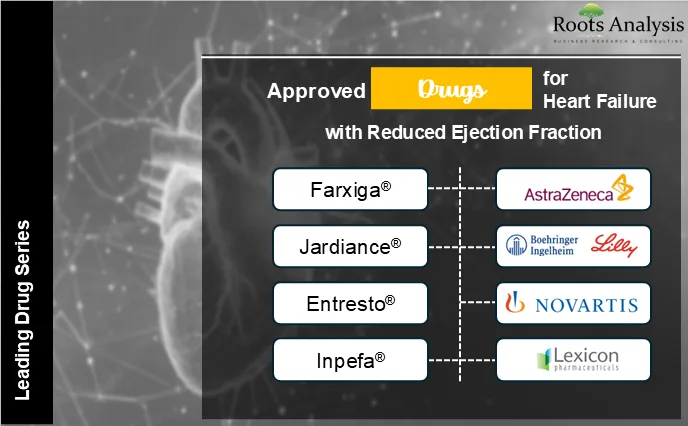
Approved Drugs for Heart Failure with Reduced Ejection Fraction
- Farxiga®
- Jardiance®
- Entresto®
- Inpefa®
Interested in exploring all ~125+ heart failure drugs, along with their recent initiatives?
Discover Below the Details on Approved Heart Failure Drugs with Reduced Ejection Fraction
Let us dive deep into the details of the approved heart failure drugs with reduced ejection fraction.
1. FARXIGA®
List of Developer, Type of Molecule, Type of Therapy, Route of Administration, Mechanism of Action, Target Patient Population, and Type of Heart Failure
The section provides information on the various parameters, with details on type of molecule, type of therapy, route of administration, mechanism of action, and type of heart failure.
- Developer: AstraZeneca
- Type of Molecule: Small Molecule
- Type of Therapy: Monotherapy
- Route of Administration: Oral
- Mechanism of Action: Sodium Glucose Co-transporter 2 Inhibitor
- Target Patient Population: Adults, Elderly Patients
- Type of Heart Failure: Chronic
Recent Developments
In April 2026, the FDA approved the first generic version of Farxiga® (dapagliflozin), to reduce the risk of hospitalization for heart failure in adults with type 2 diabetes mellitus and cardiovascular disease.1
To know more about the recent initiatives of other heart failure drugs, access full report.
2. Jardiance®
List of Developer, Type of Molecule, Type of Therapy, Route of Administration, Mechanism of Action, Target Patient Population, and Type of Heart Failure
The section provides information on the various parameters, with details on type of molecule, type of therapy, route of administration, mechanism of action, and type of heart failure.
- Developer: Boehringer Ingelheim and Eli Lilly
- Type of Molecule: Small Molecule
- Type of Therapy: Monotherapy
- Route of Administration: Oral
- Mechanism of Action: Sodium Glucose Co-transporter 2 Inhibitor
- Target Patient Population: Adults, Elderly Patients
- Type of Heart Failure: Chronic
Recent Developments
In September 2025, Thryv Therapeutics presented promising preclinical data showing that its SGK1 inhibitor THRV-1268, when combined with Jardiance® (empagliflozin), provided additional benefits in a heart failure model by further reducing cardiac inflammation, fibrosis, and improving heart function.2
To know more about the recent initiatives of other heart failure drugs, access full report.
3. Entresto®
List of Developer, Type of Molecule, Type of Therapy, Route of Administration, Mechanism of Action, Target Patient Population, and Type of Heart Failure
The section provides information on the various parameters, with details on type of molecule, type of therapy, route of administration, mechanism of action, and type of heart failure.
- Developer: Novartis
- Type of Molecule: Small Molecule
- Type of Therapy: Combination Therapy
- Route of Administration: Oral
- Mechanism of Action: Angiotensin Receptor Neprilysin Inhibitor
- Target Patient Population: Adults, Elderly Patients
- Type of Heart Failure: Chronic
Recent Developments
To know more about the recent initiatives of other heart failure drugs, access full report.
4. Inpefa®
List of Developer, Type of Molecule, Type of Therapy, Route of Administration, and Mechanism of Action
The section provides information on the various parameters, with details on type of molecule, type of therapy, route of administration, and mechanism of action dedicated to heart failure.
- Developer: Lexicon Pharmaceuticals
- Type of Molecule: Small Molecule
- Type of Therapy: Monotherapy
- Route of Administration: Oral
- Mechanism of Action: SGLT1 and SGLT2 Inhibitor
Recent Developments
In January 2026, Viatris announced the commercial launch of Inpefa® in the United Arab Emirates, marking the drug's first market entry outside of the United States. Further, Viatris also secured rights for all global territories excluding the US and Europe, with further regulatory filings already submitted in Canada, Australia, and Mexico.3
To know more about the recent initiatives of other heart failure drugs, access full report.
What About Other Heart Failure Drugs Around the World?
The above article features the approved heart failure drugs with reduced ejection fraction selected from a pool of around 125+ drugs that we have compiled. If you're interested, you can download the Sample Report on this topic by Roots Analysis. For personalized assistance in identifying the most relevant solutions based on your specific criteria, please don't hesitate to reach out to us at sales@rootsanalysis.com.
Sources:
- https://www.fda.gov/drugs/drug-alerts-and-statements/fda-approves-first-generic-dapagliflozin-tablets
- https://thryvtrx.com/news/1268-ind-esc-2025-results
- https://www.prnewswire.com/news-releases/viatris-expands-innovative-portfolio-in-cardiovascular-diseases-with-the-companys-first-launch-of-inpefa-sotagliflozin-for-the-treatment-of-heart-failure-302663580.html