


 Download Free Sample
 Buy Now
Market Outlook
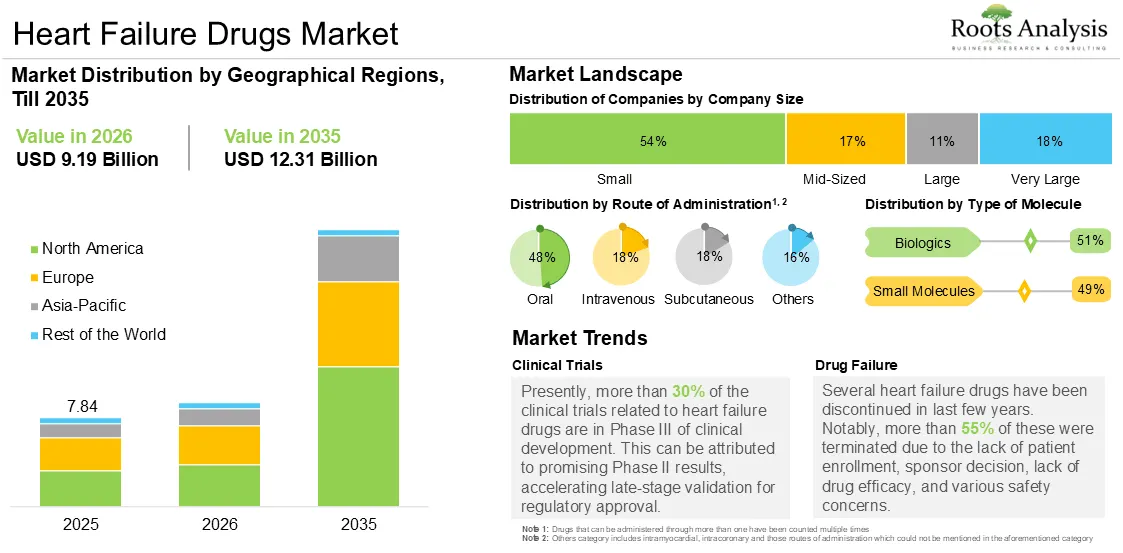
The heart failure drugs market, valued at USD 7.84 billion in 2025, is projected to reach USD 9.19 billion in 2026 and USD 12.31 billion by 2035 (this represents the opportunity only for those drugs that are primarily indicated for heart failure).
See What’s in the Full Report – Request Your Complimentary Insights!
Market Report: Key Takeaways
Market Size & Trends
- In terms of type of heart failure, chronic heart failure holds the highest share (above 95%) of the current market.
- With respect to type of therapy, monotherapies dominate the complete current market.
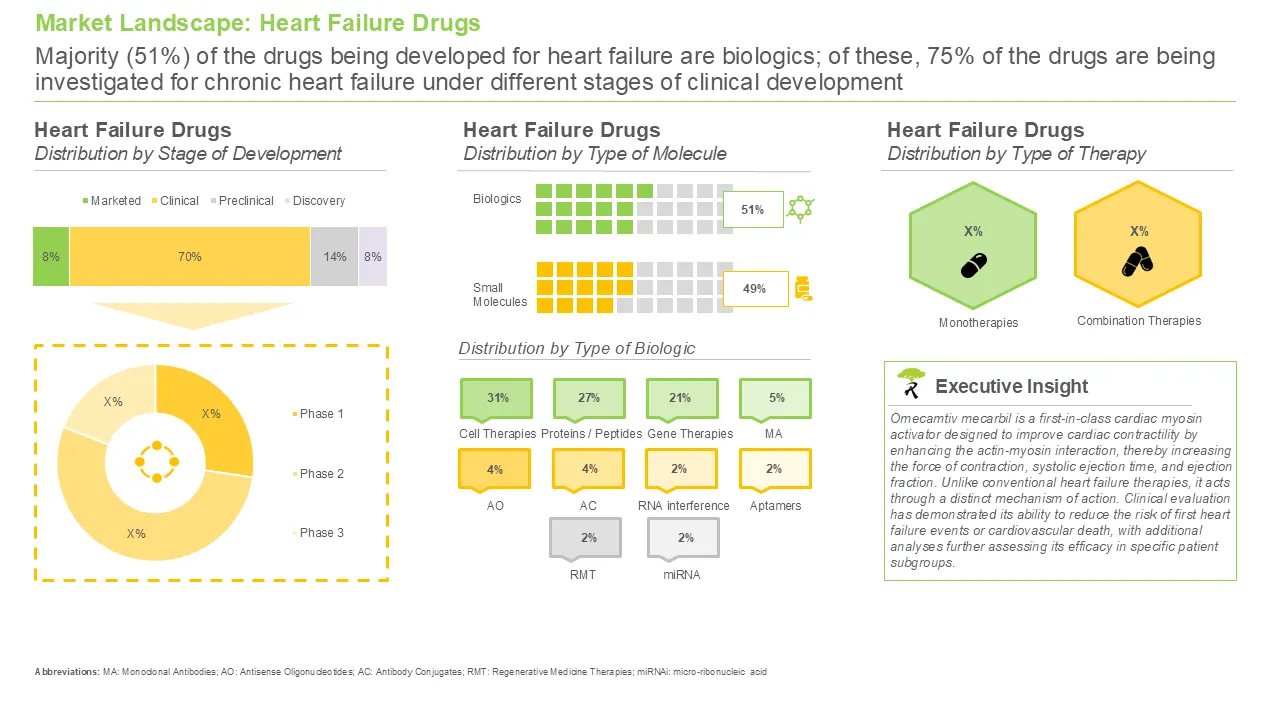
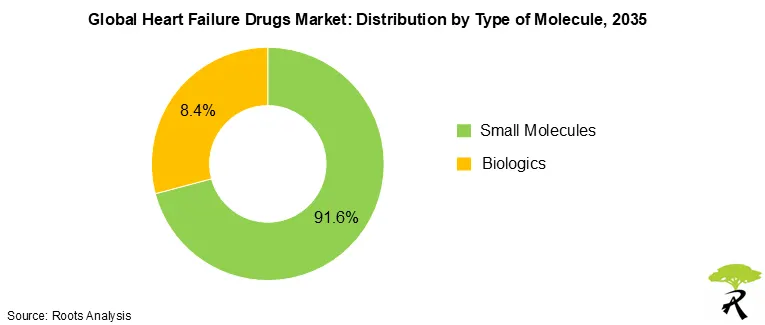
- Based on type of molecule, small molecules capture the largest share (above 95%) of the current market; this trend is unlikely to change in the future.
- Amongst the routes of administration, oral route captures the most (above 95%) of the current market.
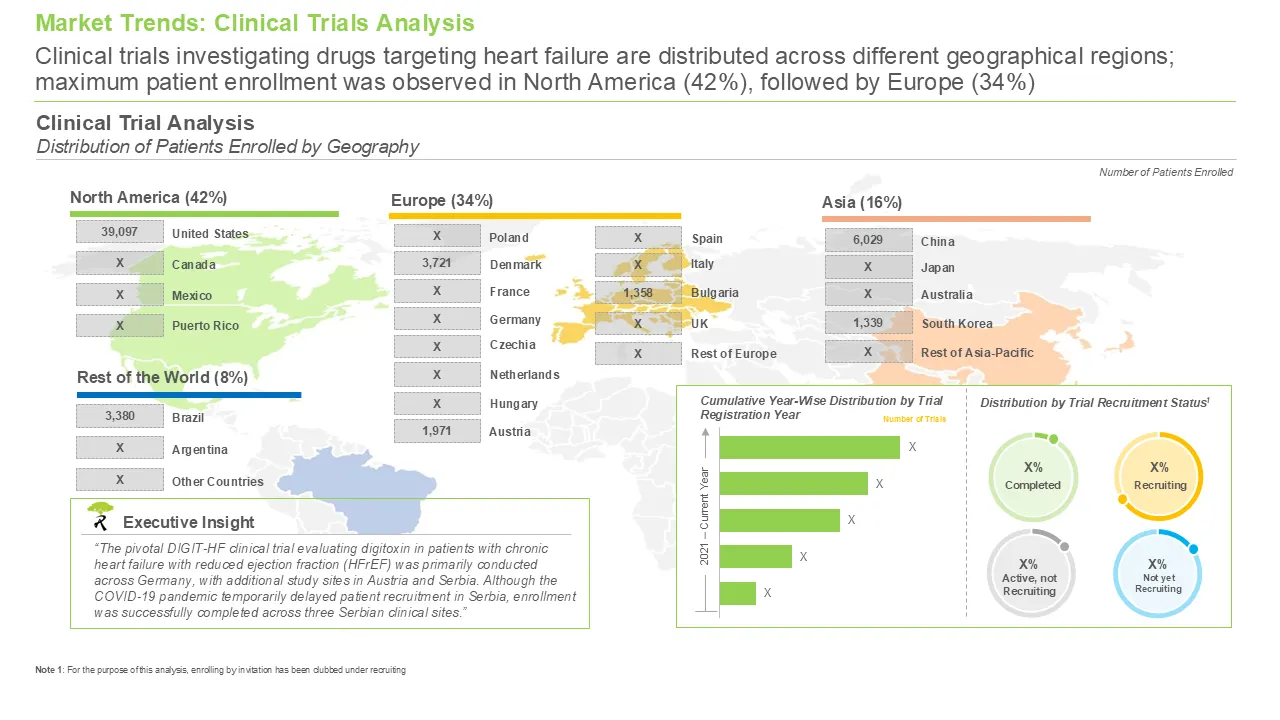
- In terms of geographical regions, North America currently holds the highest market share (above 40%).
Key Market Statistics
- Market Size in 2026: $ 9.19 Billion
- Estimated Market Size in 2035: $ 12.31 Billion
- North America: Largest market in 2026
- Asia-Pacific: Fastest growing region
Market Introduction
Heart failure is a chronic condition in which the heart is unable to pump sufficient blood into different organs. Further, in order to mitigate the growing incidence, pharmaceutical companies have developed heart failure drugs that can target wide range of conditions, such as managing fluid build-up, improving cardiac contractility, controlling blood pressure and addressing the root causes of heart failure. According to the Heart Failure Society of America, nearly 6.7 million Americans above the age of 20 are currently living with heart failure condition, which is estimated to reach 10.3 million by 2040.
To date, several heart failure drugs have been developed by the pharmaceutical companies to treat patients with heart failure conditions. Some examples of the heart failure drug class that are approved by the FDA are angiotensin-converting enzyme (ACE) inhibitors, diuretics, angiotensin receptor blockers (ARBs), aldosterone antagonists, and beta-blockers. Over time, extensive research and clinical advancements have enabled experts to incorporate newer heart failure drugs as well as congenital heart defect devices as transformative approaches in heart failure management. These modern therapies, including ARNI (angiotensin receptor-neprilysin inhibitors), SGLT2 inhibitors, and mineralocorticoid receptor antagonists offer a more comprehensive mechanism of action that targets multiple pathways involved in cardiac remodeling, fluid retention, and neurohormonal activation.
The market for heart failure therapeutics is expanding steadily and remains dynamic, with numerous pharmaceutical companies investing heavily in research and development. These investments build upon scientific progress in novel drug mechanisms, combination strategies, and innovative delivery approaches. With continuous innovation in this field, experts anticipate that the adoption of advanced heart failure drugs will rise significantly, which will drive robust market growth in the coming years.
Market Segmentation
Based on our market research, we have segmented the Heart Failure Drugs Market into type of heart failure, type of therapy, type of molecule, route of administration, geographical regions.
By Type of Heart Failure
- Chronic Heart Failure
- Others
By Type of Therapy
- Monotherapies
- Combination Therapies
By Type of Molecule
- Small Molecules
- Biologics
By Route of Administration
- Oral
- Intramyocardial
- Subcutaneous
- Intravenous
- Intracoronary
By Geographical Regions
- North America
- US
- Canada
- Europe
- Germany
- France
- UK
- Italy
- Spain
- Asia-Pacific
- China
- Japan
- India
- South Korea
- Rest of the World
Your Business is Unique – Why Shouldn’t Your Report Be?
Heart Failure Drugs Market Key Insights
What are the Key Drivers for Heart Failure Drugs Market Growth?
- Innovations in Novel Drug Class: SGLT2 inhibitors and ARNIs are novel drug classes backed by strong clinical data, demonstrating a notable decrease in patient mortality rates. Further, SGLT2 inhibitors can reduce heart failure hospitalization risk. Notably, the combination of both SGLT2 inhibitors and ARNIs demonstrates significant effectiveness in the treatment of heart failure.
- Growing Geriatric Population and Rising Prevalence of Heart Failure: Heart failure primarily affects older adults. Factors, such as hypertension, obesity, coronary artery disease, and diabetes commonly cause or worsen the condition. The prevalence of heart failure increases significantly with age and often exceeds 10% in individuals over 70 due to the accumulation of multiple risk factors.
What are the Main Challenges in Market Growth?
- High Failure Rates in Drug Development: Heart failure drug development faces significant hurdles and low success rates due to factors like insufficient clinical efficacy, poor drug specificity, and uncontrolled toxicity. Moreover, approval rates for new molecular entities (NMEs) for cardiovascular treatments have hit historic lows, driving up heart failure drug development costs.
- Limited Research Funding: The high cost of developing heart failure drugs stems from substantial investments in clinical trials, stringent regulatory requirements, and enrollment challenges. The limited funding from governments and private sectors often hinders the completion of research projects, posing significant obstacles for stakeholders in this domain.
Recent Developments in Heart Failure Drugs Market
- In April 2026, the U.S. Food and Drug Administration approved the first generics of FARXIGA® (dapagliflozin) tablets. This SGLT2 inhibitor is indicated for use in adults with type 2 diabetes mellitus, and to reduce the risk of hospitalization for heart failure.
- In January 2026, Viatris announced the launch of Inpefa® (sotagliflozin), SGLT1/2 an inhibitor for the treatment of heart failure, in the United Arab Emirates (UAE).
- In September 2025, Bayer announced new data from the pivotal Phase III FINEARTS-HF trial for KERENDIA® (finerenone) at the Heart Failure Society of America (HFSA) Annual Scientific Meeting 2025, held in Minneapolis, Minnesota.
Industry Experts on Heart Failure Drugs Market Trends
The market for heart failure has a transformative future and is likely to remain progressive in the coming years.
Christoph Koenen (Head of Clinical Development and Operations, Bayer Pharmaceuticals) stated,
“I believe the burden that heart failure places are immense, not only on the individual patient, but also on healthcare professionals and the healthcare system as a whole. Heart failure remains the leading cause of hospitalization among elderly patients worldwide. With an estimated 64 million people affected globally, this enormous patient population translates into a correspondingly heavy strain on healthcare resources. The overall expenditure on heart failure treatment is extraordinarily high, with the majority of these costs stemming from hospital stays. This reality underscores the critical importance of clinical studies aimed at reducing hospitalization, improving patient outcomes, and ultimately alleviating the pressure on healthcare systems worldwide.”
Discussions with multiple stakeholders in this domain influenced the opinions and insights presented in this study. The market report includes transcripts of the following third-party discussions:
- Professor of Medical Cardiology, Very Large Organization, United Kingdom, Europe
- Professor and Head of Advanced Heart Failure Wing, Very Large Organization, United States, North America
- Clinical Associate Professor and Director of Clinical Research, Large Organization, United States, North America
- Doctor of Medicine, Very Large Organization, United States, North America
- Professor, Very Large Organization, United States, North America
- Professor of Medicine and Heart Failure Specialist (Former Chair of Division for Circulatory Failure), Very Large Organization, United States, North America
- Senior Consultant Cardiologist, Large Organization, India, Asia
- Chair of DIGIT-HF trial, Very Large Organization, Germany, Europe
- Cardiologist and Clinical Researcher, Very Large Organization, United States, North America
Pay Only for What You Need – The Best Way to Optimize
Market Share Insights
Which Type of Heart Failure Accounts for the Largest Share in the Heart Failure Drugs Market?
In 2026, the chronic heart failure segment is projected to hold the highest market share (above 95%). This is primarily because of its high prevalence, long-term management requirements, and sustained demand for ongoing pharmacological therapies. Moreover, this segment is likely to grow at a decent CAGR during the forecast period. It is worth highlighting that Empagliflozin / Jardiance, a heart failure monotherapy drug, first approved in 2021, generated sales worth USD 4.4 billion in 2025.
Regional Analysis: Which Regions are Showing the Fastest Growth in Heart Failure Domain?
North America: Dominating the Market by Securing Highest Share
According to our projections, North America is likely to capture the majority (more than 40%) of the heart failure drugs market share in 2026. Further, we anticipate that Asia-Pacific would grow at a relatively faster pace till 2035. Within the heart failure drugs market, the US has emerged as a hub for heart failure drug developers, supported by its innovation-friendly regulatory policies and a highly skilled workforce. This regional concentration facilitates efficient scaling of heart failure drugs, from early-stage development to commercial supply.
UAE Heart Failure Treatment Drugs Market
It is worth highlighting that the Emirates Drug Establishment has issued a new decision to reduce the retail prices of 168 pharmaceutical products across the UAE, covering a wide range of chronic and critical illnesses. The decision includes reductions in the cost of advanced therapies prescribed for patients with chronic heart muscle failure.
Which Type of Molecule Will Dominate the Heart Failure Drugs Market?
- In 2026, the small molecule segment is likely to dominate the overall market share (more than 95%). This dominance stems from established efficacy of small molecules as oral therapies, like beta-blockers, ACE inhibitors, ARBs, and SGLT2 inhibitors, which form the standard of care for HFrEF and HFpEF due to proven mortality benefits in trials like DAPA-HF and EMPEROR-Reduced.
- The biologics segment is likely to grow at a higher CAGR (52.0%) during the forecast period. This growth is driven by biologics enabling personalized therapies addressing genetic and inflammatory drivers of heart failure progression, capturing premium pricing and niche markets unmet by generic small molecules.
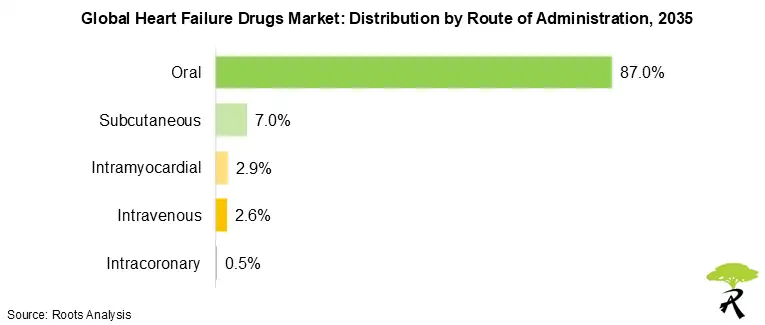
Which Route of Administration Accounts for the Largest Share in the Heart Failure Drugs Market?
- According to the heart failure drugs market forecast, the oral route of administration currently accounts for more than 95% of the overall market revenue. This can be attributed to its convenience, high patient adherence for long-term chronic management, and ease of self-administration at home.
- Till 2035, the market for drugs that can be administered by intramyocardial route is likely to grow at a faster pace (34.9%). This can be attributed to its ability to deliver therapeutics directly into the myocardium, and improved cardiac function in advanced heart failure patients.
Amongst Monotherapies and Combination Therapies, Which Segment Holds the Highest Share in the Heart Failure Drugs Market?
- According to the heart failure drugs market forecast, currently the monotherapies segment accounts for the entire market revenue. This is due to their established clinical guidelines as first-line treatment, better patient adherence, and cost-effectiveness compared to combination regimens in the initial management of heart failure.
- The combination therapies segment is likely to grow at a higher CAGR (34.4%) during the forecast period. This is due to the rising adoption of multi-drug regimens, such as quadruple therapy (ARNI, beta-blockers, MRA, and SGLT2i), which deliver synergistic effects, superior clinical outcomes like reduced mortality and hospitalization, and improved patient compliance compared to monotherapies.
Get an Instant Quote in 10 Minutes. Lowest Price Guaranteed
Scope of Heart Failure Drugs Market Report
| Key Report Attribute | Details | |
| Historical Trend | Since 2021 | |
| Forecast Period | Till 2035 | |
| Market Size 2026 | $ 9.19 Billion | |
| Market Size 2035 | $ 12.31 Billion | |
| Segments Covered |
|
|
| Key Players Profiled |
(A complete list of companies captured is available in the report) |
|
| PowerPoint Presentation (Complimentary) |
Available | |
| Customization Scope | 15% Free Customization | |
| Excel Data Packs (Complimentary) |
Available | |


