Approved PD-1 Inhibitors


Published:
Programmed cell death protein 1 (PD-1) inhibitors are monoclonal antibodies that restore antitumor immune activity by blocking the PD-1 pathway. They have become foundational treatments across multiple solid tumors and hematologic malignancies, used as monotherapy and in combination with chemotherapy, targeted agents, radiotherapy or other immunotherapies.
In the United States, the approved PD-1 inhibitor landscape includes pembrolizumab, nivolumab, cemiplimab, dostarlimab, retifanlimab, toripalimab, tislelizumab and, most recently, penpulimab. The continued arrival of new agents and indications shows that the market is no longer driven solely by the original PD-1 brands. It is increasingly shaped by differentiation in clinical positioning, combination strategy, route of administration and geographic development.
The next generation immune checkpoint inhibitors market is evolving beyond simple PD-1 / PD-L1 blockade. Developers are evaluating PD-1 antibodies alongside CTLA-4, LAG-3, TIGIT, TIM-3 and other immune-modulatory targets to address primary and acquired resistance. At the same time, biomarker-led treatment selection helps move checkpoint inhibition earlier in defined patient populations.
Recent regulatory actions illustrate this evolution. In April 2025, the US Food and Drug Administration approved penpulimab-kcqx for recurrent or metastatic non-keratinizing nasopharyngeal carcinoma, while also expanding nivolumab-based combination treatment options in biomarker-defined colorectal cancer and first-line hepatocellular carcinoma. These approvals reinforce the continuing commercial relevance of PD-1 inhibition and the strategic importance of combination regimens.
Roots Analysis has conducted an exhaustive study on Next Generation Immune Checkpoint Inhibitors Market featuring the current market landscape and future opportunity for the companies engaged in this domain, over a span of many years. In this article, we have highlighted various trends that are likely to shape the evolution of this market.
Want to explore the latest advancements in next generation immune checkpoint inhibitors industry?
Latest Trends in Next Generation Immune Checkpoint Inhibitors Market That Are Likely to Shape the Market
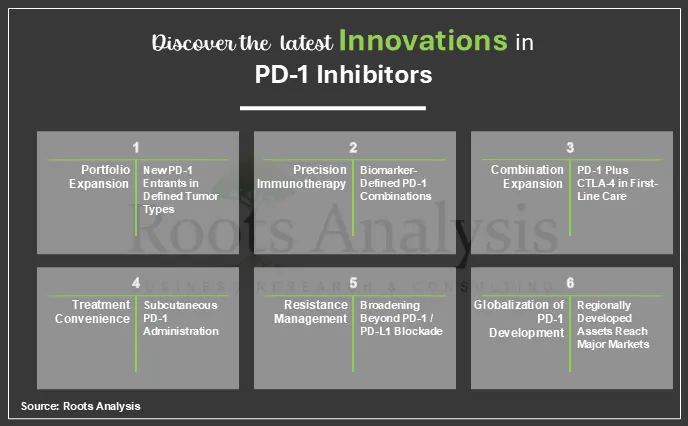
1. Portfolio Expansion: New PD-1 Entrants in Defined Tumor Types
The April 2025 FDA approval of penpulimab-kcqx created a new US-approved PD-1 inhibitor option for recurrent or metastatic non-keratinizing nasopharyngeal carcinoma. Akeso Biopharma received approval for penpulimab in combination with platinum-based chemotherapy and gemcitabine in the first-line setting, as well as monotherapy for previously treated metastatic disease.
This approval highlights a key market trend: new PD-1 inhibitors are seeking entry through well-defined tumor types and evidence-led differentiation, rather than competing broadly across every established PD-1 indication. It also emphasizes the growing contribution of China-originated oncology innovation to global checkpoint inhibitor development.
2. Precision Immunotherapy: Biomarker-Defined PD-1 Combinations
Biomarker-led treatment selection is expanding the role of approved PD-1 inhibitors in oncology. In April 2025, the FDA approved nivolumab with the CTLA-4 inhibitor ipilimumab for unresectable or metastatic microsatellite instability-high or mismatch repair-deficient colorectal cancer in adults and pediatric patients aged 12 years and older.
The decision also converted the accelerated approval of single-agent nivolumab to regular approval for specified previously treated MSI-H / dMMR metastatic colorectal cancer. Such developments strengthen the commercial rationale for genomic and immunologic testing, while creating opportunities for next-generation checkpoint combinations in molecularly defined patient populations.
3. Combination Expansion: PD-1 Plus CTLA-4 in First-Line Care
PD-1 inhibitors are increasingly used as the anchor of rational combination regimens. In April 2025, the FDA approved nivolumab plus ipilimumab for first-line treatment of adults with unresectable or metastatic hepatocellular carcinoma. The approval was based on the CHECKMATE-9DW study and expanded the role of dual-checkpoint blockade in cancer with substantial unmet medical need.
The commercial and clinical success of PD-1 plus CTLA-4 combinations supports continued investment in other complementary immune checkpoints, including LAG-3 and TIGIT. For developers, the goal is to improve response depth and durability while managing the immune-related toxicity associated with broader immune activation.
4. Treatment Convenience: Subcutaneous PD-1 Administration
Administration innovation is becoming a competitive lever as several PD-1 inhibitors approach greater pricing and lifecycle pressure. In September 2025, the FDA approved Keytruda Qlex, a subcutaneous formulation of pembrolizumab coformulated with berahyaluronidase alfa-pmph, for adult indications covered by the intravenous pembrolizumab regimen.
Subcutaneous administration can reduce chair time and simplify treatment delivery compared with conventional intravenous infusion. This trend may influence purchasing decisions across oncology practices and health systems, while encouraging competing manufacturers to consider patient- and provider-centered formulation strategies for checkpoint inhibitors.
5. Resistance Management: Broadening Beyond PD-1 / PD-L1 Blockade
Despite their clinical impact, PD-1 inhibitors do not generate durable responses in every patient, and resistance remains a major limitation. This is accelerating the development of next-generation immune checkpoint inhibitors that target non-redundant pathways involved in T-cell exhaustion, immune suppression and the tumor microenvironment.
LAG-3 has already provided clinical validation of this direction through the nivolumab-relatlimab regimen for melanoma. Emerging programs targeting TIGIT, TIM-3, VISTA and related pathways are being evaluated in combination with PD-1 antibodies, reflecting a market shift from single-target checkpoint blockade toward biology-driven immunotherapy platforms.
6. Globalization of PD-1 Development: Regionally Developed Assets Reach Major Markets
The PD-1 inhibitor market is becoming more geographically diverse. Toripalimab, tislelizumab and penpulimab demonstrate how assets developed in China are progressing into US and other regulated markets, often through indication-focused registration strategies and global clinical programs.
This diversification is likely to increase competitive pressure on incumbent brands and create more partnership, licensing and commercialization opportunities. It may also expand access to differentiated checkpoint therapies in tumor types with regionally high disease burden, including nasopharyngeal and esophageal cancers.
Conclusion
Approved PD-1 inhibitors remain central to cancer immunotherapy, but their market is shifting toward biomarker-defined use, first-line combinations, convenient administration and globally diversified product portfolios. New approvals, including penpulimab and expanded nivolumab combinations, show that PD-1 inhibition continues to provide a foundation for next-generation immune checkpoint strategies. Future market growth will depend on the ability of developers to improve outcomes in resistant disease while delivering clinically meaningful and operationally practical treatment options.
Browse our full report on Next Generation Immune Checkpoint Inhibitors Market: https://www.rootsanalysis.com/reports/next-generation-immune-checkpoint-inhibitors-market.html
Sources:
- https://www.fda.gov/drugs/resources-information-approved-drugs/fda-approves-penpulimab-kcqx-non-keratinizing-nasopharyngeal-carcinoma
- https://www.fda.gov/drugs/resources-information-approved-drugs/fda-approves-nivolumab-ipilimumab-unresectable-or-metastatic-msi-h-or-dmmr-colorectal-cancer
- https://www.fda.gov/drugs/resources-information-approved-drugs/fda-approves-nivolumab-ipilimumab-unresectable-or-metastatic-hepatocellular-carcinoma