Canine Anti-Aging Trends 2026

.png)

Published: April 2026
Aging is characterized by a wide range of molecular and cellular changes that occur in dogs as their lifespan increases. These changes gradually result in the loss of physical and cognitive abilities and lead to increased susceptibility to diseases and mortality. Notably, the factors influencing aging in dogs are multifaceted and encompasses biological, environmental, and genetic factors, with large dog breeds experiencing age-related changes more rapidly than small dog breeds. Canine anti-aging drugs market is a largely unexplored area for novel pharmacotherapies development, with ongoing research aimed at understanding the metabolic and genetic pathways that contribute to their aging.
In the canine anti-aging drug market, ongoing research is improving health outcomes and extending the lifespan of senior pets through targeted medical treatments. A significant breakthrough comes from companies like Loyal, which recently received key regulatory support for drug candidates aimed at delaying age-related diseases and maintaining metabolic health in large breeds. Similarly, Telomir Pharmaceuticals has introduced novel small-molecule therapies designed to repair cellular structures, effectively slowing the biological aging process in canines.
These advancements, paired with artificial intelligence are accelerating the identification of age-related biomarkers while veterinary research organizations worldwide expand their digital infrastructure to support personalized longevity plans. Moreover, the increasing focus on cellular health, joint preservation, and cognitive function has heightened the demand for precise and sensitive therapeutic interventions.
Roots Analysis has conducted an exhaustive study on anti-aging therapeutics for dogs market featuring the canine anti-aging trends 2026 and future opportunity for the companies engaged in developing these drugs, over a span of many years. In this article, we have highlighted some of the canine anti-aging trends 2026 that are likely to shape the evolution of this market.
Want to explore the latest advancements in anti-aging therapeutics for dogs market?
Canine Anti-Aging Trends 2026 That Are Likely to Shape the Market
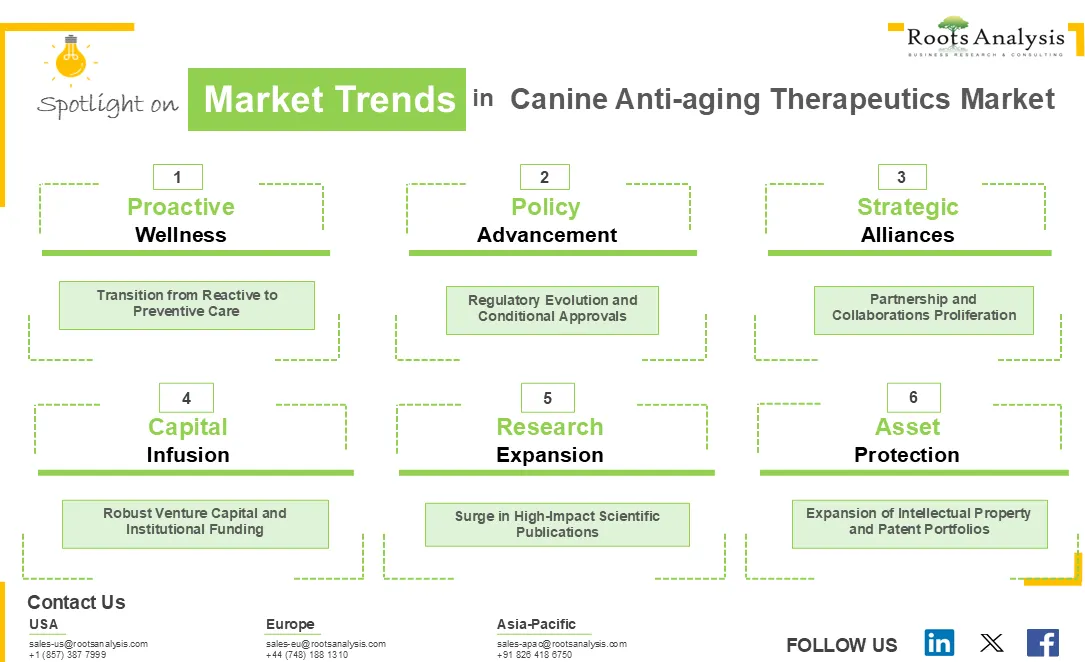
1. Transition from Reactive to Preventive Care
The veterinary industry is currently experiencing a significant move toward anticipatory medicine. This shift prioritizes early intervention over traditional reactive treatments that only address symptoms after they appear. Consequently, pet owners are now investing in therapeutics during a dog's middle-age years to preserve vital physiological functions. By focusing on these early stages, medical providers can effectively delay the onset of chronic conditions such as rheumatoid arthritis and cognitive decline. Furthermore, this proactive strategy improves the quality of life for canines while reducing the long-term financial burden of intensive emergency care.
2. Regulatory Evolution and Conditional Approvals
The regulatory framework for veterinary medicine is currently undergoing a significant transformation to accommodate aging as a treatable condition. This shift is primarily driven by the FDA’s Center for Veterinary Medicine, which has begun to recognize lifespan extension as a valid primary endpoint for clinical trials. Consequently, this change allows pharmaceutical developers to move away from traditional models that only target specific diseases.
3. Partnership and Collaborations Proliferation
Partnerships are surging in the anti-aging therapeutics for dogs market as specialized biotechnology firms collaborate with established pharmaceutical corporations to accelerate drugs development. These partnerships allow emerging startups to utilize the extensive manufacturing and distribution networks of large companies, while global leaders gain access to innovative research and proprietary drug candidates. For instance, Genflow Biosciences and Heureka Labs announced a strategic partnership to leverage AI-driven genomic data analysis to accelerate the development of SIRT6 gene therapies that target aging in dogs. Consequently, these combined efforts help reduce the high costs of research and development while ensuring that new anti-aging treatments reach the consumer market more rapidly.
4. Robust Venture Capital and Institutional Funding
Funding is continuously increasing in the canine anti-aging therapeutics market due to the rising demand for veterinary solutions that enhance canine healthspan and longevity. In recent year, Loyal secured USD 22 million in Series B funding to advance its lead drug candidates toward regulatory approval. Similarly, Rejuvenate Bio raised over USD 10 million dollars in a Series A funding round led by Kendall Capital Partners to further develop its combination gene therapy.
5. Surge of High-Impact Scientific Publications
Currently, research papers and publications have transitioned from general observations toward the identification of specific molecular aging markers in canines. Notable publications in journals have done a multi-omics analysis of canine aging markers and evaluation of stem cell intervention which has successfully identified various transcriptional and protein markers associated with cellular decline in dogs. Furthermore, large-scale initiatives such as the dog aging project provide critical evidence on how diets and medications can improve the health of large breeds. Consequently, these scholarly advancements are creating a strong foundation for the development of targeted therapies in the veterinary market.
6. Expansion of Intellectual Property and Patent Portfolios
The canine longevity market is experiencing a significant increase in patent filings as companies seek to protect novel biochemical formulations. Ultimately, these patents serve as the foundation for the next generation of life-extending drugs for canines. The strategic integration of the one health model (where pet and human aging research overlap) facilitates a profitable and secure environment for biotechnology by aligning research in both canine and human longevity.
Conclusion
Canine anti-aging trends 2026 is positioned for significant expansion, driven by the increasing humanization of pets and a growing demand for treatments that extend canine healthspan. As owners increasingly view dogs as integral family members, the focus is shifting from reactive care toward proactive longevity interventions. While regulatory pathways for aging-specific drugs remain rigorous, the domain is advancing through breakthroughs in biotechnology, including cellular rejuvenation and metabolic regulators.
Furthermore, the rise of geriatric pet populations is fueling investments in specialized nutrition and regenerative medicine. To capitalize on these opportunities, veterinary pharmaceutical companies are prioritizing clinical trials that demonstrate both safety and enhanced quality of life. Ultimately, these developments indicate a transition toward a more sophisticated veterinary landscape, where targeted therapies and personalized wellness plans ensure longer, more vibrant lives for companion animals.
Browse our full report on Anti-aging Therapeutics for Dogs Market: https://www.rootsanalysis.com/reports/anti-aging-drugs-for-dogs-market.html
Sources: