


 Download Free Sample
 Buy Now
Market Outlook
The global AI in rare disease diagnostics market, valued at USD 1.36 billion in 2024, is projected to reach USD 1.90 billion in 2025 and USD 22.12 billion by 2035, with a CAGR of 27.8% during the forecast period 2025 to 2035.

See What’s in the Full Report - Request Your Complimentary Insights!
Market Report: In Summary
- In terms of component, the software segment holds the largest share, driven by its crucial role in diagnostic platforms to analyze medical data.
- Based on application area, the genetic disease segment hold the largest share of the market due to the increase usage of AI in the analysis of genomic data to detect genetic mutations associated with rare diseases.
- With respect to type of technology, the machine learning segment dominates the market due to the increasing usage of machine learning in disease diagnosis.
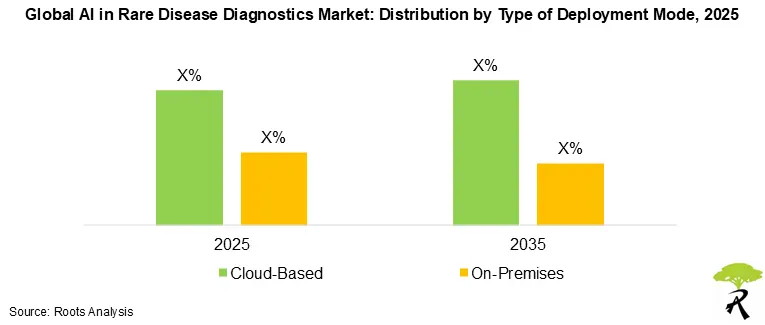
- With regards to type of deployment mode, the cloud-based segment captures the highest share of the market.
- On the basis of geographical regions, North America captures the largest share of the market, driven by the increasing research initiatives to find treatment of rare diseases.
Market Introduction
The market for AI in rare disease diagnostics is gaining momentum and is likely to remain progressive in the future. Rare diseases are uncommon medical conditions that are caused by toxic exposure, genetic mutations and nutritional deficiencies. As per the statistics published in World Health Organization report, nearly 300 million people are suffering from rare diseases. Owing to its complexity, varied symptoms and lack of awareness, healthcare professionals face challenges in rare disease diagnosis and offer specialized care.
To overcome this challenge, healthcare professionals are leveraging artificial intelligence in rare disease diagnosis. AI technologies, such as machine learning and deep learning help to analyze vast amounts of genomic data with higher precision. Notably, these predictive AI models transforming treatment plans for rare diseases with accurate disease diagnosis. Driven by its efficacy in diagnosis, several market players are undertaking strategic initiatives, such as investments, collaborations, and partnerships.
Have Questions? Let’s Get Them Answered.
For instance, in May 2025, SeqOne (US) has secured €20 million funds to expand its AI-based software for next-generation sequencing data analysis in rare disease and oncology. Given the increasing prevalence and increasing shift towards AI technology for disease diagnosis, we believe that AI in rare disease diagnostics market will continue to expand in the future.
Market Segmentation Insights
Market Share by Type of Technology: Machine Learning is Likely to Remain Dominant in the Future
- This segment is sub-segmented based on the type of technology into machine learning, deep learning, natural language processing, computer vision, and others. According to the AI in rare disease diagnostics market forecast, the machine learning segment dominates the market by holding maximum share. This dominance stems from the growing acceptance of machine learning rare disease diagnosis technologies to uncover correlations between genomic data and rare diseases.
- It is important to note here that the deep learning segment is likely to register higher CAGR during the forecast period. The deep learning algorithms rare diseases, specifically convolutional neural networks has the potential to process vast amount of unstructured data, such as genomic sequences, and medical images for early diagnosis of rare diseases. The early disease diagnosis facilitate faster and accurate treatment of the patients with rare diseases.
Market Share by Application Area: How Genetic Disease Diagnosis Segment Dominates the Market?
- Based on the application area, the global market is categorized into genetic disorders, metabolic disorders, neurological disorders, oncology disorders, and others. According to the AI in rare disease diagnostics market report, the genetic disorders segment is occupying the maximum share of the market. This highest share is due to the increasing awareness about the role of genomic data integration in AI-driven rare disease prediction and ongoing advancements in genome sequencing technologies. Notably, AI-powered genome analysis platforms are helpful to understand the heterogeneity of the genetic data, which is essential to diagnose rare diseases.
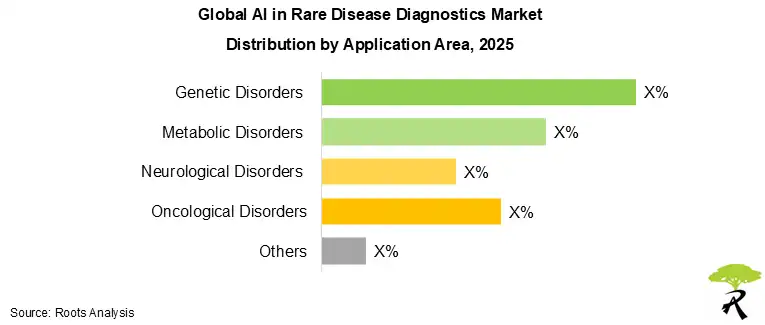
- Contrastingly, the oncology disorders segment is gaining momentum at a higher CAGR in the future. This immense growth is due to the increasing prevalence of rare cancers that propel the demand for natural language processing rare disease diagnosis to analyze rare tumor type and molecular data. Additionally, oncologists are also encouraging the usage of AI in oncology to develop targeted therapies, which further likely to propel the growth of this segment.
Your Business is Unique – Why Shouldn’t Your Report Be?
Which Regions Show Fastest Growth for AI Rare Disease Diagnostics?
North America: Remain Dominant in the Future
Currently, North America secures the maximum AI in rare disease diagnostics market share and is likely to remain dominant. Several factors, such as rising prevalence of rare diseases, increasing genomics research to understand the root cause of rare diseases, and favorable regulatory guidelines are fueling the market growth in this region. In addition, the escalated adoption of digital healthcare technologies for disease diagnosis & treatment and increasing funding in AI technology has further supported the market growth in this region.
US AI in Rare Disease Diagnostics Market
Northern countries, particularly the US, is experiencing dynamic AI in rare disease diagnostics market growth. This robust growth stems from the presence of well-established market players, advancements in the healthcare infrastructure and high adoption of AI biomarker discovery rare diseases and substantial funding from the investors. It is important to note here that the market player are fostering collaborations with research organizations and other market players to increase technological innovations and acceptance of AI in rare disease diagnosis on a large scale. These reasons are collectively fueling the market growth in this region.
Asia-Pacific: What are the Regional Growth Trends in AI applications for Rare Disease Healthcare?
Asia-Pacific region is emerging as a hub for AI in rare disease diagnosis industry. The market is expected to be driven at a higher CAGR in the upcoming years. This dynamic growth is due to the continuous investment for the development of advanced healthcare infrastructure, increasing awareness of rare disease, and government initiatives to strengthen the acceptance of AI in disease diagnosis on a broad scale. It is worth noting that the Asian countries, such as China, India, and Japan are offering funds to the market players for healthcare innovation, which further offer enormous opportunities to market players for technological innovations.
Get an Instant Quote in 10 Minutes. Lowest Price Guaranteed
Recent Industry Development
- In September 2025, Microsoft (US) in collaboration with Drexel University and the Board Institute (US) conducted a comprehensive study on AI-enhance sensemaking: exploring the design of a generative AI-based assistant to support genetic professionals in diagnosing rare genetic diseases.
- In September 2025, Scientists from the European Molecular Biology Laboratory and the German Cancer Research Center conjointly developments an advanced AI model (Delphi-2M) that has the potential to access the long-term individual risk for over 1000 diseases including rare diseases.
- In May 2025, Illumina (US) launched Promoter AI, an advanced AI algorithm that helps to interpret pathogenic regulatory genetic variants within noncoding regions of the human genome. This tool helps to gain deeper insight on rare diseases, making it a groundbreaking innovation in rare disease diagnosis.
What are the Future Opportunities in the AI in Rare Disease Diagnostics Industry?
- Precision Medicine AI Rare Diseases Treatment: The future focus will be on the development of precision medicine by leveraging predictive analytical tools powered by AI. The integration of AI with predictive analytical tools will help in identifying novel drug molecules and predicting compound interactions specifically for rare genetic mutations. Moreover, it also assist in the development of targeted cell and gene therapies and accelerate clinical development for rare diseases.
- Next-Generation AI Genomic Analysis Rare Diseases: With increasing awareness of AI-driven analysis of genomic data to identify rare disease mechanism, the future focus will be on the development of advanced AI predictive analytic tools. Notably, the AI will also be leveraged in the future for advanced cellular profiling to detect subtle phenotypic patterns that got skipped from human eyes. The approach support rapid diagnostic solutions for rare disease with complex genetic profile.
- Collaborations Shaping Innovation in AI for Rare Disease Solutions: The market players are also undertaking initiatives, such as collaborations and partnerships to strengthen innovation in AI for rare disease solutions.
- Patient-Centric AI Tools Enhancing Rare Disease Management and Outcomes: The future of rare disease treatment is patient-centric therapeutics. Therefore, the market players are emphasizing the development of patient-centric machine learning models that aid to predict patient data, such as biomarkers, genetics and treatment response patterns. This will further help in tailoring treatment plan for the patients with rare diseases. In addition, the future will also be centered on self-management AI chatbots and mobile apps for real-time symptom tracking and medication management.
Want Information on Specific Region / Segment?
AI in Rare Disease Diagnostics Market: Scope of the Report
| Key Report Attribute | Details | |
| Historical Trend | Since 2020 | |
| Forecast Period | Till 2035 | |
| Market Size 2025 | USD 1.90 Billion | |
| Market Size 2035 | USD 22.12 Billion | |
| CAGR (Till 2035) | 27.8% | |
| Segments Covered |
|
|
| Key Players Profiled |
(A complete list of companies captured is available in the report) |
|
| PowerPoint Presentation (Complimentary) | Available | |
| Customization Scope | 15% Free Customization | |
| Excel Data Packs (Complimentary) | Available | |


