
Lowest Price Guaranteed
Pages
275
Last Updated
June 2026
View Count
12956
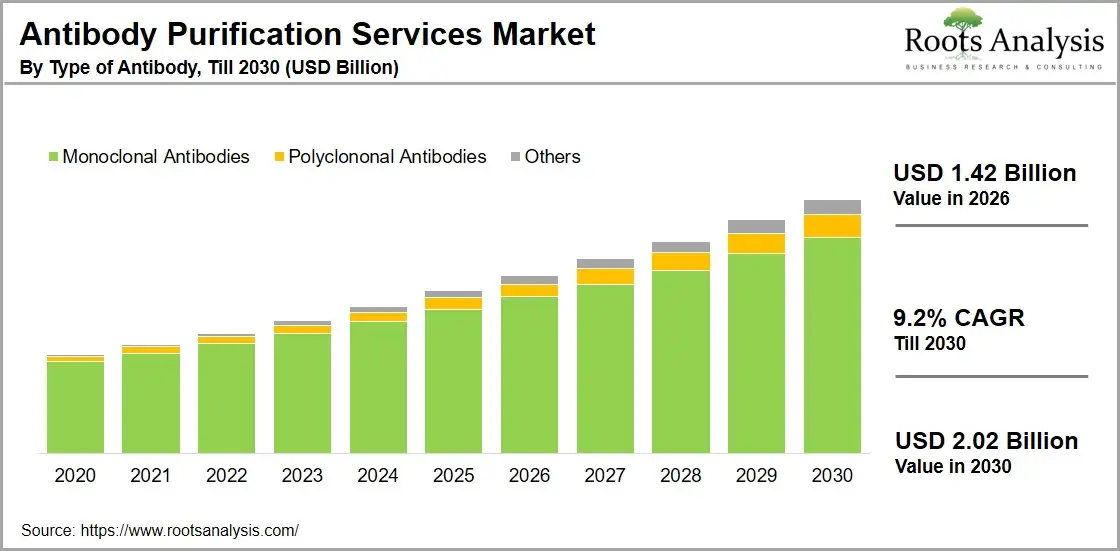
The global antibody purification services market, valued at USD 1.30 billion in 2025, is projected to reach USD 1.42 billion in 2026 and USD 2.02 billion by 2030, representing a CAGR of 9.2% during the forecast period 2026 to 2030.
 |
To learn more about this report, request a free sample copy
Orthoclone OKT3® was the first monoclonal antibody-based drug (approved in 1986). As of today, more than 100 such products are available for therapeutic use across different geographies. Recently, Margenza™ (December 2020), Danyelza® (November 2020), Adakveo® (November 2019), Beovu® (October 2019), SKYRIZI™ (April 2019) and EVENITY™ (April 2019), were approved by the USFDA. Owing to their specificity for a target biomolecule (antigen) and favorable safety profile (compared to small molecule drugs), antibody-based interventions presently make up the largest class of biologic drugs. This trend is unlikely to change as multiple advanced variants of these drugs, such as bispecific antibodies and antibody fragments-based products, have been developed and several pharmacological leads based on these relatively novel constructs, are under evaluation.
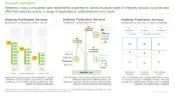
However, as is the case with all biologics, the production of antibodies is also a complex process. Specifically, antibody purification, which is one of the most crucial steps downstream of the manufacturing process, is a cost intensive operation. The investment of both effort and capital at this stage of production is justified because any impurity, or unwanted antibody molecule, poses a serious threat to not only therapeutic efficacy but also to the safety of patients. A variety of physiochemical approaches, including ammonium sulphate precipitation, hydrophobic interaction chromatography, ion-exchange chromatography and size exclusion chromatography techniques, are used to purify antibodies.
 |
 |
 |
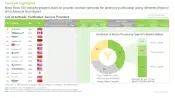
With the surge in demand for antibodies across research, diagnostic and therapeutic applications, there is now an urgent, parallel need to optimize production throughput. In this context, the purification aspect needs to be handled with extra caution, considering the dangers associated with contaminated medical products. Owing to prohibitive capital investments on purification infrastructure and the required expertise, not all therapy developers are able to establish in-house capabilities, especially at the larger (clinical and commercial) scales. Outsourcing is, therefore, a widely used operational model in this industry. The antibody purification services market today has evolved into a competitive domain, featuring the presence of start-ups, mid-sized companies and several established firms, some of which claim to offer end-to-end downstream processing solutions, as well.
Moreover, such service-focused companies generally ensure that they have the latest upgrades in equipment and infrastructure, in order to differentiate themselves from the contemporary competition. Given the growing trend of outsourcing in the healthcare industry and the ongoing efforts of service providers to further improve / expand their respective portfolios, we believe the antibody purification services market is likely to witness a steady market growth during the forecast period.
Several recent developments have taken place in the field of global antibody purification services market. We have outlined some of these recent initiatives below. These developments, even if they took place post the release of our market report, substantiate the overall market trends that have been outlined in our analysis.
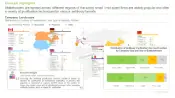
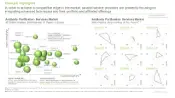
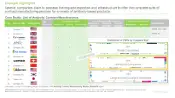
The "Global Antibody Purification Services Market, till 2030" report features an extensive study on the current market landscape, market size, market share, market forecast, market outlook and future opportunities of the antibody purification services market. The market research report underlines an in-depth analysis of the purification services for antibodies offered by service providers, which are intended for use in various R&D and / or therapeutic purposes.
 |
 |
 |
In addition to other elements, market research report includes:
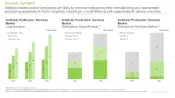
The key objective of antibody purification services market report is to provide a detailed market analysis in order to estimate the existing market size, market value, statistics and future opportunity for antibody purification services market during the forecast period. Based on multiple parameters, such as projected growth of overall antibody-based products market, cost of goods sold and direct manufacturing costs, we have developed informed estimates on the financial evolution of the market over the forecast period, till 2030.
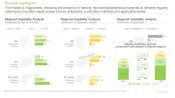
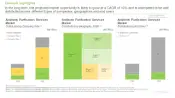
The market report also provides details on the likely distribution of the current and forecasted opportunity across [A] company size (small, mid-sized and large / very large), [B] type of antibody (monoclonal, polyclonal and others), [C] type of purification method (physio chemical, class specific and antigen affinity purification), [D] end user (pharmaceutical and biotechnology companies, and diagnostic laboratories) and [E] key geographies (North America, Europe, Asia Pacific, Middle East and North Africa (MENA), and Latin America (LATAM)).
To account for the uncertainties associated with this industry and to add robustness to our model, we have provided three market forecast scenarios, portraying the conservative, base and optimistic tracks of the market's evolution.
 |
 |
 |
All actual figures have been sourced and analyzed from publicly available information forums and primary research discussions. Financial figures mentioned in this market research report are in USD, unless otherwise specified.