


 Download Free Sample
 Buy Now
Market Size
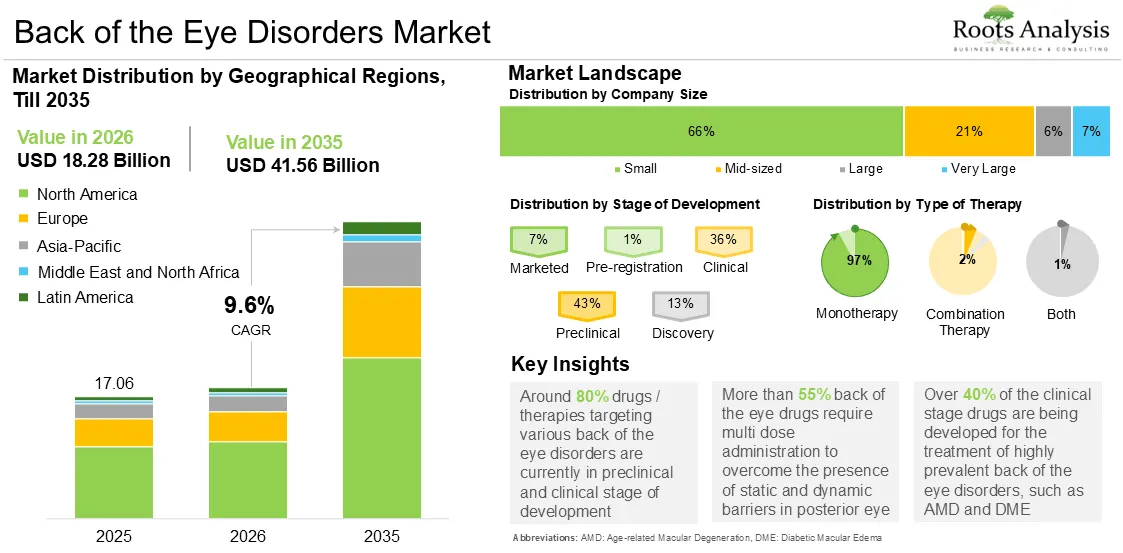
The back of the eye disorders market, valued at USD 17.06 billion in 2025, is projected to reach USD 18.28 billion in 2026 and USD 41.56 billion by 2035, representing a CAGR of 9.6% during the forecast period 2026 to 2035. Kindly note that implants and devices related to the back of the eye disorders market have been excluded from the scope of this report.
See What’s in the Full Report – Request Your Complimentary Insights!
Market Report: Key Takeaways
- Driven by rising ocular disease awareness programs and innovations in long-acting anti-VEGF agents, drug developers are capitalizing on the growing demand for early-stage detection and preventive care.
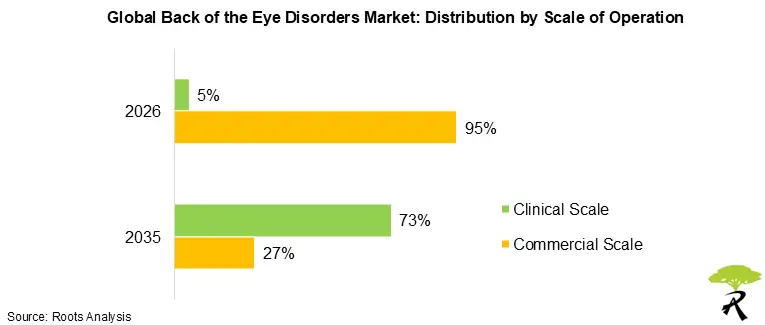
- In terms of scale of operation, the commercial scale segment secures around 95% of the overall revenue share in 2026 due to the established product portfolio of players, wider market penetration, and significantly higher annual sales contribution from approved therapies.
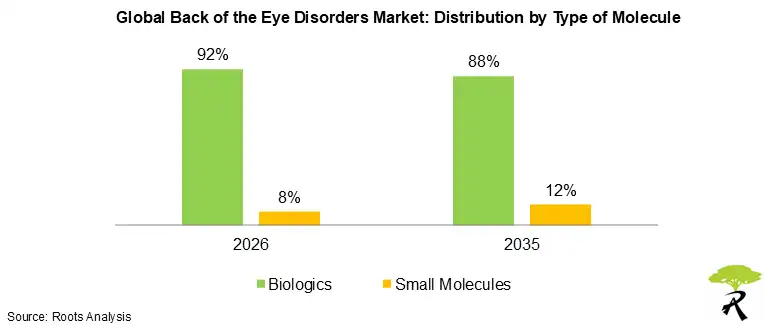
- In terms of sub-categories of type of molecule, biologics currently hold more than 90% of the market share, due to their superior compatibility to target wide range of biological pathways associated with back of the eye disorders.
- With respect to target indication, the diabetic macular edema market segment dominates (~40%) the current back of the eye disorders market size.
- In terms of geographical regions, North America captures around 60% of the market value in the year 2026, due to strong public and private investments in this region, along with supportive regulations, and significant funding initiatives that propel regional growth.
Market Overview
The therapies for back of the eye disorders and novel drug delivery systems represent a critical component in modern ophthalmology, designed to treat vision-threatening conditions affecting the retina, macula, and vitreous. Prominent disorders in this category include age-related macular degeneration (AMD), diabetic retinopathy (DR), diabetic macular edema (DME), and retinal vein occlusion. This disease group includes dry age-related macular degeneration, which can progress to geographic atrophy of the retina.
By integrating advanced biologics, gene therapies, sustained-release platforms, and innovative drug delivery technologies, drug developers in the domain aim to overcome the formidable anatomical barriers of the posterior segment while improving therapeutic efficacy, durability, and patient outcomes. Evaluating drugs and delivery technologies for back-of-the-eye disorders together helps connect therapeutic mechanisms with the requirements for reaching posterior ocular tissues.
Building on these advancements, the back of the eye disorders market continues to expand steadily. This growth is primarily driven by continuous innovations in anti-VEGF agents, bispecific antibodies, long-acting formulations, port delivery systems, and emerging gene and cell therapies that seek to reduce treatment frequency and enhance retinal protection. However, the field still encounters significant challenges in effective drug delivery across the blood-retinal barrier and management of the high treatment burden associated with frequent intravitreal injections.
Nevertheless, the rising global prevalence of diabetes and aging populations, coupled with growing investments in precision ophthalmology and next-generation delivery technologies, are fueling robust market growth.
Recent Developments
- In April 2026, MeiraGTx acquired botaretigene sparoparvovec (bota-vec), an investigational AAV gene therapy for X-linked retinitis pigmentosa (XLRP) due to RPGR mutations, from Johnson & Johnson.
- In March 2026, Sumitomo Pharma received FDA Orphan Drug Designation for its drug candidate DSP-3077, an investigational allogeneic iPSC-derived 3D retinal organoid for the treatment of retinitis pigmentosa.
- In January 2026, DKSH Malaysia forged a strategic alliance with AbbVie to deliver commercial services for its premier ophthalmology portfolio across Malaysia’s pharmacy network. Building on prior collaborations with AbbVie in Vietnam and Thailand, this partnership bolsters AbbVie’s regional footprint and commercial prowess in Asia’s eye care sector.
Your Business is Unique – Why Shouldn’t Your Report Be?
Back of the Eye Disorders Market Trends
- Biosimilars Market Expansion: FDA approvals of interchangeable biosimilars, such as Nufymco (ranibizumab) in 2026 has significantly lowered the costs for anti-VEGF therapies, broadening access for chronic back of the eye conditions. This counters high pricing challenges, fostering competition and adoption in price-sensitive markets.
- Growing Emphasis on Sustained-Release Delivery Systems: Innovations in sustained-release implants and intravitreal devices, exemplified by Roche’s Susvimo, demonstrate sustained durability in neovascular age-related macular degeneration (nAMD), with approximately 95% of patients requiring no supplemental treatment prior to six-month refills.
- Growth in Industry Engagement: Back of the eye domain has witnessed a surge in number of events, such as conferences, webinars and symposiums. In fact, players are proactively conducting and participating in events to discuss their research findings related to novel drug modalities being developed in the domain.
- Rising Investment in Complement-Targeted and Cell / Gene Therapies: Several gene therapies targeting the complement system, such as CTx001 by Complement Therapeutics received FDA Fast Track Designation in early 2026 for geographic atrophy. This reflects accelerated development efforts to address the large unmet need in dry AMD, wherein options remain limited compared to wet AMD therapies.
Industry Experts on Back of the Eye Disorders Market
Discussions with multiple stakeholders in this domain influenced the opinions and insights presented in this study. The market report includes detailed transcripts of interviews conducted with the following individuals:
- Former Chief Executive Officer, Small Company, Australia
- Former President and Chief Executive Officer, Mid-sized Company, US
- Former Senior Vice President, Small Company, US
In addition, the back of the eye disorders market report includes transcripts of the following third-party discussions:
- Associate Professor & Senior Consultant, Mid-sized Organization, Italy
- Assistant Professor, Very Large Organization, US
- Postdoctoral Researcher, Very Large Organization, US
Artificial intelligence will mark a turning point in back of the eye disorders domain in the coming future. T. Y. Alvin Liu, assistant professor at Johns Hopkins University states, “I think we’re very fortunate that ophthalmology has been at the forefront of the AI revolution in medicine, and I see two major applications right now. The first one is clinical; the second one is more on the research side. On the clinical side, the most mature AI application in ophthalmology is the use of autonomous AI for the detection of diabetic retinopathy in the primary care setting.”
Market Drivers
- Escalating Prevalence of Age-related and Diabetes-associated Retinal Disorders: The escalating diabetes epidemic, coupled with the growing aging population, is fundamentally expanding the pool of patients for back of the eye disorders, such as AMD and DR. In fact, as per a research article, approximately 200 million people worldwide are living with AMD, and this figure is projected to increase to nearly 300 million by 2040. This demographic shift has created sustained demand for therapeutic interventions, positioning drugs targeting the posterior segment as essential components of modern eye care.
- Innovations in Long-Acting Anti-VEGF Agents and Novel Delivery Systems: Continuous advancements in drug formulations, such as extended duration of anti-VEGF therapies, sustained-release implants, and early gene therapy are reducing injection frequency, improving visual outcomes, and lowering treatment burden. Moreover, maturing pipelines and faster approvals are driving clinician adoption, fueling the overall market growth.
- Improved Diagnostic Technologies and Heightened Disease Awareness Programs: Widespread adoption of high-resolution imaging tools like OCT and enhanced screening programs, supported by global awareness campaigns enable earlier detection of posterior segment pathologies. This drives timely treatment, increases treatable cases, and boosts long-term market momentum.
Pay Only for What You Need – The Best Way to Optimize
Market Segmentation Analysis
Clinical Pipeline Growth Driving the Back of the Eye Disorders Industry
- According to back of the eye disorders market forecast, the commercial scale sub-segment dominates the market (95%), driven by the increased demand for commercialized drug therapies owing to their improved efficacy and safety profile.
- Clinical stage drugs are likely to grow at a higher CAGR, showcasing substantial growth potential during the forecast period. This growth is due to the increasing approvals of novel back of the eye disorder related modalities and their ongoing exploration across diverse target indications. Examples of phase III drugs anticipating approval in the upcoming years include KSI-501 (Kodiak Sciences), OVX-001 (Ocuvex Therapeutics), ADX-2191 (Aldeyra Therapeutics), ONS-5010 (Outlook Therapeutics) and OTX-TKI (Ocular Therapeutix).
Diabetic Macular Edema Therapeutics Lead the Back of the Eye Disorders Industry with Unparallel Demand
- In 2026, diabetic macular edema sub-segment holds around 40% of the overall back of the eye disorders market share. This high share stems from the increasing global prevalence of diabetes, fueled by aging population, sedentary lifestyle, and poor dietary habits.
- Some of the approved drugs for diabetic macular edema include Eylea®, Eylea HD®, Lumitin®, Lucentis® and Vabysmo. In addition to this, OCS-01, an investigational, preservative-free drug developed by Oculis for diabetic macular edema, is expected to advance towards approval pending successful Phase III clinical trial results.
- It is important to highlight here that according to our market analysis, the uveitic macular edema sub-segment is likely to grow at a higher CAGR during the forecast period. Notably, the increasing incidence of non-infectious uveitis, expanding use of long-acting intravitreal implants and targeted biologic agents, coupled with significant unmet need and improving reimbursement landscape fuel this dominance.
Market Regional Insights
North America Dominates the Market
In 2035, North America’s back of the eye disorders market will likely dominate, capturing around 60% of the market share. Key factors that contribute to the region’s dominance in this industry include robust partnerships between academia and industry, cutting-edge manufacturing capabilities for potent compounds and comprehensive intellectual property activity.
Moreover, the growing mergers and acquisitions in back of the eye disorders domain is one of the primary reasons for the market growth in the region. For instance, Bausch + Lomb recently announced that one of the company’s affiliates acquired Whitecap Biosciences, a California based company developing two innovative investigational therapies. This strategic collaboration strengthens Bausch + Lomb’s clinical-stage pipeline in ophthalmology by adding potential new treatments for glaucoma and geographic atrophy, an advanced form of dry age-related macular degeneration.
Back of the Eye Disorder Related Drugs Adoption in the Asia-Pacific Region
Asia-Pacific is likely to observe considerable back of the eye disorders market growth of 11.9% in the forecast period. Notable examples of very large companies based in Asia-Pacific which are actively developing back of the eye disorders related drugs include Astellas Pharma and Otsuka Pharmaceutical. The detailed methodology across the global back of the eye disorders market and revenue generated across various segments is available in the full report.
Get an Instant Quote in 10 Minutes. Lowest Price Guaranteed
Back of the Eye Disorders Market: Scope of the Report
| Key Report Attributes | Details | |
| Historical Trend | Since 2022 | |
| Forecast Period | Till 2035 | |
| Market Size 2026 | USD 18.28 Billion | |
| Market Size 2035 | USD 41.56 Billion | |
| CAGR (Till 2035) | 9.6% | |
| Key Players Profiled |
|
|
| Segments Covered |
|
|
| Excel Data Packs (Complimentary) |
|
|
| PowerPoint Presentation (Complimentary) |
|
|
| Customization Scope |
|
|
Market Segments
Based on the market research, we have segmented the Back of the Eye Disorders Market Report into scale of operation, type of molecule, target indication, and geographical regions.
By Scale of Operation
- Clinical Scale
- Commercial Scale
By Type of Molecule
- Biologics
- Small Molecules
By Target Indication
- Diabetic Macular Edema
- Neovascular (Wet) Age-Related Macular Degeneration
- Diabetic Retinopathy
- Glaucoma
- Geographic Atrophy
- Uveal Melanoma
- Retinal Vein Occlusion
- Uveitic Macular Edema
- Choroidal Neovascularization
- Biallelic RPE65 mutation-associated Retinal Dystrophy
- Retinopathy of Prematurity
- Leber's Hereditary Optic Neuropathy
By Geographical Regions
- North America
- US
- Canada
- Europe
- Germany
- UK
- France
- Italy
- Spain
- Rest of Europe
- Asia-Pacific
- China
- Japan
- India
- South Korea
- Australia
- Rest of Asia-Pacific
- Middle East and North Africa
- Saudi Arabia
- Egypt
- Rest of Middle East and North Africa
- Latin America
- Brazil
- Argentina
- Rest of Latin America


