
Lowest Price Guaranteed
Pages
378
Last Updated
July 2026
View Count
19492
The global cell and gene therapy supply chain software market, valued at USD 312 million in 2025, is projected to reach USD 356 million in 2026 and USD 1,329 million by 2035, representing a CAGR of 15.8% during the forecast period 2026 to 2035.
 |
To learn more about this report, request a free sample copy
The new research study consists of industry trends, detailed cell and gene therapy supply chain software market analysis, funding and investment trends, partnerships and collaborations analysis, platform utilization trends, stakeholder needs analysis and market impact analysis. The report includes cell and gene therapy supply chain software market forecast and opportunity analysis.
Advanced therapies, including cell and gene therapy products, have revolutionized healthcare practices. The introduction of such therapeutic options has led to a paradigm shift in the development, production, and consumption of modern medicine. Moreover, such therapies have enabled healthcare providers to treat several rare clinical conditions. In the last few decades, more than 30 such therapeutic modalities have been approved; recent approvals include ELEVIDYS® (2023), Adstiladrin® (2022), Breyanzi® (2022), CARVYKTI® (2022), Abecma® (2021), Allocord™ (2019), LUXTURNA™ (2017) and Yescarta® (2017).
 |
 |
 |
Tap or click on the images for smart insights on Cell and Gene Therapy Supply Chain Software Market
Further, according to a report published by Novotech, it was anticipated that more than 12 novel cell and gene therapies would be approved by the end of 2023, highlighting lucrative opportunities for stakeholders in this market. Moreover, post-2018, over 40% of the clinical trials registered for the treatment of rare diseases involved the evaluation of novel cell and gene therapy products. It is worth highlighting that, based on an assessment of the current pipeline of cell and gene therapy and the historical clinical success of such products, it is assumed that around 10-20 advanced therapies would get approved by the United States Food and Drug Administration, each year, till 2025. Owing to the increase in the number of approved therapies, the demand for novel software solutions to manage the supply chain is also expected to rise, providing subsequent growth opportunities for cell and gene therapy software providers.
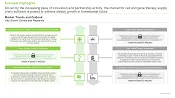
It is important to note that the commercial success of cell and gene therapy products depends not only on their ability to provide the desired therapeutic benefits but also on developers' capacity to efficiently meet all supply chain needs. The cell and gene therapy supply chain is relatively more complex compared to the conventional pharmaceutical supply chain owing to the temperature sensitivity and uniqueness of such products. As a result, there are a number of risks in terms of process inconsistency, including possible operational inefficiencies, capacity scheduling concerns, process delays leading to capital loss, and delivery / tracking-related issues, which needs to be taken care by therapy developers.
This has generated a need for bespoke software solutions, which can be integrated into existing processes and enable the drug developers to oversee and manage the various aspects of the cell and gene therapy supply chain at each step. Over the years, several innovative software solutions, offering supply chain orchestration and needle-to-needle traceability, have been developed. The market has also witnessed an increase in the number of partnerships inked for the advancement of such software solutions. Further, given the growing demand for cost-effective personalized medicinal products, and the cost saving potential of implementing such software solutions, the cell and gene therapy supply chain software market is poised to grow significantly in the foreseen future.
 |
 |
 |
Tap or click on the images for smart insights on Cell and Gene Therapy Supply Chain Software Market
The cell and gene therapy supply chain software market research report presents an in-depth analysis of various software solutions that are involved in managing cell and gene therapies supply chain, across different segments, as defined in the table below:
| Key Report Attribute | Details | |
| Historical Trend | Since 2019 | |
| Base Year | 2023 | |
| Forecast Period | Till 2035 | |
| Market Size 2026 | USD 356 million | |
| Market Size 2035 | USD 1,329 million | |
| CAGR (Till 2035) | 15.8% | |
| Process Component |
|
|
| Type of Software |
|
|
| Mode of Deployment |
|
|
| Type of End-User |
|
|
| Scale of Operation |
|
|
| Geography |
|
|
| Key Companies Profiled |
|
|
| PowerPoint Presentation (Complimentary) |
Available | |
| Customization scope | 15% Free Customization | |
| Excel Data Packs (Complimentary) |
|
|
 |
 |
 |
One of the key objectives of this market report was to estimate the current market size, opportunity and the future growth potential of the software developers in the cell and gene therapy supply chain software market, over the forecast period. Based on multiple parameters, likely adoption trends and through primary validations, we have provided an informed estimate on the market evolution during the forecast period 2026-2035.
The market report also features the likely distribution of the current and forecasted opportunity for software developers in the market across various segments, such as process component (sample collection and processing component, manufacturing component, logistics component, and patient identification and treatment follow-up component), type of software (EMS, LIMS, IMS, COP, QMS, LMS and PMS), mode of deployment (on-premise deployment and cloud-based deployment), scale of operation (clinical scale and commercial scale), type of end-user (pharmaceutical companies, cell therapy labs, hospitals / medical centers and research institutes / biobanks) and key geographical regions (North America, Europe, Asia-Pacific and rest of the world). In order to account for future uncertainties associated with some of the key parameters and to add robustness to our model, we have provided three cell and gene therapy supply chain software market forecast scenarios, namely conservative, base, and optimistic scenarios, representing different tracks of the industry’s evolution.
The opinions and insights presented in the market report were influenced by discussions held with stakeholders in the industry. The report features detailed transcripts of interviews held with the following industry stakeholders:
Further, all actual figures have been sourced and analyzed from publicly available information forums and primary research discussions. Financial figures mentioned in this market report are in USD, unless otherwise specified.
The global cell and gene therapy supply chain software market is segmented into different process components, such as sample collection and processing component, manufacturing component, logistics component, and patient identification and treatment follow-up component. The manufacturing component occupies the highest share in current year and is expected to remain dominant during the forecast period. This can be attributed to the high adoption of supply chain software solutions in manufacturing processes to streamline the overall therapy development and deliver quality products.
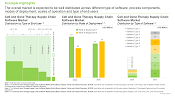
This segment highlights the distribution of the cell and gene therapy supply chain software market across different types of software solutions, such as EMS, LIMS, IMS, COP, QMS, LMS and PMS. Owing to the fact that there is a high demand for supply chain management solutions to meet production and quality requirements, the enterprise manufacturing system (EMS) market holds the largest market share. However, cell orchestration platforms (COP) are easier to deploy and have witnessed an increased adoption among pre-clinical drug developers, following which, these novel software platforms are expected to grow at a relatively higher rate.
The global cell and gene therapy supply chain management software industry highlights the distribution of software solutions based on mode of deployment, such as on-premises deployment and cloud-based deployment. It is worth highlighting that the market share for cloud-based software is likely to grow at a higher CAGR in the coming years as compared to the software solutions which are deployed on-premises.
The global cell and gene therapy supply chain software market features different software solutions which can be used to manage operations at clinical and commercial scales. It is worth highlighting that software solutions employed for managing clinical operations are likely to grow at a higher CAGR in the coming years as compared to the software solutions which are used to manage commercial scale supply chain.
The global cell and gene therapy supply chain software market caters to a variety of end-users, including pharmaceutical companies, cell therapy labs, hospitals / medical centres and research institutes / biobanks. Pharmaceutical companies capture the highest share in the current year and are expected to dominate the market during the forecast period. This can be attributed to the high adoption of supply chain software solutions by pharmaceutical companies to orchestrate different processes of therapy development, including sample collection, processing and shipment.
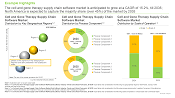
This segment highlights the distribution of the cell and gene therapy supply chain software market across various geographies, such as North America, Europe, and Asia-Pacific and rest of the world. According to our projections, North America captures the majority share (54%) of the market opportunity, and this trend is unlikely to change during the forecast period. It is worth highlighting that the CGT supply chain software market in Asia-Pacific is expected to grow at a relatively higher CAGR (20%), during the forecast period, till 2035.
The “Cell and Gene Therapy Supply Chain Software Market (2nd Edition): Industry Trends and Global Forecasts, Till 2035: Distribution by Process Component (Sample Collection and Processing Component, Manufacturing Component, Logistics Component, and Patient Identification and Treatment Follow-Up Component), Type of Software (EMS, LIMS, IMS, COP, QMS, LMS and PMS), Mode of Deployment (On-premises and Cloud), Scale of Operation (Clinical Scale and Commercial Scale), Type of End-User (Pharmaceutical Companies, Cell Therapy Labs, Hospitals / Medical Centers and Research Institutes / Biobanks) and Key Geographical Regions (North America, Europe, Asia-Pacific and Rest of the World): Industry Trends and Global Forecasts” report features an extensive study of the current market landscape, market size and future opportunities associated with software providers within the cell and gene therapy supply chain software industry, during the given forecast period. The market report highlights the efforts of several stakeholders engaged in this rapidly emerging segment of the software providers industry. Key takeaways of the peptide synthesis market report are briefly discussed below.
The software providers engaged in the cell and gene therapy supply chain software market have a well-established product portfolio and skilled professionals having technical expertise related to different software platforms. The software solutions provided by these companies follow stringent regulatory guidelines in order to ensure the data integrity and confidentiality of the samples used for cell and gene therapy development. Additionally, the supply chain software solutions assist in providing regulatory compliance for various processes, such as sample collection, sample processing and shipment activities.
Further, one of the primary benefits of using CGT supply chain software is its cost-saving potential. Companies integrating these software solutions can curb the costs associated with improper manual data handling at different stages of the supply chain. Moreover, companies engaged in the cell and gene therapy supply chain software market have specialized teams to provide services to multiple consumers; additionally, these software solutions assist in cold chain logistics management of raw materials procured by the end-user from the donor itself.
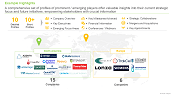
The current market landscape features the presence of close to 175 supply chain software solutions, to manage a variety of steps in the cell and gene therapy development; these software solutions include EMS, LIMS, IMS, COP, QMS, LMS and PMS. Further, these software solutions offer a variety of applications, including regulatory compliance, sample inventory management, workflow management, ordering and scheduling, logistics management, manufacturing management, and patient engagement. Moreover, CGT supply chain software solutions can also be used to maintain the chain of identity and custody throughout the cell therapy cycle in order to provide an end-to-end traceability of the samples.
It is interesting to highlight that close to 100 companies are engaged in providing such software solutions. In order to meet the increasing demand for CGT supply chain software, these companies have undertaken several initiatives, such as entering into strategic collaborations, and expanding their existing capabilities / product portfolios.
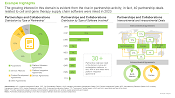
Software providers in the cell and gene therapy supply chain software market have forged several partnerships with other companies in order to enhance their product portfolios. It is worth highlighting that a significant increase in partnership activity has been witnessed. This can be attributed to the incessant efforts of software providers to further advance the development of their software solutions for cell and gene therapy supply chain. Notably, the majority of the deals were focused on acquiring other companies engaged in the CGT supply chain software market, followed by platform utilization agreements and service alliances.
In December 2023, LabWare entered into a platform integration agreement with Körber to integrate the former company’s LIMS platform with Körber’s proprietary manufacturing execution system. Such partnerships are expected to drive growth of the cell and gene therapy supply chain software market during the forecast period.
The global market opportunity for cell and gene therapy supply chain software providers is estimated to be USD 356 million in 2026, driven by the rapidly increasing demand for personalized medicine. In terms of type of software, the market for cell orchestration platforms (COP) in the cell and gene therapy supply chain software market is anticipated to grow at relatively higher CAGR of 15.8%, during the forecast period, 2026-2035. The market growth is primarily fueled by increasing popularity of COPs, owing to their proven ease of deployment and capability to provide needle-to-needle traceability withing the cell and gene therapy supply chain.
Presently, close to 55% of the cell and gene therapy supply chain software market opportunity is created by the demand for personalized medicines in North America. This can be attributed to the increasing R&D investments, partnership activity and funding received by various therapy developers for the development of novel cell and gene therapies. Further, the market for these software solutions in Asia-Pacific is expected to grow at a relatively higher CAGR of 20.2%, during the forecast period.
Examples of key software providers involved in the cell and gene therapy supply chain software industry (which have also been captured in this market report, arranged in alphabetical order) include Azenta Life Sciences, NMDP BioTherapies, Biocair, BioLife Solutions, CareDx, Cryoport, Lonza, TraceLink, TrakCel, Veeva Systems. This market report includes an easily searchable excel database .for all the companies offering software solutions for cell and gene therapy along with information on their proprietary software solutions offered to orchestrate the overall processes.
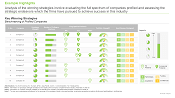
The market report presents an in-depth analysis, highlighting the capabilities of various software providers in this market, across different segments. Amongst other elements, the market report includes:
Several recent developments have taken place in the field of cell and gene therapy supply chain software. We have outlined some of these recent initiatives below. These developments, even if they took place post the release of our market report, substantiate the overall market trends that have been outlined in our analysis.