


 Download Free Sample
 Buy Now
Market Size
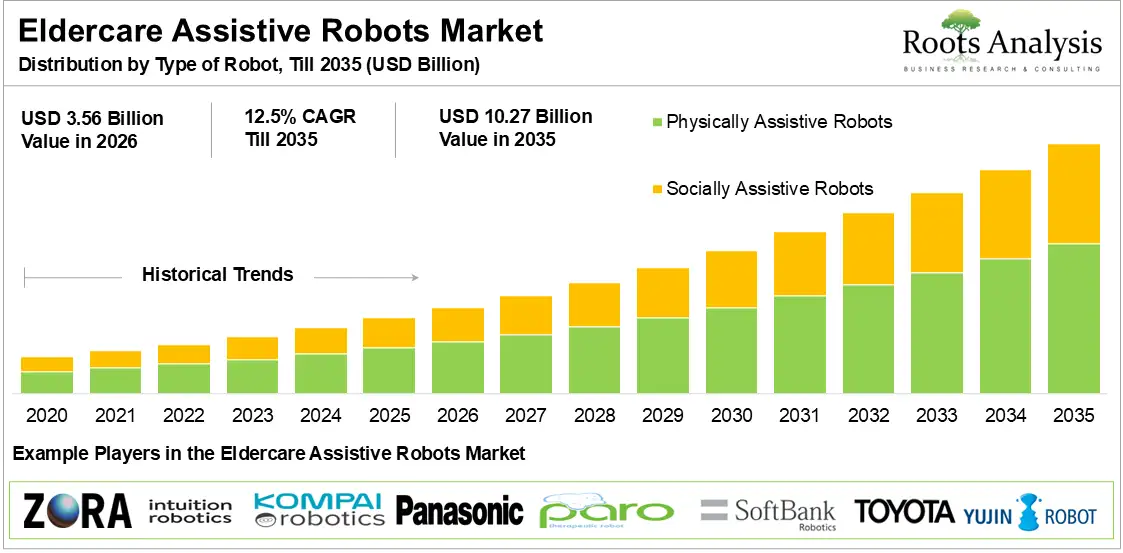
The global eldercare assistive robots market, valued at USD 3.14 billion in 2025, is projected to reach USD 3.56 billion in 2026 and USD 10.27 billion by 2035, with a 12.5% CAGR during the forecast period 2026 to 2035. The growing elderly population has heightened the demand for eldercare assistive robots.
See What’s in the Full Report – Request Your Complimentary Insights!
Market Report: Key Takeaways
- The increasing elderly population with chronic conditions, such as osteoarthritis, and musculoskeletal disorders are rising the demand for advanced Eldercare Assistive Robots.
- In terms of robots, the physically assisted robots segment dominates by holding 60% share of the market due to the growing need for assistive robots for mobility assistance and daily activity's function.
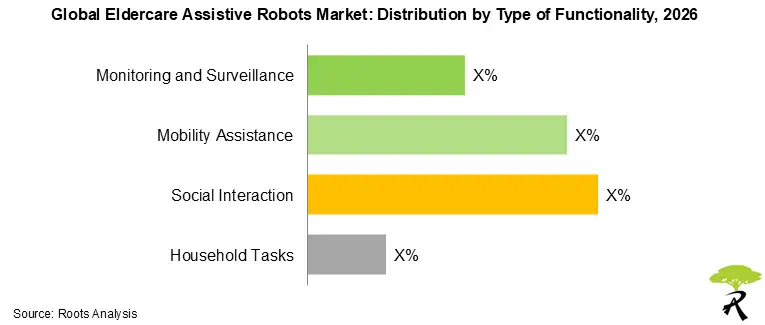
- With regards to type of functionality, the social interaction segment accounts for 37% share of the market. The growing awareness about loneliness in geriatric population underscores the demand for companion robots for emotional support to elder population.
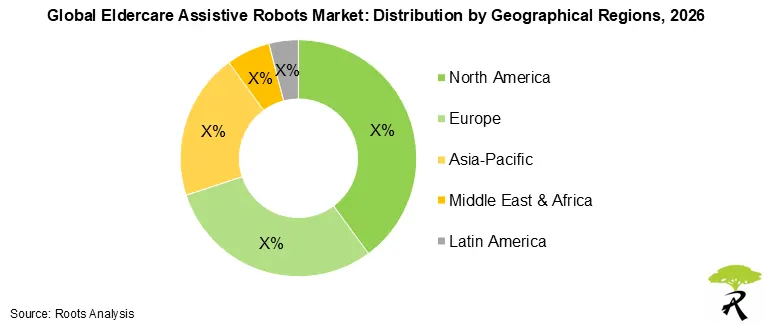
- Based on geographical regions, North America accounts for 40% of the overall revenue share. Several factors, such as rising technological innovations, increasing elderly population and presence of robust regulatory framework is driving growth in this region.
Market Overview
Eldercare assisted robot is a specialized machines that are designed to help aged individuals in performing day-to-day tasks independently. These assistive robots offer mobility assistance, remote monitoring, and social interactions. With increasing risk of neurological and age-related disorders in elderly population, there is a high demand for eldercare robots for daily living assistance and diverse need of aging individuals.
As per the stats published in Alzheimer’s Disease International, there will be nearly 78 million elder people living with dementia in 2030. Patients suffering from dementia face issues in social interaction, daily task management and decision-making. The Eldercare Assistive Robots emerged as an invaluable solution to support social engagement, and decision-making, contributing to the high demand for these robots.
Considering the ongoing demand, the market players are undertaking initiatives to develop advanced assisted living technologies, specifically assistive robots. For instance, in July 2025, MIT engineers team have successfully built and tested an Elderly Bodily Assistance Robot (E-BAR), a form of mobile robot to physically support the elderly people and prevent them from falling. As market players continue to innovate advanced assistive robots, it is expected that eldercare assistive robots market will grow steadily in the future.
Recent Developments in Eldercare Assistive Robots Market
- In June 2025, China has launched a new pilot program to deploy assistive robots to alleviate the pressure of elderly care from caregivers. Chinese government has also invited several organizations and assisted robotic companies to participate in this pilot program to enhance the integration of robots into smart elderly care.
- In May 2025, the AIREC care robot (the latest prototype of 150 kg elderly care robot) which is currently undergoing testing in Japan since March 2025 has taken a one step further. This robot has shown promising results in helping elderly put on socks and cook scrambled eggs.
- In May 2025, UBTech Robotics (China) has launched a consumer-grade humanoid home robot that worth USD 20,000, a significant step towards the integration of assistive robots into elder care. This robot is designed to assist elders with everyday tasks, such as folding laundry, loading dishwasher and offering companionship.
Have Questions? Let's Get Them Answered
Market Trends
- AI-Powered Autonomy and Emotional Intelligence: The integration of AI and machine learning is one of the significant trends in eldercare assistive robots for aging-in-place support. Notably, the AI-powered robots, such as ELLiQ developed by Intuition Robotics (Israel) provide proactive care by learning patients habits and engaging with users in a natural way. The future focus will be on the development of AI-powered assistive robots with human-like conversation capabilities to offer companionship to elder population.
- Multi-Functional and Modular Design: The market players are widely emphasizing the development of AI-powered eldercare robots with multi-functional capabilities. These versatile robots not only offer lifting assistance, but also assist in social interaction, task management, and medication care. The upgraded design will make this assisted robotic technology more appealing and practical to elderly population and caregivers.
- Integration of IoT for Enhanced Health Monitoring: With increasing acceptance of assistive robots across healthcare ecosystem, the focus will be on the development of IoT integrated robots for enhanced health monitoring. Furthermore, the medical robotics will be equipped with biosensors that helps to monitor vital health signs and alert caregivers or healthcare professionals in real-time for optimal medication assistance. This remote health monitoring by eldercare assistive robots also help in early detection of health associated issues and proactive area, which further reduce the requirement of readmission in hospitals.
- Eldercare Robotics Market Trends in Smart Home Integration: It is worth noting that the increasing demographic of aging population with mobility issues, and age-related disorders are fueling the demand for advanced assistive robots that can be integrated in homes to detect accidental falls and support elderly population in performing daily activities.
Industry Experts on Elderly Assistive Robots Market
Experts believe that spontaneous growth of eldercare robot technology is primarily driven by the rising shift towards home-based care and innovation in technologies.
Zhang Yunquan (a researcher at the Institute of Computing Technology of the Chinese Academy of Sciences) said, ‘elderly care robots will ease home-based care challenges and unlock the potential of the silver economy. Moving forward, we must focus on technological breakthroughs, scenario adaptation and ecosystem development to propel the industry's growth.’
Eldercare Assistive Robots Market Drivers
- Increasing Aging Population: As per the stats published in International federation Petits Frères des Pauvres, the global population, specifically individuals aged 60 years or above will reach nearly 2.1 billion by 2050. The rising geriatric population across the globe is likely to surge the demand for assistive robots for elderly care.
- Shortage of Caregiver: The growing shortage of caregiving and nursing professional has increased the demand for assistive robots to reduce caregiver workload. Moreover, the availability of assistive robots also helps to fill gaps between caregiver shortage and elderly patient assistance requirement.
- Shift Towards Home-Based Care and Smart Home Trends: The growing shift towards home based care is also driving the demand for assistive robots to deliver optimal care and companionship to elderly population.
Market Segmentation Analysis
Will Physically Assisted Robots Segment Dominate in the Future?
This segment highlights the distribution of global market across different type of robot, such as physically assistive robots, and socially assistive robots. According to the eldercare assistive robots market forecast, the physically assistive robots segment is accounting for 60% of the overall revenue share. This highest share stems from the rising adoption of elderly care service robots for daily assistance by elder patients with age-related disorders and mobility issues.
In the future, the socially assistive robots segment is likely to grow at a higher CAGR during the forecast period. The growing awareness about the loneliness in elderly population has necessitated the demand for social companion robots to reduce senior loneliness.
Want Information on Specific Region / Segment?
How Social Interaction Segment is Dominating the Market?
Based on the type of functionality, the global market is segmented into monitoring and surveillance, mobility assistance, social interaction, and household tasks. According to the eldercare assistive robots market analysis, the social interaction segment is dominating the market by securing 37% of the overall revenue share. This dominance is due to the increasing incidence of mental health conditions in elderly patients. The patients with mental health conditions may face challenges in social interaction. Interactive eldercare robotic assistants will help elder patients in activities, social interaction and social conversation to reduce the feeling of social isolation.
In the future, the monitoring and surveillance segment is anticipated to grow at the fastest CAGR during the forecast period. This can be ascribed to the increasing incidence of accidental fall among aging population, underscoring the demand for fall detection and emergency response robots for seniors.
Market Regional Insights
Why Does the North America is Leading the Market?
According to our projection, the North America is dominating the industry, anticipating holding 40% of the eldercare assistive robots market share. This dominance is likely to be the result of growing elderly population with mobility and neurological issues. Additionally, the growing emphasis on the caregiver-robot collaboration in eldercare settings in this region to reduce the workload from the caregivers is likely to fuel the demand for collaborative robots in this region.
US Eldercare Assistive Robots Market
The eldercare assistive robots industry is likely to grow at a higher CAGR in the future. This growth stems from the rising adoption of eldercare robot solutions for fall detection, remote monitoring and companionship. In addition, the presence of robust regulatory standards for eldercare robot safety and use is fostering a positive technological innovation ecosystem for the market players.
How Europe's Eldercare Assistive Robots Market is Growing?
The market for eldercare assistive robots in Europe is likely to grow at a substantial CAGR during the forecast period. This is driven by the increasing emphasis on awareness campaign about assisted living technologies for elder people and government initiatives.
Germany Eldercare Assistive Robots Market
Germany is known as the tech-oriented country. The presence of well-established market players who are consistently focusing on the development of customizable eldercare robots for individual needs for mobility assistance and daily task assistance is fueling the market growth in this region. Additionally, the rising need for caregivers by elder population is driving the demand for advanced assistive robots.
How the Eldercare Assistive Robots Market is Evolving in Asia-Pacific?
In Asia-Pacific, the market for eldercare assistive robots is likely to register the highest CAGR in the future. The rising disposable income and increasing geriatric population is anticipated to drive the demand for assistive living technologies, specifically caregiving robots in Asia-Pacific. Furthermore, the rising shortage of caregivers in Asian countries, such as China, Japan, and India is driving the requirement for elderly care service robots.
Japan Eldercare Assistive Robots Market
Japan is witnessing a rapid increase in the aging society and decline in working-age population. Thus, the growing aging population has underscored the requirement for advanced mobility assistance robots for elderly rehabilitation. In addition, the growing emphasis on the development of AI-driven assisted robots is likely to grow the market in Japan.
China Eldercare Assistive Robots Market
In China, the Eldercare Assistive Robots industry is likely to experience a dramatic growth, driven by the rising aging demographic, supportive government policies and technological innovations. It is important to highlight here that The Ministry of Industry and Information Technology, in collaboration with the Ministry of Civil Affairs of China has initiated a national polit program to encourage the adoption of assisted robots to provide care for senior citizens in home settings and nursing institutes. These initiatives are likely to increase the eldercare assistive robots market growth in this country.
Eldercare Assistive Robots Market: Scope of the Report
| Key Report Attributes | Details | |
| Historical Trend | Since 2020 | |
| Forecast Period | Till 2035 | |
| Market Size 2026 | USD 3.56 Billion | |
| Market Size 2035 | USD 10.27 Billion | |
| CAGR (Till 2035) | 12.5% | |
| Key Players Profiled |
|
|
| Segments Covered |
|
|
| Excel Data Packs (Complimentary) |
|
|
| PowerPoint Presentation (Complimentary) |
Available | |
| Customization Scope | 15% Free Customization | |
Eldercare Assistive Robots Market Segments
Based on the research, we have segmented the Eldercare Assistive Robots market into type of robot, type of functionality, geographical regions, and leading players.
Eldercare Assistive Robots Market, by Type of Robot
- Physically Assistive Robots
- Socially Assisted Robots
Eldercare Assistive Robots Market, by Type of Functionality
- Monitoring and Surveillance
- Mobility Assistance
- Social Interaction
- Household Tasks
Eldercare Assistive Robots Market, by Geographical Regions
- North America
- US
- Canada
- Mexico
- Europe
- France
- Germany
- Italy
- Spain
- UK
- Rest of Europe
- Asia-Pacific
- China
- India
- Japan
- South Korea
- New Zealand
- Rest of the Asia-Pacific
- Middle East & Africa
- Egypt
- Iran
- Iraq
- Israel
- Saudi Arabia
- South Africa
- United Arab Emirates
- Latin America
- Argentina
- Brazil


