
Lowest Price Guaranteed
Pages
151
Last Updated
July 2026
View Count
9312
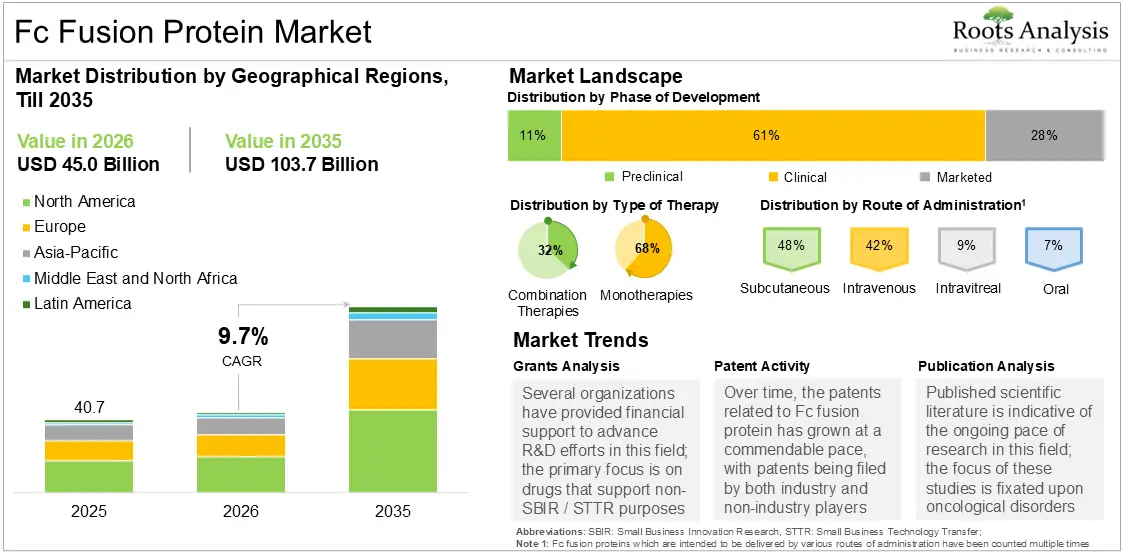
The global Fc fusion protein market, valued at USD 40.7 billion in 2025, is projected to reach USD 45.0 billion in 2026 and USD 103.7 billion by 2035, representing a CAGR of 9.7% during the forecast period 2026 to 2035.
To learn more about this report, request a free sample copy
Fc fusion proteins are engineered molecules that link the Fc (fragment crystallizable) region of an antibody to another biologically active protein or peptide, such as a receptor, ligand, or enzyme. This design helps the therapeutic protein stay longer in the bloodstream, improves its stability, and can enhance its ability to engage immune pathways in a controlled way.
Drug developers are increasingly turning to Fc fusion proteins because many diseases require long-term, targeted therapies that are both effective and convenient for patients. Moreover, traditional biologics or small-molecules APIs often have short half-lives, require frequent dosing, or cause off-target effects. Fc fusion technology helps extend dosing intervals, improve pharmacokinetics, and fine-tune how the drug interacts with the immune system, which can translate into better symptom control and improved quality of life. At the same time, there is a strong unmet need for treatments that can address complex, chronic, and rare diseases where existing options are limited, lose effectiveness over time, or have safety and tolerability issues.
These pharmacokinetic or pharmacodynamic factors are supporting steady growth of the Fc fusion protein market, with multiple approved products already generating significant revenues and a robust pipeline in development across autoimmune, inflammatory, ophthalmology, and oncology indications. Interestingly, the first-in-human Phase 1 evaluation of HCB301, the world's first tri-specific SIRPα–PD-1–TGF-β Fc fusion protein, demonstrated a favorable safety profile, predictable pharmacokinetics, and early signs of antitumor activity in patients with advanced solid tumors. By simultaneously targeting innate immunity, adaptive immunity, and the tumor microenvironment within a single Fc fusion protein, HCB301 represents a promising next-generation immunotherapy approach for overcoming tumor immune resistance and advancing the clinical potential of multifunctional Fc fusion proteins.
As more drug candidates advance through late-stage trials and receive approvals, healthcare systems and companies are likely to invest further in this class, including new formulations, combinations, and indications. Coupled with expanding use in emerging markets and ongoing innovation in protein engineering, the market for Fc fusion proteins is expected to grow significantly over the coming years.
Based on the research, we have segmented the Fc Fusion Protein Market into type of fusion molecule, therapeutic area, route of administration, end user and geographical regions.
By Type of Fusion Molecule
By Therapeutic Area
By Route of Administration
By End User
By Geographical Regions
Driven by the increasing prevalence of chronic and autoimmune diseases alongside the growing demand for long-acting biologics with extended plasma half-life, the Fc fusion protein market is poised to grow significantly in the near future.
Steven Pipe (Professor of Pediatrics and Communicable Diseases, University of Michigan), stated that, “We've had some tremendous innovation in this space, particularly for hemophilia A, over the last few years, we have had some other extended half-life Factor VIII products, but none of them have achieved the kind of pharmacokinetics that we're observing with efa (efanesoctocog alfa).”
Discussions with multiple stakeholders in this domain influenced the opinions and insights presented in this study. The market report includes transcripts of the following third-party discussions:
This segment highlights the distribution of market value for the Fc fusion protein market across various types of fusion molecules, such as receptor ECD, antibodies, cytokine, growth factor and others.
Currently, the receptor extracellular domain (ECD)-based Fc fusion proteins hold the largest share of the Fc fusion protein market owing to their proven clinical success, broad therapeutic applicability, and strong commercial adoption. These therapeutics are designed by fusing the extracellular domain of a naturally occurring receptor with the Fc region of an immunoglobulin, creating a fusion protein that binds to disease-causing ligands before they can interact with cell surface receptors. By blocking these ligand-receptor interactions, receptor ECD-based Fc fusion proteins help suppress disease-driving signaling pathways while the Fc region extends the therapeutic's circulation time through Fc receptor-mediated recycling. This combination of targeted disease inhibition, prolonged half-life, and reduced dosing frequency has contributed significantly to their widespread clinical adoption and market leadership.
Further, the cytokine-based Fc fusion protein segment is expected to grow at a significant pace during the forecast period due to increasing efforts to enhance the therapeutic potential of cytokines through Fc engineering. Native cytokines often suffer from short half-lives, rapid clearance, and dose-limiting toxicities; however, fusion with the Fc domain can significantly improve their stability, circulation time, and therapeutic efficacy. Growing research activity in immuno-oncology, autoimmune diseases, and inflammatory disorders is driving the development of next-generation cytokine-Fc fusion proteins designed to selectively stimulate or modulate immune responses.
This segment highlights the distribution of market value for the Fc fusion protein market across various therapeutic areas, such as autoimmune & inflammatory disorders, ophthalmological disorders, oncological disorders, hematological disorders and other disorders.
Currently, autoimmune & inflammatory disorders hold the largest share of the Fc fusion protein market owing to the high global burden of chronic immune-mediated diseases and the long-established clinical success of Fc fusion protein therapeutics in their treatment. Receptor-Fc fusion proteins, such as etanercept and abatacept, have become established biologic therapies for multiple autoimmune conditions, including rheumatoid arthritis, psoriatic arthritis, ankylosing spondylitis, psoriasis, and juvenile idiopathic arthritis. This is supported by decades of clinical efficacy, safety, and widespread physician acceptance of these drugs. Furthermore, the incorporation of the Fc domain prolongs the therapeutic's serum half-life through FcRn-mediated recycling, enabling less frequent dosing and sustained therapeutic activity. These clinical and pharmacokinetic advantages have solidified autoimmune & inflammatory disorders as the leading application segment within the Fc fusion protein market.
Notably, the ophthalmological disorders segment is expected to grow at a significant pace during the forecast period owing to the increasing prevalence of age-related retinal diseases and the expanding use of Fc fusion proteins in ophthalmology. Conditions such as age-related macular degeneration (AMD), diabetic macular edema (DME), diabetic retinopathy, and retinal vein occlusion are becoming more common due to aging populations and the rising burden of diabetes worldwide. Fc fusion proteins offer prolonged intraocular activity and potent inhibition of disease-driving pathways, reducing treatment burden and improving patient outcomes.
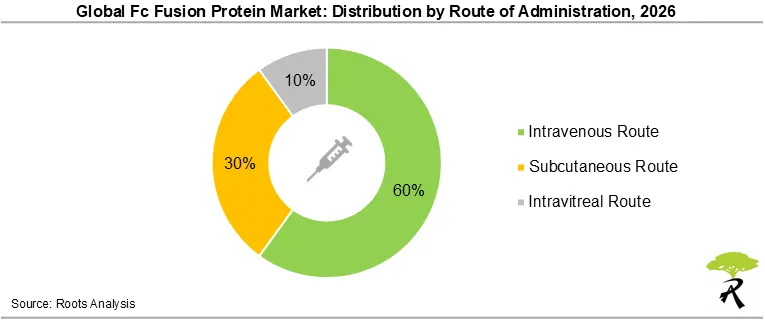
This segment highlights the distribution of market value for the Fc fusion protein market across various routes of administration, including intravenous route, subcutaneous route, and intravitreal route.
Currently, intravenous route holds the largest share of the Fc fusion protein market because many Fc fusion proteins are used for the treatment of chronic, systemic, and severe diseases that require precise dosing, rapid bioavailability, and complete systemic exposure. Intravenous administration ensures that large biologic molecules are delivered directly into the bloodstream without degradation or absorption limitations, thereby resulting in predictable pharmacokinetics and therapeutic efficacy. Further, several commercially successful Fc fusion proteins are administered intravenously in hospital and specialty care settings, particularly for autoimmune disorders, hematological conditions, and rare diseases. For example, Nplate and certain Fc-fusion coagulation factor therapies used in hemophilia management have contributed to the widespread adoption of parenteral administration.
The intravitreal route is expected to grow at a significant pace during the forecast period owing to the increasing prevalence of retinal and ophthalmic disorders and the expanding use of Fc fusion proteins in ophthalmology. Intravitreal administration delivers the therapeutic agent directly into the vitreous cavity of the eye, enabling high local drug concentrations while minimizing systemic exposure. Additionally, the rising global burden of diabetes and age-related eye diseases, coupled with ongoing development of longer-acting retinal therapies and expanded treatment indications, is expected to drive strong growth in the intravitreal segment.
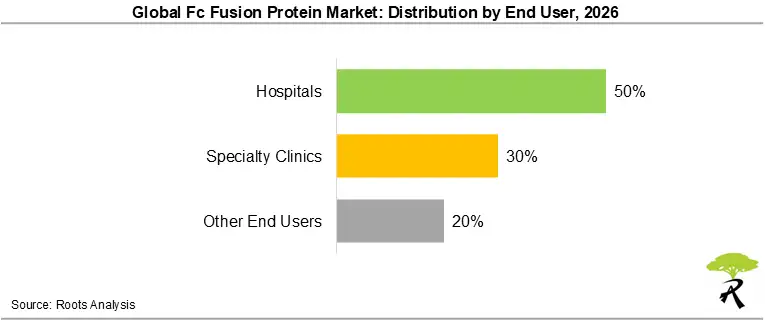
This segment highlights the distribution of market value for the Fc fusion protein market across various end users, such as hospitals, specialty clinics and other end users.
Hospitals hold the largest share of the Fc fusion protein market because they serve as the primary treatment centers for patients receiving biologic therapies for complex, chronic, and severe conditions. Many Fc fusion proteins require specialist supervision, infusion services, comprehensive diagnostic testing, and ongoing monitoring, making hospitals the preferred point of care. In addition, hospitals are often the first adopters of newly approved biologics and have established procurement systems that facilitate access to high-cost therapies.
Further, the specialty clinics segment is expected to grow at a significant pace during the forecast period owing to the increasing shift toward specialized and outpatient care models for chronic disease management. Specialty clinics providing treatment for rheumatology, ophthalmology, immunology, and rare diseases offer targeted expertise, streamlined treatment pathways, and improved patient convenience compared to traditional hospital settings. Additionally, the expansion of specialty care networks, increasing patient preference for outpatient treatment, and growing healthcare efforts to reduce hospital burden are expected to accelerate the adoption of Fc fusion protein therapies in specialty clinics, supporting strong market growth during the forecast period.
According to our projections, North America is likely to capture the majority of the Fc fusion protein market share in the current year. This leadership is primarily driven by the region's long-standing role in the discovery, development, and commercialization of Fc fusion protein therapeutics. Notably, North America was the first region to successfully commercialize an Fc fusion protein with the approval of Etanercept (Enbrel) in 1998, establishing a strong foundation for subsequent innovation in this therapeutic class. The region also has the highest concentration of marketed Fc fusion protein platforms for autoimmune, ophthalmic, hematologic, and rare disease indications, supported by leading developers such as Amgen, Regeneron Pharmaceuticals, Bristol Myers Squibb, and Pfizer. Further, continued investments in next-generation Fc engineering technologies, robust biologics manufacturing capabilities, and an active clinical pipeline for novel Fc fusion proteins have reinforced North America's leadership in the market.
The market in Asia-Pacific is likely to grow at the highest CAGR during the forecast period, driven by expanding biopharmaceutical manufacturing capabilities, increasing healthcare expenditure, and favorable government initiatives supporting biologics development. Notably, in China, the 14th Five-Year Plan (2021–2025) prioritized the biotechnology and biopharmaceutical sectors, while regulatory reforms by the National Medical Products Administration (NMPA) accelerated biologics innovation and commercialization. These initiatives have enabled companies such as 3SBio, Akeso, and Innovent Biologics to expand their biologics pipelines and manufacturing capacities, including the development of novel Fc fusion protein candidates. Further, in India, the Production Linked Incentive (PLI) Scheme for Pharmaceuticals (2020–2029) has encouraged investments in advanced biologics manufacturing infrastructure and recombinant protein production, strengthening the country's capabilities to support the development and large-scale manufacturing of complex biologics, including Fc fusion proteins and their biosimilars.
Companies such as Biocon Biologics, Intas Pharmaceuticals, and Zydus Lifesciences have expanded their biologics manufacturing capacity and global biosimilars footprint, further reinforcing India's position as a key manufacturing hub for next-generation biologics. Such policy initiatives, industry expansions, and increasing investments in biologics research and manufacturing, together with the rising prevalence of chronic diseases, are expected to accelerate the growth of Fc fusion protein market across the Asia-Pacific region.
| Key Report Attribute | Details | |
| Historical Trend | Since 2021 | |
| Forecast Period | Till 2035 | |
| Market Size 2026 | $ 45.0 Billion | |
| Market Size 2035 | $ 103.7 Billion | |
| CAGR (Till 2035) | 9.7% | |
| Segments Covered |
|
|
| Key Players |
|
|
| PowerPoint Presentation (Complimentary) |
Available | |
| Customization Scope | 15% Free Customization | |
| Excel Data Packs (Complimentary) |
Available | |