
Lowest Price Guaranteed
Slides
236
Last Updated
June 2025
View Count
15751
The global medical imaging market, valued at USD 43.93 billion in 2024, is projected to reach USD 46.41 billion in 2025 and USD 72.39 billion by 2035, representing a CAGR of 4.5% during the forecast period.
 |
To learn more about this report, request a free sample copy
Medical imaging has become a cornerstone for healthcare professionals to treat patients precisely. It refers to the leveraging imaging technologies to diagnose and monitor patients for treatment. Magnetic resonance imaging (MRI), positron emission tomography (PET), computer tomography (CT) and fluoroscopy are some of the notable imaging technologies that are widely used for disease diagnosis. With the growing incidence of chronic diseases (such as neurological conditions and cancer), there has been a surge in the demand for sensitive imaging technologies for disease diagnosis at early stages.
 |
 |
 |
It is important to highlight here that cancer has been a major cause of concern for healthcare professionals. As per the statistics published by World Health Organization, more than 35 million new cancer cases are predicted in 2050. With rising incidence of cancer, there is a demand for more sensitive imaging technologies for early cancer diagnostics as cancer patient may remain asymptomatic or have common disease signs in its initial stage. Similar to cancer, neurological conditions such as Alzheimer’s, epilepsy and Parkinson’s require regular monitoring to understand disease progression and treatment, which further necessitated the demand for advanced medical imaging technologies.
 |
 |
 |
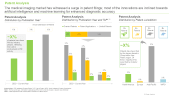
Owing to the ongoing demand, several industrial players are increasing their strategic initiatives for technologies. However, the industrial players will remain focused on integrating AI in medical imaging, 3D medical imaging technologies and handheld imaging technologies for faster diagnosis. For instance, in December 2024, GE Healthcare highlighted more than 40 innovations including artificial intelligence enabled technologies and medical imaging devices that enhance decision making process for value-based care at the Radiological Society of North America, 2024 Annual Meeting, in Chicago.
 |
 |
 |
In the same month, Philip revealed latest AI-powered diagnostic and treatment medical imaging innovations to enhance imaging process with higher precision. As stated by Bert van Meurs (Chief Business Leader of Diagnosis and Treatment, Philips),” The healthcare industry is facing a perfect storm of challenges in radiology: increasing patient volumes, skyrocketing demand for imaging studies, and an explosion in imaging data. At the same time, staff shortages are creating mounting pressure on already strained resources. Our intelligent imaging systems combined with our world-class informatics support healthcare providers in embracing innovative solutions that enhance efficiency, reduce the administrative burden, and empower radiologists to focus on delivering precise, high-quality care.”
Owing to the ongoing trends, innovations and rising demand for smart imaging technologies, we believe that medical imaging market will remain progressive throughout the forecast period.
The research report provides invaluable information on leading industrial players who are presently active across various segments of the medical imaging industry.
| Key Report Attributes | Details | |
| Historical Trend | Since 2019 | |
| Forecast Period | Till 2035 | |
| Current Market Size | $ 46.41 Billion | |
| Market Size 2035 | $ 72.39 Billion | |
| CAGR (Till 2035) | 4.5% | |
| Type of Imaging Technology |
|
|
| Type of Equipment |
|
|
| Patient Age |
|
|
| Type of Product |
|
|
| Type of Application Area |
|
|
| End User |
|
|
| Geographical Regions |
|
|
| Key Companies Profiled |
|
|
| PowerPoint Presentation (Complimentary) |
Available | |
| Customization Scope | 15% Free Customization | |
| Excel Data Packs (Complimentary) |
Available | |
One of the key objectives of the medical imaging market report was to estimate the current medical imaging market size, opportunity and the market growth potential, over the forecast period, till 2035.
We have provided informed estimates on the likely evolution of the market for the forecast period. the medical imaging market analysis also features the likely distribution of the current and forecasted opportunity within the market across various segments, such as type of imaging technology (X-ray devices (radiography, fluoroscopy and mammography), ultrasound (handheld, compact and cart / trolley based), computed tomography (high end slice CT, mid end slice CT, low end slice CT and cone beam CT), magnetic resonance imaging (closed system and open system) and nuclear imaging (SPECT and PET)), type of equipment (standalone imaging systems, mobile imaging systems and advanced imaging systems), patient age (adults and pediatrics), type of product (system, software and services), type of application area (general imaging, oncology, cardiology, neurology, orthopedics, gastroenterology, gynecology and other applications), by end user (hospitals, diagnostic imaging centers, research institutes, ambulatory imaging centers and other end users), geographical region (North America, Europe, Asia-Pacific, Middle East and North Africa, and Latin America) and leading players.
In order to account for future uncertainties associated with some of the key parameters and to add robustness to our model, we have provided three market forecast scenarios, namely conservative, base, and optimistic scenarios, representing different tracks of industry’s evolution.
All actual figures have been sourced and analyzed from publicly available information forums and primary research discussions. The financial figures mentioned in this market report are in USD, unless otherwise specified.
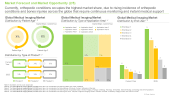
Based on the type of imaging technology, the global medical imaging market is segmented into X-Ray Devices (Radiography, Fluoroscopy and Mammography), Ultrasound (Handheld, Compact and Cart / Trolley Based), Computed Tomography (High End Slice CT, Mid End Slice CT, Low End Slice CT and Cone Beam CT), Magnetic Resonance Imaging (Closed System and Open System), and Nuclear Imaging (SPECT and PET).
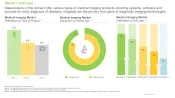
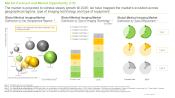
According to our projection, currently X-ray holds the highest share (30%) of the market. This can be attributed to the fact that X-Ray technology offer faster results and ensure low radiation exposure. Furthermore, X-ray images can be transferred digitally and electronically which further fueled its adoption across healthcare industry.
Notably, magnetic resonance imaging segment also occupies substantial share of the market. This can be attributed to the increasing usage of magnetic resonance imaging in visualizing internal organs including abdomen, brain, breast, pelvis and heart. In addition, the ongoing advancements in medical resonance imaging, such as higher magnetic field strengths, integration of AI, ultrafast imaging techniques, advanced coil technology, diffusion tensor imaging and magnetic resonance spectroscopy for improved image quality has further contributed to the highest share of this segment.
However, in the long run, computed tomography (CT scan) is likely to register a higher CAGR during the forecast period. CT scans offer high-resolution images to visualize internal structures with seamless clarity, which is vital for treatment planning. Moreover, CT scans are the most common medical imaging technology which is widely adopted to detect bone abnormalities, organ defect detection and tissue damage.
This segment highlights the distribution of global market across different types of equipment, such as standalone imaging systems, mobile imaging systems and advanced imaging systems. Among these, standalone imaging systems currently hold the highest medical imaging market share. This dominance is due to widespread usage of standalone imaging systems across hospitals and diagnostic imaging centers for disease diagnosis due to ease of accessibility.
However, in the long run, mobile imaging systems segment is likely to gain significant traction, anticipated to grow at a CAGR during the forecast period. Mobile imaging systems are emerging as a potential solution for diagnosis specifically in remote areas and emergency care. It is important to highlight here that advanced imaging systems also hold a significant share of the market owing to the ongoing innovations for complex diagnostic imaging and demand for early stage disease detection technologies.
The global market is categorized across different patient ages, such as adults and pediatrics. Currently, the adults segment accounts for the highest medical imaging market share owing to the widespread usage of imaging technologies for disease detection in adults. Furthermore, the growing geriatric population with chronic conditions has further fueled the demand for diagnostic imaging technologies for early disease detection and monitoring. Driven by the increasing usage of imaging technologies for adults, this segment will continue to gain momentum at a higher CAGR during the forecast period.
On the basis of product type, currently the global market is segmented into systems, software and services. According to our medical imaging market report, currently systems account for the largest share of the market. This can be attributed to the fact that the medical imaging system play a significant role in diagnosing diseases in hospital settings. Furthermore, the integrated imaging system has various components including hardware, software and scanners which offer a complete set of imaging solutions for disease diagnosis. Owing to the crucial role of the system, this segment will continue to maintain its dominating positions and is likely to grow at a higher CAGR during the forecast period.
Based on the type of application area, the global market is segmented into general imaging, oncology, cardiology, neurology, orthopedics, gastroenterology, gynecology and other applications. According to our medical imaging market analysis, orthopedic segment accounts for the highest share (nearly 35%) of the market. This can be attributed to the increasing orthopedic conditions and bones injuries. Imaging technologies play a significant role in providing orthopedic care and allow healthcare practitioners to set orthopedic implants.
However, in the long run, oncology segment is likely to grow at a higher CAGR during the forecast period. This is primarily due to the rising usage of molecular imaging, MRI and PET-CT scans for early detection of cancer and precise treatment planning. Additionally, the increasing focus on targeted therapies for the treatment of cancer patients has further increased the demand for AI integrated medical imaging technologies for early-stage cancer detection.
On the basis of end user, the global market is distributed across hospitals, diagnostic imaging centers, research institutes, ambulatory imaging centers and other end users. According to our medical imaging market forecast, presently the hospitals segment accounts for the largest market share (~45 %). This can be attributed to the widespread adoption of medical imaging technologies, including MRI, ultrasound, CT scans and X-ray, for disease diagnosis in hospitals. Furthermore, hospitals are the primary users of diagnostic imaging technologies and wide pool of patients in hospitals has further contributed to the highest market share of this segment.
However, it is worth noting that diagnostic imaging centers segment is likely to grow at a higher CAGR during the forecast period. This is primarily due to the rising awareness about chronic conditions and early diagnosis among population and increasing preferences for personalized care.
The global market is distributed across different geographical regions, such as North America, Europe, Asia-Pacific, Middle East and North Africa, and Latin America. According to our medical imaging market analysis, currently North America is dominating the industry by holding the highest share (37%) of the overall market. This can be attributed to the high adoption of advanced imaging technologies, expanding healthcare infrastructure and rising incidence of chronic conditions in this region.
In Europe, the market for diagnostic imaging holds a substantial share driven by the rising research on personalized drugs and technological innovations. However, in Asia-Pacific, the medical imaging industry is likely to experience a faster CAGR during the forecast period. This can be attributed to the growing geriatric population with chronic conditions and consistent initiatives of industrial players to expand usage of medical imaging technologies. For instance, in December 2024, Bangalore Hospitals in Bengaluru, India launched the 640-Slice CT scan imaging technology that ensure high-end accuracy and details in medical imaging.
The “Medical Imaging Market: Industry Trends and Global Forecasts, till 2035” research report features an extensive study of the focus on competitive landscape of strategic initiatives, emerging mega trends, big pharma initiatives, company profiles and key drivers and restraints. The market report highlights the efforts of several stakeholders engaged in this rapidly evolving segment of the medical imaging industry. Key takeaways of the market data analysis are briefly discussed below.
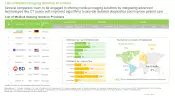
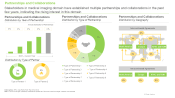
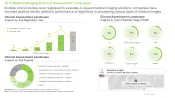
Currently, the medical imaging market landscape witnesses the presence of several well-established and new entrants. Notably, the industrial players who are presently active in the industry are leveraging collaborations, partnerships and latest technologies to strengthen their product portfolio. For instance, in November 2024, ZEISS Research Microscopy Solutions and the MPFI (The Max Planck Florida Institute for Neuroscience) renewed their research collaboration for two consecutive years. Under this extended partnership, both partners will focus on driving innovations in advanced brain imaging technologies.
Overall, technological innovations will remain the ultimate focus of the industrial players, which is likely to maintain a competitive edge in the industry during the projected period.
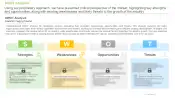
Medical imaging market has experienced a transformative shift driven by the rising prevalence of chronic conditions across global population. Notably, diseases such as cardiovascular diseases, cancer and neurological conditions require regular disease diagnosing and monitoring for providing optimal care. Additionally, the increasing geriatric population with chronic conditions and orthopedic conditions has further fueled the demand for advanced imaging technologies that helps to detect structural abnormalities, injuries and pathological changes in patients’ body accurately. Moreover, the rising preferences for personalized treatment approach has further necessitated the demand for advanced imaging technologies.
Despite growing demand, the market for diagnostic imaging is witnessing several challenges that need to be addressed to accelerate the adoption of imaging technologies. Some of the notable challenges in medical imaging market includes high cost of imaging equipment, such as MRI, PET-CT and advanced AI-based imaging technologies and limited accessibility. It is important to highlight here that advanced imaging machines are often bulkier and require specialized imaging centers which restrict their accessibility to certain geographical locations, leaving rural areas with limited access. In addition, imaging technologies generate massive amounts of data which can be difficult to manage manually.
Considering the ongoing limitations and demand for advanced imaging technologies, industrial players are focusing on artificial intelligence integration in medical imaging, 3D imaging and nuclear imaging. AI-powered imaging technologies helps to enhance precision in diagnosis and offer real-time imaging capabilities, which significantly enhance early detection and reduce the time for treatment. In addition to AI technology, industrial players are focusing on nuclear imaging in which a patient will ingest radioactive materials (radiopharmaceuticals) for achieving high resolution images with color contrast media.
Nuclear imaging serves as a beneficial tool in diagnosing internal conditions, such as cancer, thyroid and Alzheimer’s diseases. For instance, amyloid PET imaging technology helps to predict Alzheimer’s disease progression or excessive amyloid plaque building. Furthermore, wearable imaging technology and 3D imaging are likely to create enormous opportunities for industrial players to drive innovations in this field.
Currently, the global market for medical imaging is expected to be valued at USD 46.41 billion and is poised to reach USD 72.39 billion by 2035. Driven by the increasing demand for diagnostic imaging technologies for early disease detection and increasing innovations in the field, the market is expected to grow at a higher CAGR of 4.5% during the forecast period.
In order to leverage the competitive edge, several market players are focusing on collaboration and partnerships. For instance, in November 2024, Philips teamed up with icometrix to deploy AI-driven, end-to-end solutions for acquiring, analyzing and reporting the results of magnetic resonance imaging brain scan to optimize diagnosis and monitoring of neurological conditions such as Alzheimer’s and multiple sclerosis (MS). As more industrial players continue to increase their efforts for technological innovations, this market will remain competitive throughout the projected period.
Examples of key players engaged in this field of medical imaging (which have also been captured in this report) include Akumin, BD, CANON MEDICAL SYSTEMS, Carestream Health, FUJIFILM, GE HealthCare, Hologic, Hitachi, InHealth Group, Johnson & Johnson, ONRAD, Philips, RamSoft, Shimadzu, Shenzhen Mindray Bio-Medical Electronics, Siemens Healthcare, Sonic Healthcare, UNILABS and ZEISS. This market report includes an easily searchable excel database of all the companies focusing on medical imaging technologies.
The market report presents an in-depth analysis, highlighting the capabilities of various companies engaged in this domain across different segments. Amongst other elements, the market report includes:
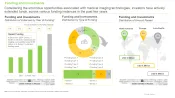
Several recent developments have taken place in the field of medical imaging. We have outlined some of these recent initiatives below.