
Lowest Price Guaranteed
Pages
116
Last Updated
July 2026
View Count
11394
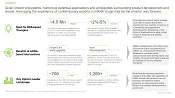
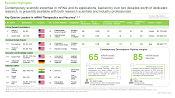
Over the last two decades, medical researchers have been able to achieve proof-of-concept and demonstrate the viability of benefits of mRNA-based interventions. In fact, currently, there are more than 65 mRNA-based therapeutics and over 85 mRNA vaccines under development. In vitro transcribed mRNA is now being evaluated as a treatment option for several oncological and genetic disorders.
Moreover, experts believe that the applications of this upcoming product class are potentially limitless. Synthetic mRNA can also be engineered to facilitate the in vitro development of several types of cell and gene therapies.
For instance, it can be used to activate key molecular pathways in somatic cells in order to induce pluripotency, an important prerequisite for stem cell therapy. There are studies that describe the use of in vitro transcribed mRNA encoding novel designer nucleases to manipulate genetic material, which is a common practice in the development of advanced therapy medicinal products. Further, the COVID-19 pandemic has enabled medical researchers to realize the vast potential of mRNA-based vaccines. Contrary to traditional vaccinology, the aforementioned type of preventive interventions do not require the use of live (attenuated) pathogens, hence, are significantly less risky. Moreover, mRNA is expressed in the cytoplasm and does not enter cellular nuclei, implying that it is incapable of adversely interacting with the genome of patients. In this context, it is worth mentioning that the mRNA vaccines developed by Pfizer / BioNtech (COMIRNATY® / BNT-162) and Moderna (SpikeVax / mRNA-1273) against the novel coronavirus strain, were, for the first time in the history of vaccine development, developed and approved for use, in under a year.
 |
 |
 |
Being a biomolecule, mRNA is well tolerated in vivo; however, despite its numerous benefits, there are several challenges that presently limit its use. Although recent advances in controlling translational efficacy and immunogenicity have led to the development of multiple viable pharmacological leads (a few of which are already approved for use), there are still several challenges that need to be addressed. One of the major concerns is related to the inherent instability, which significantly compromises in vivo persistence, of the molecule. In addition, the targeted in vivo delivery of this relatively fragile type of intervention is also complicated.
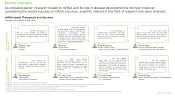
Over the years, attempts to manipulate the chemical structure of mRNA have enabled therapy developers to engineer relative more stable versions of the molecule. Similarly, lipoplexes and lipid-based nanoparticles have been successfully used to administer mRNA-based vaccines. Given that many companies (most of which have fairly limited expertise) are now in pursuit of further improving this technology, and the fact that standards related to the safety and regulation of such interventions are subject to increasing stringency, the need for expert guidance on new molecular entity design and product development is paramount. Contemporary scientific expertise in mRNA, and its numerous applications, is backed by more than 20 years of dedicated research in this field. This primary objective of this report is to identify leading scientists and industry leaders in this domain and assess the impact of their contributions to the field, till date.
 |
 |
 |
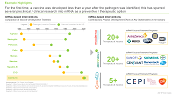
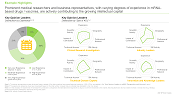
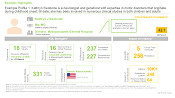
The “Key Opinion Leaders in mRNA Therapeutics and Vaccines” report features the identities of some of the key opinion leaders in this domain, offering a quantitative approach to assess the relative expertise of thought leaders in this subject, along with the means for aspiring therapy developers to contact such eminent personalities. The information in this report has been presented across two deliverables, namely an Excel sheet, featuring an interactive dashboard, and a PowerPoint deck, summarizing the ongoing activity in this domain, and key insights drawn from the available data.
 |
 |
 |
The report features the following details:
An in-depth analysis of leading technical experts in the field of mRNA therapeutics and vaccines, featuring a quantitative assessment of all the available details across 30+ parameters related to individual KOLs, including the contact information (email ID, and links to their respective LinkedIn and ResearchGate profile, as well as other details) of those individuals who have publicly disclosed such details
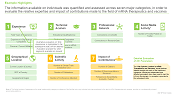
An analysis of 25+ different (quantifiable) parameters, indicative of the expertise and impact created by different types of KOLs in this domain. The parameters considered in this analysis include inputs from publicly available information that describe experience, technical acumen, scientific activity, impact of contributions, strength of professional network, social media activity, and geographical location of individual KOLs
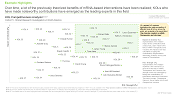
A competitive benchmarking and valuation analysis, taking into account all available data on 25+ parameters that highlight the relative strength (technical expertise) and impact created on the industry, by individual KOLs
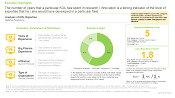
Detailed profiles of top-ranking KOLs (according to our proprietary competitiveness analysis), featuring all available details, including (but not limited to) years of experience (both general and specific to mRNA-based research), educational qualifications, previous / current affiliations, previous / current designations, strength of professional networks (LinkedIn and ResearchGate), scientific activity (such as number of publications, and trials conducted), and contact information (as disclosed by individual KOLs in the public domain). In addition, this section includes brief snapshots of some of the recent contributions (such as publications, clinical trials conducted, keynote speeches delivered and posts on social media) of the KOLs captured in the report database, who have been profiled