
Lowest Price Guaranteed
Slides
202
Last Updated
September 2026
View Count
14437
The NFT in Healthcare market, valued at USD 208 million in 2025, is projected to reach USD 240 million in 2026 and USD 1,117 million by 2035, with a 18.6% CAGR during the forecast period 2026 to 2035.

To learn more about this report, request a free sample copy
The new research study consists of market trends, porter’s five forces, detailed market analysis, and market sizing and opportunity analysis.
The non-fungible tokens / NFT market is a dynamic and rapidly evolving sector that is transforming various industries by incorporating decentralized blockchain technology. The integration of blockchain technology across various industries has prompted a shift from traditional centralized systems to decentralized networks, thereby improving transaction speed, reducing costs and enhancing data integrity.
 |
 |
 |
It is worth mentioning that NFTs are stored and tokenized on blockchain, therefore offering several advantages linked with blockchain technology. This has consequently led to the greater adoption of these NFTs in the past few years. In fact, in 2021, the non-fungible tokens market peaked at over $40 billion revenues, generated through trading NFTs. One of the breakthrough event in the history of NFTs was witnessed in 2021 in artwork industry when a digital artist named Beeple sold his art piece for whopping USD 69 million.
NFTs are unique blockchain representations of an asset, such as art, medical data and video clips that have been converted into tokens. Notably, NFTs are non-divisible and immutable, therefore cannot be broken down to smaller denominations in a similar manner as other digital entities (cryptocurrencies) and offer robust security and privacy features (since the information tokenized cannot be accessed by any third party) to users.
 |
 |
 |
Owing to the above highlighted unique characteristics of NFTs, their potential is being explored across multiple disciplines, including art, collectibles, gaming, fashion, supply chain, real estate and healthcare. This has further attracted attention from various stakeholders / investors engaged in the cryptocurrency and blockchain market, contributing towards greater adoption of NFTs.
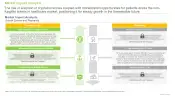
It is worth noting that NFT for healthcare is a promising development, being explored across different healthcare applications, including health records management, supply chain traceability, blood donation, clinical trial consent, genomics research and health and wellness regimens. However, NFT for medical records has emerged as the most common NFT use in healthcare, enabling patients to have access to their health information and trade medical data with pharmaceutical companies, research institutions and other end-users. Therefore, in order to harness the complete potential of NFT in healthcare industry and offer healthcare stakeholders a secure and transparent way to store and share healthcare data, several NFT solution providers are on a lookout to develop reliable and innovative NFT platforms (resulting in additional revenue streams for healthcare organizations).
 |
 |
 |
Given the growing adoption and awareness of blockchain and related advanced technologies, celebrity endorsements in regard to digital assets, and the pressing need to manage the increasing healthcare data, the global NFT in healthcare market is poised to witness steady growth, in the foreseen future.
The market report presents an in-depth analysis of various NFT solutions and companies engaged in the NFT in healthcare industry, across different segments, as defined in the below table:
| Key Report Attributes | Details | |
| Historical Trend | Since 2021 | |
| Forecast Period | Till 2035 | |
| Current Market Size | $240 Million | |
| Market Size 2035 | $1,117 Million | |
| CAGR (Till 2035) | 18.6% | |
| Blockchain Used |
|
|
| Application Area |
|
|
| End-user |
|
|
| Geographical Regions |
|
|
| Key Companies Profiled |
|
|
| PowerPoint Presentation (Complimentary) |
Available | |
| Customization Scope | 10% Free Customization | |
| Excel Data Packs (Complimentary) |
|
|
One of the key objectives of this market report was to estimate the current market size, opportunity and the future growth potential for the NFT in healthcare market, over the forecast period. Based on multiple relevant parameters, adoption trends and through primary validations, we have provided an informed estimate on the market evolution during the forecast period till 2035.
The market analysis also features the likely distribution of the current and forecasted opportunity within the market across various segments, such as blockchain used (Ethereum, HyperLedger, Polygon and other blockchains), application area (health records management, supply chain management, genomics research, health and wellness, clinical trial consent and other application areas), end-user (healthcare professionals, patients, pharmaceutical companies, academic institutions / government bodies, insurance companies and other end-users) and geographical regions ((North America (US and Canada), Europe (UK, Germany, Spain and Rest of the Europe), Asia-Pacific (China, South Korea, India and Rest of the Asia-Pacific), Middle East and North Africa (Saudi Arabia, UAE, and Rest of the Middle East and North Africa), and Latin America (Brazil, Argentina and Rest of the Latin America))
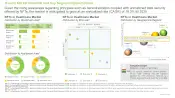
In order to account for future uncertainties and to add robustness to our model, we have provided three NFT in healthcare market forecast scenarios, namely conservative, base and optimistic scenarios, representing different tracks of the industry’s growth. Further, all actual figures have been sourced and analyzed from publicly available information forums and primary research discussions. Financial figures mentioned in this market report are in USD, unless otherwise specified.
The global NFT in healthcare industry is categorized based on the blockchain used into Ethereum, HyperLedger, Polygon and other blockchains. NFT solutions utilizing Ethereum blockchain network are anticipated to capture the majority (70%) of the current and future market share. This can be attributed to the fact that Ethereum blockchain was the first network to introduce smart contracts that do not require third-party verification, thereby offering more security and privacy. Further, NFT solutions utilizing other blockchains are expected to grow at a significant pace in the coming decade owing to the development and adoption of more private blockchains.
The global NFT in healthcare industry is segmented based on the application area into health records management, supply chain management, genomics research, health and wellness, clinical trial consent and other application areas. The health records management segment is likely to capture the highest (44%) NFT in healthcare market share in the current year, owing to the fact that NFTs can help in seamless tracking of patient electronic health records, facilitating accurate diagnosis and treatment.
In fact, more than USD 1.2 billion worth of data is produced every year in the US and close to 80% of this data remains unstructured, making it vulnerable to misuse and theft. Additionally, NFT health records provide complete ownership to the patients in exchange of financial incentives, contributing towards greater adoption of NFTs in health records.
It is worth mentioning that this trend is unlikely to change in the coming years as well. Further, healthcare applications, including supply chain traceability and genomics research are anticipated to grow at a relatively faster pace in the foreseen future.
Based on end-users, the global NFT in healthcare market is categorized into healthcare professionals, patients, pharmaceutical companies, academic institutions / government bodies, insurance companies and other end-users. It is worth noting that NFT solutions being leveraged by healthcare professionals are anticipated to capture the majority (33%) of the current and future market share. Further, NFT solutions catering to patient needs are also expected to grow at a significant pace in the coming decade.
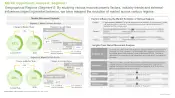
This segment highlights the distribution of NFT in healthcare market across geographical regions, including North America, Europe, Asia-Pacific, Middle East and North Africa, and Latin America. According to our projections, currently, North America captures close to 42% of the overall market. However, the market in Asia-Pacific is expected to grow at a relatively faster pace (CAGR of ~20%), till 2035. This can be attributed to the rising awareness and adoption of NFTs in this region, increasing research and development activity, and the upcoming product launches.
The “Non-fungible Tokens (NFT) in Healthcare Market: Industry Trends and Global Forecasts, till 2035” market report features an extensive study of the current market landscape, market size, market forecast and future opportunities for the NFT solution providers. The market report highlights the efforts of several companies engaged in this rapidly emerging market segment of the healthcare IT industry. Key takeaways of the market research report are briefly discussed below.
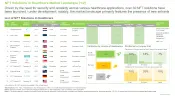
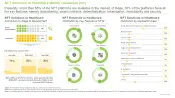
Currently, close to 35 NFT solutions are launched or are under development. It is worth mentioning that majority of these platforms possess key features such as tokenization, decentralization, data sharing, smart contracts, immutability, and security and privacy. Additionally, 45% of the NFT solutions have been launched / being developed for effective management of health records in order to improve overall patient health outcomes. Notably, 42% of the NFT solutions have been developed / being developed to serve both healthcare professionals and patients, offering them opportunities for monetizing health data.
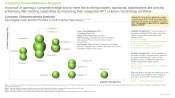
The NFT in healthcare market features the presence of over 30 NFT solution providers. Further, the market landscape is currently dominated by the small players, constituting over 75% of the overall market, reflective of high start-up activity, innovation and market expansion in this industry. It is worth mentioning that 44% of the players are headquartered in North America, followed by 34% of the firms located in European countries.
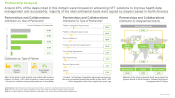
In recent years, several deals have been forged by the stakeholders in order to consolidate their presence in this field. In fact, the partnership activity witnessed a CAGR of 36% during the last three years. Further, close to 25% of deals were forged in the last 12 months. Interestingly, platform utilization agreements emerged as the most common type of partnership model adopted by the stakeholders in this domain.
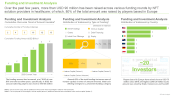
Several stakeholders in this domain have raised funds in order to fuel their growth operations. It is noteworthy that companies in this domain have raised a cumulative sum of close to USD 95 million, since 2018. Additionally, majority of the funding instances were venture capital investments (40%), followed by seed funding (27%). Further, in terms of geographical activity, firms headquartered in Europe have raised the majority (79%) of the amount in the NFT in healthcare industry. Notably, Genomes.io emerged as the most active player (in terms of amount raised), having raised a total capital of USD 21 million till date across three rounds of funding.
Presently, North America captures more than 40% of the NFT in healthcare market share. Driven by the rising interest of stakeholders in managing increasing healthcare data, the market in North America is anticipated to grow at a CAGR of 17.5% during the forecast period, till 2035. Notable factors that contribute to the region’s dominance in this industry include the presence of several well-established blockchain and IT companies and advanced healthcare infrastructure of the region. However, in terms of market growth, the healthcare NFT market in Asia-Pacific is likely to grow at a relatively faster pace (~20%) in the long term, primarily due to affordable operational costs and cheap labor in this region.
Examples of key players engaged in offering NFT solutions in healthcare (which have also been profiled in this market report; the complete list of companies is available in the full report) include (in alphabetical order) Aimedis, BurstIQ, ChainCode Consulting, DeHealth, Epillo Health, GenoBank.io, Genomes.io, IVIRSE, Molecule, Rejuve.AI, TuumIO and Universal Health Token. This global market research report includes an easily searchable excel database of all the companies that are offering NFT solutions in healthcare.
The market report presents an in-depth analysis, highlighting the capabilities of various stakeholders engaged in this industry, across different geographies. Amongst other elements, the market report includes:
Several recent developments have taken place in the field of NFT in Healthcare. We have outlined some of these initiatives below. These developments, even if they took place post the release of our market report, substantiate the overall trends that have been outlined in our NFT in Healthcare market analysis.