Surgical Robots Market by Offering (Instruments / Accessories, Surgical Robotic Systems and Services), Deployment Model (On-premises and Cloud / Remote), Type of Surgical Procedure Supported (General Surgery, Orthopedic Surgery, Abdominal and Pelvic Surgery, Urologic Surgery and Other Surgeries), Control Mechanism (Remote Controlled, Robotic Arm Controlled and Computer Assisted), Application Area, End Users and Geographical Regions - Trends and Forecast 2026-2035
Surgical Robots Market Size and Overview
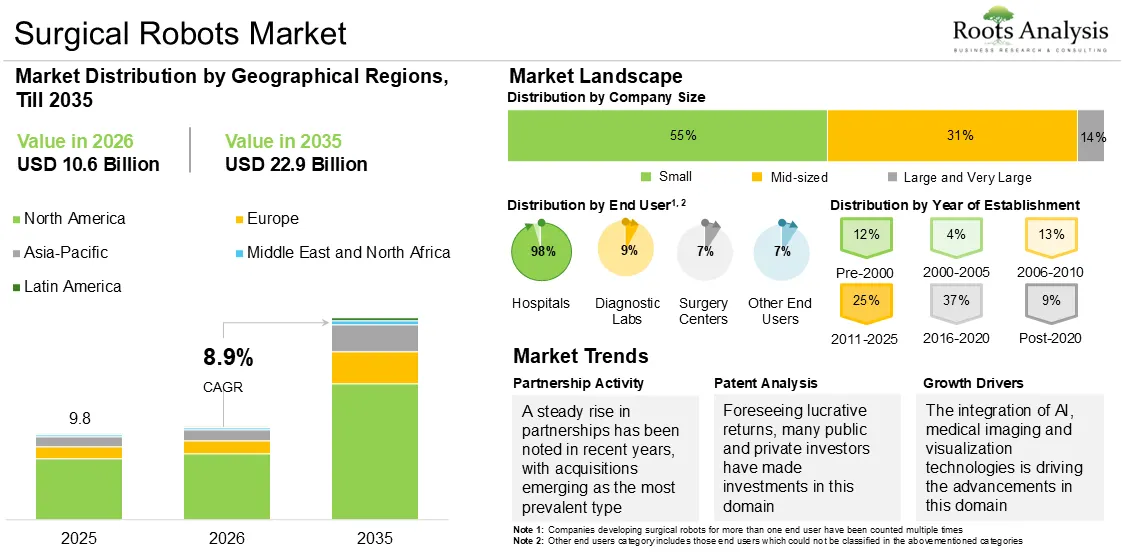
The global surgical robots market, valued at USD 9.8 billion in 2025, is projected to reach USD 10.6 billion in 2026 and USD 22.9 billion by 2035, with a 8.9% CAGR during the forecast period 2026 to 2035.
See What’s in the Full Report–Request Your Complimentary Insights!
Surgical Robots Market Report: Key Takeaways
Market Size & Trends
In terms of offering, instruments / accessories (close to 55%) account for the largest market.
On the basis of deployment model, on-premises dominates the global market.
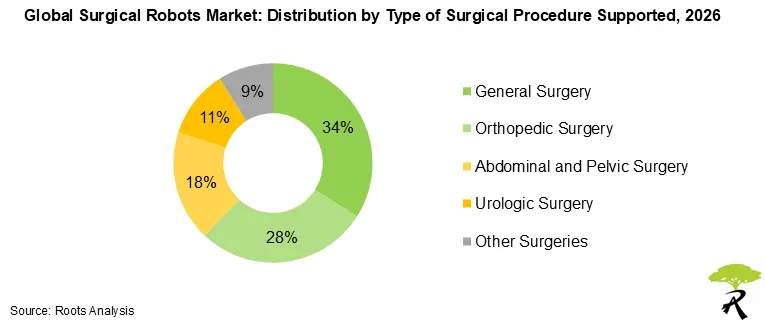
Based on the type of surgical procedure supported, general surgery currently holds the largest market share (close to 35%).
Based on the control mechanism, currently, the remote controlled segment holds the largest market share, accounting for close to 60%.
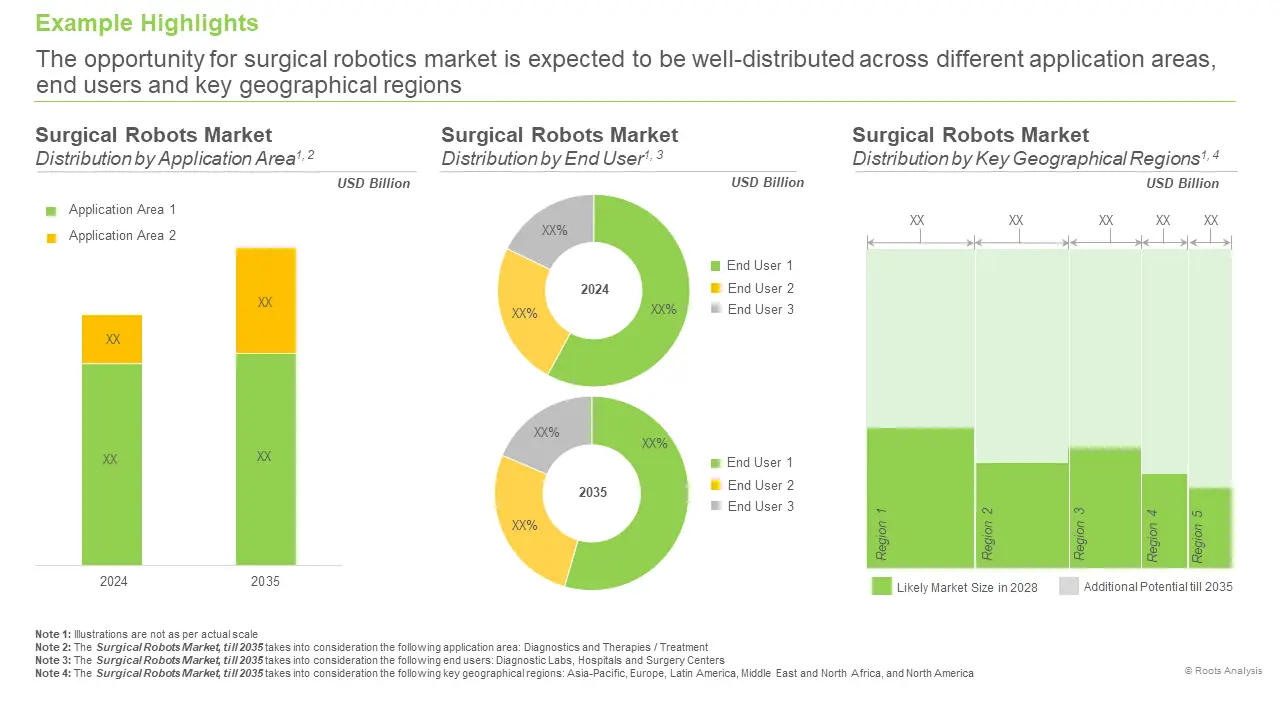
With respect to application area, therapies / treatment applications are anticipated to capture the higher current market share, and this trend is unlikely to change during the forecast period.
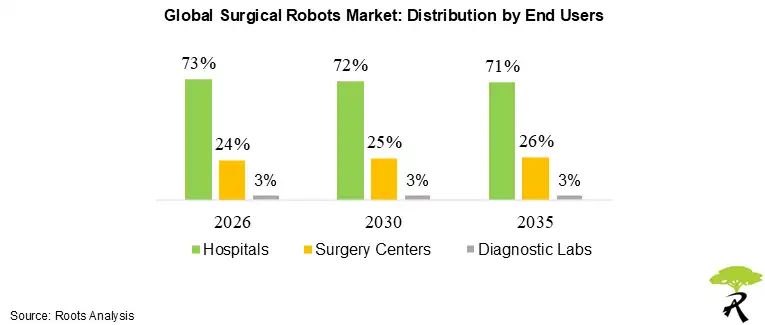
In terms of end users, hospitals are anticipated to remain the dominant segment, capturing the highest market share.
In terms of geographical regions, North America accounts for the majority share of the global surgical robots market.
Key Market Statistics
Market Size in 2026: $10.6 Billion
Estimated Market Size in 2035: $ 22.9 Billion
CAGR (2026-2035): 8.9%
North America: Largest market in 2026
Asia Pacific: Fastest growing region
Surgical Robots Market Overview
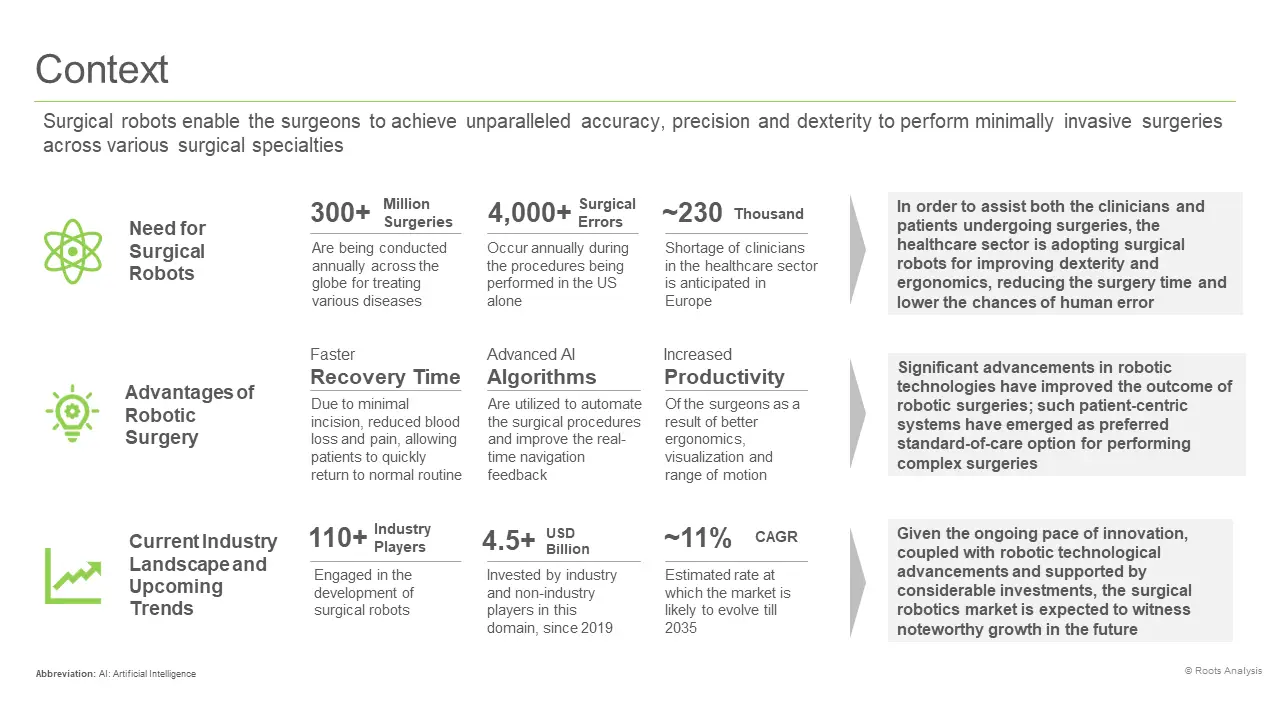
Surgical robots are medical devices employed in the healthcare sector to assist the surgeons or independently perform complex surgical procedures on the patients. Owing to the several advantages conferred by robotic surgeries, such as high precision, minimally invasive cuts, reduced scars, enhanced vision and better post-surgical recovery, the surgeons prefer to use surgical robots as a standard-of-care systems. Moreover, the adoption of surgical robots has resulted in the improvement of ergonomics for the surgeons, through reduced physical strain, better degrees of freedom, improved visualization system and flexibility in the surgeon console.
Considering the multitude of benefits offered by surgical robots, a significant paradigm shift has been observed from conducting open surgeries to minimally invasive surgeries. In addition, the maneuverability witnessed during the robotic surgeries has accentuated the possibility of easy access to the anatomically restrained or confined body organs of the patients.
Have Questions? Let’s Get Them Answered.
The evolution in the concept of remote surgery has also resulted in the development of cost-effective, network-meditated robotic systems that can be operated by surgeons located at a distant location. With growing use and continuous advancements in surgical robotics, the adoption of surgical robots in the healthcare domain is poised to transform the way minimally invasive surgeries are performed, bringing significant benefits to patients and surgeons. As these revolutionary trends continue to evolve, the surgical robots industry is likely to witness significant market growth during the forecast period.
The growth in this market is also creating opportunities for medical device contract manufacturing, with a few companies specializing in the robotics field.
Recent Developments in the Surgical Robots Market
In March 2026, Apollo Hospitals Chennai (India) launched the Apollo Institute of Robotics & Telesurgery (ART), a new initiative aimed at advancing robotic surgery, digital surgery and remote surgical collaboration.
In February 2026, Medtronic announced that the its recently FDA-cleared Hugo™ robotic-assisted surgery (RAS) system has been used to performed surgery successfully by Jihad Kaouk, MD, professor and chair of the Glickman Urologic Institute and the Zegarac-Pollock Endowed Chair in Robotic Surgery at Cleveland Clinic.
In December 2025, CMR Surgical received FDA clearance for its second-generation Versius Plus robotic surgical system for cholecystectomy procedures.
In December 2025, SS Innovations International filed a premarket notification with the FDA for its SSi Mantra Surgical Robotic System. The submission seeks clearance for use in general, urological, colorectal, gynecological, and cardiac procedures.
In October 2025, Panda Surgical raised USD 1.34 million for its handheld neurosurgical robot.
In the same month, EndoQuest Robotics announced the completion of endoscopic submucosal dissection in Mayo Clinic using its endoluminal surgical system.
In September 2025, Ronovo Surgical announced a strategic partnership with Johnson & Johnson Medical Shanghai for the expansion of surgical technology offerings to the hospitals situated in China.
Industry Experts on the Surgical Robots Market
The surgical robots market is expected to expand significantly, supported by rising demand for minimally invasive procedures and continued advances in robotic actuation, imaging, navigation, and haptic feedback technologies.
Emphasizing this, Benjamin Sexson (Chief Executive Officer and Co-founder, Monogram Orthopedics) stated that, “While currently 88% of surgeries are manual, 50% of surgeries are expected to be completed using robotics by 2027.”
The market report includes transcripts of interviews with the following third-party discussions:
Co-founder and Chief Medical Officer, Mid-sized Company, UK
Senior Director, Very Large Company, US
Chief Executive Officer, Mid-sized Company, UK
Chief Executive Officer, Mid-sized Company, US
Chief Executive Officer, Small Company, US
Chief Executive Officer, Mid-sized Company, US
Chief Executive Officer, Small Company, US
Chief Executive Officer, Small Company, US
Executive Officer and Head of GS Division, Very Large Company, Japan
National Medical Director of Robotics, Very Large Company, US
Surgical Robots Market Trends
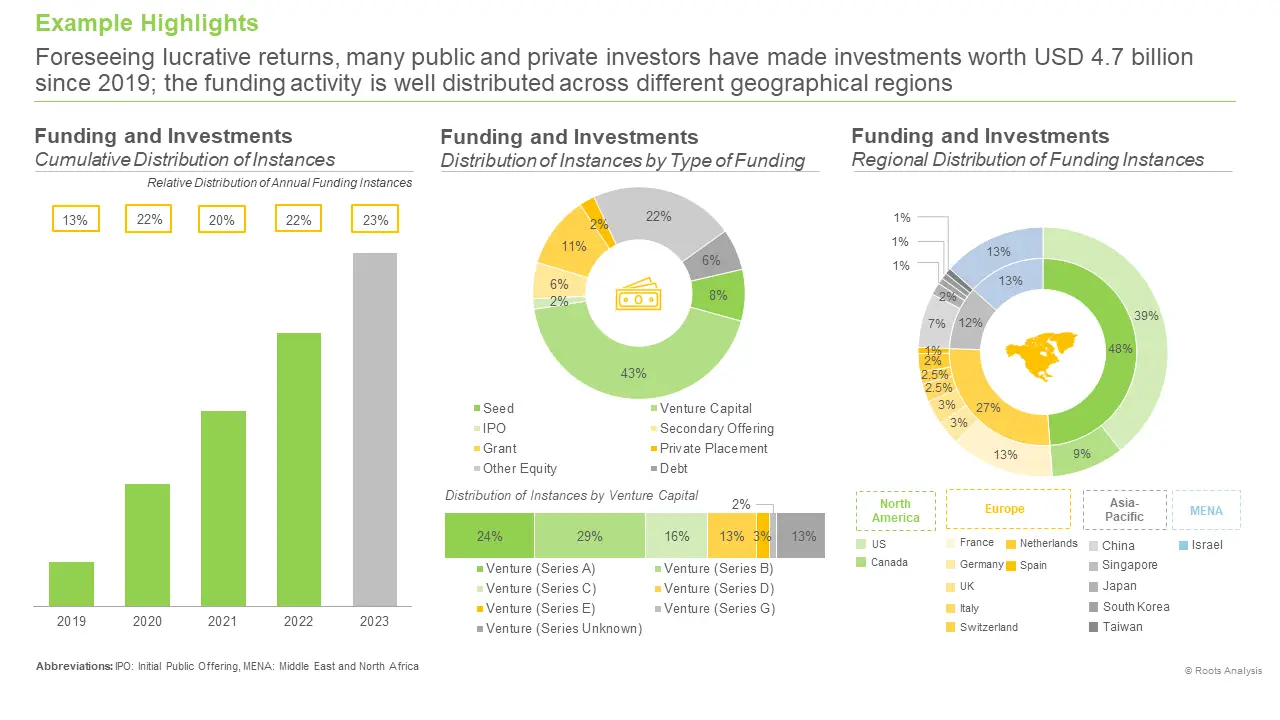
Increase in Partnerships: In recent years, industry stakeholders have established several collaborations with other industry players in order to consolidate their presence in the surgical robotics market. It is worth mentioning that, majority of the deals (14%) signed in the industry (since 2019) were acquisitions, indicating that the industry stakeholders are actively engaged in expanding their technological portfolio and geographical footprint by acquiring other players in the industry.
Technological Advancements Including Miniaturization: Companies developing surgical robots are focused on making these devices smaller and more portable, occupying less space in the operating room. In 2024, Virtual Incision gained FDA approval for its miniature Mira system in the US.
Integration of AI: In a latest application of artificial intelligence, the AI platforms assist surgical robots. Within the field of robotic surgery, AI has been involved in image processing, pre-surgery planning, surgical robot motion control and positioning to support autonomous surgery. Some companies working on the last application include Auris Health, IX Innovations, Metamorphosis, and Levita Magnetics. Although, there is no fully autonomous surgical robot approved by the FDA.
Surgical Robots Market Share Insights
Which Offering Accounts for the Largest Share of the Surgical Robots Market?
This segment highlights the distribution by value for the surgical robots market across various types of offerings, such as instruments / accessories, surgical robotic systems, and services.
The instruments and accessories segment currently accounts for the largest share of the surgical robots market. This is primarily due to the recurring use of consumables, which require replacement or reprocessing after a limited number of procedures and generate revenue beyond the initial sale of robotic system. Unlike surgical robots, which represent a one-time capital investment, instruments such as robotic forceps, scissors, needle drivers, staplers, energy devices, and endoscopes are required for every procedure and have limited usage cycles before replacement. Moreover, the increasing volume of robot-assisted surgeries across specialties such as urology, gynecology, general surgery, thoracic surgery, and orthopedics has further driven the demand for these accessories.
The services segment is projected to grow at a significant pace during the forecast period owing to the increasing global installation of surgical robotic systems and the corresponding need for maintenance, software upgrades, technical support, and surgeon training. As healthcare providers continue to invest in advanced robotic platforms, demand for comprehensive service contracts is increasing to ensure optimal system performance, minimize downtime, and comply with regulatory and quality standards. Furthermore, the integration of artificial intelligence, advanced imaging, and digital connectivity into next-generation surgical robots has increased the complexity of these systems. This necessitates regular software updates, predictive maintenance, and remote diagnostics.
Your Business is Unique–Why Shouldn’t Your Report Be?
Which Deployment Model Accounts for the Largest Share of the Surgical Robots Market?
This segment highlights the distribution by value for the surgical robots market across various types of deployment models, such as on-premises and cloud / remote.
Currently, on-premises deployment holds the largest share of the surgical robots market owing to its ability to provide hospitals with greater control over critical surgical data, system performance, and cybersecurity. Surgical robotic platforms generate large volumes of patient, imaging, and procedural data that must be managed in compliance with stringent healthcare data privacy regulations. Moreover, on-premises infrastructure enables healthcare institutions to maintain direct control over data storage, software integration, and network security while ensuring low-latency communication between robotic systems and hospital information systems.
Further, the cloud / remote segment is expected to grow at a significant pace during the forecast period due to increasing digitalization of healthcare and the integration of cloud-enabled technologies into robotic surgery ecosystems. Cloud-based platforms facilitate remote system monitoring, predictive maintenance, software updates, data analytics, and secure storage of surgical data, enabling healthcare providers to improve operational efficiency and reduce system downtime. In addition, advances in artificial intelligence, machine learning, and high-speed connectivity are supporting cloud-enabled surgical planning, performance analytics, and remote collaboration between surgeons and clinical teams.
Which Type of Surgical Procedure Accounts for the Largest Share of the Surgical Robots Market?
This segment highlights the distribution by value for the surgical robots market across various types of surgical procedures supported, such as general surgeries, orthopedic surgeries, abdominal and pelvic surgeries, urologic surgeries, and other surgeries.
Currently, general surgery procedures hold the largest share of the surgical robots market owing to the high procedural volume and the expanding adoption of robotic-assisted techniques across a broad range of abdominal and gastrointestinal procedures. Robotic systems offer surgeons enhanced dexterity, three-dimensional visualization, improved precision, and better ergonomics, enabling minimally invasive approaches for complex procedures. The increasing preference for minimally invasive surgery, driven by reduced blood loss, lower complication rates, shorter hospital stays, and faster patient recovery, has further accelerated the use of surgical robots in general surgery.
Further, the orthopedic surgery procedure segment is expected to grow at a significant pace during the forecast period due to the increasing prevalence of osteoarthritis, osteoporosis, sports injuries, and other musculoskeletal disorders, coupled with the rising demand for joint replacement procedures. For instance, Mako SmartRobotics is widely adopted for robotic-assisted knee and hip arthroplasty, while VELYS Robotic-Assisted Solution supports precise knee replacement procedures. Additionally, the aging global population, increasing healthcare expenditure, technological advancements in image-guided robotic systems, and growing surgeon acceptance of robotic-assisted orthopedic procedures are expected to drive significant growth in this segment during the forecast period.
Which Control Mechanism Accounts for the Largest Share of the Surgical Robots Market?
This segment highlights the distribution by value for the surgical robots market across various control mechanisms, such as remote controlled, robotic arm controlled, and computer assisted.
Currently, remote controlled surgical robots hold the largest share of the surgical robots market because they represent the most widely adopted and clinically validated robotic architecture currently used in operating rooms. These systems allow surgeons to control robotic instruments in real time from a dedicated console, combining human decision-making with robotic precision, tremor filtration, and enhanced dexterity. Further, their extensive use across specialties such as general surgery, urology, gynecology, thoracic surgery, and colorectal surgery has driven widespread market adoption.
Further, the computer assisted surgical robots sub-segment is expected to grow at a significant pace during the forecast period owing to rapid advancements in artificial intelligence (AI), computer vision, image-guided navigation, and data-driven surgical planning. These technologies enable robotic systems to assist surgeons with preoperative planning, intraoperative guidance, anatomical visualization, instrument tracking, and real-time decision support. This can improve surgical accuracy and overall workflow efficiency. Increasing adoption of digital operating rooms, integration of advanced imaging modalities, and the development of AI-enabled robotic platforms are further accelerating demand for computer-assisted surgical technologies.
Which Application Area Accounts for the Largest Share of the Surgical Robots Market?
This segment highlights the distribution by value for the surgical robots market across various application areas, such as therapies / treatment and diagnostics.
Currently, the therapies / treatment sub-segment holds the largest share of the surgical robots market. This is due to the fact that surgical robotic systems are primarily designed and utilized to perform therapeutic interventions rather than diagnostic procedures. The widespread adoption of robotic-assisted surgery across specialties such as general surgery, urology, gynecology, orthopedics, and thoracic surgery has significantly increased demand for robotic platforms that enable precise, minimally invasive treatment. These systems can improve surgical precision and dexterity and have been associated, in selected procedures, with reduced blood loss, shorter hospital stays, and faster recovery compared with open surgery.
Further, the diagnostics segment is expected to grow at a significant pace during the forecast period owing to the increasing integration of robotics with advanced imaging, artificial intelligence (AI), and image-guided diagnostic technologies. Robotic systems are increasingly being used to improve the precision and reproducibility of minimally invasive diagnostic procedures, including biopsies, endoscopic interventions, and image-guided needle placement. Moreover, continued advancements in AI-enabled navigation, real-time imaging, and robotic-assisted biopsy technologies are expected to drive significant growth in the diagnostics segment during the forecast period.
Which End User Accounts for the Largest Share of the Surgical Robots Market?
This segment highlights the distribution by value for the surgical robots market across various end users, such as hospitals, ambulatory surgery centers, and diagnostic labs.
Currently, hospitals hold the largest share of the surgical robots market owing to their ability to support complex robotic-assisted procedures through advanced infrastructure, specialized surgical teams, and comprehensive perioperative care. Robotic surgery systems require substantial capital investment, dedicated operating rooms, trained personnel, and multidisciplinary support, making large hospitals the primary adopters of these technologies. In addition, hospitals perform a high volume of complex procedures across specialties such as general surgery, urology, gynecology, cardiothoracic surgery, and orthopedics, where robotic assistance can improve surgical precision, reduce complications, and shorten patient recovery times.
Further, the surgery centers segment is expected to grow at a significant pace during the forecast period due to the increasing shift toward outpatient and same-day surgical procedures. Manufacturers are developing compact and cost-effective robotic platforms specifically designed for outpatient environments, facilitating broader adoption by surgery centers. For example, Intuitive Surgical and Zimmer Biomet are expanding robotic solutions that support high-volume minimally invasive and orthopedic procedures in outpatient settings. Additionally, increasing patient preference for convenient, lower-cost care, favorable reimbursement for selected outpatient procedures, and the growing number of ambulatory surgery centers worldwide are expected to drive significant growth in this segment during the forecast period.
Regional Analysis: Which Regions are Growing Fastest in the Surgical Robots Industry?
North America: Dominating the Market by Securing the Highest Share
According to our projections, North America is expected to account for the largest share of the surgical robots market in the current year. This is due to its advanced healthcare infrastructure, early adoption of robotic-assisted surgery, and strong presence of leading medical device manufacturers. The region benefits from high healthcare expenditure, favorable reimbursement for robotic procedures, and a large network of hospitals and academic medical centers equipped with robotic surgery platforms. In addition, the presence of major industry players such as Intuitive Surgical, Medtronic, Johnson & Johnson MedTech, and Stryker has accelerated technological innovation and commercialization of next-generation robotic systems.
For example, the widespread adoption of the da Vinci Surgical System across hospitals in the United States has significantly increased the volume of robotic-assisted procedures in specialties such as urology, general surgery, gynecology, and thoracic surgery. Furthermore, robust clinical research activity, rapid regulatory approvals, and increasing investments in AI-enabled robotic surgery platforms continue to reinforce North America's dominant position in the surgical robots market.
Asia-Pacific: An Emerging Growth Hotspot
The market in Asia-Pacific is likely to grow at the highest CAGR during the forecast period. This is due to increasing healthcare expenditure, expanding hospital infrastructure, and growing adoption of minimally invasive surgical procedures. Countries such as China, Japan, South Korea, and India are investing heavily in advanced surgical technologies while strengthening domestic medical device manufacturing capabilities.
For example, China has witnessed rapid commercialization of locally developed surgical robotic systems from companies such as Shanghai MicroPort MedBot, whose robotic platforms are gaining adoption across Chinese hospitals. Similarly, India is experiencing increased installation of robotic surgery systems driven by expanding multispecialty hospital networks and growing demand for minimally invasive procedures.
Surgical Robots Market Insights
Market Drivers: Advantages Offered by Surgical Robots Developers to Drive the Adoption of their Robots
Surgical robots have emerged as a transformative solution within the medical sector that enable surgeons to carry out robot-assisted minimal invasive surgeries, which offers various advantages, including unparallel precision, enhanced dexterity, reduced patient trauma and lower risk of post-operative infection. The integration of artificial intelligence, medical imaging and visualization technologies is driving the advancements in this domain, by offering real-time data analysis and improvement in decision-making ability for the surgeons.
It is worth highlighting that, apart from surgical robot systems, robotic surgical robot developers offer extensive set of instruments / accessories for conducting the robotic surgeries and conduct training programs / workshops for the surgeons to make them better equip with the surgical robots.
Unlock Deeper Insights–Schedule Your Personalized Workshop Today!
Market Opportunities: Technological Advancements Offer Several Opportunities for Surgical Robotics Companies
In order to develop autonomous surgical robots conferring better accuracy and efficiency, the robotics companies are extensively working towards advancements in robotic technologies, artificial intelligence, machine learning, data analytics and medical imaging software.
Moreover, the surgical robots are increasingly integrating with artificial intelligence, which allows to streamline the surgical procedures wherein AI-assisted robots aid in enhancement of decision-making capabilities of surgeons, identification of anomalies in medical imaging, reduction of scars / incisions and likelihood of human errors. Lately, the integration of wireless networking system with robotic technology has led to the emergence of telesurgery (remote surgery) wherein the surgeons assist in the robotic surgery remotely (through tele-operated surgical robotic systems). As such, growth of telemedicine and technological developments within the AI based surgical robots market will continue to offer growth opportunities for surgical robotics companies.
Surgical Robots Market Outlook: Rising Demand for Conducting Minimally Invasive Surgeries Has Led to Broader Applicability of Surgical Robots
The potential of surgical robots to perform seamless surgeries has facilitated their adoption by various surgeons across the globe. Robotic surgeries have been beneficial for the surgeons and patients in achieving desirable outcomes, such as better dexterity, decreased blood loss, reduced discomfort and shorter hospital stays.
Surgical Robots Market Size Analysis
Surgical robots, which are the largest segment of the overall medical robots market, generate majority of the revenues through the sales of instruments / accessories which are being used by the surgeons in each robotic surgery and are compatible with the surgical robot systems. Apart from the sales of the robot systems itself, the surgical robot companies generate recurring revenues through these accessories, services pertaining to the robots and training programs conducted for the surgeons who have to perform robotic-assisted surgeries.
See What’s in the Full Report–Request Your Complimentary Insights!
Surgical Robots Market Forecast and Opportunity Analysis
Methodology
Research Methodology
Overview
Our market forecasting methodology follows a holistic approach (for both top-down and bottom-up techniques), combining statistical models, in-depth market research, demand analysis, and expert insights to deliver accurate predictions of future trends and outcomes. Market size estimation is derived through a mix of secondary and primary research. To ensure accuracy and reliability, all findings are rigorously validated through data triangulation, aligning insights from multiple sources to strengthen the credibility and precision of the overall market and segment-level forecasts.
Conduct comprehensive industry analysis to assess TAM using validated secondary sources
Segment market by region or application to determine relevant sub-industry scope / in order to calculate the serviceable addressable market
Calculate serviceable obtainable market by applying penetration rates or adoption assumptions
Assess the historical information on growth patterns / CAGR for realistic market opportunity sizing
Calculate actual market using segmentation and penetration data, and projected its growth during the forecast period
Validate final estimates via scenario-based analysis and expert opinions gathered through extensive primary and secondary research
Identify the key component, such as products / drugs / technologies across the sector that are to be forecasted, using market databases
Estimate the average units / volumes per component by collecting primary and secondary data by leveraging information on historical industry activity
Assess the historical information on prices, adoption and penetration data, and growth patterns / CAGR for realistic market opportunity sizing
Calculate total market size by multiplying volumetric estimates with average costs / prices per component, and projected its growth during the forecast period
Validate final estimates via scenario-based analysis and expert opinions gathered through extensive primary and secondary research
Data Collection: Source and Methods
Secondary Research
In this research process, various secondary sources are referred to identify and collect information regarding the study. The secondary sources include annual reports, press releases, investor presentations, forums, certified publications, whitepapers, government, and regulatory bodies (like FDA, WHO, WTO, EPA). The secondary research is mainly used to identify reliable publicly available information sources, studying various market trends, key drivers / restraints to generate insightful conclusions, and robust data validation.
Primary Research
In the primary research process, we follow a structured approach to ensure comprehensive stakeholder engagement and actionable insights. We conduct detailed research to identify relevant stakeholders (both demand and supply side) and setup multi-channel interviews, utilizing emails, LinkedIn, direct calls, and other channels to schedule the interviews. We then conduct in-depth interviews, preparing detailed transcripts, and tabulate responses for further analysis. The primary sources included various industry experts, including Chief Executive Officers (CEOs), Vice Presidents (VPs), marketing directors, technology and innovation directors, and related key executives from various key companies and organizations operating in the respective market.
Market Sizing and Analysis
Our market reports provide comprehensive market sizing and analysis, methodologically advancing from Total Addressable Market (TAM) to Serviceable Addressable Market (SAM) and Capturable Addressable Market (CAM). We integrate key growth drivers, including supply-demand dynamics, new market entrants, economic conditions, technological advancements, and capital requirements for deep insights into expansion factors. Our structured TAM, SAM, and CAM framework delivers thorough, actionable market reports to empower strategic decision-making and market potential growth.
Market Assessment Framework: From Total Potential to Achievable Share
Total Addressable Market (TAM)
Represents the total potential revenue opportunity if a company captures 100% market share for its product or service.
Serviceable Addressable Market (SAM)
The portion of TAM that a company can reach, considering its geographic limits, products, regulations, and market constraints.
Serviceable Obtainable Market (SOM)
The realistic segment of SAM that a company can capture based on its market presence, competitive position, and capabilities.
Currently Acquired Market (CAM)
The current market share held by a company, used to benchmark performance and guide strategies for growth & expansion.
Example Factors Influencing Market Growth Potential
Competitive Landscape
Assessing key market players, competitor strategies and market positioning.
Technological Advancements
Evaluating impact of new technologies on market evolution and disruption.
Economic Indicators
Assessing influence of metrics, such as GDP, trade dynamics, inflation, and consumer spending.
Market Demand & Supply
Analyzing forces and external factors driving customer needs and product supply.
Market Entry Barriers
Understanding obstacles for new entrants, such as regulations and capital and technical requirements.
Historical Trends & Growth Rates
Considering historical growth rate patterns, product sale revenues and adoption trends.
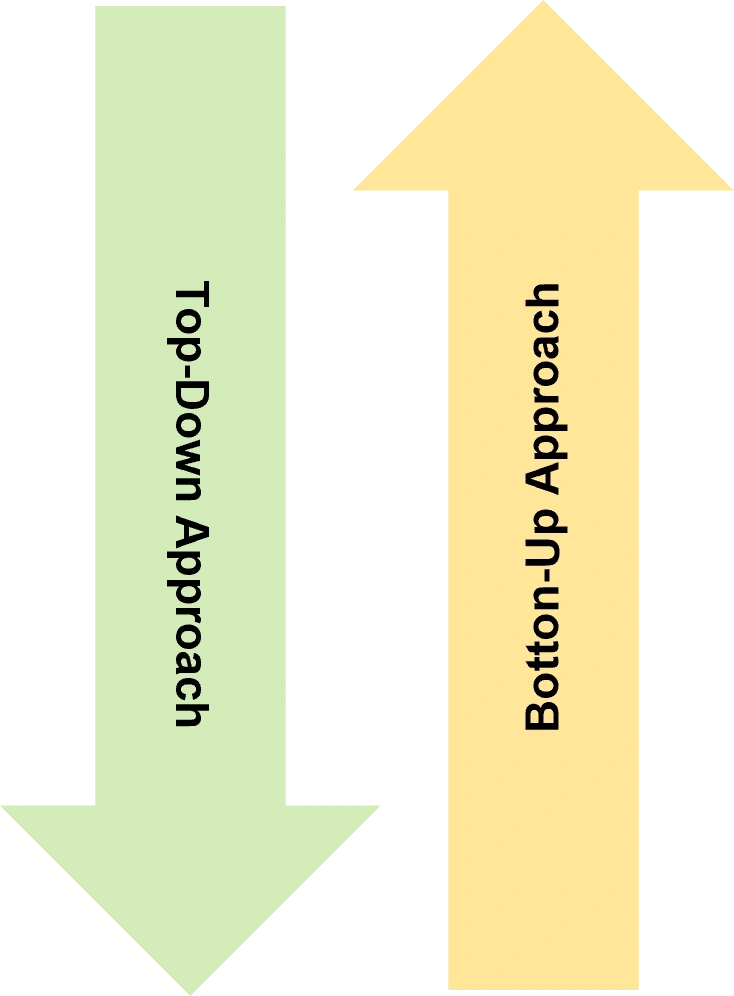
Our forecast methodology integrates a rigorous hybrid approach combining top-down market sizing with detailed bottom-up validation. This proven method delivers precise market size estimates, reliable growth rates, and credible CAGR projections that stakeholders can trust for strategic decision-making in pharma and biotech outsourcing. The methodology features extensive primary research through in-depth stakeholder interviews with executives from contract service organizations (CMO/CDMO/CRO), biopharma sponsors, biotechnology firms, and key opinion leaders. These insights are complemented by comprehensive secondary analysis of FDA and EMA regulatory filings, clinical trial pipeline data, historical revenue trends, annual reports, competitive intelligence, and industry benchmarks. Moreover, advanced data triangulation across clinical adoption metrics, procedure volumes, device sales and reimbursement trends validates key signals such as surgical specialty demand drivers, growing incidence of surgical indications, adoption rates of robotic platforms and adjunct technologies, regulatory and technical pathway probabilities, and shifts in care delivery and treatment algorithms. Sensitivity analysis and scenario modeling further enhance forecast robustness against regulatory changes, technological breakthroughs, and market disruptions. This industry-validated approach ensures high-confidence, actionable insights. It positions expert service partners at the forefront of biopharmaceutical market intelligence, empowering informed investment, capacity planning, and competitive strategies in the rapidly evolving pharma and biotech outsourcing landscape.
Data Validation and Quality Assurance
We deliver verified industry forecasts with 100% accuracy in all market size, CAGR, and growth projections through rigorous market forecast validation processes. We cross-verify data from 100+ trusted sources for precise market size accuracy in our fact-checked market research reports, provide exclusive inputs from 500+ industry experts, ensuring CAGR validation and reliable projections which are backed by 200+ years of sector expertise for benchmarked, future-proof verified industry forecasts.
Market Mapping
via
Secondary Research
Covers credible, high-quality data sources:
Paid Databases: Bloomberg, Factiva, Dun&Bradstreet (D&B) Hoovers, Thomson Reuters Eikon and Other Prominent Databases
Literature Search: Annual Reports, Company Websites, Financial Filings, Investor Presentations, White Papers etc
Primary Research
through
Stakeholder Interviews
Includes extensive primary research via:
KOL Interviews: In-depth conversations with CXOs, Founders, Director, VPs and other Senior Management stakeholders
Surveys / Polls: Widens reach and reveals insights into unmet needs, customer preferences and emerging market opportunities
Strategic Interpretation
with
Rootsight
Generates a holistic ecosystem view:
Influencing Factors Analysis
Competitive Landscape & Key Players
Drivers and Restraints Mapping
Opportunities and Challenges Assessment
Regional & Segment Level Insights
Historical Market Benchmarking
Analyst Interpretation & Forecast Refinement
Data Triangulation
and
Validation
Sense-checks and finalization of output / recommendations:
Multi-angle Forecast
Scenario Planning / Testing
Segment-specific Models
Econometric Models
Extensive validation via multiple approaches (listed below)
Insight Delivery
& Strategic
Recommendations
Comprehensive set of deliverables:
Market Size Estimates
Informed Future Growth Projections
Actionable Insights Tailored by Region, Segment, and Timeline
Model Walkthrough via Workshops
Audio podcasts
12-month unrestricted support
Complimentary upgrade to the next edition
Customization Options
At Roots Analysis, we pride ourselves on offering tailored market research solutions that adapt to your unique business needs. Our extensive customization options ensure that you receive insights that are not only relevant but also actionable. Upon purchase, clients can ask for 10% customization on a variety of modules.
01
Competitive
Intelligence
Landscape Analysis
Product / Portfolio Evaluation
Relative Competitive Assessment
Company Profiles
02
Strategy and Growth
Assessment
Value Creation Framework
Business Model Assessment
Blue Ocean Strategy
Go-no-go Framework
03
Market Potential
Assessment
Opportunity Analysis
Multivariate Sensitivity Analysis
Time Series Analysis
Region / Country wise Analysis
04
Product
Intelligence
Brand Positioning Analysis
Product Launch Strategy
Lifecycle Management
Success Protocol Analysis
05
Supplier Identification /
Assessment
Supplier Landscape Analysis
Peer Benchmarking
Vendor Selection Framework
Risk Assessment
06
Opinion Based
Assessment
Video / Telephonic Interviews
Online Surveys
Focused Group Discussions
Customer Feedback Analysis
07
Trends
Assessment
Partnerships and Collaborations
Patent Analysis
Capability Expansion Analysis
Clinical Trial Analysis
08
Merger & Acquisition and
Deal Trends
M&A Evolution
Financial Analysis
Start-up Valuation
Deal Multiple Analysis
09
Cost
Models
Total Cost of Ownership
CAPEX and OPEX Analysis
Make-vs-Buy Framework
NPV and IRR Analysis
10
Financial and
Investment Analysis
Assessment of Funding Models
Funding Life Cycle Analysis
Due Diligence
Exits / Profitability Assessment
11
Medtech
Intelligence
Demand Forecasting
Licensing Deal Assessment
Competitive Benchmarking
Value Chain Analysis
12
IP
Intelligence
Pockets of Innovation
White Space Analysis
CPC Analysis
Patent Valuation
Describe Usage
How many people will be using this report?
To help us serve you better, please select the best option that describes the usage of this report
Request Quote
Thank you for submitting the details. Your message has been sent to the relevant team. One of our team members will shortly email you the relevant quotation. For any queries, please feel free to reach out to us at support@rootsanalysis.com
Roots Analysis Customer Support
Looking for Insights that Match Your Needs?
LET’S CREATE SOLUTIONS THAT TRULY MATTER TO YOUR BUSINESS.


 Download Free Sample
 Buy Now

.webp)


