Viral Vector Manufacturing Market Overview
The global viral vector manufacturing market, valued at USD 704 million in 2024, is estimated to reach USD 799 million in 2025 and USD 2,315 million by 2035, representing a CAGR of 11.23% during the forecast period.
To learn more about this report, request a free sample copy
Viral vectors and non viral vectors are the biological tools that are used to transport genetic material to the target cell. Over the past few years, these vectors have emerged as the key pre-requisites for cell and gene therapy manufacturing. It is worth mentioning that, till January 2023, over 25 viral vector based gene therapy products have been approved by different regulatory agencies, worldwide. In the US alone, over 200 viral vector based gene therapy drug candidates are currently undergoing clinical evaluation.
This increased number of approvals and ongoing clinical trials related to viral vector based gene therapy has resulted in an evident rise in the demand for large scale viral vector manufacturing. However, viral vectors are fraught with several challenges such as immunogenicity and complexity in characterization; as a result, drug developers are actively evaluating the potential of non viral vectors. As such, in order to provide a complete picture of the market, this report also includes details on the non viral vector manufacturing landscape, market size and forecast.
In order to produce effective and affordable vectors, several technological advancements have been made in the viral vector and non viral vector manufacturing processes. Viral Vaccine Cell Culture Media supplies the nutrients and process consistency required for host-cell growth and reproducible vaccine-virus production. One such innovation includes the development of HYPERStack and CellSTACKs high density cell growth vessels, by Corning Life Sciences. These growth vessels utilize gas-permeable film to increase the viral vector production. In addition, the company has also developed an automation platform that can efficiently streamline and speed up the processing time. Along with various technological advancements, the market has witnessed the entry of several viral vector and non viral vector manufacturing companies across the globe.
Currently, close to 230 companies, across the globe are engaged in manufacturing of viral vectors and plasmid DNA in order to cater to the growing demand for cell therapies, gene therapies and viral vector vaccines. Moreover, there has been an increase in investments, partnerships and expansions related to viral vector and non viral vector services, indicating the growing interest of innovators towards enhancing viral vector and non viral vector production. Owing to these initiatives, we are led to believe that the opportunity for both non viral and viral vector manufacturing market is expected to witness substantial market growth during the forecast period. The growth in viral vector manufacturing is also driving developments in the viral sensitizers market, which are reagents used to enhance the manufacturing of viruses.
Key Market Insights
The “Viral Vector Manufacturing Market (6th Edition), 2018-2022 (Historical Trends) and 2023-2035 (Forecasted Estimates): Distribution by Scale of Operation (Preclinical, Clinical and Commercial), Type of Vector (AAV Vector, Adenoviral Vector, Lentiviral Vector, Retroviral Vector and Other Vectors), Application Area (Gene Therapies, Cell Therapies and Vaccines), Therapeutic Area (Oncological Disorders, Rare Diseases, Neurological Disorders, Sensory Disorders, Metabolic Disorders, Musculoskeletal Disorders, Blood Disorders, Immunological Disorders and Other Disorders), Type of Manufacturer (In-house and Contract Manufacturing Organizations) and Key Geographical Regions (North America, Europe, Asia-Pacific, Middle East and North Africa, and Latin America and Rest of the World): Industry Trends and Global Forecasts, 2023-2035” market report features an extensive study of the current market landscape, market size and future opportunities within the viral vector manufacturing market, during the forecast period. Further, the report highlights the efforts of several stakeholders engaged in this rapidly emerging segment of the pharmaceutical industry. Key takeaways of the viral vector manufacturing market report are briefly discussed below. In addition, the market report also provides information on the non viral vector manufacturing market landscape and market size.
Increased Reliability on Viral Vector Services and Non Viral Vector Services
Plasmid DNA and viral vector production requires significant investment in terms of time, expertise and resources. While a few established biopharmaceutical companies have set up in-house manufacturing facilities, the need for substantial capital investment and complex infrastructure to produce plasmid DNA and viral vectors have led many other biopharmaceutical developers to outsource plasmid DNA and viral vector manufacturing process to the contract service providers. Therefore, there has been an increased emphasis on collaboration, aimed at outsourcing plasmid DNA and viral vector manufacturing process to experienced partners. Additionally, the COVID-19 pandemic has fueled a surge in outsourcing activities, owing to the rising demand for nucleic acid-based COVID-19 viral vector vaccines. In response to this urgent global need, numerous viral vector vaccine developers have established strategic collaborations with viral vector service and non viral vector service providers to effectively meet the demand.
Current Market Landscape of Viral Vector Manufacturing Companies and Organizations
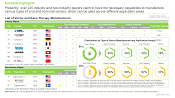
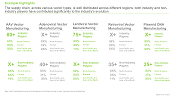
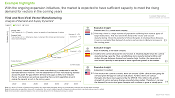
The viral vector manufacturing market landscape features a mix of both, well established and emerging players. This report covers all companies with capabilities for non viral vector manufacturing in addition to the viral vector manufacturing, which are essential for the production of cell therapies, gene therapies and viral vector vaccines. Currently, over 130 players have the required expertise for viral vector production; of these, majority of the viral vector manufacturing companies are large players. Additionally, around 95 players are capable of manufacturing plasmid DNA; of which, majority of the manufacturers are mid-sized companies. It is worth highlighting that several non-industry players are also involved in viral vector and non viral vector manufacturing to fulfill their in-house requirements and to provide contract services to the other biopharmaceutical industry players. Further, it is worth highlighting that close to 65 viral and non viral vector manufacturing companies have developed different platforms that aid in the efficient and large scale production of viral vectors and plasmid DNA. In May 2023, Touchlight expanded its existing plasmid DNA manufacturing capacity in its UK facility to meet the increasing demand. The expansion has tripled the company’s manufacturing capacity and the company is now capable of manufacturing over 8 kg of plasmid DNA annually. Such recent developments in this segment indicates that the industry and non-industry players are upgrading their capabilities and infrastructure to accommodate the current and anticipated manufacturing demand.
Partnership and Collaboration Trends in the Viral Vector Manufacturing Market
In recent years, several viral and non viral vector manufacturing companies have inked partnerships related to plasmid DNA and viral vector production with other industry / non-industry players. It is worth highlighting that manufacturing agreements and licensing agreements emerged as the most common types of partnership models adopted by stakeholders in this industry. For instance, in April 2023, Center for Breakthrough Medicines, a US-based CDMO, entered into a manufacturing agreement with University of Pennsylvania for the production of adeno associated virus based gene therapy. In addition, there have been several mergers and acquisitions by several stakeholders aiming to offer plasmid DNA and viral vector manufacturing process at different scale of operation and for different applications. Recently, in March 2023, Sartorius acquired Polyplus, a plasmid DNA and viral vector production and development company, to enhance their viral vector manufacturing capabilities and develop cell and gene therapies. Such collaborations will help meet the market demand and ensure market growth in the viral vector manufacturing market during the forecast period.
Expansion of Facilities for Building GMP Grade Plasmid and Viral Vector Manufacturing Capabilities
The vector manufacturing companies in the global market are continuously expanding their facilities in order to accommodate the growing demand for plasmid DNA and viral vector production. These companies are vigorously advancing their capabilities to serve as a fully integrated one-stop-shop by offering a range of plasmid DNA and viral vector manufacturing services, including process development and optimization, and GMP grade plasmid DNA and viral vector manufacturing. In August 2023, AGC Biologics, a US-based CDMO, expanded its capacity of GMP grade viral vector production at its Milan Cell & Gene Center of Excellence production site. The Milan cell therapy and viral vector production facility specializes in the manufacturing of clinical and commercial scale adeno associated virus and lentiviral vectors, with the maximum bioreactor capacity of 2,000 L. Similarly, in January 2023, Catalent Pharma Solutions, another US-based CDMO, established a new commercial scale plasmid development and manufacturing facility to expand its end-to-end capabilities for the production of GMP grade plasmid DNA in order to fulfill the customer requirements up to 300 L fermentation scale. The increasing demand for plasmid DNA and viral vector manufacturing to support the production of cell and gene therapies is one of the reasons for the facility / capacity / capability expansion by both, in-house and contract manufacturing organizations. Therefore, in the foreseen future, a significant rise in the expansion activity is anticipated in the viral vector manufacturing market.
Viral Vector Manufacturing Market Size
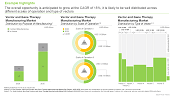
Driven by the rising demand for outsourcing viral vector manufacturing process, the future opportunities in this market are anticipated to witness a noteworthy growth in the foreseen future. The global market for viral vector manufacturing is anticipated to grow at a steady pace, at a CAGR of 11.23% during the forecast period. Specifically, in terms of type of manufacturer, the global market growth is anticipated to be largely driven by players offering viral vector services.
Further, in terms of scale of operation, commercial scale viral vector production is likely to hold the major market share (~90%) of the viral vector manufacturing market, in the near future. In addition to this, presently, close to 70% of the market share is captured by players based in North America and Asia-Pacific.
Non Viral Vector Manufacturing Market Size
The future opportunities in the non viral vector manufacturing market is anticipated to be driven by plasmid DNA used in genome editing and other non viral based therapies. The global market for non viral vector manufacturing market is estimated to be worth $7.4 million in 2023 and is projected to reach $83 million by 2035, growing at CAGR of 22% during the forecast period 2023-2035.
Key Viral Vector and Non Viral Vector Manufacturing Companies
Examples of the key viral vector and non viral vector manufacturing companies (the complete list of players is available in the full market report) include (in alphabetic order) Advanced BioScience Laboratories, AGC Biologics, Aldevron, Altruist Biotechnology, BioNTech Innovative Manufacturing Service (a subsidiary of BioNTech), BioReliance (a subsidiary of Merck KGaA), Biovian, Catalent Biologics, Celonic, Centre for Process Innovation, CEVEC Pharmaceuticals, Charles River Laboratories, CoJourney, Esco Aster, Jiangsu Puxin Biopharmaceutical, Lonza, Matica Biotechnology, Nikon CeLL innovation, NorthX Biologics, Novartis, Oxford BioMedica, Resilience, Sanofi, Thermo Fisher Scientific, VectorBuilder and Wuxi AppTec. This market reports includes an easily searchable excel database of all the companies that have capabilities for non viral vector, viral vector and gene therapy manufacturing
Recent Developments in Viral Vector Manufacturing Market
Several recent developments have taken place in the field of viral vector manufacturing. We have outlined some of these recent initiatives below. These developments, even if they took place post the release of our market report, substantiate the overall market trends that have been outlined in our analysis.
- In June 2024, ProBio announced the opening of a new facility in the US to expand its plasmid DNA and viral vector manufacturing capabilities.
- In April 2024, MassBiologics received USD 5 million for the development of viral vector manufacturing facility.
- In March 2024, New South Wales Government announced the expansion of its GMP-grade viral vector manufacturing facility to meet the increasing demand for clinical-grade viral vectors.
Scope of the Report
The viral vector manufacturing market report presents an in-depth analysis of the various firms / organizations that are engaged in this market, across different segments, as defined in the below table:
Viral Vector Manufacturing Market (6th Edition): Market Outlook / Report segmentations
| Key Data Points |
Market Insights |
|
Historical Trend
|
Since 2018
|
| Forecast Period |
Till 2035 |
| Market Size 2025 |
USD 799 million |
|
Market Size 2035
|
USD 2,315 million |
|
CAGR (Till 2035)
|
11.23% |
|
Scale of Operation
|
- Preclinical
- Clinical
- Commercial
|
| Type of Vector |
- Adeno Associated Virus Vectors
- Adenoviral Vectors
- Lentiviral Vectors
- Retroviral Vectors
- Other Vectors
|
| Application Area |
- Gene Therapies
- Cell Therapies
- Vaccines
|
| Therapeutic Area |
- Oncological Disorders
- Rare Diseases
- Neurological Disorders
- Sensory Disorders
- Metabolic Disorders
- Musculoskeletal Disorders
- Blood Disorders
- Immunological Disorders
- Other Disorders
|
| Type of Manufacturer |
- In-house
- Contract Manufacturing Organizations
|
|
Key Geographical Regions
|
- North America
- Europe
- Asia-Pacific
- Middle East and North Africa
- Latin America and Rest of the World
|
| Key Companies Profiled |
- Advanced BioScience Laboratories
- AGC Biologics
- Aldevron
- Altruist Biotechnology
- BioNTech Innovative Manufacturing Service (a subsidiary of BioNTech)
- BioReliance (a subsidiary of Merck KGaA)
- Biovian
- Celonic
- Catalent Biologics
- Cobra Biologics
- Centre for Process Innovation
- CEVEC Pharmaceuticals
- Charles River Laboratories
- CoJourney
- Esco Aster
- Jiangsu Puxin Biopharmaceutical
- Lonza
- Matica Biotechnology
- Nikon CeLL innovation
- NorthX Biologics
- Novartis
- Oxford BioMedica
- Resilience
- Sanofi
- Thermo Fisher Scientific
- VectorBuilder
- Wuxi AppTech
(Full list of 190+ companies manufacturing viral vectors and non viral vectors captured in the market landscape analysis of the report) |
| Customization Scope |
15% Free Customization Option |
| PowerPoint Presentation (Complimentary) |
Available |
|
Excel Data Packs (Complimentary)
|
- Market Landscape Analysis
- Company Competitiveness Analysis
- Partnerships and Collaborations Analysis
- Recent Expansions Analysis
- Strategic Partner Analysis
- Key Insights
- Cost Price Analysis
- Outsourcing: Go / No-Go Framework
- Capacity Analysis
- Demand Analysis
- Survey Analysis
- Market Sizing and Opportunity Analysis
|
The market report presents an in-depth analysis, highlighting the capabilities of various companies engaged in viral vector manufacturing market, across different regions. We have also captures all the companies manufacturing non viral vectors. Amongst other elements, the market research report includes:
- A preface providing an introduction to the full report, Viral Vector Manufacturing Market (6th Edition), 2018-2022 (Historical Trends) and 2023-2035 (Forecasted Estimates).
- An outline of the systematic research methodology adopted to conduct the study on viral vector manufacturing market, providing insights on the various assumptions, methodologies and quality control measures employed to ensure accuracy and reliability of our findings.
- An overview of economic factors that impact the overall viral vector manufacturing market, including historical trends, currency fluctuation, foreign exchange impact, recession, and inflation measurement.
- An executive summary of the insights captured during our research, offering a high-level view on the current state of the viral vector manufacturing market and non viral vector manufacturing market and its likely evolution in the mid-long term.
- A general introduction to various types of viral and non viral vectors including a detailed discussion on the design, manufacturing requirements, advantages, limitations and applications of the currently available gene delivery vehicles. The chapter also features the clinical and approved pipeline of genetically modified therapies. Further, it provides an overview of the latest trends and innovations in the contemporary viral vector manufacturing market.
- An overview of the current status of the market with respect to the industry players engaged in manufacturing viral vectors and gene therapies. It features information on their year of establishment, company size, location of headquarters, type of product manufactured (vector and gene therapy / cell therapy), location of manufacturing facility, type of manufacturer (in-house and contract manufacturing organizations), scale of operation (preclinical, clinical and commercial), type of vector manufactured (adeno associated virus, adenoviral vector, lentiviral vector, retroviral vector, plasmid DNA and other vectors) and application area (gene therapy, cell therapy, vaccine and others). In addition, the chapter also highlights information on the installed production capacity with stakeholders related to vector manufacturing.
- An overview of the current status of the market with respect to the industry players engaged in manufacturing plasmid DNA and gene therapies. It features information on their year of establishment, company size, location of headquarters, type of product manufactured (plasmid, and plasmid and gene therapy / cell therapy), location of plasmid DNA manufacturing facility, type of manufacturer (in-house and contract manufacturing organizations), scale of operation (preclinical, clinical and commercial) and application area (gene therapy, cell therapy, vaccine and others).
- An overview of the current status of the market with respect to the non-industry players engaged in the manufacturing of viral, non viral and other novel types of vectors and gene therapies. It features information on their year of establishment, location of vector manufacturing facility, type of manufacturer (in-house and contract manufacturing organizations), scale of operation (preclinical, clinical and commercial), type of vector manufactured (adeno associated virus, adenoviral vector, lentiviral vector, retroviral vector, plasmid DNA and others) and application area (gene therapy, cell therapy, vaccine and others).
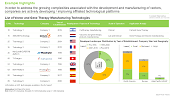
- An analysis of the technologies offered / developed by the companies engaged in this market, based on the type of technology (viral vector related platform, non viral vector related platform and other platforms), purpose of technology (vector manufacturing, product manufacturing, gene delivery, vector packaging, transduction / transfection and others), scale of operation (preclinical, clinical and commercial), type of vector (adeno associated virus, adenoviral vector, lentiviral vector, retroviral vector, plasmid DNA and other viral vectors), application area (gene therapy, cell therapy, vaccine and others). Additionally, it also highlights the most prominent players within this market, in terms of number of technologies.
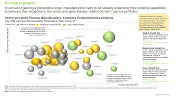
- A competitive landscape, highlighting the key players engaged in manufacturing vectors and gene therapies, across key geographical areas, featuring a four-dimensional bubble representation, taking into consideration supplier strength (based on years of experience), manufacturing strength (number of product manufactured, number of manufacturing facility and number of application area), service strength (scale of operation, number of vectors manufactured and geographical reach) and company size (small, mid-sized and large).
- Tabulated profiles of key players based in North America, Europe and Asia-Pacific (shortlisted based on proprietary criterion). Each profile features an overview of the company / organization, its financial performance (if available), information related to its manufacturing facilities, vector manufacturing technology, recent developments and an informed future outlook.
- A qualitative analysis, highlighting the five competitive forces prevalent in non viral vector and viral vector manufacturing market, including threats for new entrants, bargaining power of drug developers, bargaining power of vector and gene therapy manufacturers, threats of substitute technologies and rivalry among existing competitors.
- An analysis of partnerships and collaborations established in non viral vector and viral vector manufacturing market, since 2019; it includes details of deals that were / are focused on the manufacturing of vectors, which were analyzed based on year of partnership, type of partnership (manufacturing agreements, mergers / acquisitions, process development / optimization agreements, product development agreements, product / technology licensing agreements, production asset / facility acquisitions, research and development agreements, service alliance, supply agreements and others), scale of operation (preclinical, clinical and commercial), type of vector (adeno associated virus, adenoviral vector, lentiviral vector, retroviral vector, plasmid and other viral vectors), therapeutic area (oncological disorders, infectious diseases, neurological / CNS disorders, genetic disorders, ophthalmic disorders, multiple diseases, rare diseases, immunodeficiency, metabolic disorders, cardiovascular disorders, autoimmune disorders and other disorders), application area (cell therapy, gene therapy and vaccine) and most active players (in terms of number of partnerships). It also provides the regional distribution of the companies involved in these agreements and information on agreements related to development, manufacturing and supply of gene therapies, cell therapies and vector-based vaccines.
- An analysis of the recent expansions (since 2019) undertaken by various companies in order to augment their respective capabilities related to viral vector and non viral vector manufacturing, based on several parameters, such as year of expansion, type of expansion (new facility / plant establishment, facility expansion, technology installation / expansion, capacity expansion, service expansion and others), type of vector (adeno associated virus, adenoviral vector, lentiviral vector, retroviral vector, plasmid and other viral vectors), application area (gene therapy, cell therapy, vaccine and others) and geographical location of the expansion.
- An insightful analysis evaluating the potential strategic partners (comparing vector based therapy developers and vector purification product developers) for vector and gene therapy product manufacturers, based on several parameters, such as developer strength, product strength, type of vector, therapeutic area and pipeline strength (preclinical and clinical).
- An elaborate discussion on the emerging trends of other viral / non viral gene delivery approaches that are currently being researched for the development of therapies involving genetic modification.
- An insightful analysis, highlighting the contemporary market trends in the plasmid DNA and viral vector manufacturing industry, through different representations, based on relevant parameters, such as (type of vector, scale of operation and type of manufacturer), (type of vector and type of organization) and (location of headquarters and geographical location of key vector manufacturing hubs).
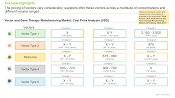
- An analysis of various factors that are likely to influence the pricing of vectors, featuring different models / approaches that may be adopted by product developers / manufacturers in order to decide the prices of their proprietary vectors.
- An insightful go / no-go framework analysis, highlighting various factors that needs to be considered by viral vector and non viral vector manufacturing companies while deciding whether to manufacture their respective products in-house or engage the services of a CMO. Further, the analysis highlights all the key parameters that must be considered by players based on company size (small, mid-sized and large), while taking the aforementioned decision.
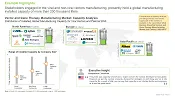
- An estimate of the overall, installed vector manufacturing capacity of industry players based on the information available in the public domain, and insights generated from both secondary and primary research. The analysis also highlights the distribution of the global capacity by company size (small, mid-sized and large), location of headquarters (region) (North America, Europe, Asia Pacific and the rest of the world) and location of manufacturing facility.
- An in-depth analysis to estimate the current and future demand for viral vectors and non viral vectors, taking into consideration the marketed gene therapies and clinical studies evaluating vector-based therapies; the analysis also takes into consideration various relevant parameters, such as target patient population, dosing frequency and dose strength.
- An in-depth analysis of the factors that can impact the growth of non viral vector and viral vector manufacturing market. It also features identification and analysis of key drivers, potential restraints, emerging opportunities, and existing challenges.
- A survey analysis featuring inputs solicited from the survey conducted on over 400 stakeholders involved in the development of different types of gene therapy vectors. The participants, who were primarily Director / CXO level representatives of their respective companies, helped us develop a deeper understanding on the nature of their services and the associated commercial potential.
One of the key objectives of this market report is to estimate the current opportunity and the future market growth potential associated with the viral vector manufacturing market, over the forecast period. We have also forecasted the opportunity for non viral vector manufacturing market. Based on various parameters, such as the likely increase in number of clinical studies, anticipated growth in target patient population, existing price variations across different types of vectors, and the anticipated success of gene therapy products (considering both approved and late-stage clinical candidates), we have provided an informed estimate on the likely evolution of the viral vector manufacturing and non viral vector manufacturing market in the short to mid-term and long term, for the forecast period 2023-2035. In order to provide a detailed future outlook, our projections have been segmented on the basis of scale of operation (preclinical, clinical and commercial), type of vector (AAV vector, adenoviral vector, lentiviral vector, retroviral vector, plasmid DNA and other vectors), application area (gene therapy manufacturing, cell therapy manufacturing and vaccine manufacturing), therapeutic area (oncological disorders, rare diseases, neurological disorders, sensory disorders, metabolic disorders, musculoskeletal disorders, blood disorders, immunological disorders and other disorders), type of manufacturer (in-house manufacturers and contract manufacturing organizations) and key geographical regions (North America, Europe, Asia Pacific, Middle East and North Africa, and Latin America and rest of the world). In order to account for future uncertainties and to add robustness to our model, we have provided three forecast scenarios, namely conservative, base and optimistic scenarios, representing different tracks of the industry’s growth.
The research, analysis and insights presented in this market report are backed by a deep understanding of key insights generated from both secondary and primary research. For the purpose of the study, we invited over 300 stakeholders to participate in a survey to solicit their opinions on upcoming opportunities and challenges that must be considered for a more inclusive growth. The opinions and insights presented in this study were also influenced by discussions held with senior stakeholders in the industry. The market report features detailed transcripts of interviews held with the following industry and non-industry players:
- Chief Operating Officer, UK-based, Mid-sized Company
- Business Developer, Netherlands-based Mid-sized Company
- Chief Executive Officer and President, Netherlands-based Mid-sized Company
- Chief Executive Officer and Chief Scientific Officer, Germany-based Small Company
- Former Executive and Scientific Director, Belgium-based Small Company
- Co-Founder and President, France-based Mid-sized Company
- Former President of Biopharma Business Unit, France-based Large Company
- Former Director, Netherlands-based Company
- Director, US-based Organization
- Scientific Director, France-based Organization
- Managing Director, Japan-based Small Company
- Scientific Director, US-based Small Company
- Director of Marketing and Technical Support, France-based Mid-sized Company
- Senior Manager Business Development, Germany-based mid-sized Company
- Project Manager, Germany-based Small Company
- Business Development Manager, US-based Small Company
- ATMP Key Account Manager, France-based Organization
- R&D Leader, France-based Small Company
- Head of Marketing and Technology Development, Spain-based Mid-sized Company
- Independent Consultant
All actual figures have been sourced and analyzed from publicly available information forums and primary research discussions. Financial figures mentioned in this market report are in USD, unless otherwise specified.
Frequently Asked Questions
What is viral vector manufacturing?
Viral vector manufacturing is a complex process of viral vector production that involves multiple steps to develop cell therapies, gene therapies and viral vector vaccines.What are the steps in viral vector manufacturing?
The steps involved in viral vector manufacturing include production of the viral vectors using non-pathogenic viruses, purification of these vectors, quality control, followed by the production of final formulation.What is required for manufacturing of viral vectors?
To manufacture viral vectors, several basic raw materials, such as plasmids encoding helper-virus, therapeutic gene and cell lines for viral vector production are required.How are gene therapies manufactured?
Gene therapy manufacturing is an intricate process, including four crucial steps. The starting step is preparation of raw materials, followed by encapsulation of the desired gene product, purification of the viral vector, and packaging the gene therapy for further clinical or commercial usage.What is the manufacturing process of viral vector gene therapy?
The process of viral vector based gene therapy manufacturing involves packaging a therapeutic transgene into a delivery vehicle (viral vector) and expanding the host cell lines to generate a high concentration of vector.How big is the viral vector manufacturing market?
The viral vector manufacturing market is estimated to be worth more than $ 799 million in 2025.Who are the top viral vector manufacturers?
Presently, more than 130 companies are engaged in viral vector manufacturing market, worldwide. The top viral vector manufacturing companies engaged in this industry, include (which have also been captured in this market report) include (in alphabetic order) Advanced BioScience Laboratories, AGC Biologics, Aldevron, Altruist Biotechnology, BioNTech Innovative Manufacturing Service (a subsidiary of BioNTech), BioReliance (a subsidiary of Merck KGaA), Biovian, Catalent Biologics, Celonic, Centre for Process Innovation, CEVEC Pharmaceuticals, Charles River Laboratories, CoJourney, Esco Aster, Jiangsu Puxin Biopharmaceutical, Lonza, Matica Biotechnology, Nikon CeLL innovation, NorthX Biologics, Novartis, Oxford BioMedica, Resilience, Sanofi, Thermo Fisher Scientific, VectorBuilder and Wuxi AppTec.How big is the adeno associated virus (AAV) vector market?
The global adeno associated virus vector manufacturing market is estimated to be worth around $ 167 million in 2023.How big is the lentiviral vector market?
The global lentiviral vector manufacturing market is estimated to be worth around $ 257 million in 2023.What is the anticipated viral vector manufacturing market growth?
The global viral vector manufacturing market size is projected to grow at a CAGR of 11.23% during the forecast period.