


 Download Free Sample
 Buy Now
Market Size
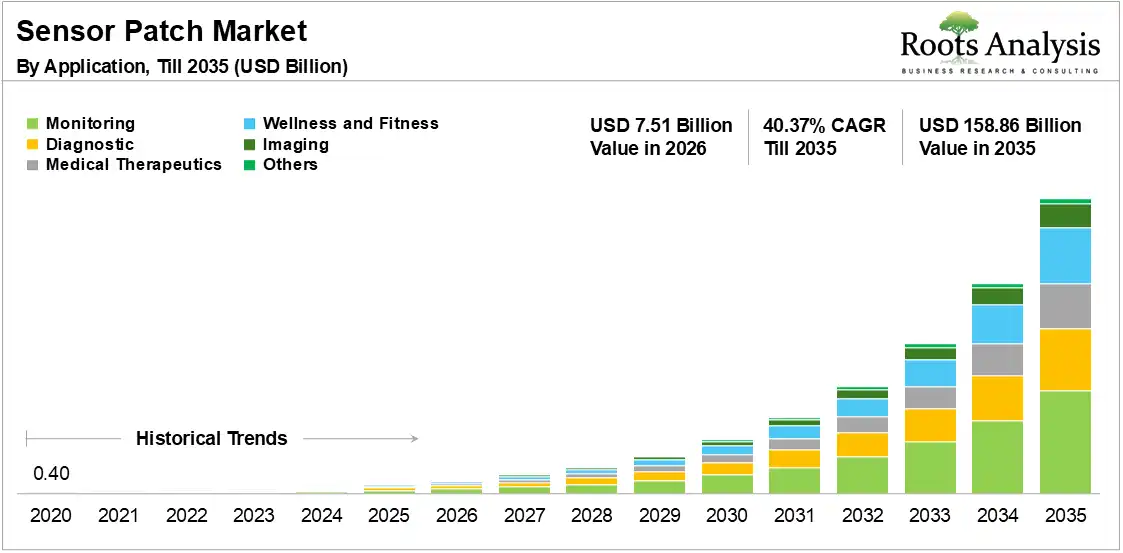
The global sensor patch market, valued at USD 5.37 billion in 2025, is projected to reach USD 7.51 billion in 2026 and USD 158.86 billion by 2035, representing a CAGR of 40.37% during the forecast period 2026 to 2035.
See What’s in the Full Report – Request Your Complimentary Insights!
Market Report: Key Takeaways
- In terms of type of product, the blood glucose sensor patch sub-segment secures 33.80% of the overall revenue share of the global market.
- In terms of application, diagnostics sub-segment holds the largest share (59.17%) of sensor patch market.
- In terms of leading region, North America holds the largest share with 38.40% share of the market.
- Key market drivers are the increasing demand for continuous and remote healthcare monitoring.
Market Overview
Sensor patches are compact, wearable devices embedded with advanced sensors designed to adhere to the skin for continuous, non-invasive monitoring of physiological and environmental parameters. These patches are typically thin, flexible, and equipped with wireless communication capabilities, allowing real-time data collection and seamless integration with digital health platforms for comprehensive health management and diagnostics.
The applications of sensor patches have expanded significantly beyond traditional areas like cardiac and diabetes monitoring. Today, they play vital roles across diverse domains including temperature tracking, fitness and stress management, sleep monitoring, and clinical diagnostics for metabolic and hemodynamic parameters.
Additionally, sensor patches are increasingly used in childcare diagnostics, sensor patch for chronic disease management, remote patient monitoring, and sports performance analytics. Their multi-sensor functionalities coupled with AI and machine learning algorithms enable early detection, predictive analytics, and precision medicine, making them indispensable in both healthcare and wellness sectors.
The growth of the sensor patch market is driven by multiple factors including the rising adoption of continuous health monitoring sensor patches, increasing prevalence of chronic diseases, advancements in communication technologies such as Bluetooth and IoT, and the regional adoption of sensor patches in telehealth platforms and preventive care.
Technological innovation is ongoing, with manufacturers focusing on enhancing sensor accuracy, patch flexibility, and integration of multifunctional sensors with digital applications. Investments in R&D and expanding applications across clinical and consumer health domains are further accelerating market expansion.
Recent Industry Developments
- In September 2025, Dutch ViCentra, an Utrecht-based medical device company, secured $85M Series D round of funding led by Innovation Industries, to bring insulin patch pump to more markets.
- In August 2025, Luna Health, a startup developing an insulin patch pump to help with overnight glucose control, raised $23.6 million in Series A funding.
- In April 2025, Biolinq, a health technology company developing precision multi-analyte wearable biosensors for metabolic health, raised $100M for intradermal glucose sensor for type 2 diabetes.
- In February 2025, Level Zero Health landed a 6.6 million funding for “world’s first” continuous hormone monitoring device.
- In February 2025, VitalConnect raised $100 million to accelerate commercialization of its ambulatory cardiac monitoring device.
Pay Only for What You Need – The Best Way to Optimize
Market Dynamics
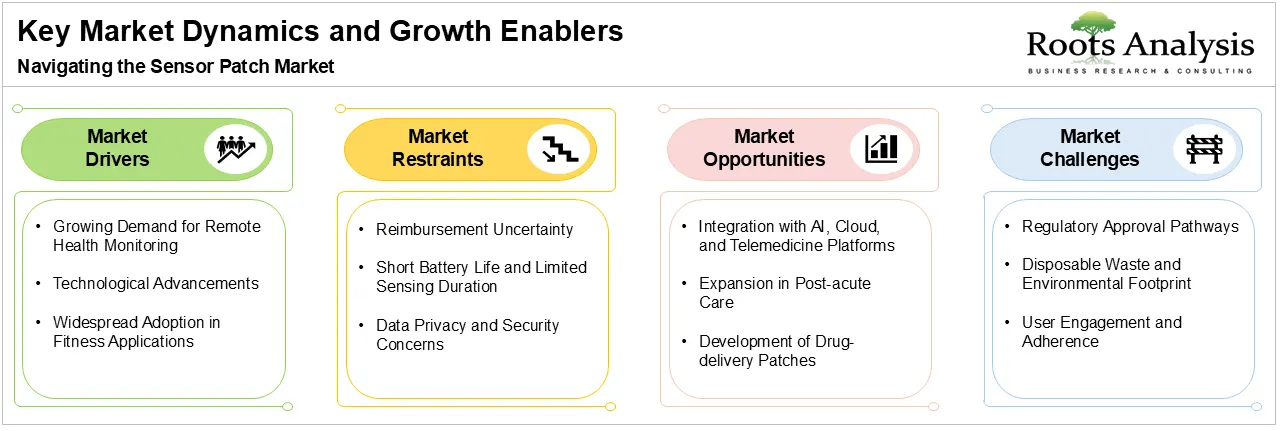
The industry is set to witness a lucrative growth phase, with the sensor patch market shaped by a dynamic interplay of drivers, restraints, opportunities, and challenges that will influence its trajectory in the coming years.
Market Segmentation
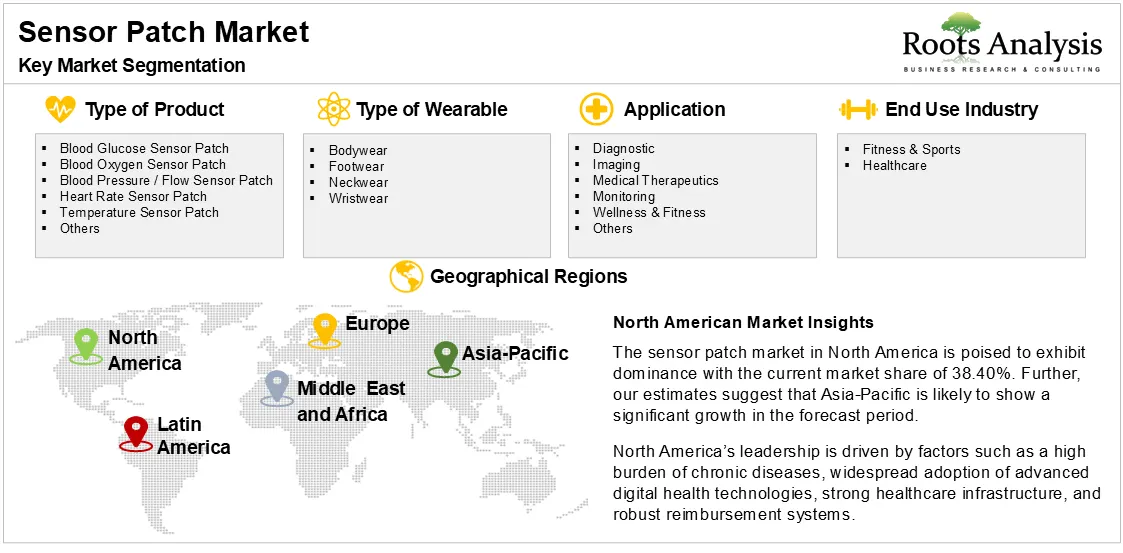
The sensor patch market report presents an in-depth analysis of the various companies that are involved in offering sensor patch solutions, across different segments, as in the figure below:
Market Share Insights
Blood Glucose Sensor Patch Sub-Segment to Dominate the Sensor Patch Industry
As per our sensor patch industry analysis, the blood glucose sensor patch sub-segment is expected to hold the largest share of 33.80% within the current global year. The growth is attributed to the rising prevalence of diabetes, and consequently the high adoption of blood glucose monitoring devices.
These patches are a painless and effective way of achieving ongoing glucose tracking without the need of constant finger pricking. The increased demand is also driven by significant sensor patch innovations for glucose and vital sign detection, advancements in biosensor technology for wearable patches, increased device accuracy and higher connectivity with smartphones.
Diagnostics Gain the Highest Market Share for Application Segment
The sensor patch applications market estimates suggest that the diagnostics sub-segment is expected to hold the largest share of 59.17% within the current global year. This dominance is driven by the technological advancements in diagnostics, allowing physicians to detect life threatening ailments, including cardiovascular diseases, infections, and metabolic disorders at an early stage.
The growth is further fueled by increased demand for real-time and non-invasive monitoring with the help of patches like the biosensor patch for continuous glucose monitoring. Another factor is the increasing focus on healthcare infrastructure and investments, particularly in regions, such as North America with robust R&D and regulatory frameworks.
Monitoring sub-segment is expected to witness the fastest CAGR due to their increase in demand that finds a wider application in chronic disease management, post-surgical care, and fitness monitoring. Patches, such as real-time vital signs sensor patch allow tracking of health metrics, including real-time monitoring of heart arrhythmias, blood pressure, and temperature.
Regional Forecast Estimates: Asia-Pacific to Gain the Fastest Growth, Fueled by Improving Healthcare Investments
Sensor patch market forecast suggests that Asia-Pacific is expected to witness the fastest growth during the forecasted period. This growth is driven by improving healthcare investments and technological advancements, such as IoT connectivity in sensor patch healthcare solutions.
Along with this, increased chronic disease cases and rising awareness concerning wearable health devices are other significant factors. Companies, such as Medtrum, Ypsomed, and others are innovating with sensor patches in countries like China, India, and Japan for glucose monitoring and fitness activities with the help of fitness tracking sensor patches.
Want Information on Specific Region / Segment?
Key Market Insights
Which are the Top Players in Sensor Patch Market?
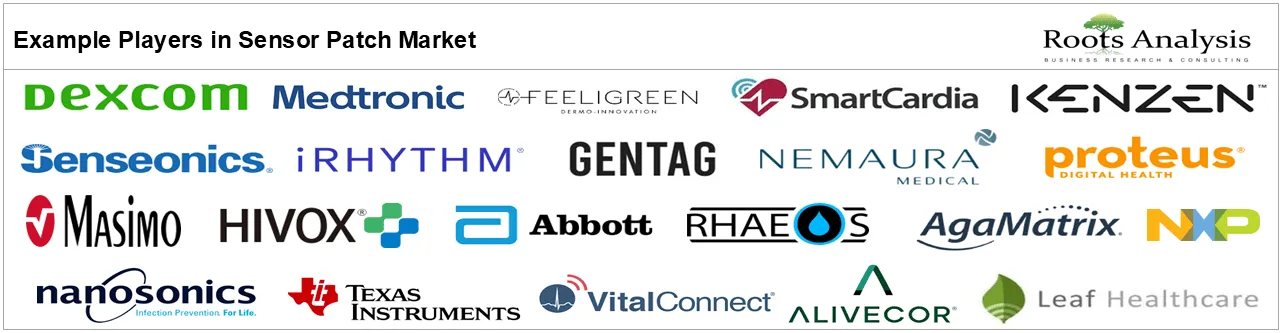
Examples of leading sensor patch manufacturers (which have also been captured in this market report, arranged in alphabetical order) include Abbott Laboratories, Adhesives Research, AgaMatrix, AliveCor, Cardiomo Care, Dexcom, Epicore Biosystems, Feeligreen, G-Tech Medical, Gentag, Hivox Biotek, iRhythm Technologies, Isansys Lifecare, KenZen, Leaf Healthcare, Masimo, Medtronic, Nanosonic, Nemaura Medical, NXP Semiconductors, Onera, Proteus Digital Health, RDS, Rhaeos, Senseonics Holdings, SmartCardia, STMicroelectronics, Texas Instruments, Vivalnk, VitalConnect, and Vpatch Cardio.
What Strategies are the Companies Using to Gain Sensor Patch Market Share?
The competitive landscape of the sensor patch market is characterized by a mix of established industry giants and innovative newcomers who are driving advancements in wearable biosensing technology, such as adhesive technologies for long-wear sensor patches. Abbott Laboratories stands out as a top market leader, thanks to its strong market presence and extensive product portfolio, particularly in continuous glucose monitoring systems.
Alongside Abbott, Medtronic and Dexcom are also key players, leveraging their technological expertise and strategic partnerships to maintain significant market shares. These companies focus heavily on research and development to introduce multi-parameter sensor patches equipped with AI capabilities for predictive health monitoring.
How is Data Privacy and Security in Wearable Sensor Patch Applications Benefiting the Market?
Data privacy and security in wearable sensor patch applications benefit the market by building user trust and enabling compliance with strict regulations like HIPAA, GDPR, and other health data protection laws. Implementing strong encryption, secure data transmission, authentication layers, and auditability reassure users and healthcare providers about the confidentiality of sensitive health information.
Such practices facilitate the integration of wearable data into clinical workflows and digital health platforms while minimizing legal risks. Consequently, enhanced data privacy and security drive wearable sensor patch market growth by fostering wider adoption, supporting regulatory compliance, and enabling innovative uses of sensor patch technology in personalized healthcare analytics and remote monitoring.
How are Wearable Sensor Patches for Continuous Health Monitoring Used?
Wearable sensor patches for continuous health monitoring are used in a variety of ways across medical, fitness, and research applications. Key uses include:
- Continuous physiological signal monitoring such as ECG (electrocardiogram), respiration rate (Bioimpedance), and motion tracking via accelerometers and gyroscopes. This allows real-time cardiac and respiratory assessment for clinical and research purposes.
- Non-invasive biomarker sensing from sweat analysis sensor patch or interstitial fluid for glucose, lactate, and other critical indicators. This supports chronic disease management such as diabetes by enabling real-time glucose tracking without finger-prick tests.
- Wireless sensor patches with long-term data collection (up to 10-14 days) and wireless data streaming for offline analysis. This supports detailed health event detection and AI algorithm development.
How is the Sensor Patch Integration in Sports and Fitness Analytics Benefiting the Market?
The integration of sensor patches in sports and fitness analytics benefits the market in several ways:
- Provides continuous, real-time monitoring of athletes' physiological and biomechanical parameters, enabling precise performance assessment.
- Small, lightweight, and flexible patches offer comfort and unobtrusiveness, enhancing wearability during intense training and competition.
- Enables multi-location sensor placement to detect asymmetries and provide comprehensive body performance data.
What are the Regulatory Approvals for Medical-Grade Sensor Patch Devices?
Medical-grade sensor patch devices must obtain regulatory approvals to ensure safety, efficacy, and reliability for clinical use. In the US, the devices in the medical sensor patch market typically require FDA clearance through pathways such as 510(k) premarket notification or De Novo classification, depending on the device’s risk class.
The European Union mandates CE marking under the Medical Device Regulation, which involves certification by a notified body after compliance assessment. Other regulatory requirements often include ISO 13485 certification for quality management and risk management compliance per ISO 14971. These approvals require extensive clinical validation, verification and validation testing, and robust documentation on labeling and intended use cases, ensuring that devices meet stringent performance and safety standards before commercial launch.

Sensor Patch Market: Scope of the Report
| Key Report Attributes | Details | |
| Historical Trend | Since 2020 | |
| Forecast Period | Till 2035 | |
| Market Size 2026 | $ 7.51 Billion | |
| Market Size 2035 | $ 158.86 Billion | |
| CAGR (Till 2035) | 40.37% | |
| Segments Covered |
|
|
Your Business is Unique – Why Shouldn’t Your Report Be?
Market Segments
Based on the research, we have segmented the sensor patch market into type of product, type of wearable, application, end use industry, geographical regions, and key players.
Market Share by Type of Product
- Blood Glucose Sensor Patch
- Blood Pressure / Flow Sensor Patch
- Blood Oxygen Sensor Patch
- ECG Sensor Patch
- Heart Sensor Patch
- Temperature Sensor Patch
- Others
Market Share by Type of Wearable
- Bodywear
- Footwear
- Neckwear
- Wristwear
Market Share by Application
- Diagnostic
- Imaging
- Medical Therapeutics
- Monitoring
- Wellness & Fitness
- Others
Market Share by End Use Industry
- Fitness & Sports
- Healthcare
Market Share by Geographical Regions
- North America
- US
- Canada
- Mexico
- Rest of North America
- Europe
- Austria
- Belgium
- Denmark
- France
- Germany
- Ireland
- Italy
- Netherlands
- Norway
- Russia
- Spain
- Sweden
- Switzerland
- UK
- Rest of Europe
- Asia-Pacific
- Australia
- China
- India
- Japan
- New Zealand
- Singapore
- South Korea
- Rest of Asia-Pacific
- Latin America
- Brazil
- Chile
- Colombia
- Venezuela
- Rest of Latin America
- Middle East and Africa (MEA)
- Egypt
- Iran
- Iraq
- Israel
- Kuwait
- Saudi Arabia
- UAE
- Rest of MEA


