Industrial Cleaning Solvents Market by Type of Product (Aqueous Solvents, Halogenates Solvents, Hydrocarbon Solvents, Oxygenated Solvents, Non-Halogenated Solvents, and Bio-Based Solvents), Type of Formulation (Concentrates, Ready-to-Use Solutions, and Semi-Aqueous Formulations), Application Area, Distribution Channel, End Use Industry, Geographical Regions, and Key Players – Trends and Forecasts 2026-2040
Market Size
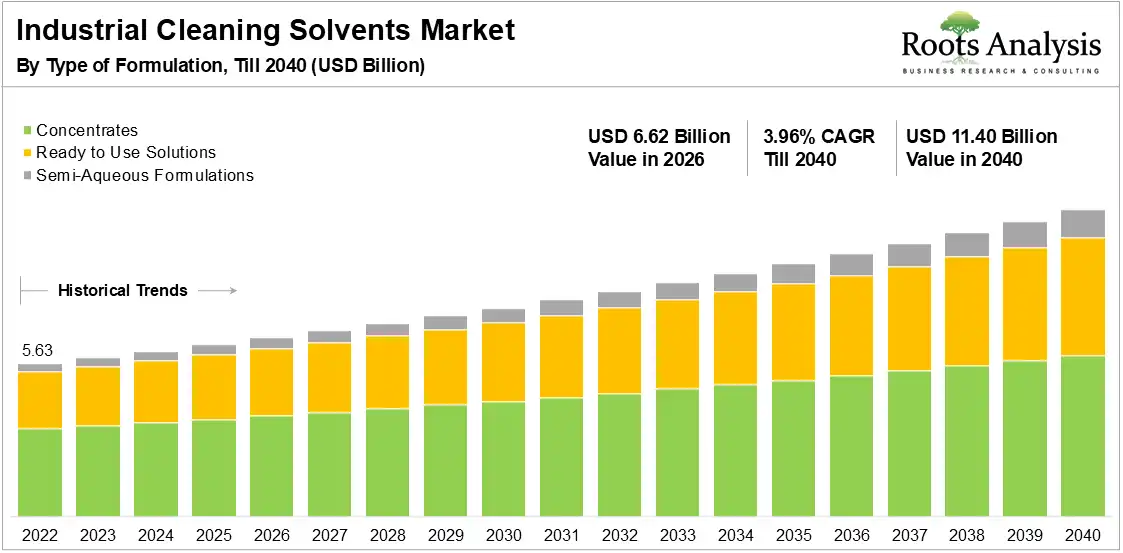
The global industrial cleaning solvents market is projected to reach USD 6.62 billion in 2026 and USD 11.40 billion by 2040, representing a CAGR of 3.96% during the forecast period 2026 to 2040.
See What’s in the Full Report – Request Your Complimentary Insights!
Market Overview
The industrial cleaning solvents market covers chemical formulations used in maintenance, repair, and operations across both heavy and precision industries. These products enable the removal of persistent contaminants, including oils, greases, waxes, and flux residues, from machinery, tools, and engineered components. The market spans hydrocarbon-based and oxygenated solvents alongside emerging bio-based options, with primary demand from manufacturing, aerospace, and electronics environments where equipment reliability, process stability, and quality assurance are critical.
Market growth is supported by rising industrial production and tighter regulatory requirements that elevate cleanliness, worker safety, and compliance expectations. Core use cases include metal parts degreasing in fabrication, surface preparation in automotive assembly, and high-precision cleaning in electronics manufacturing, underscoring broad operational dependence. At the same time, customer preference is shifting toward high-performance solutions aligned with environmental, social, and governance priorities, reshaping industrial cleaning solvents market trends and product pipelines.
Innovation is increasingly focused on green, high-efficiency solvents designed to displace traditional hazardous air pollutants without compromising cleaning performance. Leading suppliers have announced R&D investments in next-generation solvent systems optimized for additive manufacturing, underscoring an industrial cleaning solutions market outlook where performance, scalability, and environmental compliance advance together.
Market Report: Key Takeaways
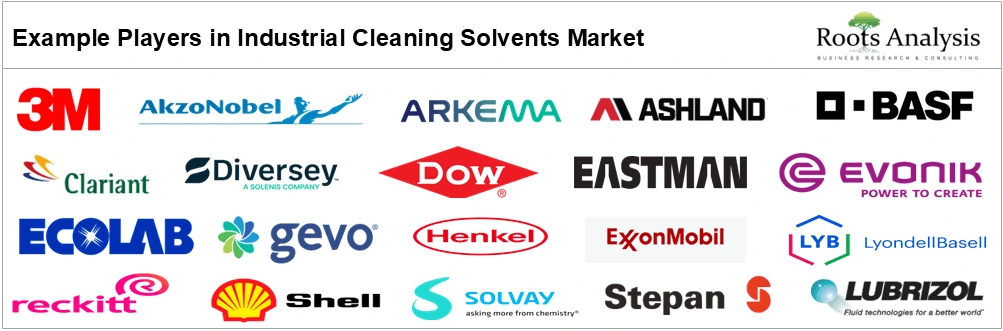
- Top Market Players: Industry is highly consolidated with established solvent manufacturers, such as 3M Company, Ashland, BASF, Dow, and ExxonMobil. These companies are broadly focused on the development of sustainable chelating agent, biorefining, and green solvents to strengthen their market position.
- Startup Ecosystem: In 2026 startups are increasingly focused on the circular economy, green chemistry and hardtech solutions that remove the need for traditional hazardous solvents. For instance, Sironix Renewables replaced petroleum-based surfactants with plant-based alternatives, such as soy and algal oil, maintaining performance while reducing environmental harm.
- Broad Corporate Initiatives and Sustainability Roadmaps: Sustainable industrial cleaning solvents market trends highlight that major chemical companies, such as BASF, DOW, and Merck are aligning their R&D with 2030 and 2040 climate goals. Solvay’s "For Generations" roadmap targets a one-third reduction in greenhouse gas emissions by 2030 and full carbon neutrality by 2050. Dow and BASF are competing on the strength of their renewable feedstock platforms, offering large-scale supply of bio-based alcohol and esters to global industrial markets.
- Regulatory Policy Catalyst: The European Clean Industrial Deal, EU Green Deal and the EU REACH regulation act as both a "push" and a "pull" for the market. The mobilization of €100 billion for green manufacturing directly funds the transition of chemical plants from petroleum-based solvent production to bio-based and aqueous cleaning systems.
- Funding and Investment Analysis: Key players in industrial cleaning solvents market share are investing heavily in this industry to develop next-generation solvents, and technologies. Recently, Nuveen announced a USD 30 million equity investment in CleanPlanet Chemical to scale on-site industrial solvent recycling technology for automotive, coating, chemicals, and packaging sectors.
- Partnerships and Collaborations: End-user industries for industrial cleaning chemicals and leading market players are actively leveraging partnerships and collaborations for global reach. In March 2025, Evonik Industries and Sea-Land Chemicals announced the US distribution partnership for biosurfactants and sustainable additives in institutional cleaning.
- Industrial Cleaning Chemicals Market Growth Opportunities: Development of application-specific formulations, and innovations in on-site solvent recycling technologies are likely to be the key focus of the industrial players in the future.
Recent Industry Developments
- January 2026: BuzzWorks partnered with Born Good to integrate high-performance, plant-based cleaning solutions across its managed workspaces. This strategic collaboration is primarily focused on ESG-focused facility management and toxin-free to address the growing corporate demand for sustainable workplace solutions.
- October 2025: Henkel launched Bonderite C-AK DW 805 Aero, a dry wash aircraft cleaner. This cleaner eliminates the requirement for water rinsing, reduces maintenance downtime and environmental impact.
- September 2025: Ecolab launched Ecolab® CIP IQ™, a smart, AI-enhanced clean-in-place solution specifically designed to help food and beverage companies maintain food safety and maximize product quality, while reducing the water usage and increase production capacity. The real-time insights allow dairy and beverage manufacturers to leverage full potential of each drop by transforming productivity into a competitive edge.
Don't Pay for What You Don't Need. Individual Sections of the Report Are Available for Purchase Now.
Market Share Insights
Hydrocarbon Solvents Lead the Market and Aqueous Solvents Grow at Higher CAGR
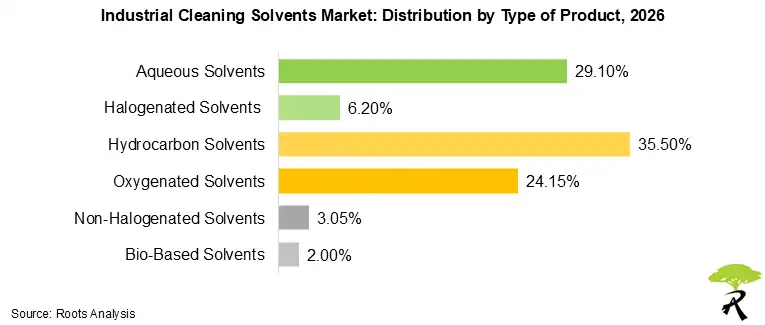
- Based on the industrial cleaning solvents market segmentation, in terms of type of product, hydrocarbon solvents lead the market with an estimated share of 35.50% in 2026. This dominance is due to their entrenched role in heavy-duty degreasing and broad compatibility across manufacturing and automotive operations.
- On the other hand, it is estimated that aqueous solvents are projected to be the fastest-growing sub-segment through 2040, expanding at a 6.2% CAGR. This unprecedented growth is likely to be the result of tightening VOC regulations and restrictions on halogenated solvents which accelerate substitution toward water-based formulations. In addition, the future growth is also reinforced by regulatory actions such as EU REACH updates and the US EPA’s low-VOC initiatives, alongside supplier investments, including BASF’s expansion of aqueous industrial cleaner portfolios cited in the recent investor disclosures.
Regional Analysis: Asia-Pacific Dominates the Market
The regional landscape of 2026 is defined by a shift in manufacturing centers and a robust focus on domestic sovereignty. While North America and Europe remain high-value markets for precision solvents, the Asia-Pacific region is the dominant growth engine.
Asia-Pacific: Leading the Market
- Based on the industrial cleaning solvents market share analysis, Asia-Pacific dominates the market with a share of 40.70% in 2026 and the trend is likely to remain unchanged during the period 2026-2040. This dominance is driven by the concentration of manufacturing hubs across India, China, and Japan as well as regulatory updates and industrial expansion.
- China provides the massive baseline demand for industrial cleaning solvents in paint and coatings industry. Moreover, the country is forcing a high-tech evolution through the "Made in China 2025" and energy-efficiency mandates, which have further pushed the market toward aqueous cleaning solvents and ultra-high purity cleaning solvents.
North America Industrial Cleaning Solvents Market Trends
- North America is the second-largest market shareholder in 2026. This robust growth is driven by the CHIPS and Science Act and the presence of advanced aerospace and healthcare sectors in the region. Notably, the CHIPs and Science Act has mobilized over USD 52 billion in federal subsidies, sparking a domestic semiconductor construction boom. This semiconductor fabrication requires solvents with less than 10 µg / cm² residue, driving the demand for high-purity isopropanol (IPA) and specialty ether-based blends.
- The emerging opportunities for industrial degreasers in North American maintenance sector is further fueling the market growth. This is because large-scale facilities are investing in IoT-enabled degreasing stations that monitor chemical concentration in real-time. This optimizes usage, reduces waste, and ensures that maintenance teams are always using the correct dilution for specific tasks (e.g., heavy machinery vs. light surface cleaning).
Want Information on Specific Region / Segment?
Market Dynamics
Key Market Drivers
- Tightening VOC Regulations in Solvents for Industrial Cleaning: The progressive tightening of regulations governing volatile organic compounds and hazardous air pollutants by authorities, such as environmental and chemical agencies is accelerating the retirement of legacy solvent systems. Industrial users are increasingly compelled to transition toward compliant, low-VOC, non-flammable, or bio-based formulations, creating structured replacement cycles. In regulated sectors such as automotive and aerospace, regulatory alignment has become a non-negotiable requirement, frequently outweighing near-term cost considerations.
- Growth in Precision Manufacturing and Electronics Sectors: Rising output across semiconductors, medical devices, and advanced electronics is elevating cleanliness standards across manufacturing workflows. These applications demand ultra-clean, residue-free surfaces to protect product performance and yield, driving sustained demand for high-purity, application-specific solvents. Cleaning steps such as flux removal, fine-part degreasing, and pre-bond preparation have become critical process enablers rather than ancillary operations.
- Shift Toward Automated and Closed-Loop Cleaning Processes: The growing adoption of automated parts cleaning systems, including ultrasonic and vapor-based technologies, is reshaping solvent demand profiles. These systems require chemically stable formulations that perform consistently over extended use, limit losses through carryover, and integrate efficiently within closed-loop configurations. As manufacturers pursue repeatable quality and lower chemical consumption, solvent selection is increasingly tied to system compatibility and process control.
Market Restraints
- Cost and Performance Disparity of Eco-Friendly Alternatives: Many aqueous and bio-based solvents struggle to replicate the cleaning speed and efficacy of conventional chlorinated or high-VOC products without process modifications. Longer cycle times, additional heating or drying requirements, and specialized equipment can erode productivity gains, particularly in high-throughput or cost-sensitive operations. These trade-offs slow adoption in industries such as metal fabrication, where margins and throughput remain tightly managed.
- Volatility in Raw Material Prices and Supply Chain Disruptions: Industrial solvent production remains intricately linked to petrochemical feedstocks and specialized intermediates, exposing the market to upstream price fluctuations. Changes in crude oil pricing and disruptions across global supply chains introduce cost instability for manufacturers and downstream users alike. This volatility complicates forecasting, procurement strategies, and long-term supplier agreements.
- High Capital Investment Required for Process Conversion: Transitioning away from legacy cleaning methods often requires significant upfront investment in new equipment and infrastructure. Aqueous and bio-based systems may necessitate ultrasonic units, advanced drying solutions, or ventilation upgrades, creating substantial financial hurdles. For small and medium-sized enterprises, these capital requirements reinforce reliance on established processes and delay technology transitions.
Market Ecosystem Insights
Competitive Landscape of Key Companies in the Industrial Cleaning Solvents Market
The industrial cleaning solvents competitive landscape report indicates that the industry is moderately consolidated with the well-established players and startup companies. Notably, the leading firms have shifted their strategy toward "Value-Chain Orchestration," where they provide not just the chemicals, but the digital tools for dosing, monitoring, and compliance of solvents. Some of the key companies actively providing industrial cleaning solvents are listed below:
- Dow: Focuses on its biorefining and biotechnology capabilities to provide a consistent, large-scale supply of green solvents.
- BASF: Leveraging its "Verbund" integration to launch sustainable chelating agents and bio-chemicals that align with European Green Deal targets.
- Ecolab and Solenis: Leading service-intensive segments such as healthcare and institutional cleaning, utilizing AI to drive efficiency and retention.
- Merck: Company is prioritizing high-purity solvents for advanced semiconductor fabrication.
Industrial Cleaning Solvents Market Trends
- Development of Application-Specific and Customized Formulations: Industrial customers are increasingly seeking solvents engineered for defined materials, tolerances, and cleanliness thresholds rather than generic solutions. This shift creates scope for suppliers to design tailored formulations optimized for substrates such as composites, advanced polymers, or precision metal components. Customized products can command premium positioning while addressing critical performance and compatibility requirements.
- Advancements in On-Site Solvent Recycling Technologies: Rising solvent costs and disposal expenses are accelerating interest in on-site recovery and reuse solutions. Distillation, purification, and closed-loop recycling systems allow end-users to extend solvent life while reducing waste volumes. Suppliers that integrate solvent products with recycling equipment or services can deliver measurable operating cost reductions alongside improved environmental compliance.
- Integration of Cleaning Solvents with Digital Monitoring Solutions: The incorporation of Industry 4.0 tools into cleaning operations is enabling real-time visibility into solvent condition and system performance. Monitoring parameters such as concentration stability and bath life supports optimized solvent usage and process consistency. Suppliers can leverage this trend by offering digitally enabled solutions that enhance efficiency, predict maintenance needs, and improve overall process control.
Your Business is Unique – Why Shouldn’t Your Report Be?
Industrial Cleaning Solvents Market: Scope of the Report
| Key Report Attributes | Details | |
| Historical Trend | Since 2022 | |
| Forecast Period | Till 2040 | |
| Market Size 2026 | $ 6.62 Billion | |
| Market Size 2040 | $ 11.40 Billion | |
| CAGR (Till 2040) | 3.96% | |
| Segments Covered |
|
|
Market Segmentation
Based on the research, we have segmented the industrial cleaning solvents market into type of product, type of formulation, application area, distribution channel, end use industry, geographical regions, and key players.
Market Share by Type of Product
- Aqueous Solvents
- Halogenates Solvents
- Hydrocarbon Solvents
- Oxygenated Solvents
- Non-Halogenated Solvents
- Bio-Based Solvents
Market Share by Type of Formulation
- Concentrates
- Ready-to-Use Solutions
- Semi-Aqueous Formulations
Market Share by Application Area
- Electronics Cleaning
- Industrial Maintenance and Repair
- Metal Cleaning
- Precision Cleaning
- Pharmaceutical Cleaning
Market Share by Distribution Channel
- Direct Sales
- Distributors and Wholesalers
Market Share by End Use Industry
- Automotive
- Aerospace
- Electronics
- Healthcare
- Manufacturing
Market Share by Geographical Regions
- North America
- US
- Canada
- Mexico
- Rest of North America
- Europe
- Austria
- Belgium
- Denmark
- France
- Germany
- Ireland
- Italy
- Netherlands
- Norway
- Russia
- Spain
- Sweden
- Switzerland
- UK
- Rest of Europe
- Asia-Pacific
- Australia
- China
- India
- Japan
- New-Zealand
- Singapore
- South Korea
- Rest of Asia-Pacific
- Latin America
- Brazil
- Chile
- Colombia
- Venezuela
- Rest of Latin America
- Middle East and Africa (MEA)
- Egypt
- Iran
- Iraq
- Israel
- Kuwait
- Saudi Arabia
- UAE
- Rest of MEA


