
Lowest Price Guaranteed
Pages
215
Last Updated
July 2026
View Count
17041
With over 60 known use-cases wherein pharma companies have actively deployed green chemistry in their research / manufacturing process, the green chemistry market is expected to steadily evolve.
 |
To learn more about this report, request a free sample copy
The green chemistry market report consists of competitive landscape, emerging mega trends, detailed use cases / examples of green chemistry in pharma industry, the future of green chemistry and market impact analysis. The report also includes detailed profiles of key green chemistry companies engaged in this field.
 |
 |
 |
Green Chemistry refers to the design, development, and implementation of chemical products and processes that reduce or eliminate the use and generation of hazardous substances. In the pharmaceutical industry, green chemistry plays a crucial role in promoting environmental sustainability while enhancing the efficiency of chemical synthesis.
Conventional drug manufacturing is often energy-intensive and relies heavily on non-renewable resources, resulting in substantial chemical waste along with costly disposal challenges. For instance, a study estimated that the global production of active pharmaceutical ingredients (APIs) reaches around 65 million to 100 million kilograms annually, generating a massive 10 billion kilograms of waste, with disposal costs estimated at $20 billion.
 |
 |
 |
In addition to this, the pharmaceutical industry contributes approximately 17% of the global carbon emissions, with nearly 50% of this footprint generated from manufacturing of API and their raw materials. With rising environmental concerns, there is a pressing need for industry to adopt greener and more efficient production methods for carbon footprint management. In response, pharmaceutical companies are actively integrating green chemistry principles into their operations.
Over time, green chemistry approaches such as photochemistry, electrochemistry, and biocatalysis have emerged to address the environmental challenges, by focusing on designing safer, less toxic chemical processes, and efficiently using renewable resources.
Examples of green chemistry applications in the pharmaceutical industry include biocatalysis for chemical synthesis, which has shown to reduce the manufacturing time by 80%, doubled the production yield, reduced the cost of the starting material by more than 99%, and eliminated the use of organic solvent during purification.
Several recent developments have taken place in the field of green chemistry, and we outline some of these below. These developments, even if they arose after our market report’s release, support the overall green chemistry market trends detailed in our analysis.
| Report Deliverables | Details | |
| Analytical Insights Covered |
|
|
| Strategic Insights Covered |
|
|
| Key Companies Profiled |
|
|
| PowerPoint Presentation (Complimentary) |
Available | |
| Customization Scope | 15% Free Customization | |
The “Green Chemistry Market” report features an extensive study of the focus on competitive landscape of green chemistry initiatives, competitive landscape of green chemistry solution providers, emerging mega trends, big pharma initiatives, company profiles and key drivers and restraints. The market report highlights the efforts of several stakeholders engaged in this rapidly evolving segment of the pharmaceutical industry. Key takeaways of the market report are briefly discussed below.
In pharmaceutical industry, green chemistry offers several advantages, including a significant reduction in environmental impact through the use of safer, non-toxic reagents and solvents. This approach minimizes waste generation, lowers carbon emissions, and conserves energy by employing more efficient processes such as biocatalysis and electrochemistry. Green chemistry promotes sustainable manufacturing by improving atom economy and decreasing the production of hazardous byproducts.
Additionally, it assists companies in complying with stringent regulatory standards while reducing the need for costly medical waste management. Ultimately, it contributes to more sustainable, cost-effective production processes, thereby enhancing both the safety of pharmaceutical operations and their environmental footprint.
Brendan McEvoy, (Head of External Communications, AstraZeneca), states, “Today, many pharmaceutical companies, and yes, AstraZeneca is one of them, are embracing green chemistry principles to reduce the impact of medicine development and manufacturing on the environment. And it isn't just the pharmaceutical industry.”
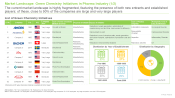
There are close to 65 use cases highlighting application areas of green chemistry by the big pharmaceutical players. Stakeholders in this domain employ various green chemistry methods including biocatalysis, electrochemistry, across different research and manufacturing applications.
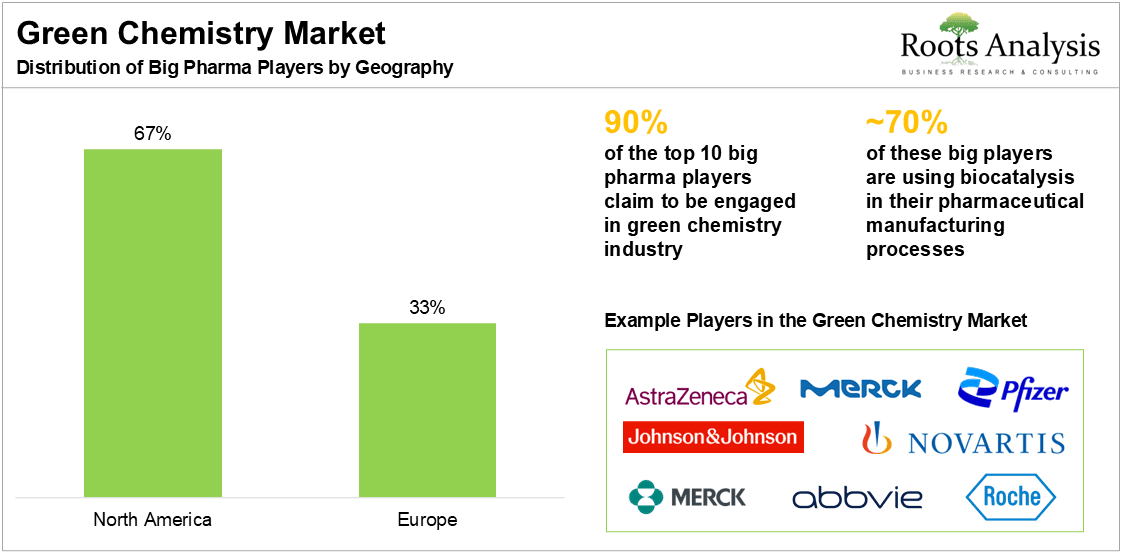
It is worth highlighting that up to 75% of the pharmaceutical pipeline is anticipated to benefit from biocatalytic methods. The photochemistry of majority of these green approaches offer improvement in yield and reduction in waste, optimizing manufacturing time as well as solvent use. Furthermore, around 30% of the small molecules targeting infectious diseases, as captured in our study, are manufactured using greener approach. Notably, majority of the big pharma players using green chemistry in their manufacturing operations are based in North America.
It is interesting to highlight that in order to keep up with the recent advancements and enhance their capabilities in this domain, companies engaged in green chemistry for chemical synthesis have undertaken several initiatives, such as entering into strategic collaborations and participating in conferences / other events.
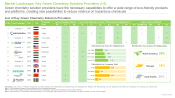
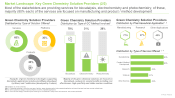
Presently, the competitive landscape of green chemistry solution providers features the presence of small, mid-sized, large, and very large players that offer various green chemistry products, platforms and services. Notably, the majority (65%) of key green chemistry industry solution providers offer manufacturing, and product / method development services.
It is worth mentioning that most of the green chemistry platforms are used in manufacturing projects; some examples of such platforms include CodeEvolver® (developed by Codexis), Nyctea® platform technology (developed by Nyctea Technologies) and selectAZyme™ (developed by Almac).
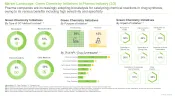
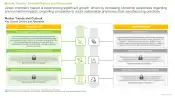
The green chemistry market growth is primarily driven by the increasing demand for sustainable products, fueled by consumers and investor pressure on pharmaceutical companies to minimize their environmental footprint. In response, companies including Bristol Myers Squibb and Roche are actively integrating green chemistry principles into their R&D and manufacturing processes to boost their corporate sustainability profiles.
In addition, cost efficiency and process optimization offered by green chemistry methods have become key drivers for the increasing adoption of such solutions. These methods enhance manufacturing efficiency, reduce waste as well as raw material usage, and lower the overall production costs. Owing to these advantages, including decreased expenses related to waste management and disposal, several companies have demonstrated improvements in their bottom line.
Presently, drug developers are constantly seeking opportunities to leverage green chemistry solutions to streamline their development processes while addressing the growing demand for sustainable products. In addition, innovations in green catalysts and solvents for environmental remediation are further enhancing the efficacy of green manufacturing practices, thereby accelerating the adoption of green chemistry technologies within the pharmaceutical industry.
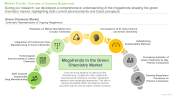
The green chemistry market is witnessing significant growth driven by a rapid transition towards sustainable drug manufacturing practices. Several big pharma companies, including Pfizer and Merck have begun to adopt these sustainable practices. Technological advancements, such as innovations in biocatalysis, electrochemistry and photochemistry, are tremendously revolutionizing this sector.
For instance, Codexis offers biocatalytic enzymes for drug synthesis, in order to reduce hazardous by-products and increase process efficiency. Further, the integration of continuous flow chemistry in pharmaceutical manufacturing, as demonstrated by companies such as Amgen and Johnson & Johnson, provides greener alternatives compared to conventional batch processes. In addition, there is an increasing emphasis on waste valorization (converting waste into valuable products) and circular chemistry to mitigate environmental impact.
In addition, convergence of AI, machine learning and data science, are helping to design more efficient, eco-friendly processes for pharmaceutical manufacturing. These technologies coupled with green chemistry principles, provide a competitive edge by streamlining various operations within the pharmaceutical industry.
In response to rising regulatory pressure, companies such as Bristol Myers Squibb, Boehringer Ingelheim and Merck are developing sustainability metrics to monitor and improve their green practices. For instance, Merck has developed a novel SMART PMI matrix that enables real-time analysis of manufacturing processes, facilitating informed decision-making to optimize operations.
Altogether, these trends are reshaping pharmaceutical and pharmaceutical contract manufacturing, making it more eco-friendly and resource efficient.
Green chemistry not only promotes sustainability but also offers several advantages to the pharmaceutical industry, such as reduced reliance on toxic chemicals, cost savings and improved process efficiency. As a result, pharmaceutical companies are prioritizing the development of processes focused on use of green chemistry for a sustainable future.
It is worth highlighting that companies such as AstraZeneca, BASF and Pfizer are striving to achieve net zero across their supply chains by as soon as 2040 and no later than 2050. These initiatives align with global regulatory guidelines and respond to the growing consumer demand for eco-friendly products.
Given the rising interest of industry players in green chemistry for environmental remediation, it is expected to have a transformative impact on the pharmaceutical industry. This shift is fostering innovation while enhancing environmental stewardship. As companies continue to invest in sustainable / green chemistry technology, the global market is anticipated to witness significant growth, paving the way for a greener and more responsible future in drug development and manufacturing.
Examples of several leading green chemistry companies driving green manufacturing in pharma industry (which have also been captured in the green chemistry market report, arranged in alphabetical order) Amgen, AstraZeneca, Bristol Myers Squibb, Codexis, Johnson & Johnson, Merck, Merck KGaA, and Pfizer. In addition, the report also includes key players offering green chemistry solutions, including Asymchem, Aurobindo Pharma, Seqens, and Zhejiang Jiuzhou Pharmaceutical. This market report includes an easily searchable excel database for all the green chemical company engaged in this industry across various research and manufacturing applications.
Amid growing regulatory pressures and increasing environmental awareness, pharmaceutical companies are embracing green chemistry to enhance sustainability and mitigate the environmental impact of drug manufacturing. Technological innovation is fueling rapid growth in the sector, though cost-effective scaling remains challenging. Ongoing advancements and demand for tailored solutions are likely to shape future of this industry.
Lead Author: Akarshika Singh
Lead Reviewer: Pemba Lahmo
Chief Editor: Simriti Gupta