


 Download Free Sample
 Buy Now
Global AI in Drug Manufacturing Market Size
The global AI in drug manufacturing market is estimated to grow from USD 0.9 billion in 2025 to reach USD 1.2 billion in 2026 and USD 34.8 billion by 2040, representing a CAGR of 27.2% during the forecast period 2026 to 2040.

See What’s in the Full Report - Request Your Complimentary Insights!
Artificial Intelligence (AI) is a branch of computer science that allows computers to carry out complex tasks that traditionally require human intelligence, such as learning, reasoning and decision making. AI in healthcare is already being utilized across various use cases, including drug discovery, clinical trials, diagnostics, personalized medicine and data management. In pharmaceutical manufacturing, AI leverages technologies like computer vision, machine learning, generative AI, deep learning to enhance process monitoring, identify bottlenecks, reduce production costs, and increase product yield.
Click On The Thumbnails To View The Full Image
 |
 |
 |
Pharmaceutical manufacturing is associated with various inefficiencies, such as suboptimal workflows, equipment downtime, quality control issues, and supply chain disruptions. These inefficiencies can lead to increased costs, production delays, and inconsistencies in product quality. AI can address these challenges by facilitating process optimization, monitoring plant / equipment performance, predicting equipment failures before they occur, supply chain management, and automating quality control.
Several pharmaceutical companies, such as Pfizer, Moderna, Novartis, Merck and Sanofi, are implementing AI into their manufacturing processes as the industry shifts towards Pharma 4.0. For instance, Pfizer deployed AI to detect anomalies and recommend real-time actions to operators, with the aim of reducing cycle time by 25% and improving product yield by 10%.
Click On The Thumbnails To View The Full Image
 |
 |
 |
Recently, the US government launched the Equip-A-Pharma program, a collaborative initiative led by the U.S Department of Health and Human Services (HHS), Administration for Strategic Preparedness and Response (ASPR), and the Defense Advanced Research Projects Agency (DARPA). The program involves various private sector partners, such as Battelle Memorial Institute, Aprecia, BrightPath Laboratories, and Mark Cuban Cost Plus Drug Company. Notably, this program aims to revolutionize the pharmaceutical manufacturing in the US using artificial intelligence, machine learning, and informatics.
AI in Drug Manufacturing Market: Report Attributes
| Key Report Attributes | Details | |
| Historical Trend | Since 2021 | |
| Forecast Period | Till 2040 | |
| Market Size 2026 | $ 1.2 Billion | |
| Market Size 2040 | $ 34.8 Billion | |
| CAGR (Till 2040) | 27.2% | |
The AI in drug manufacturing market analysis also features the likely distribution of the current and forecasted opportunity within the market across various segments, such as type of offering, mode of deployment, type of AI solution, type of technology, application area, utility in drug manufacturing, geographical regions and key players.
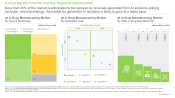
We have created three market forecast scenarios, conservative, base and optimistic, to account for future uncertainties in key parameters and enhance the robustness of our model. These scenarios represent different tracks of the industry's evolution.
Click On The Thumbnails To View The Full Image
 |
 |
 |
The adoption of AI in drug manufacturing is expected to rise substantially as regulatory agencies increasingly acknowledge its value in enhancing quality, efficiency, and compliance. For instance, during the 2024 ISPE conference, Sharmista Chatterjee (Division Director at FDA / CDER) stated “AI is going to play a significant role in pharmaceutical manufacturing in the next five to ten years.” She further emphasized that AI is a priority within the agency’s FRAME (Framework for Regulatory Advanced Manufacturing Evaluation) initiative.
Recent Developments in AI in Drug Manufacturing Market
Several recent developments have taken place in the field of artificial intelligence in drug manufacturing, and we outline some of these below. These developments, even if they arose after our market report’s release, support the overall AI in drug manufacturing market trends detailed in our analysis.
- In June 2025, Aizon entered into a partnership with Sequence aimed at delivering comprehensive, AI-powered solutions for the pharmaceutical industry.
- In April 2025, SCW.AI entered into a partnership with Sequence to accelerate digital transformation in pharmaceutical manufacturing.
- In June 2025, Antares, in collaboration with Oròbix, launched the AI-Go platform, which provides advanced visual inspection and quality control capabilities for the pharmaceutical and manufacturing packaging sectors.
- In March 2025, Infinite Uptime raised $35 million in its series C funding round to expand its presence in the US and other international markets.
Get an Instant Quote in 10 Minutes. Lowest Price Guaranteed
AI in Drug Manufacturing Market Segmentation Insights
The market report presents an in-depth analysis of various AI solution providers for drug manufacturing companies, across different segments, as defined in the table below:
AI in Drug Manufacturing Market: Market Segmentation
| Market Segmentations | Details | |
| Type of Offering |
|
|
| Mode of Deployment |
|
|
| Type of AI solution |
|
|
| Type of Technology |
|
|
| Application Area |
|
|
| Utility in Drug Manufacturing |
|
|
| Geographical Regions |
|
|
| Market in North America |
|
|
| Market in Europe |
|
|
| Market in Asia-Pacific |
|
|
| Market in Middle East and North Africa |
|
|
| Market in Latin America |
|
|
Industry Experts on Artificial Intelligence in Drug Manufacturing
Discussions with multiple stakeholders in this domain influenced the opinions and insights presented in this study. The market report includes detailed transcripts of interviews conducted with the following individuals:
- Founder, Mid-Sized Company in the US
- Vice President of New Business Development, Small Company in the US
- Senior Product Marketing Manager, Mid-Sized Company in the US
- Marketing Director, Mid-Sized Company in Israel
- Founder, Small Company in Hungary
In addition, the market report includes transcripts of the following other third-party discussions:
- Director, Data Science, Large Company in the US
- Business Lead Digital Core Transformation, Large Company in Switzerland
- Chief Revenue Officer, Mid-Sized Company in the US
- Chief Commercial Officer, Mid-Sized Company in Denmark
- Founder, Mid-Sized Company in Turkey
- Founder, Mid-Sized Company in the US
- Strategic Advisor, Mid-Sized Company in the US
- Global Head of Data Science, Large Company in France
- Technical Client Manager, Large Company in the US
- Senior Manager, Sales and Business Consulting, Large Company in Germany
- Director - Robotics & Operational Technology, Large Company in Denmark
- Chief Executive Officer, Mid-Sized Company in the US
- Vice President Information Technology, Large Company in the US
- Chief Scientific and Compliance Officer, Mid-Sized Company in the US
AI in drug manufacturing industry will mark a turning point in 2025. Geri Studebaker (Chief Commercial Officer, Aizon), states, “2025 is poised to be the tipping point when AI moves from being a competitive edge for early adopters to an industry-wide must-have, reshaping pharmaceutical production as we know it.”
AI in Drug Manufacturing Market Share Insights
Market Share by Type of Offering: Software Segment to Dominate the Overall Market
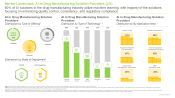
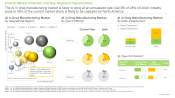
- The global AI in drug manufacturing market is divided into various sub-segments based on the type of offering, namely hardware, software, and services. In 2026, the software segment (45%) is expected to dominate the market, and is likely to grow at a higher CAGR (28.4%) during the forecast period.
- This dominance is driven by the increasing adoption of software-based solutions that integrate advanced techniques, such as predictive analytics, anomaly detection, generative AI models, and process optimization, thereby improving operational efficiency and foster innovation in drug manufacturing.
Market Share by Mode of Deployment: Cloud-based Solutions Hold the Largest Share
- Based on the mode of deployment, the overall market includes cloud-based deployment and on-premise deployment. In the current year, cloud-based deployment (62%) holds the higher market share and is likely to grow at a higher CAGR (28.1%) during the forecast period.
- This dominance is a result of its flexibility, ease of deployment, and lower upfront infrastructure costs when compared to on-premise solutions. Further, as regulatory frameworks increasingly support compliance for cloud-based solutions, the industry is gradually shifting from on-premises infrastructure to hybrid models.
Market Share by Type of AI Solution: Off-the-shelf AI Solutions to Dominate the Overall Market
- Based on the type of AI solution, the global market includes standard / off-the-shelf AI solutions and personalized AI solutions. Currently, standard / off-the-shelf AI solutions (57%) hold the higher market share and are likely to grow at a higher CAGR (30.0%) during the forecast period.
- This is primarily due to industry’s preference towards pre-validated, compliant, and ready-to-deploy solutions that can be deployed and scaled rapidly.
Market Share by Type of Technology: Computer Vision Holds the Largest Share
- There are different sub-segments of global market based on the type of technology, such as computer vision, deep learning, generative AI, machine learning and other technologies. In 2026, computer vision (36%) holds a higher market share due to its early and widespread adoption in automated quality control applications, which allowed it to gain significant traction across pharmaceutical industry.
- It is worth highlighting that the market share for generative AI is likely to grow at a relatively higher CAGR (29.9%), during the forecast period, driven by advanced capabilities of generative AI in healthcare domain, such as in predictive analytics, process optimization and real time insights.
Market Share by Application Area: Supply Chain Optimization to propel the market in the Coming Years
- This segment highlights the distribution of market across diverse types of applications within the pharmaceutical industry. According to our AI in drug manufacturing market forecast, quality control is likely to capture the majority (36%) of the market in 2026, owing to its central role in ensuring regulatory compliance and manufacturing precision.
- It is worth highlighting that the supply chain optimization segment is likely to grow at a relatively higher CAGR (29.1%), during the forecast period. This is due to the rising adoption of AI in demand forecasting, inventory management and mitigation of supply chain disruptions.
Market Share by Utility in Drug Manufacturing: Defect Defection Holds the Largest Share
This segment involves the distribution of AI in drug manufacturing market across various utilities in drug manufacturing. According to our projections, defect detection segment is likely to capture the majority (59%) share of the market in 2026, driven by the industry’s strong emphasis on minimizing batch failures and ensuring consistent product quality.
It is worth highlighting that the packaging and label inspection segment is likely to grow at a relatively higher CAGR (28.7%), during the forecast period. This is due to the strict pharmaceutical regulations regarding packaging integrity and accurate labeling, which further increases the demand for advanced inspection technologies.
Regional Analysis of AI in Drug Manufacturing Market: Asia-Pacific to Propel in the Coming Years
- According to our projections, North America is likely to capture the majority (39%) of the market in 2026 and this trend is unlikely to change in the future as well. This is due to the presence of advanced pharma manufacturing infrastructure, early adoption of artificial intelligence (AI) in healthcare technologies and supportive regulatory framework across the region.
- It is worth highlighting that the market in Asia-Pacific is expected to grow at a higher CAGR (29.3%), driven by the lower implementation costs, supportive government policies fostering digitalization, and rapidly expanding pharmaceutical sector.
AI in Drug Manufacturing Market: Report Deliverables
| Report Deliverables | Details | |
| Excel Data Packs (Complimentary) |
|
|
| Key AI in Drug Manufacturing Companies Profiled |
(Full list of ~130 companies captured is available in the report) |
|
| PowerPoint Presentation (Complimentary) |
Available | |
| Customization Scope | 15% Free Customization | |
AI in Drug Manufacturing Market Key Takeaways
The “AI in Drug Manufacturing Market: Industry Trends and Global Forecasts, till 2040” market report features an extensive study of the current market landscape, company competitiveness analysis, start-up ecosystem analysis, funding and investments analysis, partnerships and collaborations analysis, and market size and future outlook for AI in drug manufacturing market, during the forecast period.
Competitive Landscape of AI Drug Manufacturing Companies
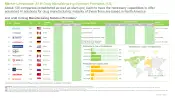
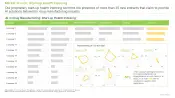
The current market landscape features a list of around 130 players including very large, large, mid-sized and small companies. These companies have the required expertise to provide AI solutions for drug manufacturing across different geographical regions.
Notably, more than 95% of companies engaged in AI in drug manufacturing offer cutting-edge software solutions. In addition to this, close to 80% of the firms are using machine learning to digitalize different stages of drug manufacturing.
What are the Use Cases of Artificial Intelligence in Pharmaceutical Manufacturing?
Over 60% of the big pharma players are leveraging AI to transform their manufacturing processes, enhancing efficiency, quality, and agility. Key use cases include real-time monitoring, automated quality inspection, predictive maintenance, and supply chain optimization.
For instance, Sanofi uses AI to optimize production yield and process efficiency; Novartis employs machine learning algorithms for real-time plant monitoring and AI-driven supply chain optimization in drug manufacturing; Merck leverages AI to reduce false reject rates during quality inspections; and Moderna employs AI-driven tools to enhance quality control systems. These applications not only streamline operations but also contribute to cost reduction and improved regulatory landscape for AI in drug manufacturing market.
As leading pharmaceutical companies and AI solution providers continue to advance their capabilities, the integration of AI in drug manufacturing has become crucial for achieving operational excellence and maintaining a competitive edge in this rapidly evolving industry.
Market Size Analysis: What is the Opportunity for AI in Drug Manufacturing?
The global AI in drug manufacturing market size is likely to be worth $ 1.2 billion in 2026 and is expected to reach $ 34.8 billion by 2040. In terms of type of technology, computer vision segment holds the largest share of the global market given its widespread utilization in automated quality control applications across the pharmaceutical industry. Further, the market size for generative AI is likely to grow at a relatively higher CAGR during the forecast period.
Regional Analysis: Which Region Holds the Largest Share of the AI in Drug Manufacturing Market?
North America is Leading the Market
North American companies are likely to dominate the global market in 2040, with close to 40% of solution providers based in the region. This concentration of prominent industry players fuels significant investment and accelerates the adoption of AI technologies in pharmaceutical manufacturing. In addition, North America also benefits from its advanced pharmaceutical ecosystem, robust R&D capabilities, and supportive regulatory infrastructure which further contribute to its dominance.
Asia-Pacific: An Emerging Growth Spot
The market in Asia-Pacific is likely to grow at the highest CAGR (29.3%), during the forecast period till 2040. This growth is driven by several factors, including lower operational costs, government initiatives supporting digitalization, and rapidly growing pharmaceutical sector in the region. Moreover, Asia-Pacific has a relatively large number of contract manufacturing facilities, where the integration of artificial intelligence offers significant potential to enhance production efficiency, improve resource utilization, and achieve substantial reductions in operational costs.
What are the Key Drivers of Artificial Intelligence in Drug Manufacturing Market?
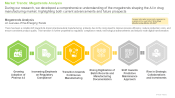
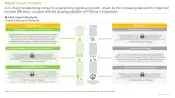
AI in drug manufacturing market growth is fueled by the increasing need to improve process efficiency, reduce production costs, and ensure consistent product quality in drug manufacturing. In addition, growing regulatory support and ongoing digital transformation across the pharma industry further accelerate the adoption of advanced AI solutions.
It is worth mentioning that AI solutions in drug manufacturing addresses various applications such as quality control, predictive maintenance, process development and optimization, plant / equipment performance monitoring and supply chain optimization. The expanding scope of these applications continues to drive strong market demand for AI solutions tailored to pharmaceutical manufacturing.
Key Market Trends in AI in Drug Manufacturing Market
Rising Partnerships and Collaborations amongst the Solution Providers to Foster Progress and Innovation in Expanding their Capabilities
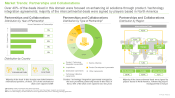
Companies providing AI solutions for drug manufacturing have forged several partnerships with other stakeholders to enhance their technology / service portfolios. Notably, in the last five years, companies based in North America and Europe have inked more than 90% of these partnerships to strengthen their capabilities in this domain.
It is worth highlighting that, majority of the deals signed in this domain are technology integration agreements, followed by acquisitions. These deals indicate the ongoing efforts of AI solution providers to advance their offerings for pharmaceutical manufacturing.
Investment Trends in AI for Drug Manufacturing 2026
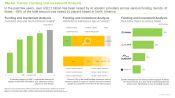
Several stakeholders in this domain have raised significant funding in order to sustain their growth initiatives. It is noteworthy that companies engaged in this domain have raised over USD 2 billion, since 2021. Additionally, majority of the funding instances were venture capital investments (69%), followed by seed funding (18%). Further, in terms of geographical activity, firms headquartered in North America have raised the majority (94%) amount in the AI in drug manufacturing industry. Notably, Dataiku emerged as the most active player (in terms of amount raised), having raised a total capital of USD 600 million since 2021 across two rounds of funding.
AI in Drug Manufacturing Market Report Coverage
The market report presents an in-depth analysis, highlighting the capabilities of various stakeholders in the AI in drug manufacturing industry, across different geographies. Amongst other elements, the market report includes:
- An Infographic Executive Summary
- Market Landscape of AI in drug manufacturing Solution Providers
- Company Competitiveness Analysis
- Company Profiles
- Start-up Ecosystem Analysis
- Funding and Investments Analysis
- Partnerships and Collaborations Analysis
- Market Forecast Analysis
Glossary
- Computer Vision: Computer Vision is a branch of artificial intelligence that enables computers to process and analyze visual input.
- Machine Learning: Machine learning is a subset of artificial intelligence that allows a system to autonomously learn from data sets and improve over time.
- Deep Learning: Deep Learning is a type of machine learning that uses artificial neural networks.
- Predictive Maintenance: Predictive maintenance is a proactive approach to maintenance that uses machine learning to anticipate potential failures and schedule maintenance before they occur.
From the Author’s Desk
Author’s View on AI in Drug Manufacturing Market
AI has emerged as a cornerstone of modern pharmaceutical manufacturing with applications across the entire value chain. As companies continue to seek greater efficiency, quality and regulatory compliance, AI is going to play a central role in shaping the next generation of Pharma 4.0 manufacturing ecosystems. With real-world adoption accelerating and technologies becoming more accessible, its momentum is likely to increase further, shaping a smarter, faster and more adaptive drug manufacturing.
About Authors
Lead Author: Akarshika Singh
Lead Reviewer: Aashima Bhalla
Chief Editor: Rupali Chaudhary


