


 Download Free Sample
 Buy Now
Click Chemistry and Bioorthogonal Chemistry Market Size
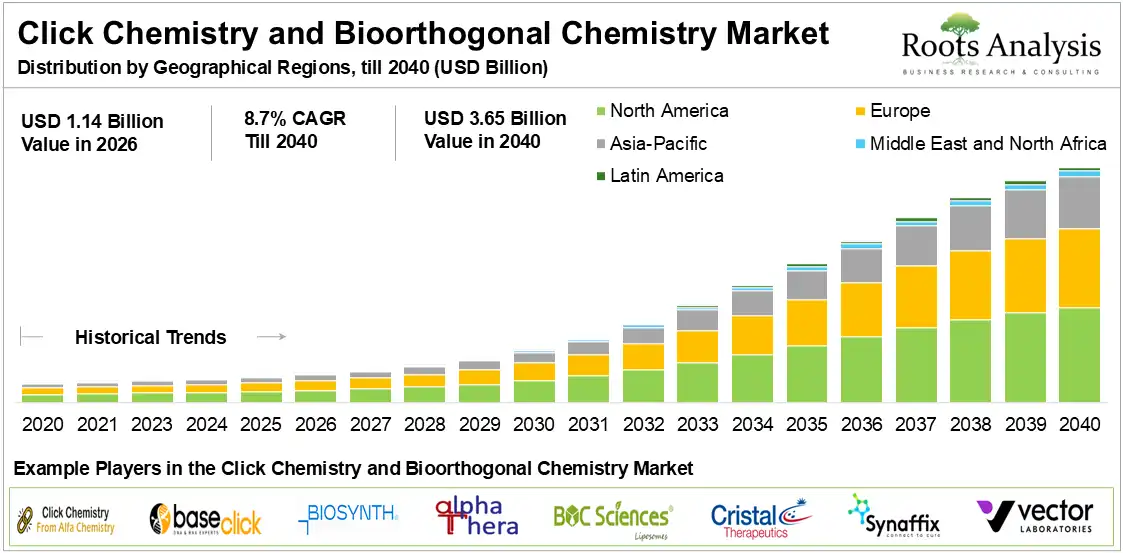
The click chemistry and bioorthogonal chemistry market, valued at USD 1.04 billion in 2025, is projected to reach USD 1.14 billion in 2026 and USD 3.65 billion by 2040, with a 8.7% CAGR during the forecast period 2026 to 2040.
See What’s in the Full Report - Request Your Complimentary Insights!
Click chemistry is a complex process of creating and joining molecules that requires expertise in constructing different parts of compounds together while maintaining precise control of subtleties associated with linked atoms in order to produce the desired product. Notably, significant boost came in the click chemistry and biorthogonal chemistry market when Barry Sharpless and colleagues, and Carolyn Bertozzi were honored with the Nobel Prize in Chemistry in 2022 for their remarkable contributions in the field of click chemistry.
Have Questions? Let's Get Them Answered
It is worth noting that there are a variety of click chemistry reactions that are currently being employed across different industries, primarily pharmaceutical and biotechnology. Moreover, these reactions are utilized across various application areas, including biomolecular labeling, biomolecular modification, library construction, lead discovery and optimization, custom synthesis and drug delivery. Therefore, in order to capitalize the growing opportunity within this rapidly evolving market, several click chemistry solution providers are on a lookout to offer reliable and innovative click chemistry protocols / services.
Given the increasing R&D expenditure, technological advancements coupled with eco-friendly nature of click chemistry reactions, the global click chemistry and bioorthogonal chemistry market is likely to witness steady growth in the coming years.
Click Chemistry and Bioorthogonal Chemistry Market: Report Attributes
| Key Report Attribute | Details | |
| Historical Trend | Since 2020 | |
| Forecast Period | Till 2040 | |
| Market Size 2026 | $1.14 Billion | |
| Market Size 2040 | $3.65 Billion | |
| CAGR (Till 2040) | 8.7% | |
The click chemistry and bioorthogonal chemistry market analysis also features the likely distribution of the current and forecasted opportunity within this industry across various segments, such as type of click chemistry reaction, type of molecule synthesized / labeled, application area and geographical regions.
We have created three market forecast scenarios, conservative, base and optimistic, to account for future uncertainties in key parameters and enhance the robustness of our model. These scenarios represent different tracks of the industry's evolution.
The rising focus on the click chemistry approaches for drug discovery and development, growing interest in the development of biocompatible reactions and rising partnership activity are fueling the growth of click chemistry and biorthogonal chemistry domain.
 |
 |
 |
Recent Developments in the Click Chemistry and Bioorthogonal Chemistry Market
- Several recent developments have occurred in the field of click chemistry and bioorthogonal chemistry, and we outline some of these below. These developments, even if they arose after our market report’s release, support the overall click chemistry and bioorthogonal chemistry market trends detailed in our analysis.
- In September 2026, Researchers published a Click-code-seq protocol for genome-wide, single-nucleotide-resolution mapping of major DNA modifications. The method enzymatically converts oxidized guanines and abasic sites into gaps, then uses click chemistry to attach molecular barcodes for sequencing.
- In September 2026, The US National Institutes of Health awarded the University of Southern California an R01 grant to develop a rapid 18F-radiopharmaceutical platform using click chemistry and droplet radiochemistry.
- In July 2026, VERAXA Biotech strengthened its patent portfolio, including additional patents covering click chemistry and conjugation technology. Additionally, the company also filed initial patent applications covering its BiTAC-TCE and BiTAC-ADC platforms, including composition-of-matter and proprietary payload technologies for oncology applications.
 |
 |
 |
Click Chemistry and Bioorthogonal Chemistry Market Segmentation Insights
The market research report presents an in-depth analysis of the various click chemistry and bioorthogonal chemistry companies, across different segments, as defined in the table below:
Click Chemistry and Bioorthogonal Chemistry Market: Market Segmentations
| Market Segmentations | Details | |
| Type of Click Chemistry Reaction |
|
|
| Type of Molecule |
|
|
| Application Area |
|
|
| Geographical Regions |
|
|
| Market in North America |
|
|
| Market in Europe |
|
|
| Market in Asia-Pacific |
|
|
| Market in Middle East and North Africa |
|
|
| Market in Latin America |
|
|
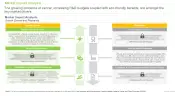
Click chemistry and bioorthogonal chemistry domain took a turning point after Carolyn R. Bertozzi, Karl Barry Sharpless and Morten Meldal were honored with “Noble Prize in Chemistry”. Jessica Ferti, (Head of Organization, baseclick), states, “Click chemistry and bioorthogonal chemistry market is expected to grow at a growth rate (CAGR) of more than 15% in the foreseen future attributed to the current momentum in mRNA synthesis and manufacturing”.
 |
 |
 |
Click Chemistry and Bioorthogonal Chemistry Market Share Insights
Market Share by Type of Click Chemistry Reactions: CuAAC Click Reactions to Dominate the Market
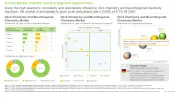
- The global chemistry market is further divided into various sub-segments based on the type of click chemistry reaction, such as CuAAC Reaction, SPAAC Reaction, Diels-Alder Reaction, Thiol-ene Reaction and other click chemistry reactions. As per click chemistry and bioorthogonal market forecast, in 2026, the CuAAC segment (35%) dominates the market since researchers often prefer CuAAC reactions for various application areas, primarily drug discovery and development.
- It is worth noting that SPAAC click chemistry reactions are likely to witness high CAGR (9.5%) by 2040. This is due to the fact that click reactions can occur without copper, which eliminates the toxicity associated with the catalyst.
Market Share by Type of Molecule Synthesized / Labeled: Proteins / Peptides Market Opportunities
- This segment highlights the distribution of market for click chemistry and bioorthogonal chemistry across various molecules synthesized / labeled, such peptides / proteins, oligonucleotides, antibody drug conjugates antibodies, small molecules and radiopharmaceuticals. In 2026, the proteins / peptides segment (25%) dominates the market as click reactions help in controlled creation of complex proteins / peptides through conjugation and cyclization, offering high efficiency, specificity and biocompatibility.
- As per our click chemistry and bioorthogonal chemistry market report, the market size for ADCs is likely to grow at a relatively higher CAGR of 9.01% during the forecast period. The is due to the rising collaborations occurring in the industry for the development of ADCs.
Would Like to Preview the Actual Report?
- The global click chemistry and bioorthogonal chemistry market is further divided into various sub-segments based on the application area, such as drug discovery, drug synthesis and other application areas. In 2026, the drug discovery segment (75%) dominates the market, and is likely to grow at a relatively higher CAGR, during the forecast period.
- This is due to the ability of click chemistry reactions to synthesize molecules in a quick, modular and reliable manner, allowing lead discovery, ligand optimization and bioconjugation.
Market Share by Geographical Regions: Asia-Pacific to Propel the Click Chemistry and Bioorthogonal Chemistry Sector in the Coming Years
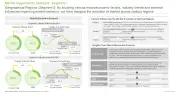
- This segment highlights the distribution of market for click chemistry and bioorthogonal chemistry across various geographies, such as North America, Europe, Asia-Pacific, Middle East and North Africa, and Latin America. According to our projections, North America is likely to capture the majority (42%) of the click chemistry and bioorthogonal chemistry industry share in 2026, and this trend is unlikely to change in the future.
- It is worth highlighting that the market in Asia-Pacific is likely to grow at a relatively higher CAGR (9.5%), during the forecast period. This is a result of rising investments in the region and increasing demand from countries, such as India, where biotechnology investments are expanding.
Click Chemistry and Bioorthogonal Chemistry Market: Report Deliverables
| Report Deliverables | Details | |
| Analytical Insights Covered |
|
|
| Strategic Insights Covered |
|
|
| Key Click Chemistry and Bioorthogonal Chemistry Companies Profiled |
|
|
| PowerPoint Presentation (Complimentary) |
|
|
| Customization Scope |
|
|
Click Chemistry and Bioorthogonal Chemistry Market Major Takeaways
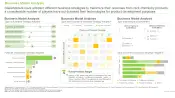
The “Click Chemistry and Bioorthogonal Chemistry Market: Industry Trends and Global Forecasts, till 2040” market report features an extensive study of the current market landscape, technology competitiveness analysis, partnership analysis, business model analysis and market size and future opportunities within the click chemistry and bioorthogonal chemistry industry, during the forecast period.
Competitive Landscape of Click Chemistry and Bioorthogonal Chemistry Service Providers
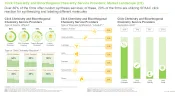
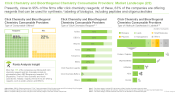
The current market landscape features close to 35 service providers, including large, mid-sized and small companies. These service providers have the required expertise to provide services for click chemistry and bioorthogonal chemistry reactions, across different geographical regions.
Notably, over 80% of the service providers offer custom synthesis services, followed by click chemistry labeling services (40%). In addition to this, close to 65% of click chemistry and bioorthogonal chemistry service providers are using SPAAC reactions as a suitable technique for the development of complex molecules.
Competitive Landscape of Click Chemistry and Bioorthogonal Chemistry Technologies
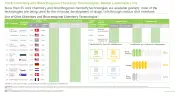
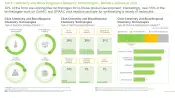
The current market landscape features more than 25 technologies and technology providers, including large, mid-sized and small companies. These companies are integrating click chemistry reactions into their technologies in order to produce high-yielding molecules.
Notably, close to 55% of the technologies can be used for antibody discovery and oligonucleotide synthesis. Further, 70% of the technologies focus on enhancing their drug discovery approaches primarily for the treatment of oncological disorders.
Competitive Landscape of Click Chemistry and Bioorthogonal Chemistry Providers
The current market landscape features over 75 consumable providers, including large, mid-sized and small companies. These consumable providers are incessantly putting effort into developing and supplying a wide array of kits and reagents across different countries.
Notably, close to 95% of the consumable providers offer various click chemistry reagents with majority of the companies primarily focused on providing azides, Dibenzocyclooctynes (DBCOs) and alkyne groups. Moreover, 20% of the players offer various types of click chemistry kits to cater to the needs of end-users.
Market Size Analysis: What is the Opportunity for Synthesis / Labeling of Proteins and Peptides?
The global click chemistry and bioorthogonal chemistry market size is likely to be worth $ 1.14 billion in 2026 and will reach $ 3.65 billion by 2040. In terms of the type of molecule synthesized / labeled, protein / peptide segment holds the largest share of the click chemistry and bioorthogonal chemistry market due to its ability to analyze protein interactions effectively. The market size for ADCs is likely to grow at a relatively higher CAGR of 9.01% during the forecast period.
The increase in the share of ADCs is due to the rising partnerships occurring for ADC technologies using click chemistry reactions which is likely to drive the growth of the click chemistry and bioorthogonal chemistry market.
Regional Analysis: Which Region Holds the Largest Share of the Click Chemistry and Bioorthogonal Chemistry Market?
North America is Leading the Market
North American companies will likely dominate the field of click chemistry and bioorthogonal chemistry in 2040, with more than 25% of players based in the region. The rising R&D expenditure investments by the developed regions contributes towards their greater shares in the market. In addition, the rising demand for chemicals in developed regions reflects larger market potential as click chemistry reagents generate majority of the revenues in this industry.
Asia-Pacific: An Emerging Growth Spot
The market in Asia-Pacific is likely to grow at a relatively high CAGR (9.5%), during the forecast period till 2040. This is due to the investments in biotechnology and biopharma industry with specifically increasing demand from countries, such as India, where biotechnology investments are expanding.
What are the Key Drivers of Click Chemistry and Bioorthogonal Chemistry Market?
The rising incidence of cancer and limitations of conventional approaches, several industry stakeholders and researchers are actively evaluating click chemistry in order to create multifunctional anti-cancer agents in a controlled manner. Additionally, higher R&D expenditure also contributes towards technological innovations that can improve research efficiency and result in targeted delivery enhancing precision medicine approaches.
It is worth mentioning that companies engaged in the click chemistry and bioorthogonal chemistry market are actively employing novel ligand designs to enhance the reactivity, stability and reactivity of existing catalysts. However, more expertise and research are required to formulate stable and inexpensive catalysts.
Don't Pay for What You Don't Need. Individual Sections of the Report Are Available for Purchase Now.
Key Market Trends in Click Chemistry and Bioorthogonal Chemistry Market
Rising Partnerships and Collaborations Amongst the Players to Foster Progress and Innovation in Expanding their Capabilities
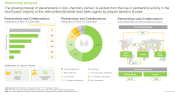
Click chemistry and bioorthogonal chemistry players have forged several partnerships with other stakeholders to enhance their services, technologies and consumables portfolios. Notably, in the last five years, companies based in Europe have inked more than 65% of these partnerships to strengthen their existing portfolios.
It is worth highlighting that, majority of the deals signed in this domain are licensing agreements forged to enhance their capabilities for the development of various type of molecules, such as ADCs, oligonucleotides and vaccines. This is followed by the instances of acquisitions of other companies involved in the global market. The persistent efforts of players engaged in the click chemistry and bioorthogonal chemistry domain to advance their offerings for manufacturing of complex compounds drive this market.
From the Author’s Desk
Author’s View on Click Chemistry and Bioorthogonal Chemistry Market
The potential market drivers that are propelling growth in this domain include rising interest in creating multifunctional anti-cancer agents in a controlled manner along with rising focus on development of biocompatible catalysts. It is worth highlighting that sustainable, biodegradable and non-toxic solvents are being used recently for custom synthesis, minimizing waste consumption Therefore, with the ongoing technological advancements in this domain, we anticipate a steady growth in the click chemistry and bioorthogonal chemistry market, till 2040.
Author’s Bio
Nishta Garg has been working as a competent business research analyst since she joined Roots Analysis. Throughout her dynamic tenure, Nishta has made significant strides to evaluate emerging trends and technologies within the pharmaceutical industry, contributing critically to numerous comprehensive research reports that provide in-dept views on topics, such as ADC Technologies, Modular Facilities, NFT in Healthcare and Targeted Protein Degradation Technologies Market.
Glossary
- Click Chemistry: A chemical synthesis method to combine complex molecules quickly.
- Bioorthogonal Chemistry: A chemical synthesis method to combine molecules quickly in biological systems.
- SPAAC Reaction: Strain-promoted azide-alkyne cycloaddition (SPAAC) click reaction occurs between an azide and a cycloalkyne facilitated by ring strain, forming a stable triazole.
- Bioconjugation: It is a chemical process that links two molecules together and one of the molecules is a biomolecule, such as protein, carbohydrate or nucleic acid.
Looking For a Deal Aligning with your Budget? Don't Miss Out on Our Promotional Campaigns!


