
Lowest Price Guaranteed
Pages
312
Last Updated
September 2026
View Count
17823
The global human factors and usability engineering services market, valued at USD 1.01 billion in 2025, is projected to reach USD 1.09 billion in 2026 and USD 1.97 billion by 2035, with a 6.7% CAGR during the forecast period 2026 to 2035.
 |
To learn more about this report, request a free sample copy
The new research study consists of market trends, detailed market analysis, competitive landscape, mergers and acquisitions, and market forecast and opportunity analysis. The human factors and usability engineering services market growth over the next decade is expected to be driven by increased technological innovations leading to the development of complex medical devices that require stringent regulatory review. Further, the heightened focus on user’s safety along with the need to minimize risks associated with user interactions is anticipated to drive the market growth.
In recent years, the medical device industry has observed a rise in the number of adverse events related to medical devices. According to the United States Food Drug and Administration (USFDA), the most common user errors leading to medical device recalls stem from design and user interface related modifications in a medical device, insufficient user training, and improper use of devices outside their intended applications.
According to Sedgwick brand protection’s US Recall Index report, medical device recalls in the US have surged by nearly 15% in the first quarter of the current year, marking the highest number of recalls in any quarter in over five years. In order to mitigate such recalls and ensure the safer use of the medical devices, medical device manufacturers have implemented various proactive measures, including robust product design and risk management processes, maintaining meticulous documentation, and collaborating closely with regulatory authorities. One prominent example of such a process is the integration of human factors and usability engineering during product design and product development.
Human factors and usability engineering involves the comprehensive analysis of how users will interact with a medical device in the real-world setting, considering all the possible parameters / potential hazards related to product use. It ensures that a device is designed in such a way that the risk of use-related errors is minimal, by thoroughly understanding the impact of devices on different type of user groups. With the integration of advanced technologies in medical devices, the human factors and usability engineering considerations have become more complex, which can be challenging for medical device manufacturers to stay updated with evolving real-world human factors and regulatory standards.
Notably, the human factors and usability engineering service providers offer specialized expertise (including FDA guidance) and help medical device companies to navigate through the complex and evolving regulatory requirements more efficiently. Moreover, medical device manufacturers often prefer to outsource human factors and usability engineering to avoid potential biasedness (which may potentially influence the participants they choose) that could arise from their familiarity with the devices and a desire for favorable outcomes. As a result, this has led to the development of an extensive contract services market that caters to the human factors and usability engineering needs of medical device manufacturers, in order to ensure adequacy and integrity of the study that aligns with regulatory requirements. As the demand for innovative and personalized medical devices continues to rise, the outsourcing of human factors and usability engineering services operations is expected to increase correspondingly. This trend is poised to present attractive growth opportunities for medical device CRO (contract research organizations) that possess expertise in this specialized field.
 |
 |
 |
The market report presents an in-depth analysis of the various service providers, across different segments, as defined in the table below:
| Key Report Attributes | Details | |
| Historical Trend | Since 2020 | |
| Forecast Period | Till 2035 | |
| Market Size 2026 | $ 1.09 Billion | |
| Market Size 2035 | $ 1.97 Billion | |
| CAGR (Till 2035) | 6.7% | |
| Steps Involved |
|
|
| Type of Research Method |
|
|
| Class of Medical Device Tested |
|
|
| Geographical Regions |
|
|
| Companies Profiled |
|
|
| PowerPoint Presentation (Complimentary) |
Available | |
| Customization Scope | 15% Free Customization | |
| Excel Data Packs (Complimentary) |
|
|
 |
 |
 |
One of the key objectives of the market report was to estimate the current human factors and usability engineering services market size, opportunity and the market growth potential for the human factors and usability engineering service providers, over the forecast period. Based on multiple parameters, likely adoption trends and through primary validations, we have provided an informed estimate on the market evolution during the forecast period, till 2035.
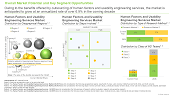
The market report also features the likely distribution of the current and forecasted opportunity within the market across various segments, such as steps involved (summative study, contextual analysis, formative study, known use error analysis, use risk analysis, submission preparation, design process and task analysis), type of research method (evaluation research and generative research), class of medical device tested (Class I, Class II and Class III), geographical regions (North America, Europe, Asia-Pacific, Middle East and North Africa, and Latin America) and leading players. In order to account for future uncertainties and to add robustness to our model, we have provided three human factors and usability engineering services market forecast scenarios, namely conservative, base and optimistic scenarios, representing different tracks of the industry’s evolution.
The opinions and insights presented in the market report were influenced by discussions held with stakeholders in the industry. The report features detailed transcripts of interviews held with the following industry stakeholders:
Further, all actual figures have been sourced and analyzed from publicly available information forums and primary research discussions. Financial figures mentioned in this market report are in USD, unless otherwise specified.
The global human factors and usability engineering services market is categorized into different steps involved, such as summative study, contextual analysis, formative study, known use error analysis, use risk analysis, submission preparation, design process and task analysis. Currently, the summative study market segment captures maximum share of the market and is expected to remain dominant during the forecast period. It is worth highlighting that summative study and contextual analysis segments are likely to grow at a relatively higher CAGR during the forecast period. It is worth highlighting that there are various advantages offered by conducting the contextual analysis at the beginning of any medical device development, these include decreased chance of device recall, expedition in the market launch of the medical device and high return on investments (ROI).
This segment highlights the distribution of the human factors and usability engineering services market across different type of research method, such as evaluation research and generative research. Among these tools, the evaluation research segment occupies the highest market share in 2024 and is expected to witness substantial growth during the forecast period.
The global market is segmented across Class I, Class II and Class III medical devices. It is worth highlighting that, presently, majority of the human factors and usability engineering services market share is occupied by testing of Class III medical devices and is expected to grow at a relatively higher CAGR, during the forecast period, till 2035. This can be attributed to the fact that Class III devices are considered as high-risk devices, since these devices have the potential to cause serious illness or injury to the patients (in case of failure). Therefore, it is imperative to conduct the human factors and usability engineering studies on these devices in order to ensure presence of better interface, minimize use-related hazards and high usability quotient.
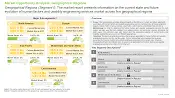
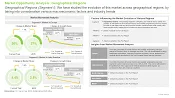
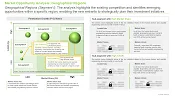
This segment highlights the distribution of human factors and usability engineering services market revenue across various geographies, such as North America, Europe, Asia-Pacific, Middle East and North Africa, and Latin America. Presently, North America is estimated to capture the majority of the market share, and this trend is unlikely to change in the future. Further, it is worth highlighting that the market in Asia-Pacific is expected to grow at a relatively higher CAGR, during the forecast period, till 2035. This can be primarily attributed to the increasing regulatory requirements for medical device approvals in this region. Some of the Asian countries, such as Australia, China, India and Japan, have implemented risk-based classification systems for medical devices, where higher-risk devices (Class II and III medical devices) are subjected to more stringent requirements, making it necessary for medical device companies to conduct human factors and usability engineering. It is worth highlighting that National Medical Products Administration (NMPA) in China is proactively focussing on comprehensive human factors and usability engineering guidelines, with emphasis on local usage and alignment with global standards for the product development and product design.
The “Human Factors and Usability Engineering Services Market (2nd Edition): Industry Trends and Global Forecasts, till 2035” report features an extensive study of the current market landscape, market size and future opportunities for human factors and usability engineering service providers, during the given forecast period. The market report highlights the efforts of several stakeholders engaged in this rapidly emerging segment of the medical devices market. Key takeaways of the market report are briefly discussed below.
Human factors and usability engineering studies focus on how a user interacts with a device in a simulated environment. The primary goal of human factors and usability engineering in the medical device domain is to identify and prevent any potential use errors that could occur once the medical device is put into use. During the usability testing of any medical device, it is imperative to consider the user (in terms of type and age of user), the environment, and interface in relation to the device being developed.
These studies encompass a wide range of aspects, including mechanical and software-driven user interface (that facilitate the user interaction with device), systems and tasks (to evaluate the overall product design and how the users interact with its various components), instructions for use (IFUs) and documentation (to ensure that the users can easily understand and follow the provided guidelines), packaging and labelling (to evaluate the product design and usability of product packaging), and user training (to assess the effectiveness and comprehensiveness of user training materials and methods). Further, human factors and usability engineering provides the necessary evidence of safety and efficacy of medical devices, which facilitates the regulatory approval of the device. As a result, in order to develop effective, and user-friendly medical devices, applying human factors and usability engineering to medical devices throughout the product development lifecycle is essential.
The well-established and comprehensive service portfolio of the human factors and usability engineering service providers, along with the presence of specialized expertise for the testing of diverse range of medical devices, acts as a one-stop-shop for the medical device developers to get their products tested and validated. Additionally, the reliability on the service providers offers flexibility and unbiasedness to the medical device manufacturers in order to navigate dynamic market conditions without the requirement to maintain in-house infrastructure. Some of the prominent advantages conferred through the outsourcing of human factors and usability engineering aspects, include lower cost of manufacturing, post-market surveillance (for continuous improvements and ensure ongoing regulatory compliance) and supply chain assistance. Further, by leveraging the expertise of service providers, medical device manufacturers can focus on their core competencies, while ensuring that a patient-centric and safe solution reaches the market quickly.
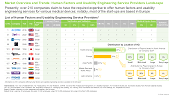
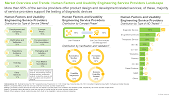
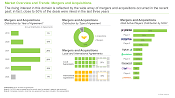
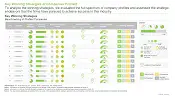
The current human factors and usability engineering services market landscape features the presence of over 210 service providers offering various services related to human factors and usability engineering for the product development; the services include concept phase, development and designing, verification and validation testing, documentation / file compilation, regulatory guidance, packaging and labeling, training and post-market surveillance. Further, the human factors and usability engineering services industry is dominated by small companies, followed by mid-sized companies having the required expertise to offer human factors services across the globe. Notably, these companies have also undertaken several initiatives, such as entering into merger / acquisition deals with other players in order to expand their existing offerings / services or to enter into this domain.
The market growth can be attributed to the increasing stringent regulatory requirements, growing complexity of medical devices, and need for risk management for medical devices. The increasing penetration of medical devices into emerging markets has driven a shift towards more affordable and accessible healthcare solutions, thereby reshaping the global medical device design landscape. The increasing adaptability of medical devices to diverse types of users has enabled medical device manufacturers to prioritize the usability of medical devices in early stages of development so as to make it more user-friendly.
In recent years, the increasing adoption of self-administration devices and digital health solutions has empowered the users to take a more active role in managing their own healthcare needs. This shift towards preference of patient-centric solutions have resulted in rise in the development of complex devices, such as combination products (including autoinjectors and prefilled syringes), diagnostic equipment, digital health solutions, implantable devices, surgical robots and Software as Medical Devices (SaMD). This has eventually necessitated the need for comprehensive human factors testing in order to ensure safety, reliability and performance of such products. As a result, medical device manufacturers have actively started to invest in rigorous and extensive usability testing protocols. Furthermore, the surge in global healthcare expenditure has amplified the demand for quality-assured medical devices, which is further driving the human factors and usability engineering services market growth.
The current market size for human factors and usability engineering services is estimated to be worth USD 1.09 billion. The market growth is expected to be driven by the recognition for conducting usability testing, growing regulatory requirements and rising demand for patient-centric medical devices, leading to a CAGR of 6.7%.
Presently, 55% of the overall market is captured by North America. Notably, the factors that contribute to the region’s dominance in this industry include the presence of several well-established companies (with diverse experience in research and development of medical devices) and advanced healthcare infrastructure of the region. However, in terms of market growth, the human factors and usability engineering services market in Europe is expected to grow at a relatively higher CAGR during the forecast period. This can be attributed to various factors such as rising healthcare expenditure, changing regulatory norms, preference to conduct human factors and usability engineering studies from service providers located in Europe, growing awareness about usability testing and their advantages.
It is worth mentioning that in the recent years, there has been an increase in conferences and industry events focused on medical device human factors and usability engineering, which is an indicator of increased interest of medical device companies in this domain.
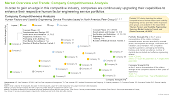
Examples of human factors and usability engineering service providers (have been profiled in full report, arranged in alphabetical order) include Aptar Digital Health, AYES, Bayoomed, Bold Insight, ClariMed, Comate, D+I, Greenlight Guru, Hydrix, Invetech and Johari Digital. This market report includes an easily searchable excel database including all the service providers that we identified are engaged in human factors and usability engineering domain.
The market report presents an in-depth analysis, highlighting the capabilities of various stakeholders in this industry, across different segments. Amongst other elements, the market report includes:
 |
 |
 |
Several recent developments have taken place in the market, some of which have been outlined below.