
Lowest Price Guaranteed
Slides
207
Last Updated
August 2025
View Count
15164
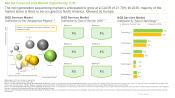
The global next generation sequencing services market is estimated to reach USD 12.2 billion in 2025, increasing to USD 87.5 billion by 2035, representing a CAGR of 21.78% during the forecast period.
 |
To learn more about this report, request a free sample copy
Given the growing demand for personalized therapies and biologics to treat chronic and rare diseases, there is a surge in the demand for sequencing services. Next generation sequencing is a new sequencing technology used for the sequencing of whole genomes to understand genetic variations associated with diseases. The potential of sequencing entire genome simultaneously has brought unprecedented opportunities for research and diagnosis of diseases at molecular level. It is important to highlight here that the demand for high-throughput technologies has also gained attention due to the growing burden of genetic and chronic diseases across the globe. According to the report of Centers for Disease Control and Prevention, nearly 6 out of 10 Americans are suffering from at least one chronic disease, indicating the growing risk of diseases.
 |
 |
 |
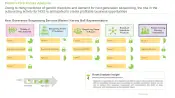
In order to mitigate the growing concern of diseases, researchers are leveraging next generation sequencing for analyzing diseases at molecular level and metagenomics studies. In addition to disease diagnosis, next generation sequencing helps to design cell therapies, identify biomarkers and develop targeted therapies. Despite high demand, the next generation sequencing platforms have experienced limited adoption due to the high installation cost, requirement of skilled personnels and limited in-house infrastructure to implement NGS workflow. To address this concern, several industry players (including Illumina and Roche) are offering next generation sequencing services. It is worth mentioning that outsourcing NGS solutions is cost-effective, reduces analysis time and provides accuracy in generating sequencing.
 |
 |
 |
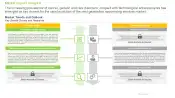
The benefits offered by the outsourcing of next generation sequencing have caught the attention of several government organizations and industrial players who are presently indulging in several national population genome mapping projects. For instance, in June 2024, Illumina, in association with Nashville Biosciences, announced the incorporation of Bristol Myers Squibb, Novo Nordisk and GSK in the Alliance for Genomic Discovery. As stated by Joydeep Goswami (Chief Financial Officer, Illumina), “Together with NashBio and the now eight member organizations in the Alliance for Genomic Discovery, we will generate and analyze more genomic, multimodal phenotypic, and multiomic data in a turnkey manner. This rich dataset will enable the discovery of highly actionable therapeutic targets and improve the speed, probability of success, and efficiency of the discovery and development process.”.
 |
 |
 |
Such ongoing alliance has contributed to the heightened demand for next generation sequencing solutions. Driven by the ongoing initiatives, alliance and increasing demand for high-throughput sequencing methods, we believe that the next generation sequencing services market is estimated to boost at a steady rate during the forecast period.
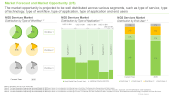
The market report is a brief discussion on various NGS service providers that are engaged in the industry across different segments, as defined in the table below.
| Key Report Attributes | Details | |
| Historical Trend | Since 2019 | |
| Forecast Period | Till 2035 | |
| Market Size 2035 | USD 87.5 Billion | |
| Market CAGR | 21.78% | |
| Type of Service |
|
|
| Type of Workflow |
|
|
| Type of Technology |
|
|
| Type of Application |
|
|
| Type of End User |
|
|
| Geographical Regions |
|
|
| Key Companies Profiled |
|
|
| PowerPoint Presentation (Complimentary) |
Available | |
| Customization Scope | 15% Free Customization | |
| Excel Data Packs (Complimentary) |
Available | |
One of the key objectives of the next generation sequencing services market report was to estimate the current market size, opportunity and the market growth potential, over the forecast period, till 2035. We have provided informed estimates on the likely evolution of the market for the forecast period.
Additionally, the market report features the likely distribution of market based on the type of service (human genome sequencing services, single cell sequencing services, microbial genome-based sequencing services, gene regulation services (small RNA sequencing, ChIP sequencing and other gene regulation-based services, animal & plant sequencing services and other sequencing services), type of technology (sequencing by synthesis, ion semiconductor, single-molecule real-time sequencing, nanopore sequencing technology and other technologies), type of workflow (pre-sequencing, sequencing and data analysis), type of application (diagnostics, drug discovery, biomarker discovery, agriculture, and animal research, other applications), end user (universities & other research entities, hospitals & clinics, pharmaceutical & biotechnology companies and others), geographical regions (North America, Europe, Asia-Pacific, Middle East and North Africa, and Latin America) and leading players.
To account for the uncertainties associated with the next generation sequencing services and to add robustness to our model, we have provided three market forecast scenarios, portraying the conservative, base and optimistic tracks of the market’s evolution.
All actual figures have been sourced and analyzed from publicly available information forums and primary research discussions. Financial figures mentioned in this market research report are in USD, unless otherwise specified.
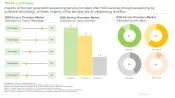
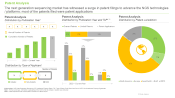
Based on the type of service, the next generation sequencing services market is segmented into human genome sequencing services, single cell sequencing services, microbial genome-based sequencing services, gene regulation services (small RNA sequencing, ChIP sequencing and other gene regulation-based services), animal & plant sequencing services and other sequencing services. According to our projection, currently human genome sequencing services accounts for the largest share (31%) of the market. This largest share is due to the fact that human genome sequencing helps to access the genetic information associated with human genes and identify the susceptibility to any disease. Based on the results, researchers are able to develop personalized medicine (especially, oncology precision medicine) and pharmacogenomics. Moreover, human genome sequencing play a significant role in biomarker discovery and key information for cancer-associated genes.
It is important to highlight here that gene regulation services will grow at a higher CAGR rate during the forecast period. This can be attributed to the fact that gene regulation services cover isoform sequencing, small RNA sequencing, INcRNA sequencing, bisulfite sequencing and ChIP sequencing are currently being used across various types of applications. It is worth mentioning that in February 2024, Wasatch Biolabs (a subsidiary of Renew Biotechnologies) announced the launch of proprietary targeted DNA methylation sequencing service for various end users (such as researchers and clinical service providers). Interestingly, this service (which is bisulfite conversion free) is being launched as a part of Oxford Nanopore-based sequencing services.
Additionally, with respect to microbial genome sequencing services, companies like Charles River Laboratories are offering services for bacterial and fungal identification. Their service was launched in May 2023, under the name, Accugenix NGS will serve the industrial microbiology market.
This segment highlights the distribution of next generation sequencing services market across various types of technologies, such as sequencing by synthesis, ion semiconductor, single-molecule real-time sequencing, nanopore sequencing technology and other technologies. According to our analysis, sequencing by synthesis accounts for the highest share (nearly 65%) of the market. Sequencing by sequencing services and platforms allow sequencing of genomes efficiently with higher accuracy and reduce the cost of sequencing. Moreover, sequencing by synthesis is a versatile technology that can cater to wide range of applications such as whole genome sequencing, targeted resequencing and RNA sequencing, making it an ideal sequencing technology for clinical studies.
However, it is important to highlight here that nanopore sequencing technology is expected to grow at a higher CAGR during the forecast period. This lucrative growth is due to the growing demand for personalized therapeutic drugs and advanced technology for precise analysis of diseases.
The global next generation sequencing services market is segmented on the basis of types of workflows into pre-sequencing, sequencing and data analysis. Pre-sequencing involves nucleic acid extraction and library preparation. NGS service providers are working towards strengthening their complete workflows. In October 2024, US based NGS service provider Admera Health acquired Germany based BioEcho Life Sciences to gain hold of their EchoLUTION technology for DNA and RNA extraction.
Based on our projection, currently sequencing segment occupies the highest share (56%) of the market. This can be attributed to the fact that NGS services providing companies are offering services for sequencing of whole genome on a large scale. Furthermore, sequencing services providers generate publication-ready report for the successful outcomes of research programs that are conducted across various industrial sectors. In order to fulfill the demand for sequencing services several companies are engaged in the industry to offer standalone services and facilities to the consumer seeking to outsource NGS workflow. Driven by the rising demand, this segment will continue to grow at a steady rate during the forecast period.
Based on the type of application the global market is segmented into diagnostics, drug discovery, biomarker discovery, agriculture, and animal research, other applications. According to our analysis, diagnostics application accounts for the highest next generation sequencing services market share. This can be attributed to the growing usage of next-generation sequencing technologies for diagnosing disease at molecular level. However, it is important to highlight here that discovery and biomarker discovery are likely to grow at a higher CAGR during the forecast period. This is likely to be the result of hi demand for next-generation sequencing technology in clinical studies of diseases and designing therapeutic treatment.
The global next generation sequencing services market is distributed across various types of end users, such as universities & other research entities, hospitals & clinics, pharmaceutical & biotechnology companies and other end users. Among these end users, universities and other research institutes accounts for the highest share (52%) of the market. The highest growth share is likely to be the result of heightened adoption of NGS services in oncology research and personalized medicine. However, it is important to highlight here that hospitals & clinics will grow at a higher CAGR of during the forecast period. This growth potential is primarily due to the growing demand for next generation technologies disease diagnosis in hospitals. The ongoing research and high demand for NGS solutions for disease diagnosis across different industrial verticals offers opportunities to next generation sequencing services providers for technological innovations and product portfolio expansion.
Based on the geographical regions, the NGS services market is distributed into North America, Europe, Asia-Pacific, Middle East and North Africa, and Latin America. Currently, North America accounts for the highest share (45%) of the overall market. This dominance is due to the increasing demand for next generation sequencing solutions in research and healthcare institutes of this region. Moreover, the increasing prevalence of personalized medicine to treat chronic condition has further accelerated the demand for next generation sequencing kits and solutions to diagnose disease at molecular level.
However, in Asia-Pacific, the market will show significant growth potential, anticipated to grow at a higher CAGR during the forecast period. This can be attributed to the increasing support from the government organizations for drug research, increasing expenditure on the improvement of healthcare infrastructure and rising partnerships between industrial players. It is important to highlight here that players like Pfizer and Thermo Fisher Scientific are expanding their partnerships to expand the next generation sequencing testing in international regions (including Asia, Middle East, Africa and Latin America), anticipated to be a key growth factor.
The “Next Generation Sequencing Services Market: Industry Trends and Global Forecast, till 2035” market report features an extensive study of the current market landscape, market size, market share, market growth, market trends, market value, market forecast, market outlook, statistics and future opportunities of the NGS market.
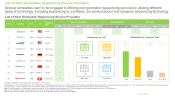
Currently, the NGS services market landscape features several well-established companies claiming to provide an extensive portfolio of genome sequencing-related services. Overall, the market seems moderately competitive, characterized by the presence of various small, mid-sized and large players who are offering a variety of next-generation technologies-based services. It is important to highlight here that the leading players of the industry have developed a wide range of gene sequencing systems and technologies including next generation technologies that have the capability to sequence entire genomes with higher accuracy.
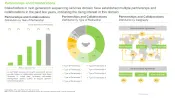
In order to enhance product portfolio and services, several market leaders entered into the collaborations and acquisitions deals. A number of collaborations have been for technology platforms that strengthen / improve the NGS service portfolio. For instance, in April 2024, an Ireland based NGs service provider Genseq signed a collaboration agreement with Sapio Sciences to install their laboratory information management system (LIMS) to automate data exchange between systems, track sample and assess quality control. As industrial players continue to foster an ecosystem of technological innovations, the market will remain competitive throughout the projected period.
Next generation sequencing services market growth drivers that are propelling the market include technological advancements, and demand for personalized therapies. In order to mitigate the growing concern of chronic and genetic diseases, leading pharmaceutical players are actively emphasizing on the development of advanced tailored drugs that require innovative sequencing technologies ensure accurate analysis of human genome with shorter turnaround time. The ongoing demand to conduct advanced next generation sequencing techniques offer competitive advantage to the leading players for making high investments in this field, which is estimated to grow the market during the projected period. Additionally, the increasing awareness about benefits of sequencing genome for disease diagnosis and drug development has further heightened the adoption of next generation sequencing services.
Despite the growing demand for next generation sequencing services in the disease diagnosis, drugs research and development, the market players witness several challenges. Some of the significant challenges include the high expenditures associated with installation and maintenance of NGS technologies. Furthermore, the lack of standardized silico tools to interpret data generated during genome analysis may hinder the adoption of NGS services. Additionally, the requirement of skilled personnel, sophisticated bioinformatic tools and computational resources may increase the overall cost, creating subsequent challenges for market players. It is important to highlight here that NGS services specifically designed for clinical diagnostics are required to follow stringent regulatory framework to ensure data security and safety. These complex guidelines may limit the adoption of next generation sequencing services on a large scale.
Some of the potential opportunities that are likely to propel the next generation sequencing services market during the projected period includes outsourcing trend, shift towards precision medicine and demand in disease diagnosis. It is important to highlight here that next generation sequencing services reduces the load from researchers for genome profiling under in-house facilities. The growing trend of outsourcing for genome sequencing has provided opportunities to industrial leaders for offering more advanced and affordable next generation sequencing services to industrial players. Furthermore, the market players of NGS services also find lucrative opportunities in technological advancements. Some of the notable technological advancements trends includes next generation sequencer with higher accuracy, long-read sequencing and growth of single-cell sequencing such as single-cell RNA sequencing technology. Furthermore, industry players are working on integrating artificial intelligence and machine learning technology to make sequencing more effortless.
North America maintains a well-established technology manufacturers network and supportive regulatory guidelines for using genetic tests. Additionally, the advanced healthcare infrastructure and rising focus on oncology precision medicine is another significant driver of the next generation sequencing services market in this region. According to the National Institute of Health, in 2024, nearly 2,001,140 new cancer cases has been projected to occur in the United States. With growing concern of cancer, genetic testing or gene profiling has been mandated by the healthcare experts to assess genetic markers in asymptomatic individuals to predict future susceptibility of cancer in individuals.
Next generation sequencing also play a crucial role in diagnosing and designing treatment plan for cancer patient by understanding genome profile, anticipated to be a key driver for the market in North America. Since, next generation sequencing requires advanced infrastructure, technological support and skilled personnels which enhances the overall cost of sequencing, healthcare experts and pharmaceutical companies rely on next generation sequencing services providers, which is expected to boost the demand for NGS services in North America.
It is important to highlight here that the service providers are expanding their geographical presence to meet the local needs across other regions and overcome logistical challenges. In May 2024, Azenta Life Sciences opened their new genomics laboratory in Oxford, UK to provide local access to their GENEWIZ services using NGS platforms. Additionally, market in Asia-Pacific is likely to witness a higher CAGR during the forecast period. The primary reason for faster growth rate is advancement in infrastructure, prevailing risk of genetic diseases and presence of life science-based companies who are focusing on leveraging next generation sequencing for tailored drug development.
The global NGS services market is currently valued at USD 12.2 billion and is estimated to reach USD 87.5 billion by 2035. With heightened demand from targeted drugs to treat broad range of diseases, next generation sequencing has become an integral part of drug research and development. Driven by the growing demand for next generation sequencing technologies, top players of the industries are expanding their services across the globe by offering wide range of sequencing solutions. With global expansion of next generation sequencing services, the market is expected to grow at a CAGR of 21.78% during the forecast period.
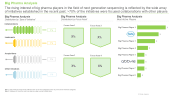
Examples of key companies active in NGS services market (which have also been profiled in this market report; the complete list of companies is available in the full report) include 10x Genomics, BGI Group, BD, DNASTAR, Eurofins Scientific, GENEWIZ, GATC Biotech, GenScript Biotech, Illumina, Macrogen, NantOmics, Oxford Nanopore Technologies, Partek, Pacific Biosciences, Perkinelmer, Qiagen, Roche, and Thermo Fisher Scientific. This market report includes an easily searchable excel database of all the companies providing NGS sequencing services worldwide.
Several recent developments have taken place in the field of the next generation sequencing services market. We have outlined some of these recent initiatives below.