
Lowest Price Guaranteed
Pages
423
Last Updated
September 2026
View Count
28883
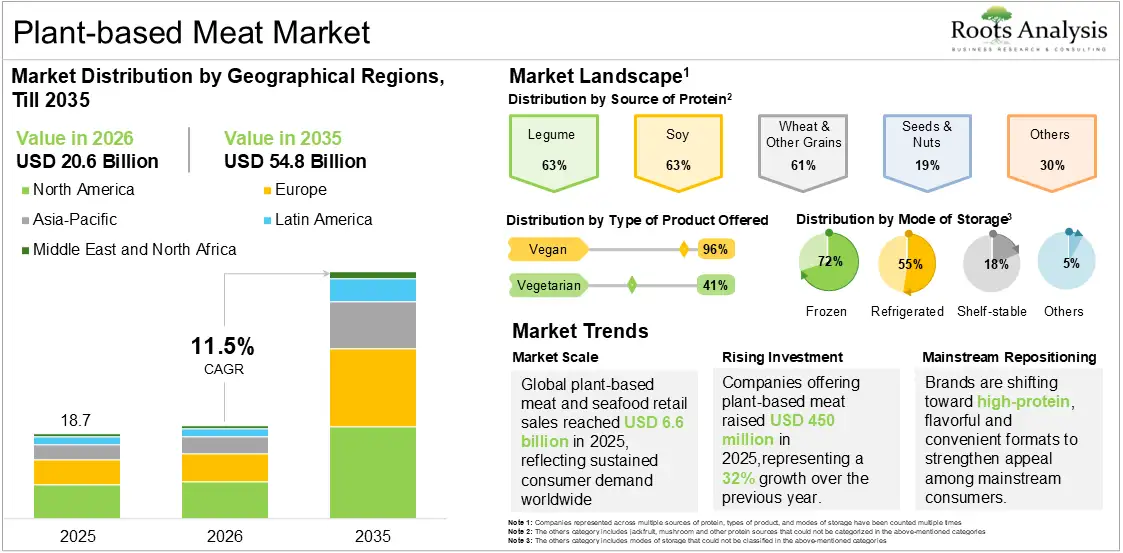
The global plant-based meat market, valued at USD 18.7 billion in 2025, is projected to reach USD 20.6 billion in 2026 and USD 54.8 billion by 2035, representing a CAGR of 11.5% during the forecast period 2026 to 2035.
To learn more about this report, request a free sample copy
Plant-based meat refers to food products made from soy, wheat, pea, and other plant-derived proteins. These products are formulated to replicate the taste, texture, appearance, and cooking properties of conventional meat. A distinct alternative-protein approach is cultured meat, which grows animal cells in controlled culture rather than formulating products from plant proteins.
Manufacturers offer plant-based meat in a familiar formats such as burger patties, sausages, ground meat, nuggets, strips, meatballs, fillets, and whole-cut alternatives. These formats allow consumers to reduce their consumption of animal-derived meat without substantially changing their eating habits or meal preparation routines.
The plant-based meat market is expanding beyond vegan and vegetarian consumers to reach flexitarians seeking convenient, protein-rich and more sustainable food choices. This broader consumer appeal has supported steady market expansion, as global retail sales of plant-based meat and seafood tripled between 2015 and 2025, reaching an estimated USD 6.6 billion in 2025.
Consumer interest also extends beyond committed plant-based eaters. Approximately 71% of US consumers between the ages of 18 and 59 remain at least somewhat likely to consume plant-based meat or dairy, indicating a sizeable addressable consumer base beyond committed plant-based eaters.
To convert consumer interest into repeat purchases, manufacturers are improving taste, texture, nutritional value, ingredient quality, and ease of preparation. A blinded sensory study conducted in 2026 with 2,684 consumers found that several plant-based chicken fillets, nuggets, and burgers achieved consumer preference scores comparable to animal-based products. These findings indicate that improvements in taste, texture, and juiciness can support broader consumer adoption. However, sensory performance alone may not be sufficient to generate sustained demand.
Price remains another major barrier to adoption. GFI Europe's June 2026 analysis found that plant-based food sales volumes increased in four of six leading European markets during 2025 as price gaps between plant-based and conventional products narrowed.
Future market growth will depend on manufacturers' ability to improve sensory quality, reduce production costs, simplify ingredient lists, enhance nutritional profiles, and expand product availability across retail and foodservice channels.
| Company | YoE | Headquarters | Protein Platform | Major Product Categories |
| Beyond Meat | 2009 | United States | Yellow pea, brown rice, red lentil and faba bean proteins | Burgers, ground beef, sausages, chicken pieces and steak products |
| Impossible Foods | 2011 | United States | Soy protein supported by soy leghemoglobin, or heme | Ground beef, burgers, chicken, sausage, pork, hot dogs and steak bites |
| Quorn Foods | 1985 | United Kingdom | Fermentation-derived mycoprotein | Mince, chicken pieces, nuggets, sausages, fillets, steaks, deli slices and ready meals |
| Gardein | 2003 | Canada | Pea protein in its Ultimate Burger, with soy and wheat-based formulations across parts of its portfolio | Burgers, ground beef, chicken, turkey, pork, meatballs, fish alternatives and ready meals |
| MorningStar Farms | 1974 | United States | Primarily soy protein and wheat gluten | Burgers, breakfast sausage, bacon, chicken products, hot dogs, crumbles and appetizers |
| Heura Foods | 2017 | Spain | Soy protein for chicken-style products and pea protein for beef-style products | Chunks, burgers, fillets, nuggets, sausages, mince and cold cuts |
YOE: Year of Establishment
Based on the research, we have segmented the Plant-based Meat Market into source of protein, type of meat substituted, type of end product, mode of storage, type of distribution channel, and geographical regions.
By Source of Protein
By Type of Meat Substituted
By Type of End Product
By Mode of Storage
By Type of Distribution Channel
By Geographical Regions
Driven by rising consumer interest in reducing animal-based food consumption, the plant-based meat market is broadening its appeal beyond vegetarian and vegan niches to target mainstream meat-eating consumers.
Emphasizing this shift, Indy Kaur (Founder and Chief Executive Officer, Plant Futures Collective) stated, "The real opportunity, however, lies with open omnivores, meat eaters who are open to trying plant-based foods, especially plant-based meat, and are actively seeking to reduce their meat consumption. What's particularly exciting is that if someone is interested in reducing meat consumption, they are also more likely to reduce their dairy consumption, and vice versa."
Discussions with multiple stakeholders in this domain influenced the opinions and insights presented in this study. The market report includes transcripts of third-party discussions:
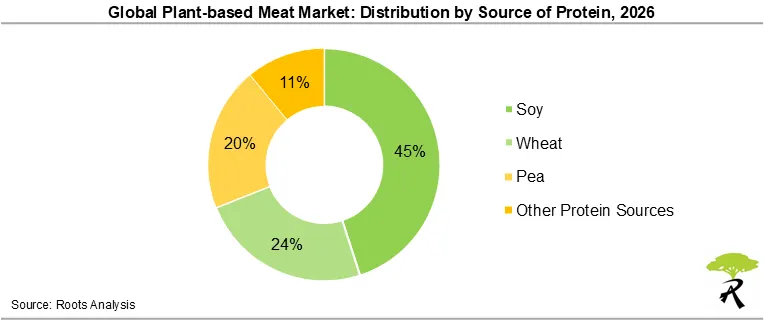
Based on the source of protein, the plant-based meat market is segmented into soy, wheat, pea and other protein sources.
The soy segment currently holds the largest share, accounting for around 45% of the plant-based meat market. Soy benefits from an established agricultural and processing ecosystem, competitive pricing and broad availability and widespread use in commercial alternative protein products. Moreover, soy protein also offers strong gelling, emulsification, water-holding and oil-absorption properties. These characteristics help manufacturers create fibrous structures, retain moisture and reduce cooking losses.
Further, soy protein isolates, concentrates and textured soy proteins support the production of burgers, sausages, minced meat, nuggets and other high-volume formats. These functional advantages enable manufacturers to achieve consistent product quality on a commercial scale, supporting the segment's market leadership.
The pea segment is likely to register the highest growth during the forecast period. Pea protein enables manufacturers to develop soy-free and gluten-free formulations while reducing their dependence on traditional protein sources. Its water and oil absorption, emulsification and gelling properties support applications across burgers, chicken alternatives, strips and other meat-like formats.
Manufacturers are also adopting fermentation, thermal treatment, pH modification and protein blending to reduce undesirable flavors and improve texture, mouthfeel and nutritional quality. Continued improvements in pea protein processing and ingredient availability are likely to accelerate its adoption across premium and clean-label plant-based meat products.
Based on the type of meat substituted, the plant-based meat market is segmented into chicken, beef, pork, seafood and others.
The plant-based chicken segment currently holds the largest share, accounting for around 30% of the market. Its dominance primarily reflects the widespread consumption and culinary versatility of conventional chicken, which creates a large substitution opportunity. Manufacturers can offer plant-based chicken in familiar formats, including nuggets, fillets, strips, patties and sausages, across retail, foodservice and ready-meal applications.
Further, chicken's relatively mild flavor profile allows manufacturers to adapt products to different seasonings and regional cuisines. Additionally, the OECD-FAO expects poultry to record the largest absolute increase in global meat consumption through 2035, further reinforcing the long-term demand potential for comparable plant-based alternatives.
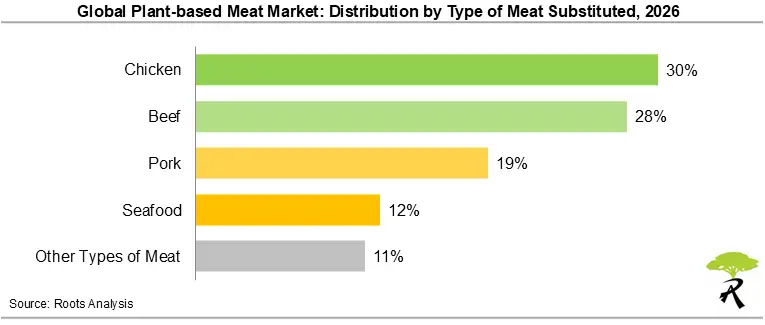
The plant-based seafood segment is likely to register the highest growth during the forecast period. The segment remains comparatively underdeveloped, providing considerable scope for companies to introduce alternatives to fish fillets, tuna, salmon, shrimp and other seafood products. Concerns related to overfishing, marine pollution, supply volatility and contaminants are also strengthening interest in seafood alternatives.
Advances in 3D structuring, algae-based flavoring and protein formulation are enabling manufacturers to recreate the flaky texture and distinct flavor of conventional seafood. For instance, in May 2026, Oshi secured USD 3 million in funding after recording a fourfold increase in sales, supporting the expansion of its whole-cut plant-based salmon and the development of a whitefish product.
Based on the type of end product, the plant-based meat market is segmented into burger patties, sausages, minced meat, strips and nuggets, meatballs and Others.
The burger patties segment currently dominates the global market. Burger patties were among the earliest plant-based meat products to achieve widespread commercial availability and remain familiar to consumers across retail and foodservice settings. Their ground format also allows manufacturers to recreate meat-like texture, moisture and cooking behavior more easily than structurally complex whole-cut products.
Further, burger patties fit established consumption occasions across quick-service restaurants, casual dining outlets, barbecues and home meals. Their strong brand recognition, extensive freezer placement and compatibility with existing foodservice preparation systems continue to support the segment's market leadership.
The strips and nuggets segment is anticipated to register the highest growth during the forecast period. These products offer convenient preparation, portion flexibility and compatibility with a wider range of meals, including wraps, salads, bowls, stir-fries and children's meals. Nuggets also provide a familiar entry point for consumers who may hesitate to purchase products that closely replicate whole cuts of meat.
Manufacturers are increasingly improving breading, juiciness and protein content while introducing pre-cooked and flavored options suited to both snacking and meal preparation. For instance, in April 2026, Beyond Meat introduced Spicy Buffalo Beyond Chicken Pieces across more than 2,000 Kroger stores, reflecting continued expansion of convenient, bite-sized plant-based chicken formats.
Based on the mode of storage, the plant-based meat market is segmented into frozen, refrigerated and shelf-stable products.
The frozen segment currently captures the largest share of the plant-based meat market. Freezing extends product shelf life while preserving texture, flavor and nutritional quality, making it suitable for products such as burger patties, sausages, nuggets and minced meat. The format also enables manufacturers and retailers to maintain larger inventories, reduce spoilage and distribute products across wider geographical areas. Further, established frozen-food supply chains and dedicated freezer sections across supermarkets support the commercial availability of plant-based meat in both developed and emerging markets.
The shelf-stable segment is likely to register the highest growth during the forecast period. Unlike frozen and refrigerated products, shelf-stable plant-based meat does not require continuous temperature-controlled storage, reducing dependence on costly cold chain logistics. This can improve distribution across smaller retail outlets, e-commerce channels and markets with limited refrigeration capacity.
Advances in vacuum packaging, modified-atmosphere packaging, moisture control and preservation technologies are also helping manufacturers extend shelf life while maintaining product safety and sensory quality. These advantages are likely to encourage the development of shelf-stable minced meat, ready-to-eat products and other convenient formats.
In terms of geographical regions, the global plant-based meat market is segmented into North America, Europe, Asia-Pacific, Latin America, and Middle East and North Africa.
North America currently holds the largest share of the global plant-based meat market. The region's market leadership is supported by high consumer awareness, strong retail and foodservice distribution, and the presence of prominent plant-based meat manufacturers.
The North American plant-based meat market also benefits from a wide variety of product formats. These include burger patties, nuggets, sausages, minced meat and whole-cut alternatives. This broad product availability helps manufacturers address different meal occasions, dietary preferences, and consumer needs.
However, the US Dietary Guidelines for Americans released in January 2026 may influence plant-based meat marketing and product positioning. The guidelines prioritize protein at every meal and explicitly include red meat, poultry, seafood, eggs, and plant-based protein sources. The guidelines also advise consumers to limit highly processed foods.
As a result, plant-based meat companies may need to focus on cleaner labels, simpler ingredients, strong nutritional profiles, and clear benefits compared with conventional meat. These strategies will be important for maintaining consumer trust and supporting the long-term growth of the plant-based meat market in North America.
The plant-based meat market in Europe is expected to grow at the highest rate during the forecast period. This growth is supported by strong flexitarian demand, retailer-led expansion of plant-based ranges and increasing efforts to narrow the price gap with conventional meat.
European supermarkets are using private-label products, competitive pricing, improved shelf placement and protein-transition targets to make plant-based options more accessible. For instance, sales of Lidl's private-label plant-based range in the UK increased by nearly 700% between 2020 and 2025.
Further, major supermarkets in the Netherlands aim to increase the share of plant-based protein to 60% of total protein sales by 2030. Such retailer-led strategies are expected to improve product visibility, encourage trial and integrate plant-based meat into routine household purchases.
| Key Report Attribute | Details | |
| Historical Trend | Since 2019 | |
| Forecast Period | Till 2035 | |
| Market Size 2026 | USD 20.6 Billion | |
| Market Size 2035 | USD 54.8 Billion | |
| CAGR (Till 2035) | 11.5% | |
| Segments Covered |
|
|
| Key Players |
|
|
| PowerPoint Presentation (Complimentary) |
Available | |
| Customization Scope | 15% Free Customization | |
| Excel Data Packs (Complimentary) |
Available | |