


 Download Free Sample
 Buy Now
Market Size
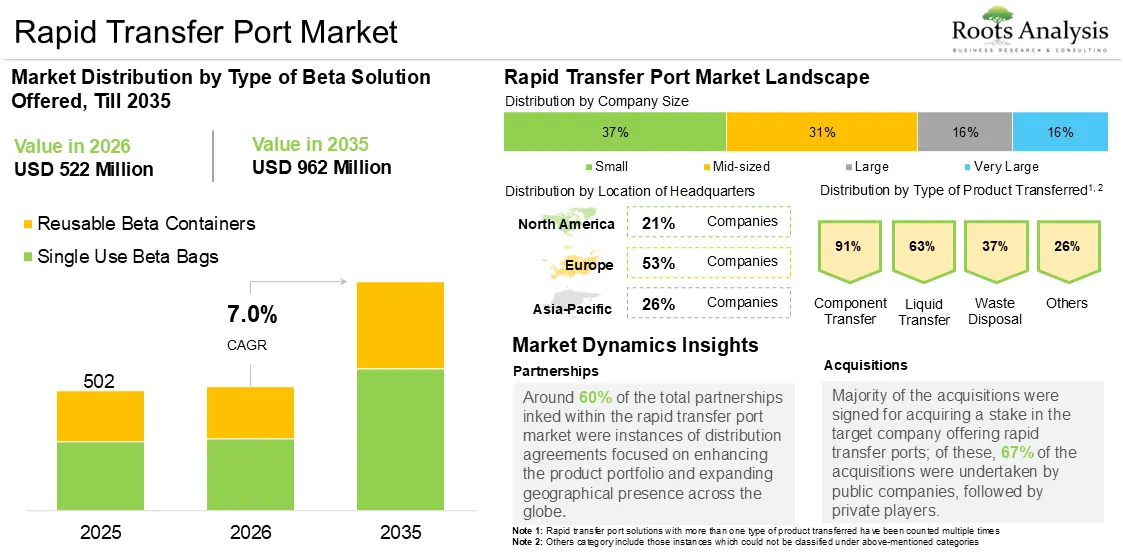
The global rapid transfer port market size, valued at USD 502 million in 2025, is projected to reach USD 522 million in 2026 and USD 962 million by 2035, with a CAGR of 7.0% during the forecast period 2026 to 2035.
See What’s in the Full Report – Request Your Complimentary Insights!
Market Report: Key Takeaways
- With the rising complexity of aseptic processing and the critical need for absolute sterility assurance in high-value biologics, the industry has observed increased stringency in the regulatory framework of the USFDA and the EU for market approval and compliance.
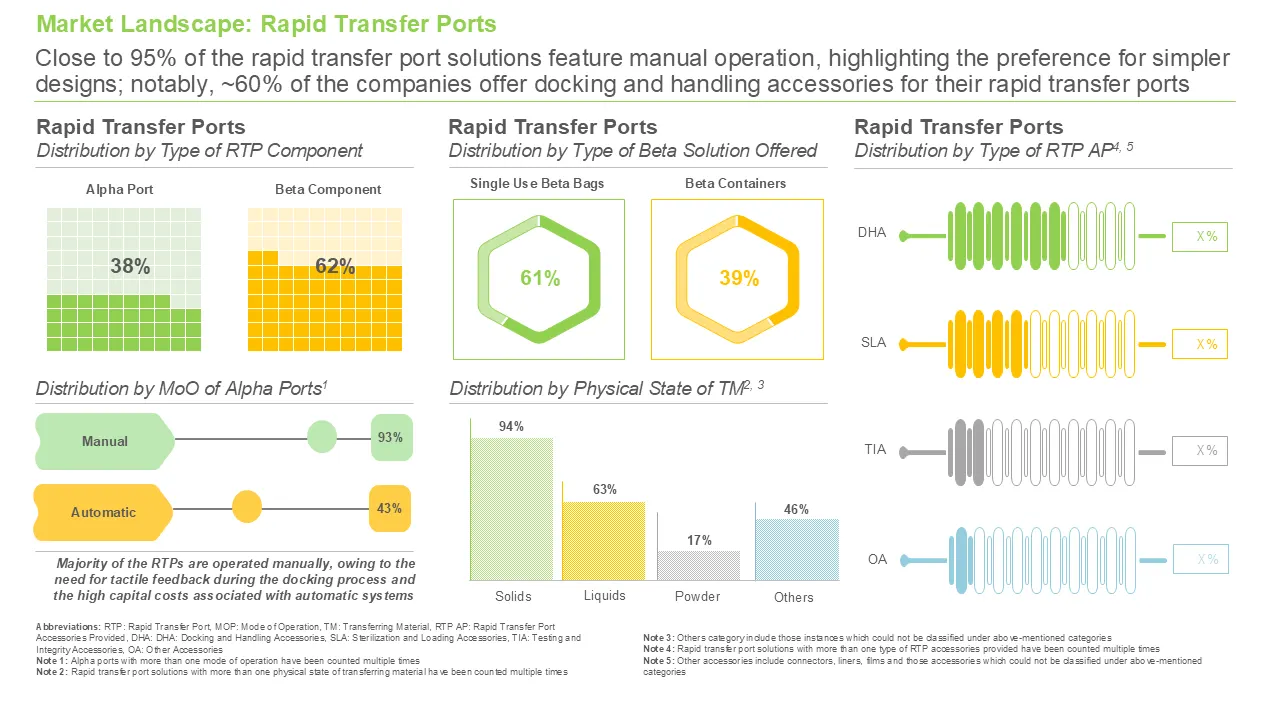
- In terms of type of beta solution offered, single use beta bags account for nearly 60% of the overall rapid transfer port market.
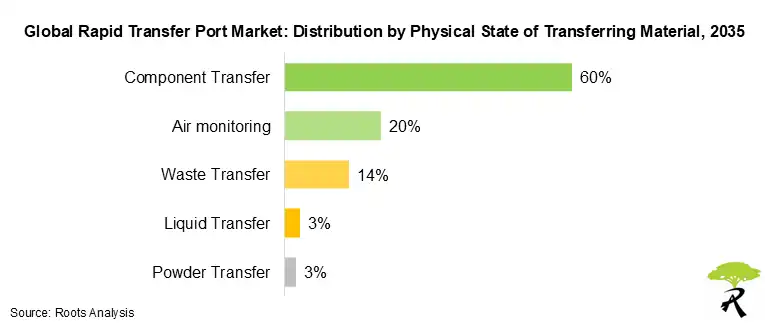
- In terms of physical state of transferring material, component transfers capture largest (60%) share of the current market; this trend is unlikely to change in the future.
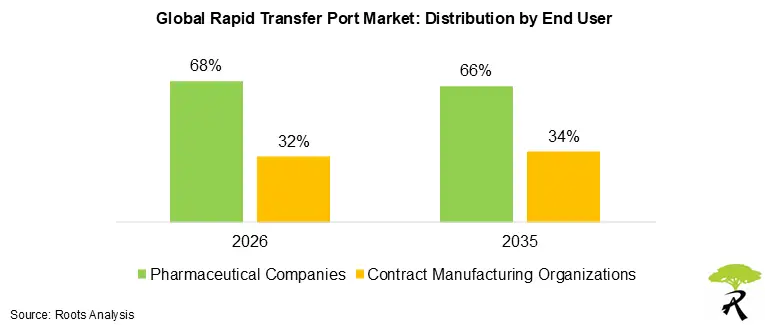
- With respect to the end user, pharmaceutical companies capture largest (~70%) share of the market, owing to their dominant role in large-scale sterile manufacturing of injectables, biologics and high-potency drugs.
- In terms of geographical regions, Europe is likely to hold more than 35% of the market value, driven by surging demand for advanced therapies that require high-containment aseptic transfer solutions in this region.
Want Information on Specific Region / Segment?
Market Overview
Over the past decade, the pharmaceutical industry has witnessed a surge in innovation, driven by breakthroughs in biologics, cell and gene therapies, and high-potent APIs. This, combined with the rising demand for sterile injectables and robust aseptic manufacturing, has increased the need for effective contamination-control. However, one of the primary challenges faced by this industry includes the complexity of aseptic processing, especially maintaining sterility assurance during material transfers in isolators, RABS (Restricted Access Barrier System) and cleanrooms.
To address these challenges, pharmaceutical companies are increasingly integrating high-performance RTPs into their production lines. These systems, characterized by their precision-engineered alpha and beta components, allow for the secure, "leak-free" transfer of components without compromising the sterile integrity of the isolator or RABS. Notably, the market is shifting towards single use beta bags and automated port systems that minimize human intervention and streamline the validation of sterilization cycles.
The role of RTP technology has expanded beyond mere containment; these systems now foster operational agility by enabling faster line changeovers and supporting small-batch personalized operations. In addition, the aseptic landscape is rapidly changing, driven by advancements in material sciences, robotic gloveless isolators and Pharma 4.0 digital monitoring. As these innovations present new opportunities for sterile manufacturing, they also introduce mechanical complexities that require validated, high-integrity transfer solutions to navigate regulatory landscapes effectively. The synergy between advanced barrier hardware and advanced RTP interfaces will be crucial in ensuring that high-potency and sterile therapies reach patients safely, ultimately enhancing the quality of care in an increasingly demanding regulatory environment.
Recent Developments
- In March 2026, Getinge participated in a webinar on “Redefining Aseptic Transfer: Annex 1’s Influence on Gloveless Solutions,” where it highlighted that the revised EU GMP Annex 1 is driving a major shift in Rapid Transfer Port (RTP) practices towards reduced human intervention and stronger contamination control.
- In March 2026, ABC Transfer participated in PharmaTechnica 2026 conference, in Switzerland, presenting its reliable transfer solutions for high-containment environments.
- In February 2026, ABC Transfer, a France-based specialist in sterile transfer technologies, expanded its pharmaceutical and biotechnology offering in the UK through a distribution agreement with UK pharmaceutical containment provider Sychem.
- In July 2025, SKAN announced that it has acquired 84% of the shares of ABC Transfer, a French company offering beta bags and related consumables for aseptic material transfer for pharmaceutical and biopharmaceutical applications.
- In March 2025, Tema Sinergie, a specialist in isolation technology for pharmaceuticals, biotech, and radiopharma has launched ZEROC, an innovative automatic integrity verification system specifically for rapid transfer ports.
Rapid Transfer Port Market Trends
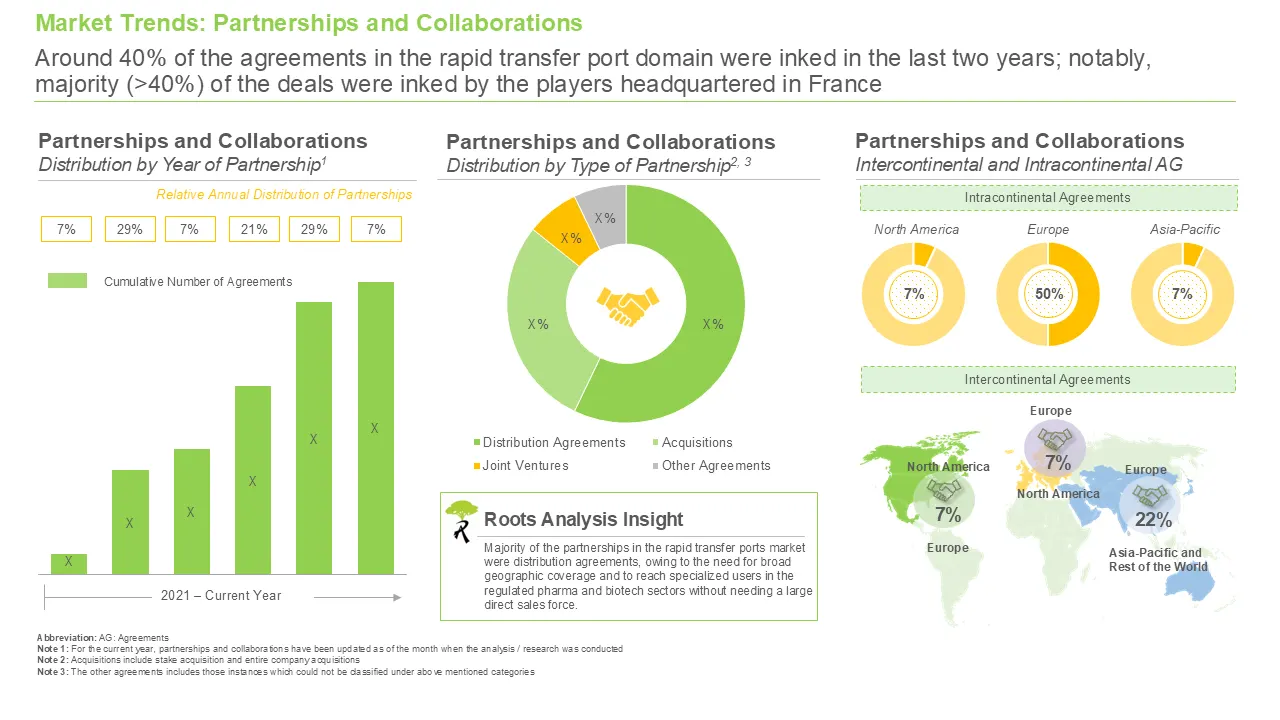
- Partnerships and Collaborations: In recent years, several rapid transfer port companies have entered into agreements with other players to consolidate their presence in this field. Interestingly, most of the agreements were distribution agreements, followed by acquisitions. This is due to the need for broad geographic coverage and to provide access to specialized end-users in regulated pharmaceutical and biotechnology sectors without establishing an extensive direct sales infrastructure.
- Expanding Global Capabilities for Rapid Transfer Ports: Over the years, there has been a notable increase in the expansion of capabilities for RTPs. This is driven by strategic acquisitions, geographic footprint growth and innovation among leading manufacturers to meet rising demand for aseptic material transfer in pharmaceutical and biopharmaceutical production, worldwide. Established players, including Getinge (with its original DPTE® RTP system), Sartorius, Central Research Laboratories (CRL) and others are expanding manufacturing sites and distribution networks across Europe, North America, Asia-Pacific and rest of the world to support increased adoption in isolators, RABS and cleanrooms.
Industry Experts on Rapid Transfer Port Market
The rapid transfer port market report includes discussions of multiple stakeholders in this domain, which have influenced the opinions and insights presented in this study. The market report includes detailed transcripts of the following interviews and third-party discussions:
- Director, Small Company, India
- Sales Manager, Mid-Sized Company, US
- Product Manager, Large Company, Italy
- Manager of Projects and Proposals, Mid-Sized Company, US
- Associate Director QA Microbiology, Very Large Company, US
- Senior Consultant Aseptic Processing and Containment, Large Company, Switzerland
- Director of Business Development, Large Company, Germany
- Technical Sales Engineer, Very Large Company, Sweden
- Professor, University, UK
- Product Manager, Aseptic Transfer Solutions, Very Large Company, Sweden
Rapid transfer port industry will mark a significant shift in demand dynamics as K.V. Shivdas, Director, Das Engineering Works states, “Majority of the companies offer customized RTP solutions tailored to client demands, including designs compatible with specific isolators and cleanrooms, as well as a wide range of beta bags and containers.”
Pay Only for What You Need – The Best Way to Optimize
Market Drivers
- Rising adoption of single use technologies and closed system processing: The shift towards single-use RTP components (such as beta bags, disposable interfaces, and transfer kits) reduces cleaning / validation requirements, minimizes cross-contamination risks, and supports flexible, faster batch changeovers in cell and gene therapy manufacturing as well as HPAPI production, accelerating market expansion as manufacturers prioritize efficiency and cost savings.
- Increasing automation and reduction of human intervention in aseptic manufacturing: Driven by advancements in aseptic processing technologies and the need to comply with contamination control standards, the pharmaceutical industry is increasingly integrating automated rapid transfer port systems with robotics and advanced docking mechanisms. Such advancements require minimal operator involvement, which aligns with wider industry goals to enhance sterility assurance, lower ergonomic / safety issues and increase throughput.
Market Segmentation Analysis
Single Use Beta Bags Leading the Rapid Transfer Port Market
- In 2026, single use beta bags hold nearly 60% of the overall market share. This can be attributed to the fact that they eliminate the extensive time and capital costs associated with cleaning, sterilization and re-validation of traditional stainless-steel canisters.
- Moreover, it is important to highlight that single use beta bags are likely to grow at a higher CAGR during the forecast period. This is due to the increasing industry preference for miniaturization and manufacturing agility, which allows pharmaceutical companies to efficiently process smaller, highly specialized batches of biologics and personalized medicines without the costly downtime required for cleaning and re-validating stainless-steel alternatives.
Solid Transfer is Driving the Rapid Transfer Port Industry
- According to the rapid transfer port market forecast, the component transfers segment currently holds 60% of the market share.
- This is due to the fact that the volume of solid components (such as stoppers, plungers, seals and caps) transferred across RTPs is far more than the frequency of liquid or powder transfers. As each batch requires thousands of sterile components to be introduced into the isolator, this makes the component transfer, a primary workhorse of the production line.
- In future, this scenario is unlikely to change, driven by the surging demand for biologics, injectables, vaccines and parenteral drugs, which require precise, contamination-free aseptic fill-finish manufacturing and downstream processes.
Market Regional Insights
Europe Dominates the Overall Market
Europe is dominating the market for rapid transfer ports, securing more than 35% of the overall revenue share. This dominance stems from robust growth in pharmaceutical manufacturing, driven by rising demand for advanced therapies that demand high-containment aseptic transfer solutions. Further, it is worth highlighting that European countries are also emerging as global hubs for sterile drugs, biologics, injectables, cell and gene therapies, and HPAPI manufacturing, further accelerating adoption of these technologies across in this region.
North America Drives Expansion in the Rapid Transfer Port Sector
North America is playing a pivotal role in accelerating the growth of the market, owing to the high concentration of biopharmaceutical manufacturing hubs and the rapid adoption of single-use technologies to meet stringent FDA and Annex 1 sterility standards.
Emerging Opportunities in Rapid Transfer Port Market
Next-Generation Sleeveless and Externally Operated RTP Designs for Enhanced Automation and Ergonomics
Externally operated and sleeveless RTP innovations are redefining high-speed aseptic transfers by enabling fully robotic or automated docking without operator exposure or manual sleeve handling. This can be exemplified by Getinge's DPTE®-EXO with sleeveless DPTE-BetaBag® and Sartorius RTP beta-bag kits with automated needle insertion. These designs eliminate the need for traditional beta bag sleeves, which reduces particulate generation, simplifies gamma-sterilized single-use integrations and allows seamless robotic arm interfacing for beta canister or bag attachment in isolators. Such designs have proven ideal, specifically for high-throughput injectables, potent compounds, and multi-format lines.
As facilities scale for personalized medicines and flexible manufacturing, these advancements are expected to drive greater operator safety, containment performance, and integration with robotics, positioning RTPs as enablers of fully automated, contamination-free material flows in modern biopharma production.
Instrumented RTP Ecosystems: Transitioning Ports into Intelligent Aseptic Gateways
Smart and connected RTP systems represent a paradigm shift in contamination control, transforming static mechanical hardware into intelligent, data-driven assets within the Pharma 4.0 framework. This innovation involves the integration of embedded IoT sensors, RFID / NFC identifiers, and position-sensing technologies directly into the alpha and beta port assemblies.
In addition, advanced digital monitoring systems now integrate real-time pressure differential sensors and actuation counters to provide a predictive maintenance profile of the port’s seal integrity. This connectivity facilitates the creation of a tamper-proof digital audit trail, linking every material transfer event to the site’s Contamination Control Strategy (CCS).
Rapid Transfer Port Market: Scope of the Report
| Key Report Attributes | Details | |
| Historical Trend | Since 2022 | |
| Forecast Period | Till 2035 | |
| Market Size 2026 | USD 522 Million | |
| Market Size 2035 | USD 962 Million | |
| CAGR (Till 2035) | 7.0% | |
| Segments Covered |
|
|
| Excel Data Packs (Complimentary) |
|
|
| PowerPoint Presentation (Complimentary) |
|
|
| Customization Scope |
|
|
Market Segments
Based on the research, we have segmented the Rapid Transfer Port Market into type of beta solution offered, physical state of transferring material, end user and geographical regions.
By Type of Beta Solution Offered
- Single Use Beta Bags
- Reusable Beta Container
By Physical State of Transferring Material
- Component Transfer
- Air Monitoring
- Waste Transfer
- Liquid Transfer
- Powder Transfer
End User
- Pharmaceutical Companies
- Contract Manufacturing Organizations
By Geographical Regions
- North America
- Europe
- Asia-Pacific
- Latin America
- Middle East and North Africa


