Aseptic Fill Finish Manufacturing Market (2nd Edition) by Type of Molecule (Biologics and Small Molecules), Type of Biologic Manufactured (Antibodies, Cell Therapies, Gene Therapies, Oligonucleotides, Recombinant Proteins, Vaccines and Other Biologics), Type of Packaging Container, Scale of Operation, Company Size, Type of Product, Therapeutic Area and Geographical Regions – Trends and Forecast, 2026-2035
Market Size
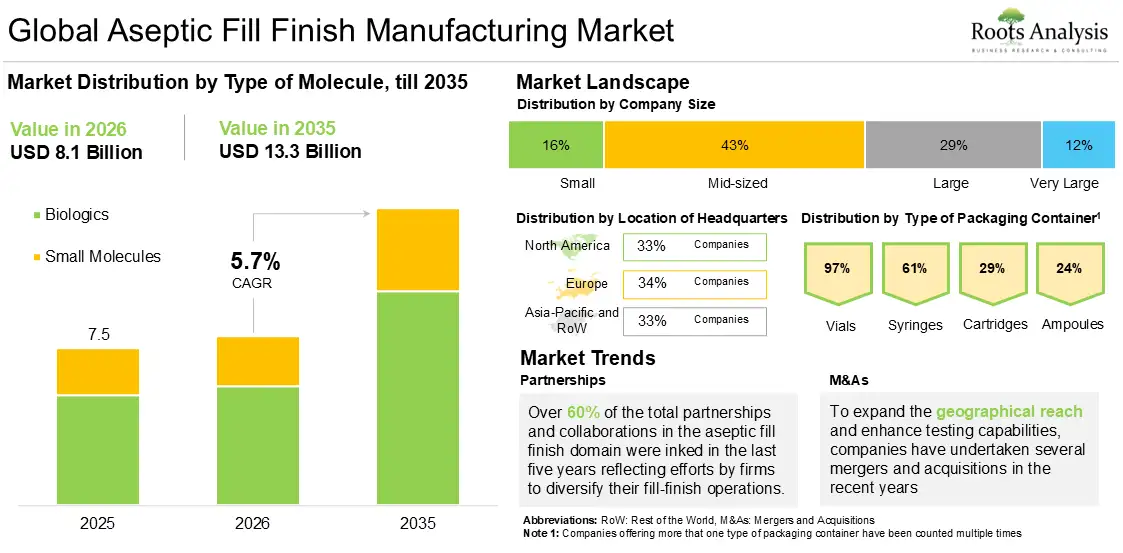
The global aseptic fill finish manufacturing market, valued at USD 7.5 billion in 2025, is projected to reach USD 8.1 billion in 2026 and USD 13.3 billion by 2035, with a CAGR of 5.7% during the forecast period 2026 to 2035. This market is growing steadily, driven by the increased awareness related to the benefits of aseptic fill finish services across biologics and small molecules.
See What’s in the Full Report – Request Your Complimentary Insights!
What is Aseptic Fill-Finish Manufacturing?
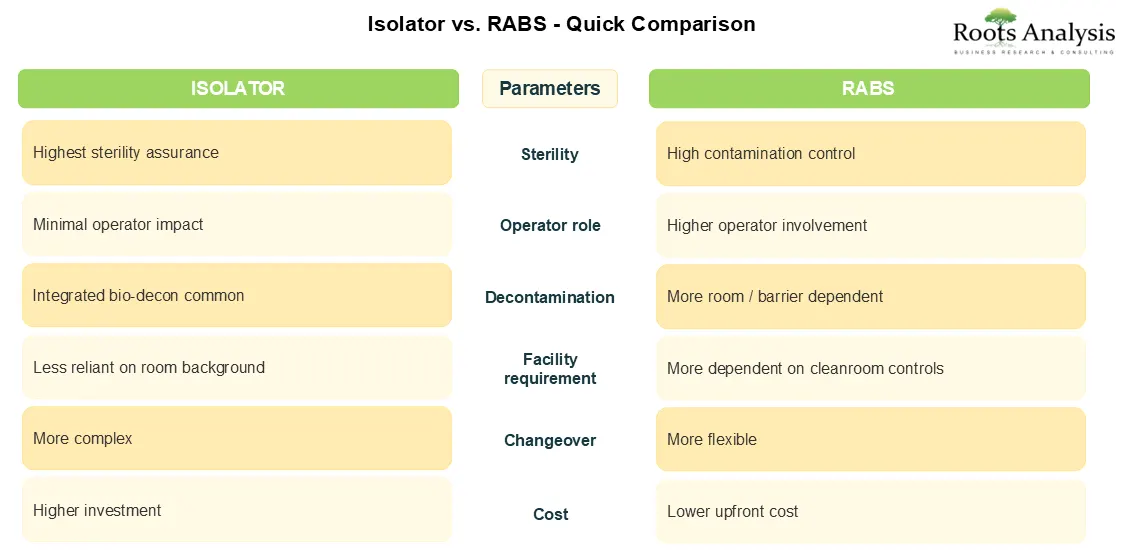
Aseptic fill-finish manufacturing is the final stage of sterile drug production in which a formulated drug product is filled into its primary packaging container, such as a vial, prefilled syringe, cartridge, or ampoule, under conditions that exclude microbial and particulate contamination. Prefilled Syringe Fill Finish Manufacturing applies these sterile-processing controls to ready-to-administer injectables, combining aseptic filling with device and container-closure requirements. The process typically relies on isolators or Restricted Access Barrier Systems (RABS) to separate operators from the sterile filling zone, together with validated cleaning, sterilization, and environmental monitoring protocols that support compliance with US FDA, EMA, and Good Manufacturing Practice (GMP) requirements. For injectable products that cannot withstand terminal sterilization, aseptic processing provides a critical route to market for monoclonal antibodies, cell and gene therapies, vaccines and other sterile medicines.
Market Report: Key Takeaways
Market Size & Trends
- The growing demand for biologics, vaccines and advanced injectable therapies is driving the need for efficient, contamination-free aseptic fill-finish capabilities.
- The biologics fill finish segment accounts for 70% of overall revenue, supported by the rising adoption of monoclonal antibodies, cell and gene therapies, and recombinant proteins across multiple therapeutic areas.
- Amongst biologics, antibodies capture the largest (60%) share of the market; this trend is unlikely to change in the future owing to the increasing pipeline of antibody-based drugs, including biosimilars, for oncological and autoimmune disorders.
- In terms of type of packaging container, vials currently hold around 50% of the market for both small molecules and biologics, owing to their broad formulation compatibility and the established use of durable borosilicate glass containers with validated aseptic manufacturing processes.
- Large companies dominate (more than 80%) the overall aseptic fill finish market share, reflecting the high capital expenditure required for isolator and RABS-equipped, high-throughput commercial lines.
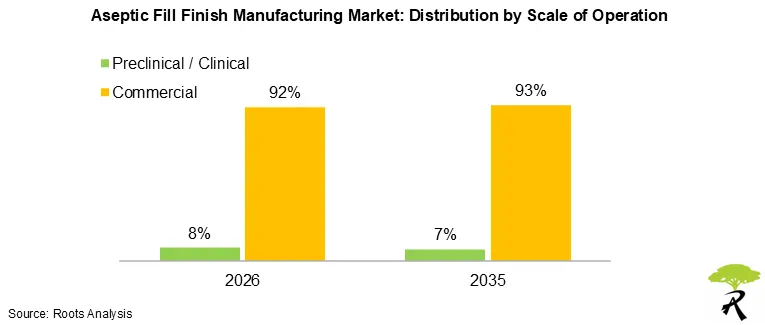
- The commercial segment dominates the current market (over 90%) due to sustained demand for large-scale production of both biologic and small molecule drugs.
- Based on the type of product, branded product segment captures largest share, accounting for more than 80% of the market.
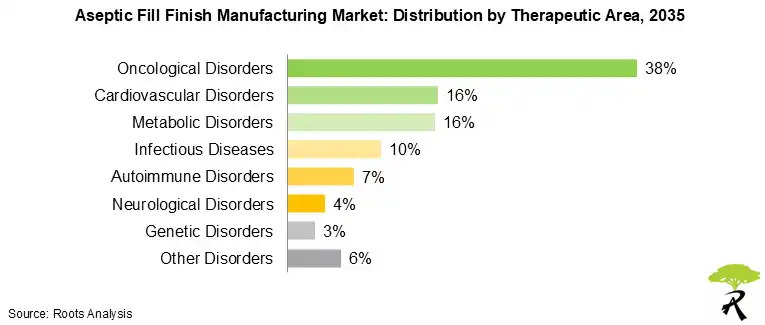
- Oncological disorders dominate (35%) the current aseptic fill finish market, owing to the rising prevalence of cancer across different regions.
- North America holds around 35% of the sterile biologics aseptic fill finish market share.
Key Market Statistics
- Market size in 2026: USD 8.1 Billion
- Estimated market size in 2035: USD 13.3 Billion
- CAGR (2026 to 2035): 5.7%
- Biologics: 70% revenue share
- Vials: 50% packaging share
Methodology and Market Segmentation
The study combines extensive secondary research, proprietary databases, company disclosures, regulatory publications and primary interviews. These inputs were triangulated to validate market sizing, segment shares, capacity estimates and forecast assumptions. Detailed transcripts were prepared from the discussions with senior stakeholders across North America, Europe and Asia, including chief executives and business, commercial, formulation-development and technology leaders.
- Ex-Chief Commercial Officer, Large Company, Germany
- Ex-Vice President Business Development & Marketing, Mid-sized Company, US
- Vice President and Head of Formulation Development, Very Large Company, India
- Head of Business Development, Mid-sized Company, Czech Republic
- Ex-Technology Watch Manager, Mid-sized Company, France
- International Business Developer, Mid-sized Company, Netherlands
Aseptic fill finish domain is expected to mark a turning point in biologics fill finish in the coming years. Purushottam Singnurkar, Vice President and Head of Formulation Development at Syngene states, “Currently, approximately 20-25% of vial filling operations are for biologics. Regarding the overall injectables market, it is likely to be significantly driven by biologics, given the fact that biopharmaceuticals are growing at an annualized rate of 8-9%.”
Together, these interviews provided practical perspectives on outsourcing decisions, aseptic-technology adoption, capacity constraints, regulatory compliance and demand for biologics and injectable therapies.
The report segments the Aseptic Fill Finish Manufacturing Market into type of molecule, type of biologic manufactured, type of packaging container, scale of operation, company size, type of product, therapeutic area and geographical regions
By Type of Molecule
- Biologics and Small Molecules
By Type of Biologic Manufactured
- Antibodies, Cell Therapies, Gene Therapies, Oligonucleotides, Recombinant Proteins, Vaccines, and Other Biologics
By Type of Packaging Container
- Ampoules, Bags, Cartridges, Syringes, and Vials
By Scale of Operation
- Commercial and Preclinical / Clinical
By Company Size
- Large, Mid-sized, and Small
By Type of Product
- Branded and Generic
By Therapeutic Area
- Autoimmune Disorders, Cardiovascular Disorders, Genetic Disorders, Infectious Diseases, Metabolic Disorders, Neurological Disorders, Oncological Disorders, and Other Disorders
By Geographical Regions
- North America: US, Canada, Mexico, Puerto Rico
- Europe: France, Germany, Italy, Spain, UK, Rest of Europe
- Asia-Pacific: China, India, Japan, South Korea, Australia, Rest of the Asia-Pacific
- Middle East & North Africa: Israel, Saudi Arabia, Rest of Middle East and North Africa
- Rest of the World: Argentina, South Africa
Your Business is Unique – Why Shouldn’t Your Report Be?
The report was authored by Pemba Lahmo who has over 10 years of industry expertise and is part of Roots Analysis’s healthcare and pharma research practice, covering biologics discovery, development, and manufacturing market studies.
Market Overview
Aseptic fill finish refers to accurate and sterile fill finish / sealing of drug products into packaging containers, such as vials, prefilled syringes, ampoules and cartridges. Maintaining aseptic conditions during these fill finish operations is critical to ensure end-user safety, while preserving pharmacological efficacy and product quality.
Aseptic fill-finish manufacturing requires skilled personnel, specialized automated equipment, a clean room setup and continuous environmental monitoring to maintain the sterility and safety of the final drug product. However, given the high cost of specialized isolator and RABS equipment, and affiliated GMP expertise required for fill finish operations, it is difficult for a drug developer with limited finances and capacity constraints to meet the specific needs of its clientele.
As a result, various stakeholders are outsourcing their fill and finish pharmaceutical manufacturing related needs to contract service providers, in order to ensure the development of good quality, FDA-compliant drug products. A number of Contract Development and Manufacturing Organizations (CDMOs) are consequently involved in offering aseptic fill finish services for a wide range of biologics, biosimilars, and small molecules. The principal end users of these services include pharmaceutical and biotechnology developers, biopharmaceutical manufacturers and CDMOs. Contract research organizations (CROs) may support related analytical or clinical-development activities but are distinct from providers performing GMP sterile fill-finish manufacturing. Across related applications, lyophilization services improve the shelf stability of sensitive biologics through validated freeze-drying cycles.
Recent Developments
- In July 2026, Biocon received European Medicines Agency approval for a new drug product fill-finish line at its insulin manufacturing facility in Malaysia. The line will manufacture Semglee insulin glargine, with European commercial supplies expected to begin during the second quarter of fiscal year 2027.
- In June 2026, Shantha Biologics entered into an outsourcing agreement with Novo Nordisk to provide cartridge fill-finish manufacturing services in India. Shantha will use its purpose-built sterile manufacturing infrastructure to support production requirements for cartridge-based injectable products.
- In June 2026, AGC Biologics partnered with Pyramid Pharma Services to provide integrated drug substance and sterile fill-finish services in the US. The offering covers liquid and lyophilized vials, prefilled syringes and cartridges, alongside device assembly, labeling and secondary packaging for clinical-stage programs.
Pay Only for What You Need – The Best Way to Optimize
Aseptic Fill Finish Manufacturing Market Trends
- Partnerships and Collaborations: The market analysis shows several partnerships that are likely to drive the growth in this market. For instance, market players, such as Lifecore Biomedical (US) and Humanetics (US) are collaborating to provide advanced aseptic fill-finish services, streamlining the production of therapeutics. Likewise, several market players are entering into collaborations for expanding their fill finish capabilities and advance innovative aseptic processing technologies.
- Growing Demand for Aseptic Fill Finish of GLP-1 Drugs: The COVID 19 pandemic was a strong driver for expansion of aseptic fill finish capabilities and capacities. However, following reduced demand for COVID vaccines, the market is being driven by blockbuster GLP-1 drugs for diabetes and obesity. In April 2025, Novo Nordisk announced an investment of DKK 8 billion to expand its manufacturing site in Montes Claros, Brazil. The expansion will add aseptic production processes and increase capacity for injectable medicines in multiple formats, including GLP-1 products. Construction is underway and is expected to be completed in 2028.
- Expanding Fill Finish Capabilities in the US: U.S. fill-finish investment continues to accelerate as drugmakers and CDMOs strengthen domestic supply chains and expand local manufacturing capacity. In January 2026, Sharp Sterile Manufacturing announced a USD 28 million expansion in Lee, Massachusetts, adding an automated isolator line and more than doubling filling capacity. In April 2026, PCI Pharma Services announced a USD 100 million San Diego project for high-speed prefilled-syringe and cartridge filling, alongside a Bedford, New Hampshire line capable of producing 33 million vials annually. In June 2026, Recipharm announced a multi-million-dollar expansion of U.S. sterile fill-finish capabilities for biologics and advanced therapies, underscoring continued investment momentum.
- Pharmaceutical Companies Acquiring Major CDMOs for In-House Fill-Finish Expansion: In recent years, the fill finish pharmaceutical industry has shown a notable shift towards vertical integration, where large pharma companies acquire contract development and manufacturing organizations (CDMOs) to bolster their in house fill finish capacities. A prime example of this trend is Novo Holdings’ USD 16.5 billion acquisition of Catalent, completed in December 2024.
Recent Expansions
Given the growing demand for novel aseptic filling technologies, CDMOs have made considerable investments to expand their existing capabilities. Expansion activity related to aseptic fill finish is most pronounced in the US, where facility expansions, capacity expansions, and new-facility builds have all featured, spanning a range of investment sizes from under USD 40 million to more than USD 100 million per project.
Market Drivers
- Technological Advancements in Aseptic Processing: Global market players are increasingly adopting advanced technologies, such as robotics, isolator and RABS-based containment systems, and real-time monitoring tools, to enhance aseptic fill finish process. These automated vial and syringe filling lines, integrated with quality control systems, improve precision, reduce contamination risks, and ensure compliance with stringent, validated regulatory standards. For instance, SCHOTT Pharma’s AI-driven quality control system enables real-time detection of particulate contamination and seal integrity, boosting efficiency and scalability for sterile injectables. Within this workflow, aseptic filling machine provides the automated, closed and isolator-compatible equipment needed to dispense sterile formulations into primary containers while limiting operator-associated contamination.
- Regulatory Emphasis on Sterility and Quality: Stringent regulatory compliance from agencies such as the FDA and EMA is pushing manufacturers to adopt advanced aseptic technologies, single-use systems, and GMP-validated quality standards to ensure product safety and compliance. The integration of closed-system technologies and real-time environmental monitoring minimizes contamination risks and enhances traceability across the fill-finish workflow. Facilities supporting the manufacture of FDA-approved injectable products must also maintain validated aseptic process simulations (media fills), container-closure integrity testing, batch-release controls and documented quality systems.
Capacity Analysis
Global aseptic fill finish manufacturing capacity is well distributed across facilities worldwide; large and very large players account for majority of the total capacity across all four primary packaging container types: vials, syringes, cartridges, and ampoules. High-throughput lines concentrated among large and very large companies continue to set the pace for commercial-scale output, while mid-sized and small companies remain more active in the preclinical and clinical scale of operation.
Market Segmentation Analysis
Vials are the Most Widely Adopted Primary Packaging Containers for Sterile Filling of Biologics
- In 2026, vials hold 50% of the overall market share. Manufacturers make these glass containers from strong and durable materials, such as borosilicate glass, which can withstand extreme conditions during handling and transportation, and reduce the risk of product loss.
- The syringes segment is likely to grow at a higher CAGR during the forecast period. Automated prefilled-syringes filling technologies can improve patient convenience and dosing precision while reducing handling steps and contamination risk.
- Consumables such as stoppers, plungers, and cartridge components round out the packaging-container ecosystem.
Oncological Therapeutics Lead the Aseptic Fill-Finish Industry with Unparalleled Demand
- According to the aseptic fill finish manufacturing market forecast, oncological disorders account for 35% of the overall revenue share in the current year, rising to 38% by 2035. This high share stems from the increasing global prevalence of cancer and the rising demand for targeted cancer therapies such as monoclonal antibodies, antibody drug conjugates and immunotherapies. These disorders are likely to sustain high aseptic fill finish manufacturing growth throughout the forecast period, followed by cardiovascular disorders (16%) and metabolic disorders (16%).
Biologics and Biosimilars: A Specialized Segment
Biologics, including antibodies, cell therapies, gene therapies, oligonucleotides, recombinant proteins, and vaccines, require controlled conditions, temperature and humidity-sensitive handling, and specialized upstream steps such as cell culture and purification ahead of fill-finish. Biosimilars in particular are adding meaningful volume to this segment, as patent cliffs across major antibody classes open the field to validated, GMP-compliant biosimilar manufacturers seeking qualified fill-finish partners. Temperature-sensitive biologics may also require qualified cold-chain management, while lyophilization can be integrated after filling to improve the stability of selected vaccines, proteins and other moisture-sensitive products.
Regional Analysis
Europe and North America Dominates the Aseptic Fill Finish Manufacturing Domain
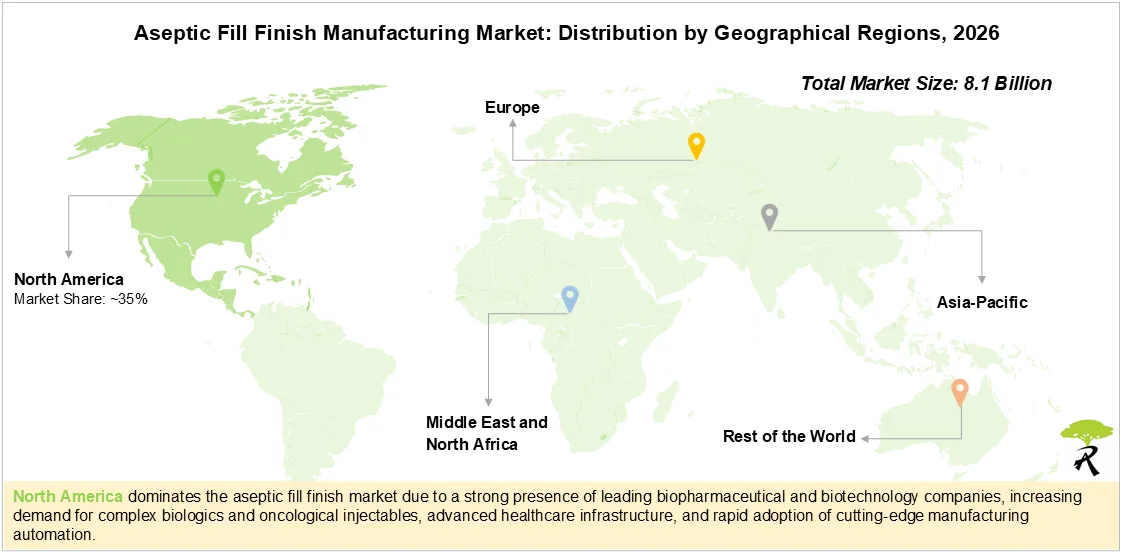
North America dominates the market for aseptic fill finish of biologics, securing ~35% of the overall revenue share. The surge in personalized medicine has resulted in an increased clinical trial activity for biologics, boosting the demand for aseptic fill-finish services in the region. Europe, meanwhile, holds the largest aseptic fill finish manufacturing market size for small molecules, with around 40% share.
US Aseptic Fill Finish Market
The US leads the market owing to its substantial capacity and expertise in aseptic filling contract manufacturing. According to BioPlan’s survey, approximately 40% of the non-US companies prefer US-based facilities, largely because of the country’s advanced infrastructure and regulatory compliance capabilities.
Aseptic Fill Finish Adoption in Asia Pacific
Asia Pacific is the fastest growing region, supported by cost-efficient pharmaceutical manufacturing, a skilled workforce, rising healthcare expenditure and government support for biopharmaceutical CDMOs. Rapid capacity expansion in China, India and South Korea, together with growing adoption of isolator-based systems and other advanced manufacturing technologies, is further accelerating regional market growth.
Key Players
The aseptic fill finish manufacturing market is served by a broad base of CDMOs and packaging-technology suppliers, including AbbVie Contract Manufacturing, Aenova, BioPharma Solutions, Boehringer Ingelheim BioXcellence, Catalent, CordenPharma, Delpharm, Fresenius Kabi, GlaxoSmithKline, Lonza, Pierre Fabre, Pfizer CentreOne, Patheon, PiSA Farmaceutica, Recipharm, Wacker Biotech, Syngene, Sharp Services, WuXi Biologics, and Wockhardt, alongside packaging and component suppliers such as West Pharmaceutical Services. A complete list of companies captured is available within the full report.
Get an Instant Quote in 10 Minutes. Lowest Price Guaranteed
Report Deliverables and Customization
Alongside the core market report, clients receive complimentary Excel data packs covering the market landscape, company competitiveness analysis, partnership and collaboration analysis, recent expansions, capacity analysis, demand analysis, market forecast and opportunity analysis. A complimentary PowerPoint presentation summarizing the full report is also included, and 15% free customization scope is available on request.
Independence and Non-Affiliation
Roots Analysis is an independent secondary and primary market research publisher. This report is not affiliated with, endorsed by, or produced on behalf of any company named or profiled within it, including all key players, CDMOs, and industry expert interviewees referenced above. Roots Analysis' findings draw on a combination of secondary research and primary interviews with industry experts, of the kind referenced above, to validate market sizing, segment shares, and forecast assumptions independently of any single company's disclosures. Roots Analysis maintains its own proprietary primary research process, and does not receive compensation from any company profiled within the report, in exchange for inclusion or favorable characterization.


