


 Download Free Sample
 Buy Now
Smart Medical Devices Market Overview
The global smart medical devices market size, valued at USD 54 Billion in 2025, is projected to reach USD 61 Billion in 2026 and USD 152 Billion by 2035, representing a CAGR of 10.8% during the forecast period.

See What’s in the Full Report–Request Your Complimentary Insights!
Market Report: Key Takeaways
- The global smart medical devices market expands phenomenally due to the increasing demand for real-time health signs monitoring devices for managing chronic conditions.
- In terms of geographical regions, North America dominates the global market by holding 40% of the market share.
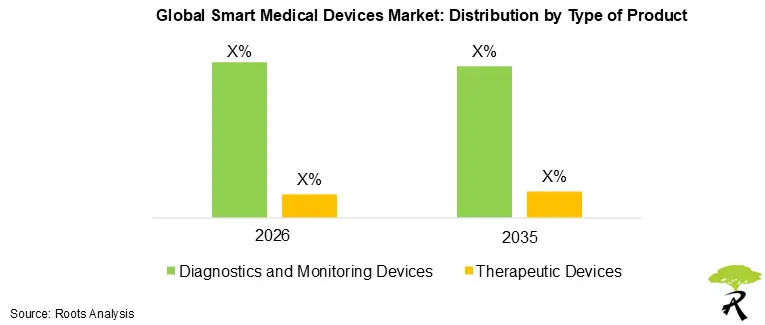
- Based on the type of product, diagnostics and monitoring segment secures more than 85% of the market share.
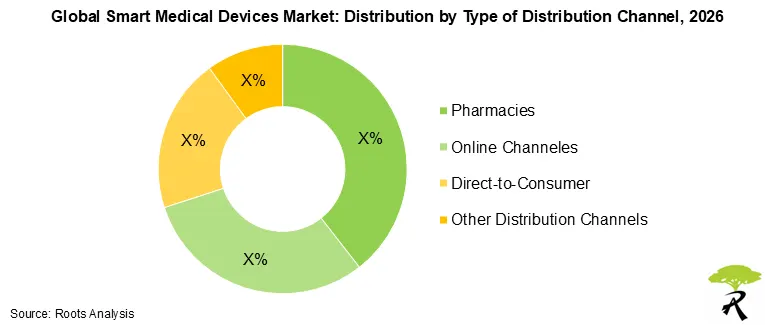
- On the basis of distribution channel, the pharmacies segment holds nearly 40% of the overall market share.
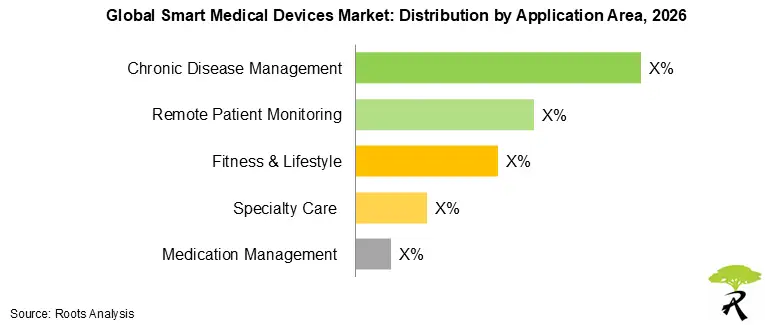
- In terms of application, chronic disease management segment accounts for the largest market share.
- The future focus will be on strategic partnerships and technological innovations to ensure real-time monitoring with higher accuracy rate.
Have Questions? Let’s Get Them Answered
Market Introduction
Smart medical devices are the front edge of healthcare industry revolution. These devices are integrated with wireless connectivity, smartwatches and cloud platforms to store, share and transfer patient data for disease diagnosis, monitoring and treatment. With increasing shift towards data-driven treatment, there has been a surge in the demand for smart medical devices. According to a recent study, the number of smart medical devices will exceed 7 million due to increasing acceptance in smart hospitals by 2026.
The real-time insight into diseases for treatment has become a cornerstone of healthcare industry to improve patient outcomes and reduce patient's readmission burden in hospitals. Additionally, the rising shift towards telehealth services for remote patient monitoring and treatment has fueled the demand for smart medical devices. Beyond disease monitoring, smart medical devices, such as neurostimulation devices bring new ray of hope for brain simulation to help patients improve cognitive function.
Market players, such as Medtronic (Ireland), Abbott (US), and Roche (Switzerland) are increasingly focused on the development of smart medical devices, including hearing aid solutions, smart drug delivery, neurostimulation devices and smart inhalers for managing chronic conditions. This consistent revolution, heightened acceptance and proliferation of market players has made smart medical devices market highly competitive.
Pay Only for What You Need – The Best Way to Optimize
Recent Developments in Smart Medical Devices Market
Several recent developments in the field of smart medical devices have occurred and we have outlined some of these below:
- In July 2025, Philips (Netherland) entered into the partnership with four critical care companies Hamilton Medical, Drager, B. Braun and Getinge to enable interoperability across Service-Oriented Device Connectivity (SDS) certified smart medical devices and platforms.
- In May 2025, The Ministry of Foreign Affairs organized a seminar on smart medical devices in Geneva, highlighting the government's commitment towards advancement of global healthcare.
- In June 2025, Renalyx Health Systems (India) launched cloud-enabled and AI-powered smart hemodialysis machine (RxT21) with clinical connectivity and real-time remote monitoring.
Market Trends
- AI and Machine Learning Integration: The future focus of the market players is on AI integration in smart medical device diagnostics to advance clinical decision-making process with a real-time approach.
- 5G and Faster Connectivity: The market players will focus on faster 5G technology for better connectivity and low latency which is highly needed for real-time data transmission through smart medical devices. Moreover, the key focus will also be on Internet of Medical things to create a seamless data flow between patients, providers, and caregivers, leading to a more coordinated healthcare ecosystem.
- Telemedicine-Enabled Smart Medical Device Innovations: In the future, the focus will be on the development of telemedicine-compatible medical devices, driven by the growing need for remote care, and a shift towards more patient-centric and preventative healthcare models.
Industry Experts on Smart Medical Devices Market
Experts believe that smart medical devices for chronic disease management will be the future of healthcare industry as physicians are increasingly adopting portable and wearable medical devices for patient-centric treatment.
Dr. Glen Stream (Chairman of Family Medicine for America's Health) stated that, "We believe consumer health technologies, apps, wearables, self-diagnosis tools have the potential to strengthen the patient-physician connection and improve health outcomes."
Smart Medical Devices Market Drivers
- Rising Incidence of Chronic Diseases: Increasing adoption of smart medical devices for chronic disease management, such as diabetes, cardiovascular diseases, and cancer. These smart devices play a significant role in monitoring diseases remotely.
- Rising Aged Demographic: The growing aging population with age-related health issues have underscored the demand for remote patient management with connected smart devices.
Smart Medical Devices Market Segmentation Insights
Diagnostic and Monitoring Devices Dominates the Market
The segment is categorized into diagnostics and monitoring devices, and therapeutic devices. Based on the smart medical devices market report, diagnostic and monitoring devices secure more than 85% of the market share. This highest share stems from the increasing usage of remote monitoring devices for chronic diseases management. Key drivers within this leading segment include:
- Blood Glucose Monitoring: The blood glucose monitoring devices and continuous glucose monitoring systems are two core smart devices that are broadly accepted for diabetes management.
- Wearable Technology: This segment holds the substantial share and like to show potential growth in the future. The broad focus on fitness & lifestyle for overall wellbeing, and clinical-grade real-time ECG and cardiac monitoring smart devices are fueling the growth of this segment.
Therapeutic devices segment is likely to grow at a higher CAGR in the future. The consistent demand for smart devices such as smart insulin pumps, smart hearing aids, and smart drug delivery systems are the core reasons for highest CAGR of this segment in the future
Chronic Diseases Management Segment Holds the Highest Share
- In this segment, the chronic diseases management segment secures the highest smart medical devices market share (40%). This is driven by the growing demand for portable remote patient monitoring devices for chronic disease management in elderly patients.
- It is important to note here that this segment is likely to show robust growth, anticipated to grow at a higher CAGR. This growth stems from the rising usage of wearable smart medical devices for continuous health monitoring among global population to manage chronic conditions.
Hospitals Continue to Adopt Smartphone-Connected Medical Devices
- The segment is sub-divided into hospitals, clinics, home care, and others (sports, fitness centers, assisted living). According to the smart medical devices market analysis, the hospitals segment holds the maximum share of the market. This dominance stems from the adoption of smart medical devices that meets quality standards for the disease monitoring, diagnosis and management.
- In the future, home care segment is likely to exhibit a higher CAGR, driven by the increasing shift towards remote patient monitoring for disease management in home settings, specifically geriatric population.
Get an Instant Quote in 10 Minutes. Lowest Price Guaranteed
Market Regional Insights
North America: The Center Hub for Innovation of Smart Medical Devices
Currently, North America accounts for 40% of the overall smart medical devices market growth. This is driven by the increasing adoption of wearable devices for remote patient monitoring, supportive frameworks, and advancements in healthcare infrastructure.
US Smart Medical Devices Market
The US market players, such as Medtronic (US), Johnson & Johnson (US), and Abbott Laboratories (US) are consistently focused on technological innovations, and partnerships for the adoption of AI in wearable medical devices to facilitate real-time monitoring.
In September 2025, Medtronic (US) and Manchester University NHS Foundation Trust signed an agreement to co-develop advanced health technology solutions with a focus on artificial intelligence, smart medical devices, and robotic surgery in four main areas, neuroscience, cardiovascular, diabetes, and medical surgery.
Europe: The Second Largest Consumer of Smart Medical Devices
European region is poised to hold the second largest smart medical devices market share. The continuous implementation of smart healthcare technologies and integration of IoT-enabled medical devices to harmonize patient care and monitoring is the key driving force for the market growth.
In July 2025, the UK's government shared 10 year health plan for the NHS which covers new polices around digital health technologies, NHS app tools that helps to collect real-time data from medical wearables, smart devices and biometric to improve patients treatment outcome.
The robust government initiatives for the adoption of smart technologies in healthcare is likely to grow market in the upcoming years in Europe.
Want Information on Specific Region / Segment?
Asia-Pacific: The Fastest Growing Region
According to the smart medical devices market analysis, the market is expected to grow at a higher CAGR in Asian regions. This growth stems from increasing aging population with chronic conditions, focus on remote patient monitoring and healthcare investments to support digital healthcare technologies.
In February 2025, MediBuddy (India) entered into a strategic partnership with ELECOM (Japan) to conjointly develop and introduce cord-cutting smart health IoT devices in India. This partnership further strengthen innovation in integrated smart healthcare solutions to make healthcare more accessible in rural areas.
Smart Medical Devices Market: Scope of the Report
| Report Deliverables | Details | |
| Historical Trend | Since 2020 | |
| Forecast Period | Till 2035 | |
| Market Size 2026 | USD 61 Billion | |
| Market Size 2035 | USD 152 Billion | |
| CAGR (Till 2035) | 10.8% | |
| Segments Covered |
|
|
| Excel Data Packs (Complimentary) |
Available | |
| Key Players Profiled |
|
|
| Excel Data Packs (Complimentary) |
Available | |
| PowerPoint Presentation (Complimentary) |
Available | |
| Customization Scope | 15% Free Customization | |
How are Regulatory Pathways for Smart Medical Device Approval Evolving?
The regulatory pathways for smart medical devices is evolving rapidly to accelerate innovation and widespread adoption in healthcare industry. Here are the key ways these pathways are evolving:
- Breakthrough Device Designation Programs: the USFDA have established a breakthrough device designation program to expedite the review process of wireless health monitoring systems that helps in disease monitoring, management and treatment planning.
- European Union Reforms: The European Medical Device regulation and In Vitro Diagnostic Regulation reforms are aiming to harmonize the approval process of smart medical devices. Moreover, a joint clinical assessment program has also been introduced.
- The USFDA's AI / ML Specific Frameworks: The USFDA is co-leading a working group with International Medical Device Regulators Forum on AI / ML-enabled medical devices. Notably, Troy Tazbaz (director of CDRH's Digital Health Center of Excellence) stated that the USFDA's Digital Health center of Excellence foremost wants to ensure that AI technologies when integration with medical devices are safe and effective to use.
Market Segmentation
The global smart medical devices market provides an in-depth analysis of segments and sub-segments listed below:
By Type of Product
- Diagnostics and Monitoring Devices
- Blood Glucose Monitors
- Pulse Oximeters
- Breath Analyzers
- Medical Tricorders
- Blood Pressure Monitors
- Smart Thermometers
- Heart Rate Monitors
- Smart Contact Lenses
- Glucose Monitoring
- Intraocular Pressure Monitoring
- Smart Clothing
- Embedded Health Sensors
- Fitness Monitoring
- Wearable ECG Monitors
- Chest Straps
- Patches
- Blood Glucose Monitors
- Therapeutic Devices
- Portable Oxygen Concentrators & Ventilators
- Insulin Pumps
- Hearing Aid
- Neurostimulation Devices
- Spinal Cord Stimulation
- Deep Brain Stimulation
- Smart Inhalers
- Asthma & COPD Management
- Connected Inhalers with Data Tracking
- Smart Drug Delivery Systems
- Wearable Injectors
- Implantable Drug Delivery Devices
By Type of Modality
- Portable
- Wearable
By Application Area
- Chronic Disease Management
- Remote Patient Monitoring
- Fitness & Lifestyle
- Specialty Care
- Medication Management
By Distribution Channel
- Pharmacies
- Online Channels
- Direct-to-Consumer
- Other Distribution Channels
By End User
- Hospitals
- Clinics
- Home Care
- Other End Users
By Geographical Regions
- Noth America
- US
- Canada
- Mexico
- Europe
- France
- Germany
- Italy
- Spain
- UK
- Rest of Europe
- Asia-Pacific
- China
- India
- Japan
- South Korea
- New Zealand
- Rest of the Asia-Pacific
- Middle East & Africa
- Egypt
- Iran
- Iraq
- Israel
- Saudi Arabia
- South Africa
- United Arab Emirates
- Latin America
- Argentina
- Brazil


