pricing-dollar

3D Bioprinting Market Size, Share & Growth Trend Analysis Report By Type of Component, Consumable, Technology, Material, Application Area, Region (2026 - 2035)

3D Bioprinting Market: Industry Trends and Global Forecasts, Till 2035: Distribution by Type of Component (Bioprinters, Consumables and Software), Type of Consumable (Bioinks and Other Consumables), Type of Technology (Extrusion-based, Inkjet-based, Laser-based, Stereolithography and Other Technologies), Type of Material Used (Extracellular Matrix, Hydrogels and Living Cells), Application Area (Clinical Testing, Drug Development, Regenerative Medicine, Tissue Engineering and Other Application Areas), End User (Academic Institutes, Biopharmaceutical Companies, and Clinical Trial and Research Centers), Geographical Regions (North America, Europe, Asia-Pacific, Latin America, and Middle East and North Africa) and Key Players

  • Lowest Price Guaranteed

  • Slides
    232

  • Last Updated
    April 2026

  • View Count
    21912

3D Bioprinting Market Size

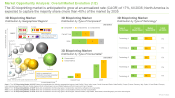
The 3D bioprinting market, valued at USD 4.0 billion in 2024, is estimated to reach USD 4.6 billion in 2025 and USD 23.1 billion by 2035, representing a CAGR of 17.7% during the forecast period.
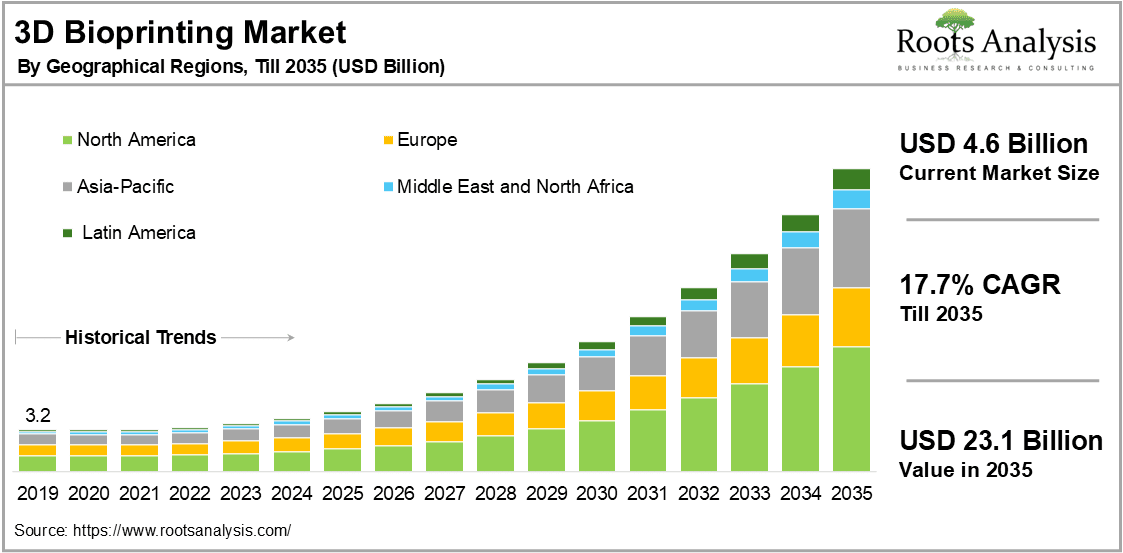
3D Bioprinting market by geography

To learn more about this report, request a free sample copy

3D bioprinting is the process of combining living cells, growth factors, bioinks, and biomaterials using 3D printing techniques to develop three-dimensional functional biological structures that closely mimic natural tissues. According to a recent study, over 46,500 organ transplantation procedures are annually carried out solely in the US, depicting an increase of 8.7% in the number of procedures as compared to the previous year. It is worth noting that 103,223 individuals are currently waiting for compatible organs in the US, alone. Moreover, close to 20 deaths per day are caused due to the unavailability of compatible organs. Nevertheless, 3D bioprinting technology has the potential to address the increasing organ demand and revolutionize various application areas like tissue engineering, regenerative medicine, drug testing and personalized medicine.
 
Presently, in the realm of conventional 2D bioprinting approaches, there are several challenges that are faced by researchers and scientists; notably, some of the significant challenges encountered are achieving high-resolution printing to accurately recreate intricate biological structures, slow printing speed, poor surface quality, real-time monitoring of the printing processes and maintenance of cell viability. These challenges have further contributed to the intricacy of the 2D bioprinting processes and have necessitated the need for advanced printing technologies, such as 3D bioprinting to augment various treatment approaches.

3D bioprinting actively explores avenues that enable researchers and scientists to overcome existing challenges in the 2D bioprinting domain by providing a solution for organ shortages and enabling the development of organs and tissues, which are patient-specific and derived from patient's own stem cells, thereby reducing the risk of rejection. Additionally, 3D bioprinting helps in the development of viable complex structures and tissues that are difficult to produce using traditional methods. 3D bioprinting has the potential to transform healthcare by offering personalized treatments, accelerating drug development, and advancing regenerative medicine. Such developments and advancements, further supported by the increasing investment activity in this domain are likely to drive the 3D bioprinting market growth over the forecast period.
3D Bioprinting Market Megatrends Analysis 3D Bioprinting Market Opportunity Analysis 3D Bioprinting Market Evolution

3D Bioprinting Market Segmentation Insights

The market research report presents an in-depth analysis of the various 3D bioprinting companies, across different segments, as defined in the table below:

3D Bioprinting Market: Report Attributes / Market Segmentations

Key Report Attributes Details
Historical Trend Since 2019
Forecast Period Till 2035
Market Size 2035 $ 23.1 Billion
CAGR 17.7%
Type of Component
  • Bioprinters
  • Consumables
  • Software
Type of Consumable
  • Bioinks
  • Other Consumables
Type of Technology
  • Extrusion-based
  • Inkjet-based
  • Laser-based
  • Stereolithography
  • Other Technologies
Type of Material Used
  • Extracellular Matrix
  • Hydrogels
  • Living Cells
Application Area
  • Clinical Testing
  • Drug Development
  • Regenerative Medicine
  • Tissue Engineering
  • Other Application Areas
End User
  • Academic Institutes
  • Biopharmaceutical Companies
  • Clinical Trial and Research Centers
Geographical Regions
  • North America
  • Europe
  • Asia-Pacific
  • Latin America
  • Middle East and North Africa
Market in North America
  • US
  • Canada
Market in Europe
  • Germany
  • UK
  • France
  • Italy
  • Spain
  • Rest of Europe
Market in Asia-Pacific
  • China
  • Japan
  • India
  • South Korea
  • Rest of Asia-Pacific
Market in Latin America 
  • Brazil
  • Argentina
Market in Middle East
and North Africa
  • Iran
  • Saudi Arabia
  • Egypt
Key 3D Bioprinting
Companies Profiled
  • Advanced Solutions Life Sciences
  • Allevi
  • Aspect Biosystems
  • Cellink
  • CollPlant Biotechnologies
  • Cyfuse Biomedical K.K.
  • Foldink
  • Formlabs
  • Inventia Life Science
  • it3d Group
  • Medprin Biotech
  • Organovo
  • Pandorum Technologies
  • Precise Bio
  • Regemat 3D
  • REGENHU
  • Rokit Healthcare
  • Stratasys
  • Vivax Bio 

(Full list of 65+ companies captured is available in the report)

PowerPoint Presentation 
(Complimentary)
Available
Customization Scope 15% Free Customization
Excel Data Packs 
(Complimentary)
  • Market Landscape 
  • Market Forecast and Opportunity Analysis
  • White Space Analysis 

3D Bioprinting Market List 3D Bioprinting Market Distribution by End User 3D Bioprinting Market Analysis of Patent Innovations

One of the key objectives of this market report was to estimate the current market size, opportunity and the future growth potential of the market, over the forecast period. We have provided informed estimates on the likely evolution of the market for the forecast period.

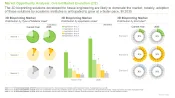
The 3D bioprinting market analysis also features the likely distribution of the current and forecasted opportunity within the market across various segments, such as type of component (bioprinters, consumables and software), type of consumable (bioinks and other consumables) type of technology (extrusion-based, inkjet-based, laser-based, stereolithography and other technologies), type of material used (extracellular matrix, hydrogels and living cells), application area (clinical testing, drug development, regenerative medicine, tissue engineering and other application areas), end user (academic institutes, biopharmaceutical companies, and clinical trial and research centers) and geographical regions (North America, Europe, Asia-Pacific, Latin America, and Middle East and North Africa). In order to account for future uncertainties associated with some of the key parameters and to add robustness to our model, we have provided three market forecast scenarios, namely conservative, base, and optimistic scenarios, representing different tracks of the industry’s evolution. 

The opinions and insights presented in this study were influenced by discussions conducted with multiple stakeholders in this domain. The market report features detailed transcripts of interviews held with the following individuals:

  • Chief Executive Officer, Small Company in France
  • Chief Executive Officer, Small Company in Austria
  • Chief Technology Officer, Small Company in Germany
  • Director of Communications and Public Relations, Large Company in Malaysia

Further, all actual figures have been sourced and analyzed from publicly available information forums and primary research discussions. Financial figures mentioned in this market report are in USD, unless otherwise specified.

3D Bioprinting Market Trends and Share Insights

Market Share by Type of Component

This market report highlights the segmentation of the global 3D bioprinting market into bioprinters, consumables and software, based on the type of component. Currently, the bioprinters segment captures maximum share (62%) in the overall market and is likely to dominate the market in the future as well. This can be primarily attributed to the development of more advanced 3D bioprinters incorporated with cutting-edge technologies.

Market Share by Type of Consumable

The global 3D bioprinting consumables market is categorized into bioinks and other consumables, based on type of consumables. Currently, the market is driven by the bioinks segment that captures maximum share (75%) in the overall market and is likely to dominate the market in the future as well. Owing to the fact that bioinks are biocompatible and supports the survival and growth of cells thereby forming complex structures, such as tissues and organs.

Market Share by Type of Technology

The global 3D bioprinting bioprinter market by type of technology is segmented into extrusion-based, inkjet-based, laser-based, stereolithography and other technologies. The extrusion-based technology segment dominates the market in 2024. This can be attributed to its precision, cost-effectiveness and ability to handle a diverse range of bioinks. It is worth highlighting that the market for stereolithography segment is expected to grow at a relatively high CAGR (20%), during the forecast period till 2035.

Market Share by Type of Material Used

The global market value is segmented into different types of material used, including extracellular matrix, hydrogels and living cells. Currently, the living cells segment captures maximum (48%) 3D bioprinting market share and is likely to dominate the market in the future as well.

Market Share by Application Area

The global 3D Bioprinting market is segmented across different application areas, such as clinical testing, drug development, regenerative medicine, tissue engineering and other application areas. Currently, the regenerative medicine segment holds the maximum share (32%) in the market; this can be attributed to the fact that technological advancements in this domain are expanding the capabilities of 3D bioprinters in the field of regenerative medicine. Additionally, regenerative medicine has the capability to address critical healthcare needs and enable the fabrication of complex tissue structures.

Market Share by End User

The global 3D Bioprinting market is segmented into different end users, such as academic institutes, biopharmaceutical companies and clinical trial and research centers. Currently, academic institutes hold the maximum share (48%) in the overall market, and this trend is unlikely to change in the future; since, the researchers are at the forefront of advancing the 3D bioprinting technologies through innovative research. It is worth highlighting that the biopharmaceutical companies segment is expected to grow at a relatively high CAGR (18.4%), during the forecast period till 2035.

Market Share by Geographical Regions

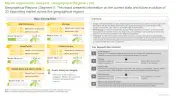
This segment highlights the distribution of market for 3D Bioprinting across various geographies, such as North America, Europe, Asia-Pacific, Latin America and Middle East and North Africa. According to our projections, North America is likely to capture the majority (38%) of the current 3D Bioprinting market share, and this trend is unlikely to change in the future. It is worth highlighting that the market in Latin America is expected to grow at a relatively high CAGR (21.4%), during the forecast period till 2035. This can be attributed to the technological advancements and rising adoption of 3D bioprinting technologies in this region.

3D Bioprinting Market Key Insights

The “3D Bioprinting Market: Industry Trends and Global Forecasts, Till 2035” market report features an extensive study of the current market landscape, market size and future opportunities within the 3D bioprinting industry, during the given forecast period. The market report highlights the efforts of several stakeholders engaged in this rapidly emerging market segmentation of the pharmaceutical industry. Key takeaways of the market report have been briefly discussed below.

Benefits of 3D Bioprinting

3D bioprinting offers numerous benefits and is therefore experiencing a growing demand in the healthcare domain. One of the key advantages of 3D bioprinting is its ability to create complex structures with precise control over the placement of cells, biomaterials, and growth factors. Further, it enables the fabrication of tissues and organs that closely mimic the native tissues, making it invaluable in the realm of regenerative medicine, drug testing, and disease modeling. Moreover, 3D bioprinting can potentially address organ shortages by providing means to create personalized and functional organs for transplantation.

Key Drivers of 3D Bioprinting Market

One of the key drivers of 3D bioprinting industry is the rising geriatric population which has spurred the need for regenerative therapies and organ replacements. Further, the increasing innovation in this domain has led to the increased adoption of 3D bioprinting solutions with higher resolution, speed, and cell viability. It is worth mentioning that various 3D bioprinters are used for various purposes, such as drug development and testing. Additionally, technological advancements like 4D bioprinting, which use stimuli-responsive materials for creating bioprinted structures, are improving efficiency and speed of bioprinting technology.

Competitive Landscape of 3D Bioprinting Solution Providers

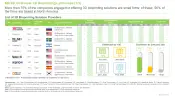
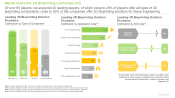
The current market landscape features over 65 large, mid-sized and small companies, which claim to have the required expertise to develop 3D bioprinters, across different application areas, including clinical testing, drug development, regenerative medicine, tissue engineering and other application areas. Notably, 97% of the 3D bioprinting solution providers offer bioprinters, followed by software (67%). Close to 95% of the players claim to offer 3D bioprinting solutions that are employed in the field of tissue engineering.

Market Size: Bioprinters Market Segment to Hold the Largest Share of the Market

The global 3D bioprinting market size is estimated to be worth USD 4.0 billion in 2024. Further, the piqued interest of stakeholders in 3D bioprinting coupled with the growing demand and adoption of advanced 3D bioprinting technologies, increasing need for organ transplants and shortage of organ donors is likely to drive the growth of this market. Specifically, in terms of type of component, the market is anticipated to be driven by the revenues generated by the bioprinters segment.

Regional Analysis: North America Emerged as the Hub of 3D Bioprinting

Majority of the 3D bioprinting solution providers are headquartered in North America and Europe. Notably, the global 3D bioprinting market in 2035 is anticipated to be dominated by the players based in North America, while 26% share is anticipated to be captured by the players based in Europe, attributing to the fact that various stakeholders in this region are enhancing their service offerings by integrating 3D bioprinting technologies.

Key Players in the 3D Bioprinting Market

Examples of key players in 3D bioprinting industry (which have also been profiled in this market report; the complete list of companies is available in the full report) include Advanced Solutions Life Sciences, Allevi, Aspect Biosystems, Cellink, CollPlant Biotechnologies, Cyfuse Biomedical K.K., Foldink, Formlabs, Inventia Life Science, it3d Group, Medprin Biotech, Organovo, Pandorum Technologies, Precise Bio, Regemat 3D, REGENHU, Rokit Healthcare, Stratasys and Vivax Bio.

3D Bioprinting Market Report Coverage

The market report presents an in-depth analysis, highlighting the capabilities of various stakeholders in this industry, across different geographies. Amongst other elements, the market report includes:
  • A background study presenting essential context by elucidating key market trends and delineating key project objectives of the global 3D bioprinting market report.
  • An outline of the systematic research methodology adopted to conduct this study, covering research assumptions, project and forecast methodologies, primary and secondary research approaches, along with the various analytical frameworks utilized / considered in the report.
  • It explores various comprehensive methodologies and frameworks used to forecast and analyze market trends. Further, it discusses the key factors influencing market dynamics and emphasizes the robust quality control framework adopted to ensure transparency and credibility in the insights presented throughout the report.
  • A brief overview of the economic factors that impact the overall 3D bioprinting market, including currency fluctuations, foreign exchange rates, and known trade barriers. In addition, it evaluates the effects of global recession and inflation on the growth of the market, drawing insights from key historical events to inform decision making in the future.
  • An infographic executive summary of the key insights captured during our research, offering a high-level view of the current state of the 3D bioprinting market and its likely evolution in the short to mid and long term.
  • A general overview of 3D bioprinting, highlighting the key bioprinting technologies and historical milestones in 3D bioprinting. Further, the chapter highlights the advantages and application areas of 3D bioprinting domain. In addition, the chapter also provides a brief discussion on the likely future trends and the potential of this industry.
  • An in-depth analysis of the factors that can impact 3D bioprinting market growth. It also features identification and analysis of key drivers, potential restraints, emerging opportunities, and existing challenges.
  • A detailed market forecast analysis in order to estimate the existing market size and future opportunity in the market, till the year 2035. Based on multiple parameters, such as likely adoption trends and thorough primary validations, we have provided an informed estimate on the market evolution during the forecast period till 2035. The report also features the likely distribution of the current and forecasted opportunity within the 3D bioprinting industry.  Further, in order to account for future uncertainties and to add robustness to our model, we have provided three forecast scenarios, namely conservative, base, and optimistic scenarios, representing different tracks of the industry’s growth.
  • Detailed projections of the current and future 3D bioprinting market across type of component, such as bioprinters, consumables and software.
  • Detailed projections of the current and future 3D bioprinting consumables market across type of consumable, such as bioinks and other consumables.
  • Detailed projections of the current and future market for 3D bioprinting bioprinters across type of technology, such as extrusion-based, inkjet-based, laser-based, stereolithography and other technologies.
  • Detailed projections of the current and future 3D bioprinting market across type of material used, such as extracellular matrix, hydrogels and living cells.
  • Detailed projections of the current and future 3D bioprinting industry across application area, such as clinical testing, drug development, regenerative medicine, tissue engineering and other application areas.
  • Detailed projections of the current and future 3D bioprinting market across end user, such as academic institutes, biopharmaceutical companies and clinical trial and research centers.
  • Detailed projections of the current and future market for 3D bioprinting across geographies, such as North America, Europe, Asia-Pacific, Latin America and Middle East and North Africa.
  • Detailed discussion on the key 3D bioprinting solution providers in this industry, highlighting their product portfolio and annual revenues of business segment that includes 3D bioprinting.
  • A detailed assessment of market landscape of players offering solutions for 3D bioprinting domain, based on several relevant parameters, including type of component (bioprinters, software, bioinks and consumables), type of technology (extrusion-based, inkjet-based, laser-based, stereolithography and other technologies), type of material used (extracellular matrix, hydrogels and living cells), application area (clinical testing, drug development, regenerative medicine, tissue engineering and other application areas) and end user (academic institutes, biopharmaceutical companies and clinical trial and research centers). In addition, the chapter provides a detailed list of solution providers engaged in offering 3D bioprinting solutions, along with analysis based on various parameters, such as year of establishment, company size (in terms of number of employees), location of headquarters (North America, Europe, Asia-Pacific and Rest of the World).
  • Elaborate profiles of prominent players based in North America that are engaged in offering 3D bioprinting solutions, featuring information on their year of establishment, location of headquarters, company size (in terms of number of employees), leadership team, financial information (if available), 3D bioprinting solution portfolio, recent developments and an informed future outlook.
  • Elaborate profiles of prominent players based in Europe that are engaged in offering 3D bioprinting solutions, featuring information on their year of establishment, location of headquarters, company size (in terms of number of employees), leadership team, financial information (if available), 3D bioprinting solution portfolio, recent developments and an informed future outlook.
  • Elaborate profiles of prominent players based in Asia-Pacific and Rest of the World that are engaged in offering 3D bioprinting solutions, featuring information on their year of establishment, location of headquarters, company size (in terms of number of employees), leadership team, financial information (if available), 3D bioprinting solution portfolio, recent developments and an informed future outlook.
  • An insightful analysis of the various CPC codes used in published IP literature (representative of unique patent families) and their affiliated families, offering the means to identify historical and existing pockets of innovation (based on the functional area / industry described by the elaborate and systematic IP classification approach, mentioned earlier); the analysis also features a discussion on prevalent white spaces (based on type of innovation and innovation in this field of research).
  • A value chain analysis featuring a discussion on various steps of development operations, namely facility set-up, raw materials, R&D, design and modelling, bioprinting, post-processing and maturation, quality control and applications of 3D bioprinting.
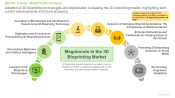
  • A qualitative assessment of the various megatrends ongoing in the 3D bioprinting industry, including the adoption of 3D bioprinting technologies, personalized medicine with artificial intelligence, dominance of digitization and e-commerce, innovation in biomaterials and cell research, inclusion of innovative 3D bioprinting solutions, influence of partnerships and collaborations, promoting brands on social media and the evolving regulatory guidelines.
3D Bioprinting Market Geographical Regions 3D Bioprinting Market Movement Analysis 3D Bioprinting Market Penetration Growth

Recent Developments In 3D Bioprinting Market

Several recent developments have taken place in the field of 3D bioprinting, some of which have been outlined below. These developments, even if they took place post the release of our market report, substantiate the overall 3D bioprinting market trends that we have outlined in our analysis.

  • In February 2026, CollPlant launched BioFlex, a ready-to-print rhCollagen-based kit for DLP 3D bioprinting in order to enable high-resolution, reproducible printing of scaffolds mimicking native human tissues for regenerative medicine.
  • In January 2026, University of Texas Southwestern Medical Center secured $25 million grant from ARPA-H for VITAL project with an aim to develop 3D bioprinted functional artificial livers.
  • In September 2025, Penn State researchers received $3 million NIH grant to develop 3D bioprinting combined with micropuncture surgical method to improve blood supply in reconstructed tissues.
  • In September 2025, MIT researchers introduced new 3D bioprinting technique to enhance production of engineered tissues by accelerating process optimization for real-world tissue engineering applications.

Frequently Asked Questions

What is 3D bioprinting?

3D bioprinting is a technique to develop / construct biomedical structures with the use of viable cells, biological molecules, and other biomaterials.

What is the market of 3D bioprinting?

The global 3D bioprinting market, valued at USD 4.0 billion in 2024, is estimated to reach USD 4.6 billion in 2025 and USD 23.1 billion by 2035

What is the CAGR of 3D bioprinting market?

The global market for 3D bioprinting is expected to grow at a CAGR of 17.7% till 2035.

Which geographical segment is likely to capture majority share in the 3D bioprinting market, by 2035?

North America is likely to hold close to 38% of the market share in the next decade.

What is the demand for bioprinting?

The demand for 3D bioprinting is steadily increasing across various industries, especially in healthcare, research, and pharmaceutical sectors due to its potential to revolutionize medical practices by enabling the development of personalized tissues and organs for transplantation, disease modeling, and drug testing.

What is the bioprinting market trend?

The 3D bioprinting market is currently experiencing an upward trend with significant growth potential due to the increasing investments in research and development, technological advancements, and the rising demand for developing bioprinted organ replacements.

What is the biggest challenge facing bioprinting?

The biggest challenge faced by 3D bioprinting is the complexity of replicating the intricate structures and functions of human tissues and organs.

Which are the leading companies offering 3D bioprinting solutions?

Advanced Solutions Life Sciences, Allevi, Aspect Biosystems, Cellink, CollPlant Biotechnologies, Cyfuse Biomedical K.K., Foldink, Formlabs, Inventia Life Science, it3d Group, Medprin Biotech, Organovo, Pandorum Technologies, Precise Bio, Regemat 3D, REGENHU, Rokit Healthcare, Stratasys and Vivax Bio.