
Lowest Price Guaranteed
Pages
210
Last Updated
September 2026
View Count
20475
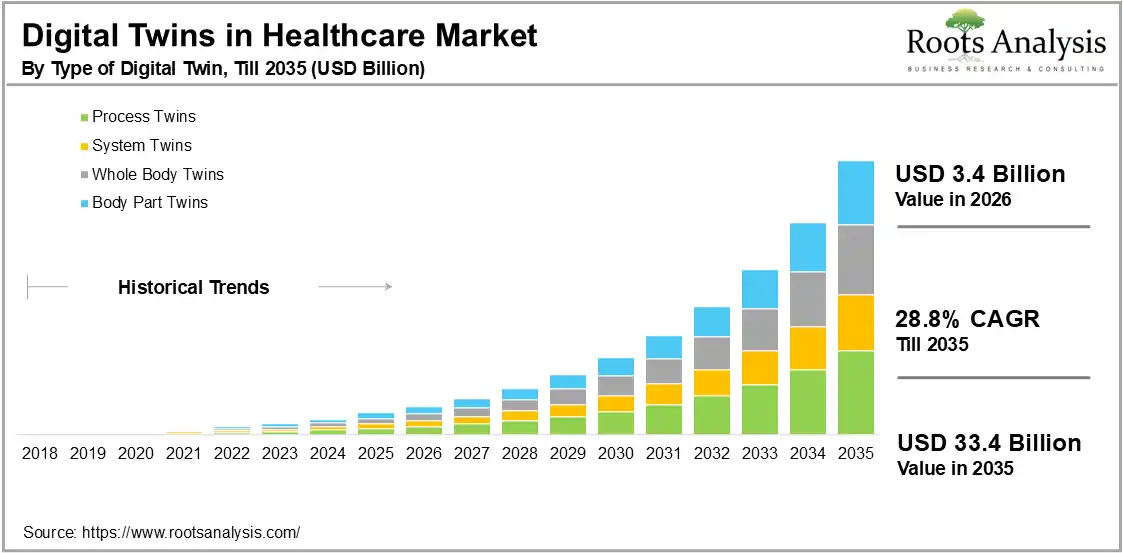
The global digital twins in healthcare market, valued at USD 2.5 billion in 2025, is projected to reach USD 3.4 billion in 2026 and USD 33.4 billion by 2035, with a 28.8% CAGR during the forecast period 2026 to 2035.
To learn more about this report, request a free sample copy
The new research study consists of industry trends, detailed market analysis, company competitiveness analysis, partnerships and collaborations, and funding and investment analysis. The digital twins in healthcare market growth over the next decade is likely to be the result of increasing adoption of digital health technologies, advancements in data analytics and simulation capabilities, and rising demand for personalized medicine.
Digital twins can be defined as virtual representations of physical objects or systems, created through the use of real-time data and simulation models. Such digital replicas offer various applications in the pharmaceutical domain, such as accelerating clinical trials, simulated studies for larger populations, drive treatment efficiency and cost savings in drug design and testing. The surge in the popularity of industry 4.0 technologies has led to the digital twin market growth in healthcare industry, facilitating seamless data integration and the development of virtual replicas of physical assets, processes, and even the human body.
 |
According to a recent study, healthcare executives anticipate a significant increase in investment from pharmaceutical players with over 65% increased investment expected in this domain in the next three years. Patient Engagement Software extends these digital workflows by supporting communication, education, adherence and active participation throughout the care pathway. Digital twins also find their application in accelerating the pace of clinical trials, conducting simulated studies for larger populations. A group of researchers have developed a risk estimator using virtual simulation, machine learning and other tools to estimate the cardiotoxicity of various drugs; this could potentially help save up some of the costs from the estimated USD 2.5 billion that is spent on drug design and testing costs. Such technologies empower organizations to implement predictive maintenance strategies, simulate pharmaceutical processes, and enable real-time monitoring, prompting pharmaceutical companies to explore their potential.
In fact, nearly 90% of healthcare executives view digital twins as an essential technology to lead collaborations between multiple systemic units within their organizations. Additionally, the growing demand for virtual simulation, personalized medicine, and predictive maintenance are expected to further drive exploration of digital twin use cases in the pharmaceutical industry.
 |
The digital twins in healthcare market research report presents an in-depth analysis of the various companies that are engaged in offering digital twin solutions in the healthcare market, across different segments, as defined in the table below:
| Key Report Attribute | Details | |
| Historical Trend | Since 2018 | |
| Forecast Period | Till 2035 | |
| Market Size in 2026 | $3.4 billion | |
| CAGR | 28.8% | |
| Therapeutic Area |
|
|
| Type of Digital Twin |
|
|
| Area of Application |
|
|
| End Users |
|
|
| Key Geographical Regions |
|
|
| Key Companies Profiled |
|
|
| PowerPoint Presentation (Complimentary) |
Available | |
| Customization Scope | 15% Free Customization | |
| Excel Data Packs (Complimentary) |
|
|
One of the key objectives of the digital twins in healthcare market report was to estimate the current market size, opportunity and the future market growth potential of this technology in healthcare market, over the forecast period. Based on multiple parameters, likely adoption trends and through primary validations, we have provided an informed estimate on the market evolution during the forecast period, till 2035.
 |
The market report also features the likely distribution of the current and forecasted opportunity within the digital twins in healthcare market across various segments, such as therapeutic area (cardiovascular disorders, metabolic disorders, orthopedic disorders, and other disorders), type of digital twin (process twins, system twins, whole body twins and body part twins), areas of application (asset / process management, personalized treatment, surgical planning, diagnosis and other applications), end users (pharmaceutical companies, medical device manufacturers, healthcare providers, patients and other end users) and key geographical regions (North America, Europe, Asia, Latin America, Middle East and North Africa, and Rest of the World). In order to account for future uncertainties and to add robustness to our model, we have provided three digital twins in healthcare market forecast scenarios, namely conservative, base and optimistic scenarios, representing different tracks of the market growth.
All actual figures have been sourced and analyzed from publicly available information forums and primary research discussions. Financial figures mentioned in this report are in USD, unless otherwise specified.
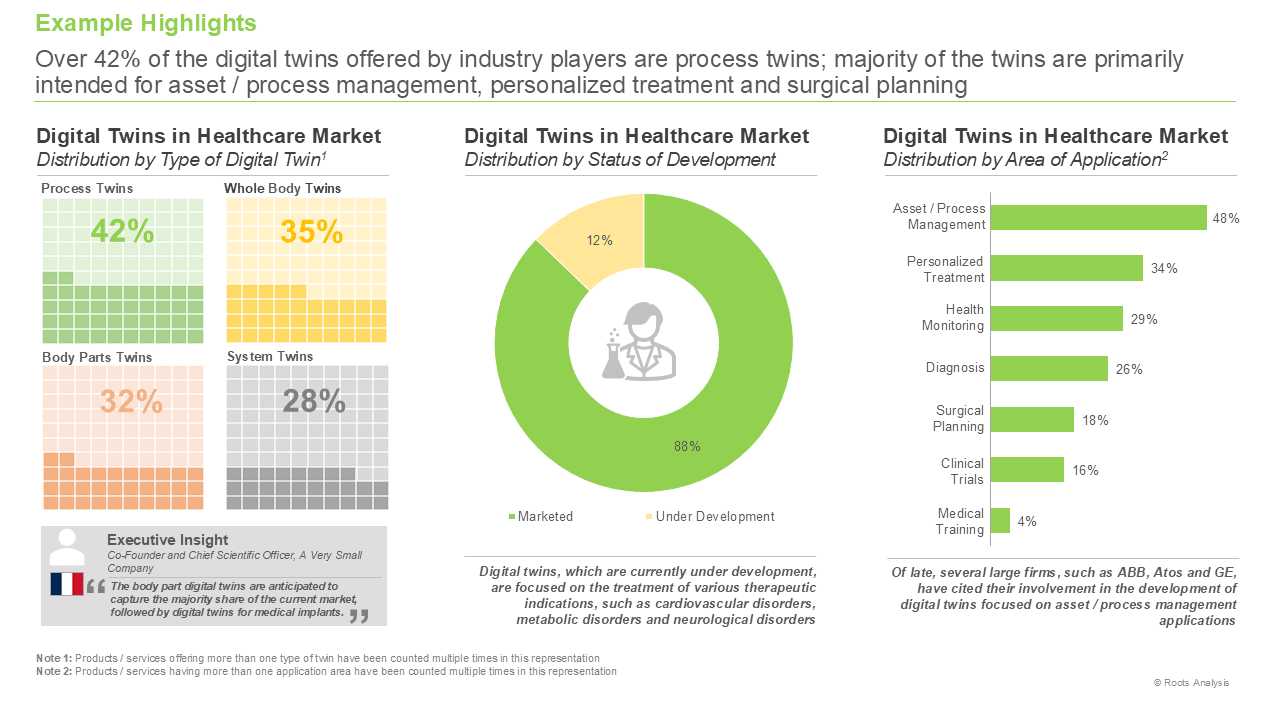
The global digital twins in healthcare market is categorized into body part twin, process twin, system twin, and whole-body twin. The process digital twin segment occupies the highest share currently and is expected to stay dominant during the forecast period. This can be primarily attributed to the fact that process digital twins enable comprehensive simulations and optimizations of healthcare workflows, leading to enhanced efficiency, cost savings, and improved patient outcomes, thus driving their widespread adoption and dominance in the market.
 |
The global digital twins in healthcare market highlights the distribution of this segment across different therapeutic areas, such as cardiovascular disorders, metabolic disorders, orthopedic disorders, and other disorders. Among these therapeutic areas, the cardiovascular disorders segment occupies the highest share and is expected to witness substantial growth during the forecast period.
The global digital twins in healthcare market is segmented into different types of end users, such as healthcare providers, medical device manufacturers, patients, pharmaceutical companies and other end users. The pharmaceutical companies are expected to hold the majority share of the market in 2035, whereas the patient’s segment is likely to grow at a higher CAGR as compared to other end users in the coming years.
This segment highlights the distribution of digital twins in healthcare market across various geographies, such as North America, Europe, Asia, Latin America, Middle East and North Africa, and Rest of the World. According to our projections, North America is likely to capture the majority (over 30%) of the digital twins in healthcare market share in 2024, and this trend is unlikely to change in the future. Further, it is worth highlighting that the market in Middle East and North Africa is expected to grow at a healthy CAGR (32.2%), during the forecast period, till 2035.
 |
 |
 |
Tap or click on the images for smart insights on Digital Twins in Healthcare Market
The “Digital Twins in Healthcare Market - Distribution by Therapeutic Area (Cardiovascular Disorders, Metabolic Disorders, Orthopedic Disorders, and Other Disorders), Type of Digital Twin (Process Twins, System Twins, Whole Body Twins and Body Part Twins), Areas of Application (Asset / Process Management, Personalized Treatment, Surgical Planning, Diagnosis and Other Applications), End Users (Pharmaceutical Companies, Medical Device Manufacturers, Healthcare Providers, Patients and Other End Users) and Key Geographical Regions (North America, Europe, Asia, Latin America, Middle East and North Africa, and Rest of the World): Industry Trends and Global Forecasts, till 2035” market report features an extensive study of the current market landscape, market size, market share, market analysis, market forecast and future opportunities for the digital twin companies involved in the healthcare market. The digital twins in healthcare market research report highlights the efforts of several digital twin developers engaged in this rapidly emerging market segment of the pharmaceutical industry. Key takeaways of the digital twins in healthcare market analysis are briefly discussed below.
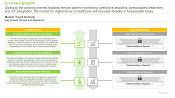
The increasing adoption of Industry 4.0 technologies within the healthcare industry has led to the growth of the digital twins in healthcare market by enabling seamless data integration, which has in turn facilitated the creation of virtual representations of physical assets / processes and human body. In fact, over 65% of the healthcare executives expect that the investment of pharmaceutical players will increase in the coming next three years. In addition, digital twins have been shown to speed up clinical trials and simulate studies for a larger population, in shorter timelines.
The capabilities of such technologies to empower the organizations to implement predictive maintenance strategies, simulate pharmaceutical processes and offer real-time monitoring have influenced pharmaceutical companies to explore the use of digital twins. Consequently, nearly 15% of organizations involved in IoT projects have already started using digital twin platforms, while over 60% of the firms are either planning or in the process of establishing digital twin technology in their processes, in the near future.
The digital twins in healthcare industry features over 90 solutions. Over 40% of the twins in this domain are process digital twins. Further, around 50% of the digital twins are intended for asset / process management applications; however, a shift towards the digital twins intended to offer personalized treatment is being observed. Based on our research, we observed that majority of the digital twin companies use artificial intelligence in their solutions. In parallel, digital biomanufacturing connects process data, automation and analytics to improve control of biopharmaceutical production.
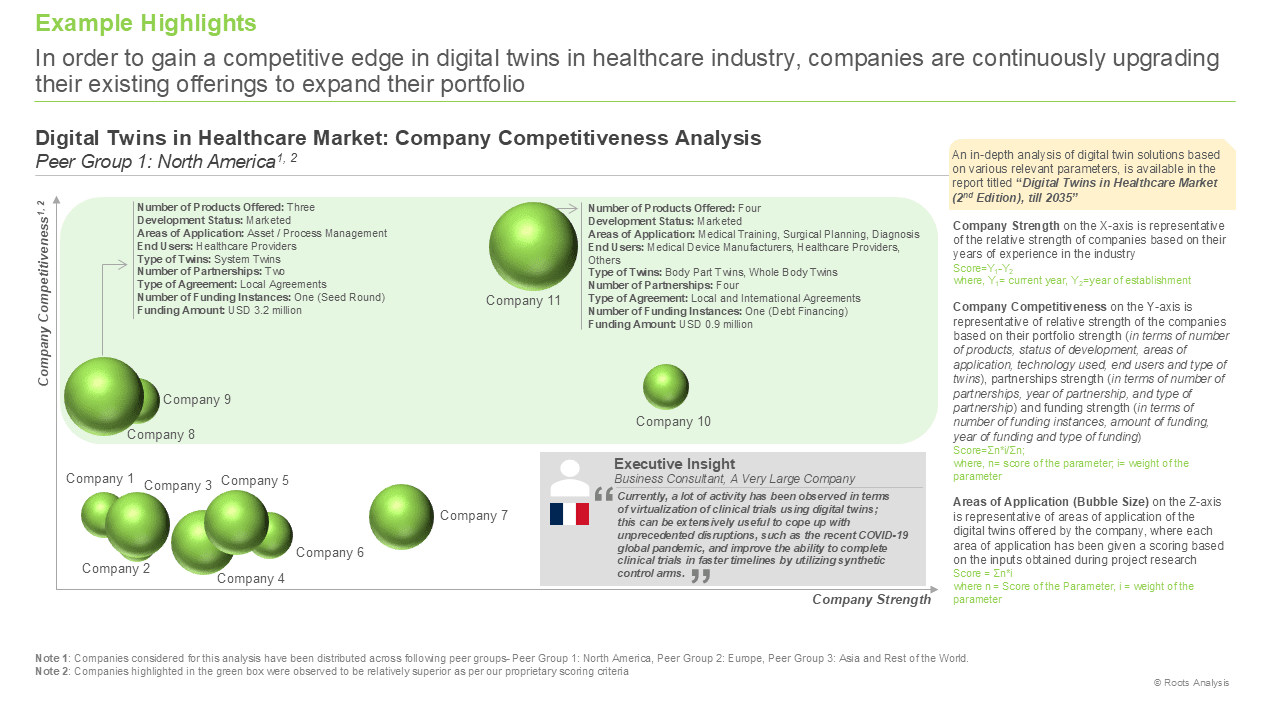 |
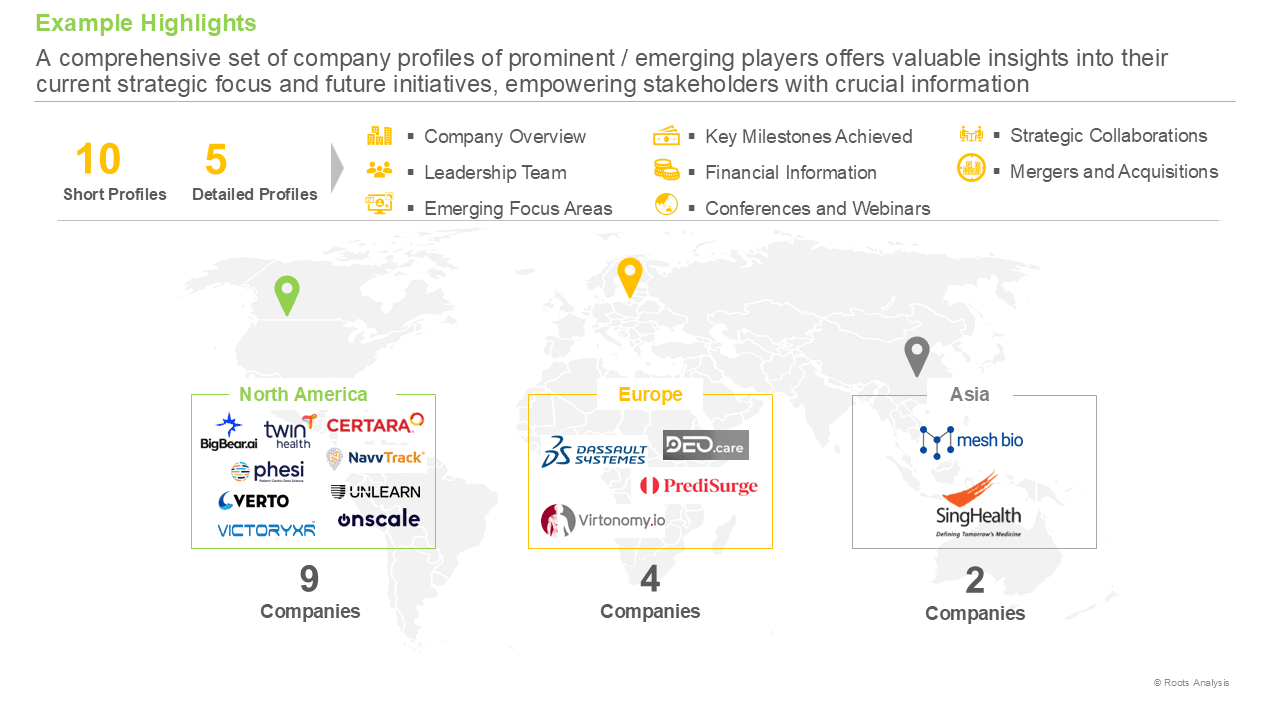
The current digital twins in healthcare market landscape features the presence of over 75 players that have the required expertise to develop and manufacture digital twin solutions for healthcare applications. Overall, the market appears to be dominated by small and mid-sized digital twin technology companies, which is indicative of the fact that this domain is currently evolving and offers opportunities for innovation and growth among diverse players. In terms of the location of headquarters, over 48% of the digital twin companies are based in Europe, followed by North America (42%), Asia (9%) and Middle East and North Africa (1%).
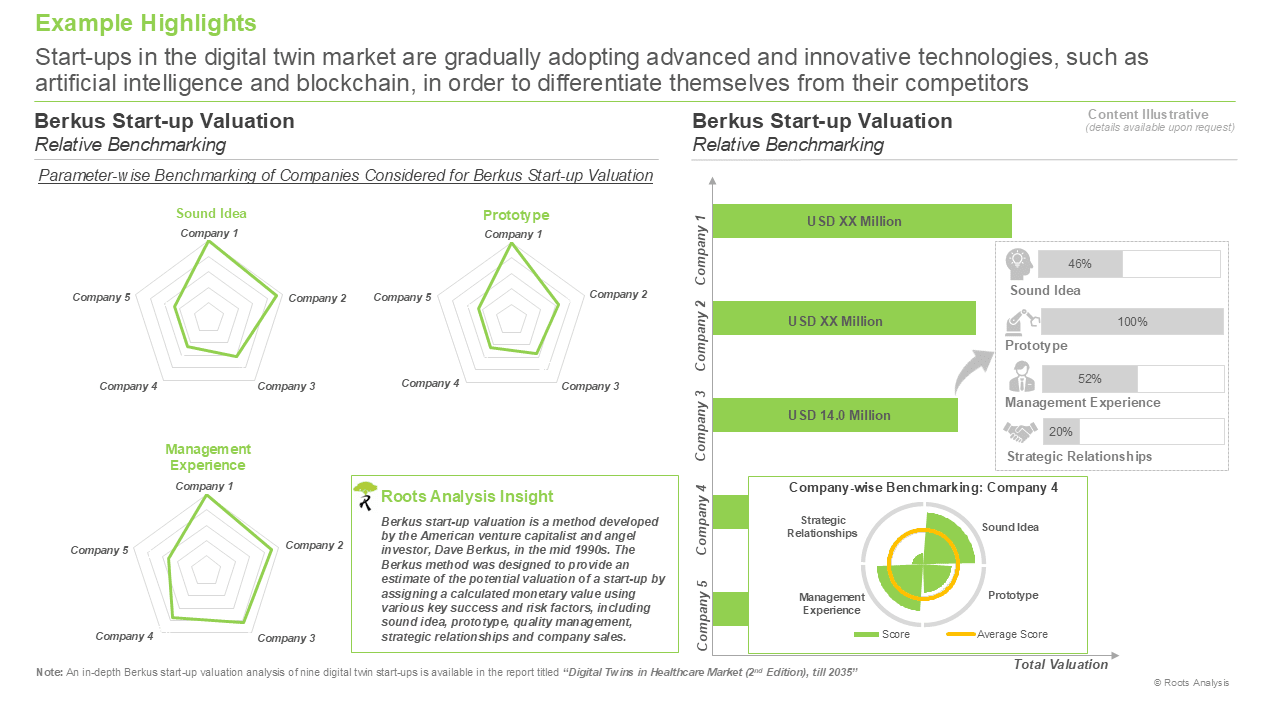
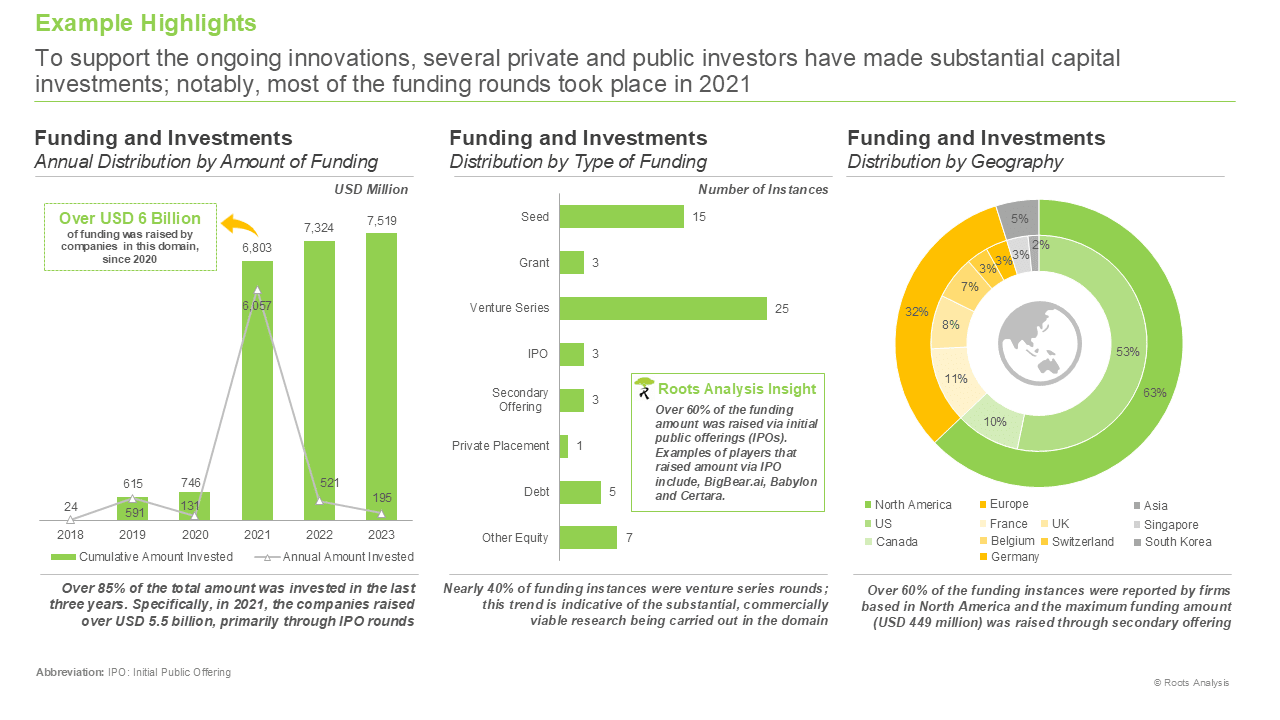
In the past four years, over USD 6.5 billion have been invested by various investors across the globe in digital twin technology companies engaged in the healthcare market. These companies raised majority of the funds through IPO (Initial Public Offering) rounds, followed by amount raised through venture series rounds. Recently in October, Leucine raised a venture capital round of USD 7 million, led by Ecolab and Pravega Ventures.
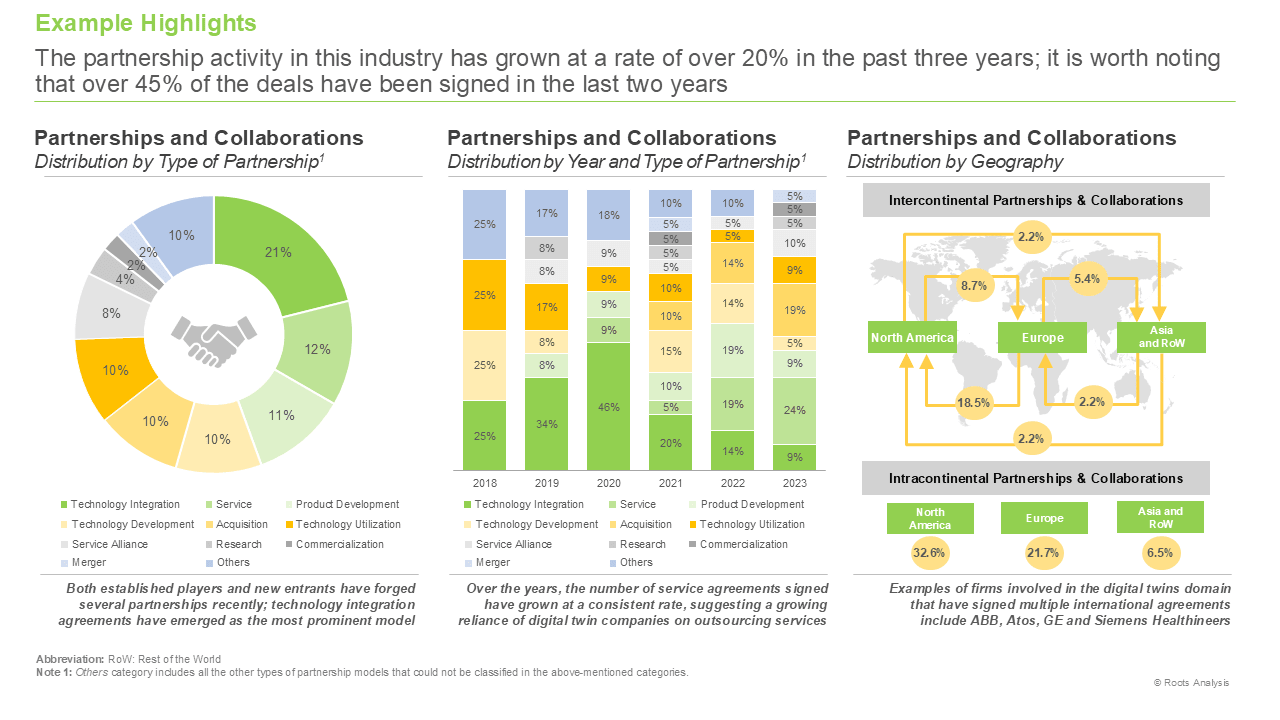
Additionally, in 2023, a significant number of partnerships have been inked in the digital twins in healthcare domain, indicating the substantial efforts made by such players to expand their existing portfolio. Majority (31%) of the partnerships signed in this market space include technology integration and technology development agreements. Recently, in December 2023, Blackford entered into a technology integration agreement with Nurea in order to integrate its PRAEVAorta® 2 solution into its proprietary Blackford AI platform. According to the source, the combined technology is expected to assist cardiovascular surgeons to improve surgical planning and decision making.
 |
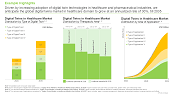
The global digital twins in healthcare market size is estimated to be worth USD 3.4 billion in 2026. The market growth is expected to be driven by the increasing adoption of women's digital health technologies, leading to a CAGR of 28.8% over the forecast period. Further, in terms of application areas, digital twins intended for asset / process management currently capture the majority (32%) of the market share. However, in 2035, digital twins intended for personalized treatment are anticipated to capture the majority (29%) of the market share.
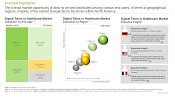
Presently, North America captures over 30% of the market share of the overall digital twins in healthcare market. However, it is worth highlighting that, owing to the rising demand for digital twin solutions and increased investments, market in Middle East and North Africa is likely to grow at a higher CAGR (32.2%) as compared to other regions in the coming years.
Examples of digital twin companies (also profiled in this report) in the healthcare industry (the complete list of companies is available in the full report) include BigBear.ai, Certara, Dassault Systèmes, DEO, Mesh Bio, NavvTrack, OnScale, Phesi, PrediSurge, SingHealth, Twin Health, Unlearn, Verto, VictoryXR and Virtonomy. This global digital twins in healthcare market report includes an easily searchable excel database of all the companies that offer digital twin solutions.
The digital twins in healthcare market report presents an in-depth analysis, highlighting the capabilities of various stakeholders in this industry, across different geographies. Amongst other elements, the market report includes:
Several recent developments have taken place in the field of digital twins in healthcare. We have outlined some of these recent initiatives below. These developments, even if they took place post the release of our market report, substantiate the overall market trends that have been outlined in our analysis.